
Scouting still matters. Here’s how Congress can save it | Opinion
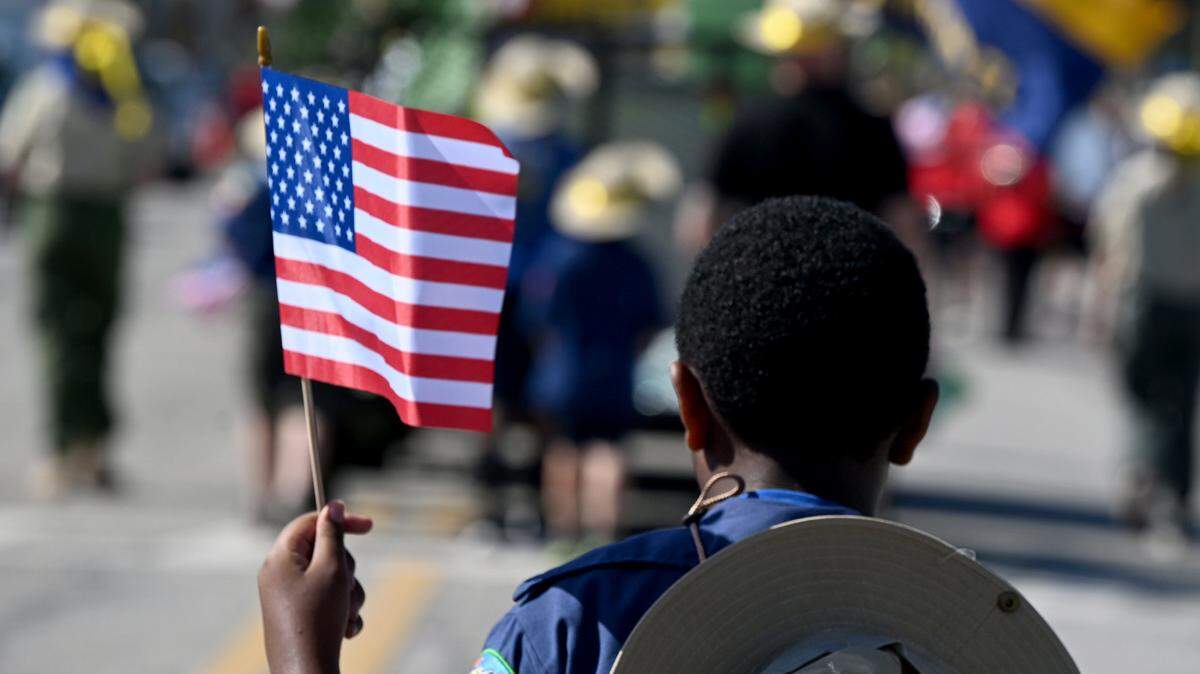
A long time ago, as a Boy Scout, my troop and I embarked on a two-week trip through the mountains of New Mexico.
By the end of the first day at the legendary Philmont Scout Ranch, I was exhausted from hauling gear and ready to settle in for the night. Then the storm hit. Soon I was soaked, far from home, and wondering what exactly I had gotten myself into.
That trip became one of the defining experiences of my life. Years later, when life tested me in other ways, I found myself reaching back to those memories.
That is the power of Scouting. Thankfully, that kind of experience still exists today.
It is not mainly about patches, derby cars, or campfire skits, though those matter. Scouting gets boys and girls off screens and into the world. There they learn to serve, to lead, and to handle hard things. That is how character is built.
I’ve spent the past decade as a Scout leader with my own children, and much of the program is just as I remember. My children have even worn old neckerchiefs my mother saved from when I was young.
But much has changed behind the scenes, and not for the better.
The troubles of the Boy Scouts have been well documented. The sex abuse scandal shattered trust, and the bankruptcy that followed left the organization smaller, weaker, and more defensive. Those wounds did not simply damage Scouting’s reputation. They left the institution unsure of itself.
That was clear again in February, when Defense Secretary Pete Hegseth threatened to end the government’s affiliation with Scouting before the two sides reached an agreement.
The Girl Scouts have faced different but parallel challenges. Their struggles have been less public, but membership there has fallen sharply too. So while the Boy Scouts’ crisis has been louder, both organizations are under strain.
The common narrative is that the Boy Scouts lost their way by going woke, especially by allowing girls to join. That is not really accurate.
The real problem is that the Scouts have forgotten their mission.
An institution that has lost clarity
Soon after taking the job, Scouting America CEO Roger Krone told Scout leaders, “Our number one job is to get kids in this program.” In one sense, that is true. Any youth organization needs young people. But recruitment is not the mission. Recruitment follows when the mission is clear and carried out well.
Scouting is about civic responsibility, service, and good moral character. It exists to help turn young people into strong, capable, responsible citizens. When an institution loses confidence in that purpose, it starts grasping. It chases numbers instead of building a program people believe in.
That has hurt Scouting. Costs have risen sharply. The burden on volunteers has grown. The friction involved in running a unit has increased. It is the worst of both worlds — a bloated bureaucracy at the top and too much improvisation at the bottom. The branding chaos has not helped either. First Boy Scouts became Scouts BSA, and then Scouting America.
Parents can feel all that. They have more options than ever and less time to spare. Scouting still depends heavily on adult volunteers, and those volunteers are harder to come by than they used to be. It is not realistic to ask more from families while giving them a fuzzier sense of why the sacrifice is worth it.
When an institution cannot explain itself clearly, it should not be surprised when fewer people choose to join it.
Congress should act
Few people know it, but both Boy Scouts of America and Girl Scouts of the USA are federally chartered organizations. Congress authorized and created them. These are not just private groups in the marketplace, but civic institutions with a national purpose.
In 1916, Congress charged the Boy Scouts with promoting in boys “the ability to do things for themselves and others” and teaching “patriotism, courage, self-reliance, and kindred virtues.” In 1950, it chartered the Girl Scouts to promote “truth, loyalty, helpfulness, friendliness, courtesy, purity, kindness, obedience, cheerfulness, thriftiness, and kindred virtues,” and to inspire girls with “the highest ideals of character, patriotism, conduct, and attainment.”
That language may sound old-fashioned. Fine. A lot of what this country badly needs sounds old-fashioned right now. America used to produce presidents, astronauts, military leaders, and civic builders through Scouting in astonishing numbers.
If we want that tradition to endure, it is time for Congress to combine them. Congress should merge the Boy Scouts of America and the Girl Scouts of the USA into one national Scouting organization.
That will not be easy, because the Boy Scouts and Girl Scouts get along about as well as Republicans and Democrats. The two behave less like complementary civic partners and more like rival firms fighting over a shrinking market. Difficulty, however, is not an argument for inaction.
A merger would mean one national organization with shared administration, shared assets, and a clearer mission. Boys would be Boy Scouts, and girls would be Girl Scouts. Both would work through a single program toward the Eagle award.
That core of Scouting is valuable for both boys and girls, and the Boy Scouts were right to recognize that when they opened it up. But boys and girls are not interchangeable, and there is real value in single-sex spaces. A stronger, unified national organization should have enough confidence to offer them when it makes sense.
Each side has something to teach the other. The Boy Scout side could learn from Girl Scouts about a leaner professional structure and a council-led model that avoids the complexity of chartered organizations. The Girl Scout side could benefit from a clearer progression, a stronger outdoor culture, and access to assets the Boy Scouts have spent generations building, including Philmont.
Just being able to say “Boy Scouts” and “Girl Scouts” again without confusion would be a huge win.
Saving Scouting is critical. We live in a country marked by distraction, passivity, and institutional decay. We do not need more programs built around convenience. We need institutions that help shape citizens.
Scouting can still do that. I know because it did it for me, and I have seen it do it for my children.
Congress helped build Scouting. It should now help save it.
Contributing columnist Andrew Dunn is the publisher of the Longleaf Politics newsletter, which offers thoughtful analysis of North Carolina politics and policy from a conservative perspective. He can be reached at andrew@longleafpol.com.