
There’s a way to ease Raleigh’s bus station troubles. It starts in the middle | Opinion
AI-generated summary reviewed by our newsroom.
- Moore Square congestion stems from hub-and-spoke routing, not just crime.
- Experts urge a grid network to enable direct trips and reduce downtown transfers.
- Rerouting may require more buses, better stops and money to boost ridership.
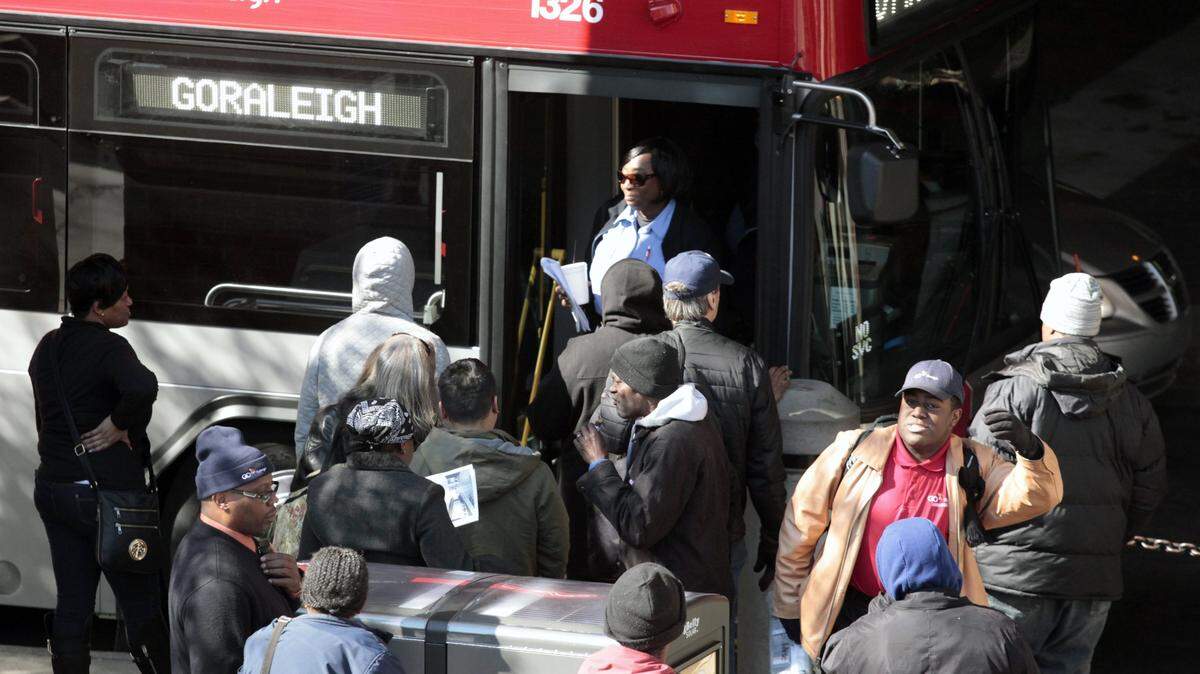
Raleigh’s Moore Square bus station has drawn attention as a center for crime and loitering that is inhibiting downtown’s post-pandemic revival.
But the bus station’s broader problem is that it’s a center at all. The GoRaleigh bus system still operates on a hub-and-spoke design that funnels many riders through downtown Raleigh even though that’s not where they are seeking to go.
The bus system should switch to a grid design that would allow more riders to get to their destinations without having to ride downtown, only to transfer to a bus that will take them back out of the city’s center. Fewer passengers passing through the Moore Square station wouldn’t eliminate all the problems there, but it would ease pressure on the station, improve the rider experience and likely increase ridership.
Former Raleigh Mayor Mary-Ann Baldwin has long advocated for the switch to a grid design. As mayor, she sought solutions to the bus station’s issues and called for better and more extensive mass transit in the capital city and across the Triangle. She now serves as board chair for GoTriangle, the regional bus service.
Baldwin said an approach that sends most riders downtown was designed for a Raleigh that no longer exists. Since the bus station opened in 1988, the city’s population has more than doubled from 200,000 to more than 500,000. Much of that growth has happened in North Raleigh, where many residents live and work without any need to go downtown.
“Hub-and-spoke works best in cities where the travel goes to a dominant work area, a downtown work center,” Baldwin said. “That hub-and-spoke system is a little weird here because we don’t have a single, dominant work center.”
That decentralization has been compounded by the increase in remote work since the pandemic. About a quarter of Raleigh’s workforce now works remotely, one of the highest levels in the nation.
A grid system would allow a rider to go, for instance, directly from N.C. State University to North Hills without transferring at the Moore Square bus station downtown.
If more direct routes were coupled with more frequent service, Baldwin said, ridership would likely increase. She noted that since last August, when GoTriangle switched the frequency of buses between Durham and Chapel Hill to every 15 minutes, ridership increased 100%. Higher frequency, she said, makes taking the bus “more reliable and more usable, and we’ve seen that with a doubling of ridership.”
Sig Hutchinson, a former GoTriangle chair and Wake County commissioner, also wants to end Raleigh’s hub-and-spoke design for bus travel.
“I just think the hub-and-spoke is a very 20th century model. It’s outdated. It’s going the way of Blockbuster Video,” he said. “There are other models that can do it so much better. If you’re in North Raleigh, there’s no point in going downtown only to go back to North Raleigh. It makes no sense.”
But the system makes sense for Raleigh, said David Walker, GoRaleigh’s transportation manager.
“Outside of the downtown area, the City of Raleigh street infrastructure looks much more like a hub and spoke network versus a large grid network that you may see in some cities,” he said. “Operations currently function well and cover all major corridors. We have no plans currently to change that.”
Houston offers a model for the benefits of the grid system. Houston’s buses ran too infrequently, especially on weekends and in the evening, and taking a bus was not a practical option in the suburbs. That all changed in 2015.
In a PBS report on the Houston bus system’s transformation, Christoph Spieler, an urban planner and then-member of the board of directors of Houston’s Metropolitan Transit Authority of Harris County, said the city was facing a decline in bus ridership even as its population grew. “So we just asked the question: What would this bus system look like if we started over from scratch?”
Spieler said that meant abandoning the hub-and-spoke model that “was based on a time when everybody worked in the same place. And not a system that really made it easy to move around the city.”
After the change, Houston saw a 6.8 percent increase in its local bus and light rail ridership.
Changing Raleigh’s bus system to a design that reflects the way people work and move about today would involve more than redrawing routes. It would require a study and better bus stops. But it would make taking the bus a more viable option and reduce congestion at a downtown bus station that was built to serve a smaller city.
“It does take money. It takes planning. It’s not easy. It’s complex,” Baldwin said. “The timing wasn’t right before. We’ll see if the timing could be right now.”
Associate opinion editor Ned Barnett can be reached at 919-404-7583, or nbarnett@newsobserver.com