
Caregivers of wounded veterans also serve. They need support | Opinion
AI-generated summary reviewed by our newsroom.
- 14.3 million military and veteran caregivers live in the U.S.
- Roughly 2.3 million children in those homes help care for veterans
- VA provided just six care hours daily, leaving gaps and strain
When our country goes to war, we send our best. North Carolina knows this well. What we talk about less is what they carry home—and what their families carry too.
My husband, Jim, and I are both veterans, and have parents who are veterans. We have nine children, seven of whom have served or are currently serving in the United States military, one of whom was severely injured. We have spent our adult lives rooted in the rhythms of service: deployments, homecomings, the pride, and the price.
As a friend once told me when I described life as a caregiver for an injured veteran: “In the military, you’re volunteering for service. When you’re a caregiver, you’re drafted.”
When our daughter Kimmy, an Army paratrooper, returned from deployment in Afghanistan and was forward stationed in Italy, she suffered a severe traumatic brain injury (TBI) that left her in a coma for a year—she was just 25 years old. For a year, we traveled up and down the East Coast as clinicians fought to help her emerge. When she finally woke, doctors told us there was nothing more they could do. We brought her home.
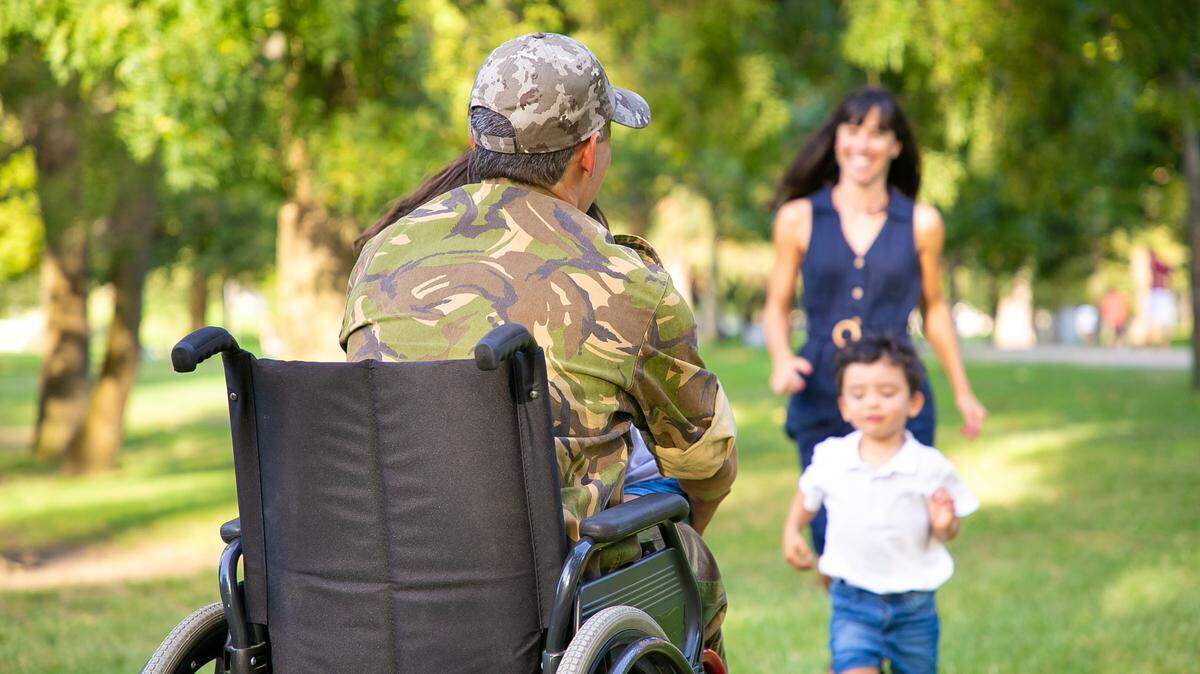
We were unprepared for what came next. Life became isolating and exhausting. Our younger children saw less of us as we devoted every moment to Kimmy’s care. Financial strain followed. The Department of Veterans Affairs (VA) provided just six hours of unskilled care per day—enough for basic needs, but not enough for someone with a brain injury. Kimmy was frustrated and unable to communicate. Our other children adapted in the way military children do—quietly, capably, and at a cost most people never see. They became what are known as Hidden Helpers—the children, youth, and young adults who provide unpaid, often unrecognized care to wounded, ill, or injured veterans or service members.
Right now, there are 14.3 million military and veteran caregivers in this country, and roughly 2.3 million children in those homes serve alongside them, until recently, with almost no recognition of how it shaped them. Depression affects about one in four children with a deployed parent, and academic problems occur in one in five. When a loved one comes home wounded, those pressures compound. Service members returning from combat carry invisible wounds alongside visible ones—TBI, PTSD, and other service-connected conditions that reshape every member of their household’s daily life.
Fifteen years later, Kimmy is relearning to walk and can speak a few words again. Our mornings begin at 6:30 with medication, a shower, and breakfast. The rest of her day is filled with physical and music therapy. It has taken years to reach this rhythm — years of fighting for care, losing funding, and discovering abuse by a VA-funded caregiver. But we kept working through it. We know what this road demands. With American service members already coming home wounded from the current conflict, families across North Carolina are about to enter a chapter most have never navigated. We have a duty and honor to serve, but that service can come with sacrifice; we must observe and support. Some of those families’ children will quietly start carrying more than anyone notices—until someone does.
Healing, I have learned, is communal. Legacy is not something preserved on a family tree. It is something lived.
Service members and their caregivers have given everything. The least we can do is make sure they don’t have to fight alone. Because when you strengthen the caregiver, you strengthen the veteran. And when you strengthen the family, you strengthen the community.
Karee White of Apex is a veteran, military mother, and Elizabeth Dole Foundation Caregiver Fellow. Her memoir, Ash Woven, releases April 23, 2026.