Thank you, Virginia Foxx. Your letter was right. | Opinion
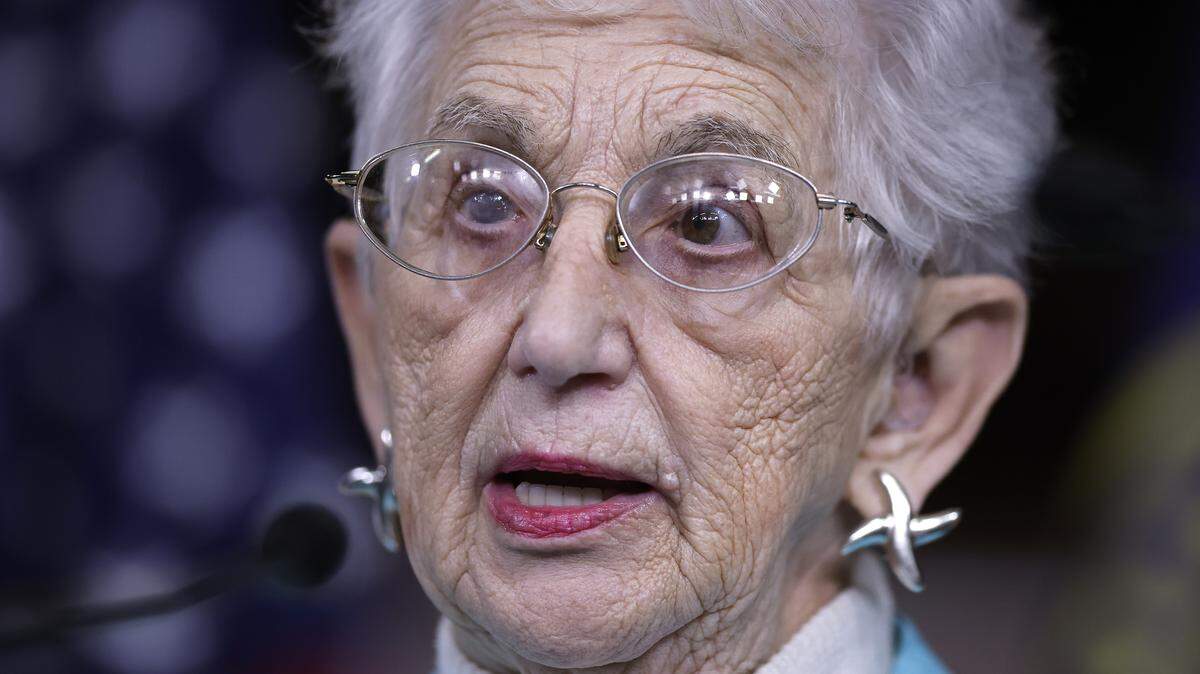
In response to “Did Rep. Virginia Foxx really punch down on a 10-year-old? Oh yes, she did.” (May 13)
I had many exemplary teachers during my public school career. I even taught school in Wake County System for 5 years. To the best of my knowledge, none of my fellows tried in any way to do anything more than instill into our students the subject content that was taught. English teachers taught the proper use of the language and math teachers taught how to use of math. History teachers taught history but none of these teachers ever attempted to involve students in their personal political endeavors or sway their minds into areas that were not related to the subject being taught. A 10-year-old student should be encouraged to learn how to think. Not be told what to think. Thank you, Honorable Mrs. Foxx!
Stephen Trexler, Raleigh
Indoctrinated Foxx
Virginia Foxx has the sensitivity of a dull axe and should not be allowed near a 10-year-old who is concerned about the ecological crisis facing the earth. Foxx should reexamine her own views on critical issues. She has been indoctrinated by Trump, who opposes environmental strategies that will hopefully make the earth a safer place for humans and all living organisms. Many of his cabinet members share his backward and dangerous views on scientific issues.
Thomas K. Spence, Jr., Sanford
Concentrated wealth
Today’s op-ed “Taxing the rich won’t reduce their power” only recycles the old “trickle down” con. Tax them enough, and it will. At least five Founding Fathers warned extensively against the dangers to democracy of concentrated wealth and hereditary privilege: George Mason, James Madison, Thomas Jefferson, Alexander Hamilton, and John Adams.
M. B. Hardy, Raleigh
Trump’s tariffs lose again
The writer is Professor of Economics Emeritus, North Carolina State University.
The Founding Fathers demonstrated considerable foresight in establishing checks and balances among the judicial, executive, and legislative branches of the federal government. On Thursday, the Federal Court Of International Trade declared that Trump’s new tariffs based on Section 22 of the 1974 Trade Act were unconstitutional. This limitation on the President’s authority followed the Supreme Court’s earlier February decision that the first Trump tariffs were unconstitutional. The judiciary continues to protect millions of American consumers from costly and illegal taxes.
Thomas Grennes, Raleigh
Redistricting ruling
In response to “The shameful response to the Supreme Court’s redistricting ruling” (May 13)
I am trying to figure out how the latest Supreme Court decision has done away with the 1964 Voting Rights Act. Having been around at that time I seem to remember that the main goal of it was “one man one vote.” There is no direct link to actually design black majority voting districts. The problems back then were poll taxes, etc.
Fenton McGonnell, Durham
Obamacare alternatives
The characterization of the impact of Obamacare (“We can’t afford to let Dems lead on health care” - May 14) is demonstrably false. Anyone who has followed this issue over the years knows that the very problems that Merrill Matthews describes preceded the implementation of Obamacare. They include rising premiums, domination by conglomerates, the insertion of corporate bureaucrats in medical decisions, and profiteering.
Mr. Matthew’s “market” solutions will simply force individual families to negotiate with conglomerates.
This makes as much sense as asking families to schedule their accidents, medical emergencies, and illnesses, to the timing of the “market.”
Randolph Rogers, Raleigh
Flock cameras
Regarding the use of Flock cameras to read license plates on public maintained roads: the government has a responsibility to both reasonably protect the public from and respond to crime, as well as protect people’s right and ability to move about freely without government intrusion. In this case, the question becomes, does a person have a reasonable expectation of privacy from having their vehicle license plate be seen by the public and the government on a public road?. No. There is no expectation of privacy on public roads. Therefore, Flock license plate readers do not violate a person’s reasonable expectation of privacy and should be used as a valuable tool, strictly for valid law enforcement purposes.
Stacie Hagwood, Garner