
With I-77 vote, Charlotte is the city its critics have been warning about | Opinion
A favored pastime of the more pessimistic kind of North Carolina conservative is watching Charlotte for signs of civic decline.
Every viral video, Uptown crime story, or woke talking point becomes evidence that Charlotte is quickly becoming another Portland or Seattle, albeit with better weather.
But despite real setbacks, Charlotte has stubbornly refused to become that city. It is liberal and moving left, but still pragmatic and business-friendly enough to remain distinct.
The question has always been how long that balance could hold. It is too soon to call it now, but years down the line, Wednesday night’s I-77 vote may be remembered as the tipping point.
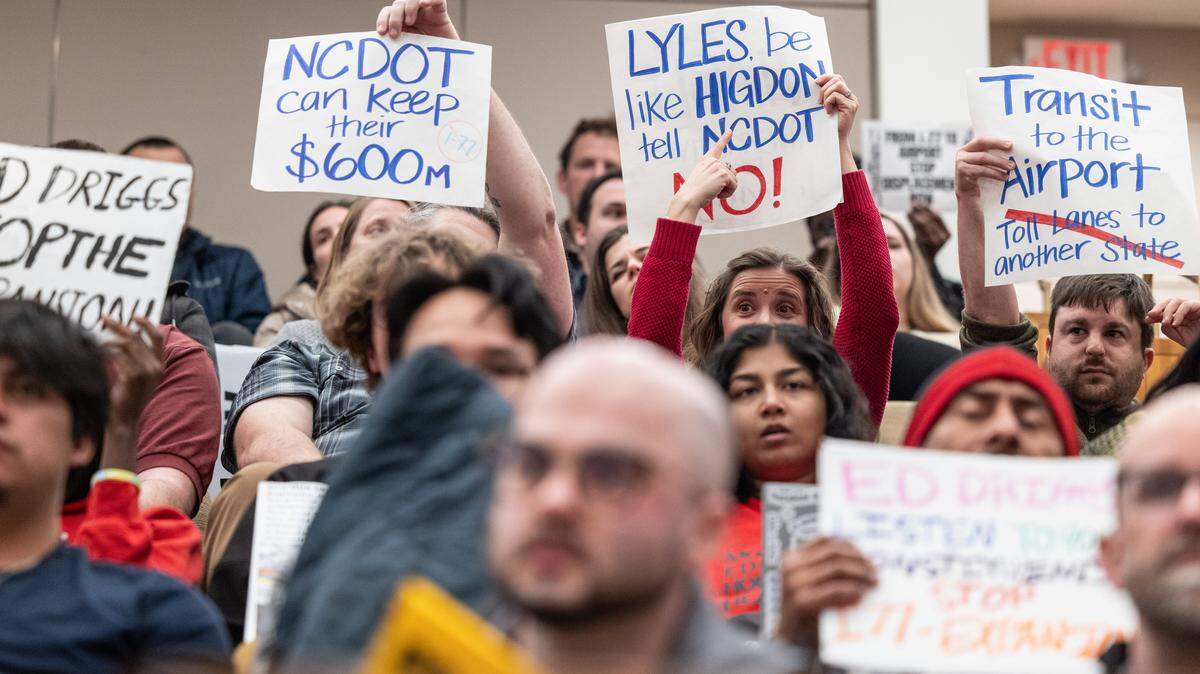
Just two weeks ago, the I-77 South toll lanes project still appeared headed toward approval after more than a decade of planning. The designs had come under fire because they would demolish homes in a historic Black neighborhood, but the N.C. Department of Transportation was quickly working to make them more palatable.
Then the politics shifted almost overnight.
A narrow Charlotte City Council majority voted last week to direct the city’s representative to withdraw support for the project. Then on Wednesday night, the Charlotte Regional Transportation Planning Organization followed through, formally rescinding support despite warnings from its own attorney that the move carried uncertain legal and financial consequences.
The full repercussions are still unclear, but the symbolism is not. Charlotte and Mecklenburg helped walk away from hundreds of millions of dollars in state funding, over the strong objections of the business community, without a clear replacement plan for one of the region’s most important corridors.
That is what makes the vote feel bigger than toll lanes. The old Charlotte would have hated parts of this project, negotiated for changes and tried to preserve the money. The new Charlotte proved willing to blow it up.
Maybe that was the right call on the merits. Maybe not. But politically, it revealed something important. The Chamber-backed, business-friendly consensus that once shaped nearly every major civic decision in Charlotte no longer has anything close to veto power.
The end of the Vi Lyles era
It is impossible to separate this vote from the sudden end of the Vi Lyles era.
Lyles’ announcement that she would step down did not create this moment, but it clearly accelerated it. Just days later, a narrow council majority moved to pull support for I-77, and Lyles did not veto it.
That absence of restraint is striking because Lyles has often represented the older Charlotte instinct. Her defeat of Jennifer Roberts in 2017 was not just a change in mayors. It was a repudiation of the more activist style Roberts came to symbolize after House Bill 2, the Keith Lamont Scott protests and the sense that City Hall had lost control of the city’s direction.
Lyles was no conservative. But she was steady, institutional and attentive to the business community in a way Charlotte voters still valued.
As recently as last year, she cast the tie-breaking vote against advancing SEIU’s airport-worker ordinance, saying the issue was “not yet ready” for the agenda. That was classic old Charlotte. Sympathetic to workers, but wary of legal risk, union pressure and anything that might threaten control of Charlotte Douglas International Airport.
The same logic should have applied to I-77. Lyles did not have to support the toll-lane plan forever. She simply could have vetoed the rushed council move and said a decision this consequential needed more time, more clarity and a real alternative.
Instead, the city’s stabilizing force stepped aside at the exact moment Charlotte needed one.
The first test of what comes next
The I-77 vote is now the first major test of the post-Lyles era, and that should worry anyone who cares about the city.
The danger here is not really about the sudden death of one flawed project. The danger is that this becomes the new pattern, with hair-trigger votes and no clear path from “no” to “now what.”
If that is where Charlotte politics goes next, Wednesday night will look much bigger in hindsight.
Heading into 2027, Charlotte can still take the old route, liberal and increasingly progressive, but still practical enough to build coalitions, protect its economic base and solve problems.
Or it can become the kind of city its critics have been warning about for years.
Contributing columnist Andrew Dunn is the publisher of the Longleaf Politics newsletter, which offers thoughtful analysis of North Carolina politics and policy from a conservative perspective. He can be reached at andrew@longleafpol.com.
This story was originally published May 21, 2026 at 3:10 PM with the headline "With I-77 vote, Charlotte is the city its critics have been warning about | Opinion."