
9 true things about gerrymandering, the Voting Rights Act and NC | Opinion
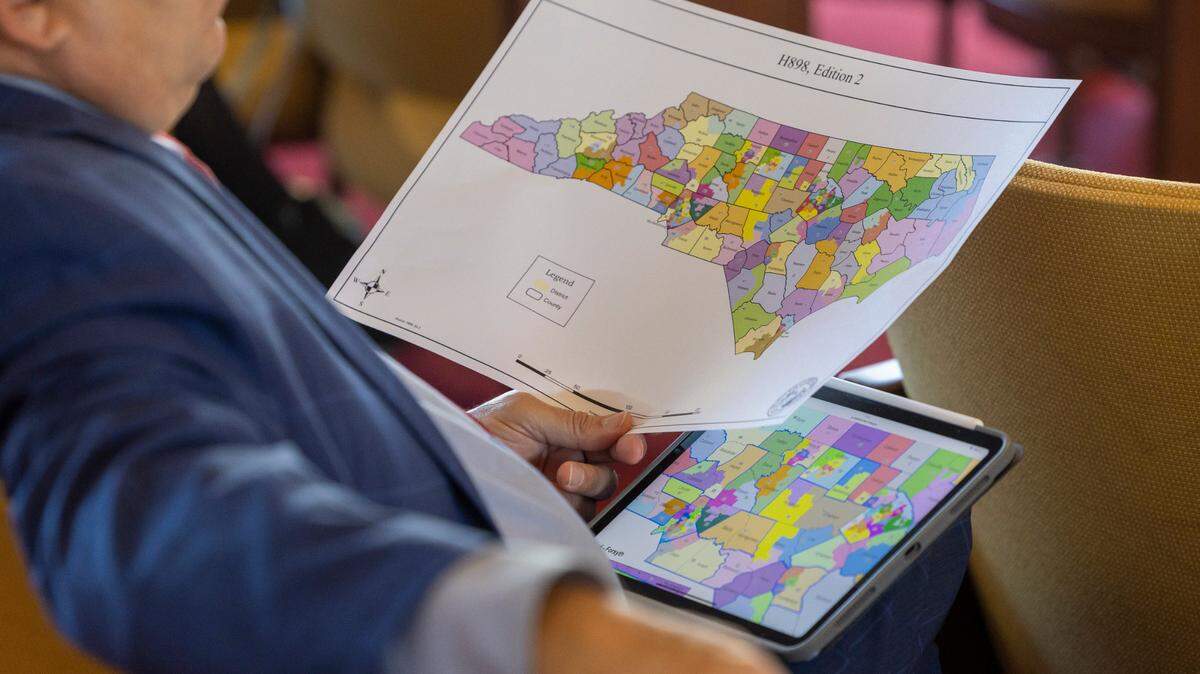
Here Are Nine True things about gerrymandering and the Voting Rights Act.
1) We learned at least 60 years ago there must be constitutional rules about redistricting. In Baker v. Carr (1962), the Tennessee legislature had refused to redistrict since 1900. (No one likes existing districts as much as incumbents.) Population growth meant that big city districts had almost 20 times the number of residents as smaller rural ones. The Supreme Court eventually held that such disproportionately sized districts deny equal protection. Electoral districts must have equal populations, one-person, one vote. And that meant after each new census, district lines had to be redrawn.
2) The Court determined, as well, that district lines constructed on the basis of race can also violate the 14th and 15th amendments. If you have a city that’s 55% white and 45% black, you can’t split up the districts so that – regardless of residential patterns — every district has a majority of white voters and every council member elected is white. Racial gerrymandering can be constitutionally problematic.
3) In Rucho v Common Cause (2019), a case from North Carolina, a 5-4 Republican majority ruled that partisan gerrymandering, no matter how extreme, cannot be challenged in the federal courts. They did that based on two assumptions that are untrue. First, that it is impossible to develop a rule saying how much partisanship is too much. And second, the framers didn’t mean to outlaw partisan gerrymandering even if it denied lots of folks’ equal political participation. The majority would never have reached that result if it didn’t believe partisan gerrymandering favored Republicans.
4) In theory, you can’t gerrymander by race, but you can by politics. That creates other problems, especially in places like North Carolina. If you have a political party that is essentially all white, and that enacts a heavily racialized legislative agenda substantively, can you really say its electoral moves are just political, not racial? Not truthfully.
5) The Voting Rights Act makes it illegal to adopt rules and practices that result in discrimination against Black citizens. In two breathtaking cases, Shelby County (2013) and the new Callais case, the Supreme Court gutted the most important provisions of the Voting Rights Act. Neither case has conceivable justification. The Reconstruction Amendments give Congress, not the courts, broad discretion to enforce their provisions. Nothing about the VRA is unconstitutional.
6) The decisions are also gigantically hypocritical. Justice Alito explained in cases like Dobbs (abortion) that he is existentially committed to originalism. The framers of the Civil War amendments repeatedly used racial classifications to help newly freed slaves achieve greater actual equality. In Callais, Alito said: Originalism? Never mind.
7) Callais adopted a theory that is even worse. In blatant violation of the statute’s text, the Court concluded you have to show intent to discriminate, not just results. Plaintiffs must show a smoking gun. Next, they ruled, when a legislature says “We’re only discriminating on political grounds, not racial ones,” judges ought to presume that’s true. So when our lawmakers tell Black Tar Heels: “We’re not crushing your rights because you’re Black, we’re crushing your rights because you’re Democrats,” that should do the trick. The political gerrymandering exception thus swallows the racial discrimination rule. Tar Heel Blacks have been handed supposedly neutral reasons for being denied equal access to the political system for centuries. This is just one more.
8) The NC Supreme Court has added insult to injury by holding that our constitution’s “free elections” clause guarantees free, but not fair, elections. Rigged elections are still free. That’s true only if you’re in on the rigging.
9) These decisions in Raleigh and in DC are designed explicitly to overcome pluralistic constitutional democracy. They are not mere mistakes.
Contributing columnist Gene Nichol is a professor of law at the University of North Carolina-Chapel Hill.