
A July 4 warning: Watch your language, UNC leaders | Opinion
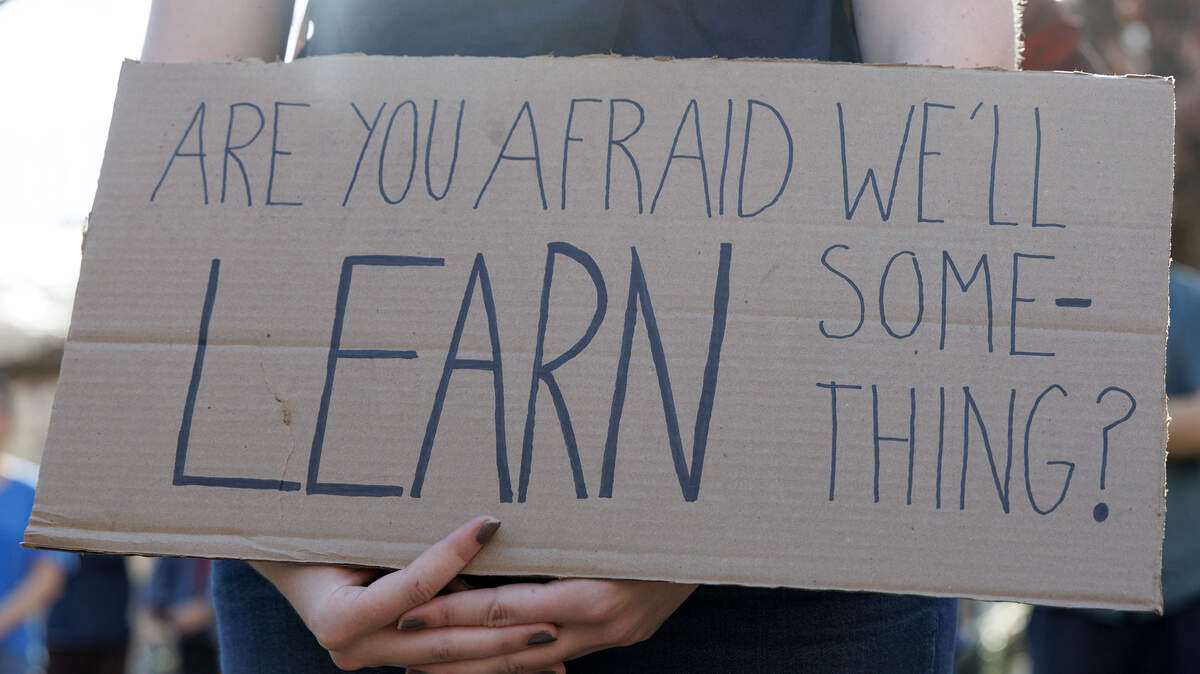
The lawyer in me was thinking I ought to put out a word of caution to UNC system administrators, staff and faculty as the Fourth of July approaches. Be careful what you say.
I know a lot of folks were stunned when, earlier this month, UNC Chapel Hill censored the athletic department for sending out a post that read “The Tar Heels Are For Everyone.” It featured a graphic of North Carolina and included “the university’s signature argyle pattern running through its center,” the News & Observer reported. The offending message was quickly removed. A university spokesman told the News & Observer: “The social post in question was taken down because it violated the UNC System’s Equality Policy, which requires neutrality on political and social issues.” At first folks thought they must be reading The Onion. Apparently not so.
UNC spokesman Andy Wallace explained: “The Board of Governors Equality Policy commits the university to institutional neutrality. Campus efforts to ensure compliance will remain a continuous process.” I’m sure they will. There’s no more effective path to university greatness than having a bunch of terrified employees. It might have been more reassuring to say – not to worry, the rule only applies to speech Republicans don’t like.
The policy states no one speaking on behalf of the university, or any employing subdivision, can address “matters of contemporary political debate” or “social policy” or “political controversies of the day.” That’s a mouthful. I hope the athletic department was well chastised.
The First Amendment broadly prefers that speech be left alone. If it is to be regulated, on the other hand, the rules must be clear, limited and precise. Prohibiting expression which concerns “matters of contemporary debate” goes, I think, as far as humanly possible in the opposite direction.
There are reasons for precision. First, it’s a good idea to let people know when they are violating the state’s rules. I can’t imagine here, just to make the point, that the athletic department thought it was doing anything wrong.
Next, the university’s rule, and the statute it echoes, present obvious dangers of what’s called a “heckler’s veto.” What makes something subject to “contemporary debate”? I suppose the answer is when somebody else starts not to like it. I’m guessing it wasn’t always controversial to say “Tar Heels For All.” It didn’t become troubling, or prohibited, until somebody started saying “I detest the statement Tar Heels For All.”
Third, vague rules like “matters of contemporary debate” pose the danger that government decision makers will apply them one way for their friends and another for their adversaries. The UNC Board of Governors, Board of Trustees, and their administrators are really excellent at this.
So what’s all this got to do with the Fourth of July?
As I recall, the fourth marks the day we adopted, in 1776, the Declaration of Independence. Is it a “matter of contemporary debate” or “political controversy”?
Last year, Donald Trump and Pete Hegseth moved to bar transgender folks from the military – declaring their service “inconsistent” with “requisite warrior ethos.” The order declared transgender Americans cannot maintain “an honorable, truthful, disciplined life.” (I’m not kidding.)
A federal district judge issued an injunction against the exclusion order. The court concluded the ban was based merely on “derogatory language targeting a vulnerable group in violation of the Fifth Amendment.” The seemingly angered jurist summarized with a flourish.
“This Court’s opinion is long, but its premise is simple. In the self-evident truth that ‘all people are created equal’, all means all. Nothing more and certainly nothing less.”
Stephen Miller called the decision “madness.”
Is it still OK for an administrator to wish an institution a Happy Fourth of July?
Contributing columnist Gene Nichol is a professor of law at the University of North Carolina-Chapel Hill.