
Professor: Here’s an alternative to UNC’s charade of ‘institutional neutrality’ | Opinion
The author is a professor at the UNC Hussman School of Journalism and Media.
It’s well past time to blow the First Amendment whistle on institutional neutrality in North Carolina.
What began as relatively benign guidance for university administrators during the Vietnam campus protests of the 1960s has now evolved into nonsensical, ridiculous dogma by UNC system administrators concerned that even a whiff of an opinion on any topic might ruffle feathers.
As a reminder, the First Amendment welcomes all kinds of feathers — ruffled, queer, straight or otherwise, and on a regular basis.
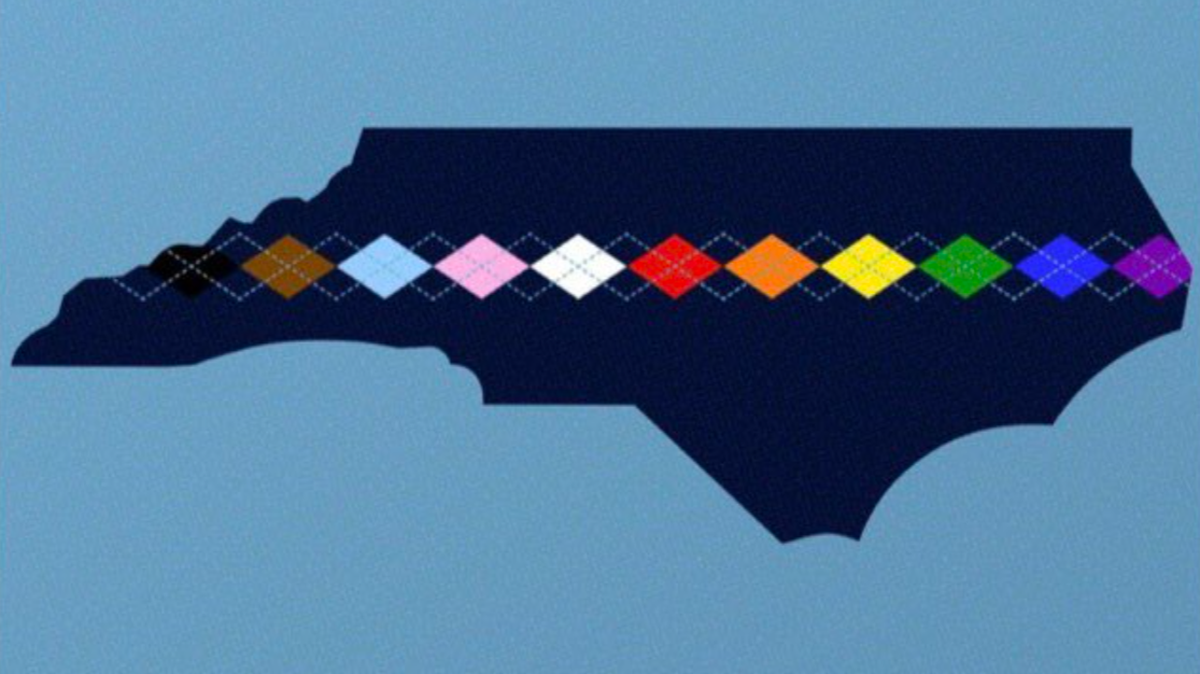
This month, after the UNC and UNCG athletic departments posted their logos with a Pride flag and “Happy Pride Month,” the post was quickly removed by administrators, citing the system’s equality policy and its commitment to institutional neutrality. As my NC State colleague David Ambaras quickly pointed out on BlueSky, the elimination of the post itself was not a neutral response, clearly reflecting if not also supporting conservative viewpoints and criticism of anything related to the LGTBQ+ community.
By reacting this way, system administrators teach our students precisely the opposite lessons of the First Amendment — that the government cannot impose content-based restrictions and arbitrary viewpoint discrimination on university staff, faculty and student speech.
In the land of Tar Heel Neutrality, though, silencing those who offend the powers in government is the goal.
For a few years now, the UNC system and other universities, many in the south, have signed onto this institutional neutrality charade, which maintains that university administrators speaking on behalf of the university “shall remain neutral, as an institution, on the political controversies of the day.”
Prepared by a faculty committee chaired by famous First Amendment scholar Harry Kalven Jr. during a period of intense Vietnam War protests, the principle argues that a university is a community dedicated to the discovery and dissemination of knowledge, rather than a corporate body designed to take political action.
But as Yale professor and former law school dean Robert Post has continuously pointed out, the report was written in a very specific context — when universities found themselves inexorably drawn into debates about the Vietnam War and the draft, which repeatedly and directly impacted students, their communities and university life on a daily basis.
A pride flag just doesn’t strike nearly the same chord.
Post challenges overly rigid conceptions of institutional neutrality and argues that universities cannot practically function as purely neutral, non-ethical actors. Universities make value-laden judgments every day. From hiring decisions and rigorous peer evaluations to managing financial resources, universities routinely exercise institutional judgment to protect their educational and research missions. In ways that can instantly trigger state interference with academic freedom the First Amendment, UNC administrators (and those in states like Texas and Ohio) now also regularly review and return syllabi that fail to carry statements that say the literature we choose for our students don’t reflect our viewpoints – clearly a government viewpoint that insists professors can’t have views. (And on the basis of what or who decides what is that viewpoint?)
When UNC administrators discourage faculty from applying for grants from grantors with “disfavored viewpoints” – namely viewpoints antithetical to the Republican state legislature – the system claims its supposedly “neutral” viewpoint. When federal grants are cancelled and the federal Office of Management and Budget threatens peer review and funding rules, hark the sound of Tar Heel administrator crickets scurrying behind the scenes to clean up the damage, change wording on grants and do their best to ride out what they hope is a temporary storm.
What kind of upside-down world have we wrought?
Institutional neutrality, as currently defined, is fast becoming one of the most insidious chilling effects to the First Amendment and academic freedom on UNC’s campuses. As a state policy, it is neither possible nor realistic. Instead, Dean Post supports Princeton University’s commitment to “institutional restraint.” Former Princeton president William Bowen in 1985 said Princeton “is a value-laden institution, and it is for that reason that I avoid using the word ‘neutrality’ to describe its aims. … But the University’s core values emanate from its character as a university. In this setting, the unrelenting, open-minded search for truth is itself the highest value; it is not to be sacrificed to anything else.”
Toward that end, a practice of institutional restraint rather than neutrality prioritizes leaving political debates to individual students and faculty – the quintessential First Amendment campus marketplace of ideas – while allowing administrators to speak out only on rare occasions involving the university’s core educational values.
What are those UNC institutional values, you ask?
Hark the sound of Tar Heel silence.
Ekstrand has been a longtime First Amendment professor in North Carolina and Ohio. She was previously a senior executive with The Associated Press in its New York City headquarters.