
Data center companies are starting to learn their lesson in North Carolina | Opinion
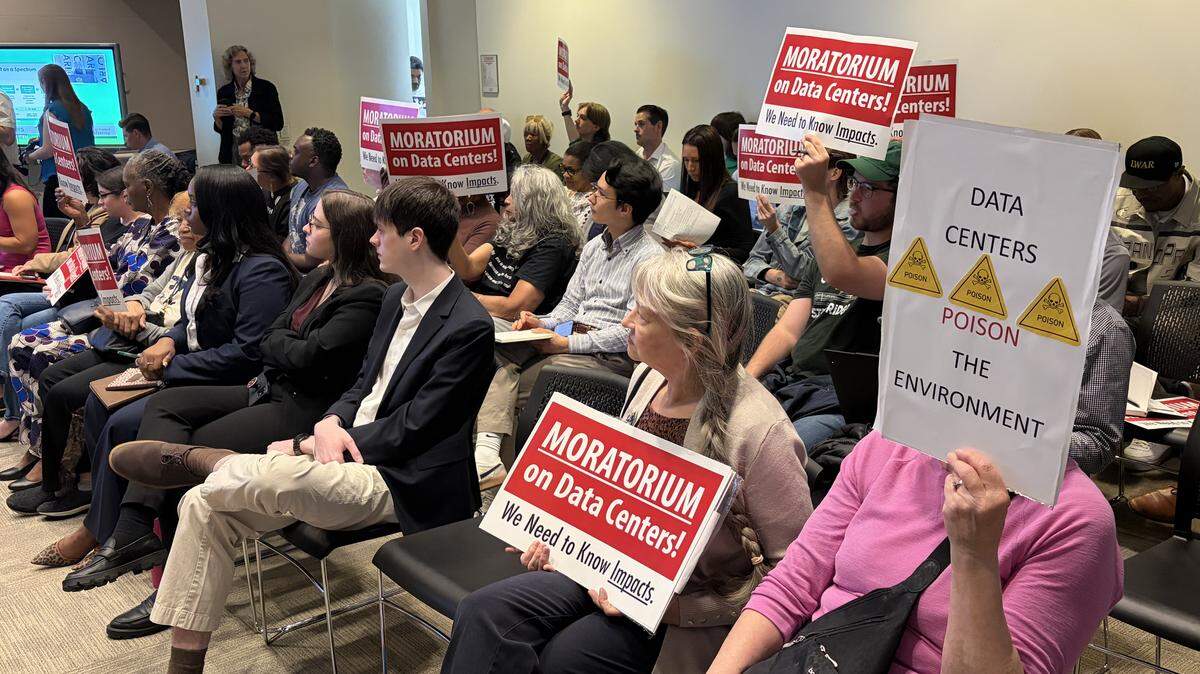
On June 8, the Charlotte City Council did something it almost never does. It told a fast-growing industry to wait. The unanimous vote for a 150-day moratorium on new data centers put Charlotte alongside dozens of Carolina communities that have hit pause in recent months, from Rowan and Cumberland counties to Holly Springs, Asheville, and across the state line in York, Chester, and Spartanburg counties.
It would be easy to read this as fear of technology or hostility to business. That reading is wrong, and it misses the real lesson.
Most of these communities are not slamming a door. They are admitting they were never handed the right tools. Town after town has discovered that its zoning code has no definition for a data center, which means no way to manage the noise, the water demand, and the enormous power load these facilities bring. Asheville’s own attorney said the city must act now so that any future project arrives under real rules. Holly Springs and Boiling Spring Lakes paused without a single proposal on the table. The moratorium is not a verdict on data centers. It is the only instrument these communities have to buy time to write the rules.
The projects that have already unraveled make the lesson plain. They did not stumble on their merits. They stumbled on conduct.
In Marion County, SC, officials approved a $2.4 billion project in January, during a winter storm, after signing non-disclosure agreements that kept residents in the dark until after the vote. The project later fell apart when the developer could not secure power for the site in time, and a community that had been shut out had no reason to help save it. In Stokes County, NC, commissioners rezoned roughly 1,845 acres along the Dan River for a hyperscale complex, overriding their own planning board and approving the change before an end user was even named. The land holds Saura tribal sites and the cemeteries of the Hairston family. A lawsuit followed, and by April the county had voided its own decision and conceded it failed to give residents proper notice. The developer must start over.
These were not anti-business communities. They were communities asked to absorb something enormous before they were allowed to understand it. Trust lost that way does not return at the permitting stage. It is gone before the application is ever filed.
Data centers are important infrastructure. They store medical records, process payments, and run the everyday apps that families and businesses depend on, and they can bring real investment to places that need it. But a community is not an obstacle to be cleared at the end of a process. It is a partner that has to live with the result for decades.
The good news is that most of this conflict was avoidable. It is avoidable when a company shows up before the vote instead of after it. It is avoidable when it states plainly what it is building, what the benefits are, and where the genuine trade-offs lie. It is avoidable when it listens in good faith and shows how it intends to be a responsible neighbor long after the ribbon is cut. In Person County, Microsoft committed publicly to pay its own way so that residents would not see higher power bills. That is what good faith looks like.
The companies now treating Carolina communities as full stakeholders will still be building when these moratoriums lift. The ones counting on the size of their check will keep starting over, in Stokes County and everywhere the same mistakes repeat.
A pause is not a no. It is a community asking to be respected. The smartest players in this industry will hear it that way.
Colton R. Overcash is the founder and managing principal of Vertex Strategies, a government relations, public affairs, and strategic advisory firm based in Charlotte. He previously served as a presidential appointee at the U.S. Department of Homeland Security and as a congressional staffer to U.S. Senator Thom Tillis and U.S. Representative Virginia Foxx.