
The Supreme Court’s horrifying gift to Donald Trump | Opinion
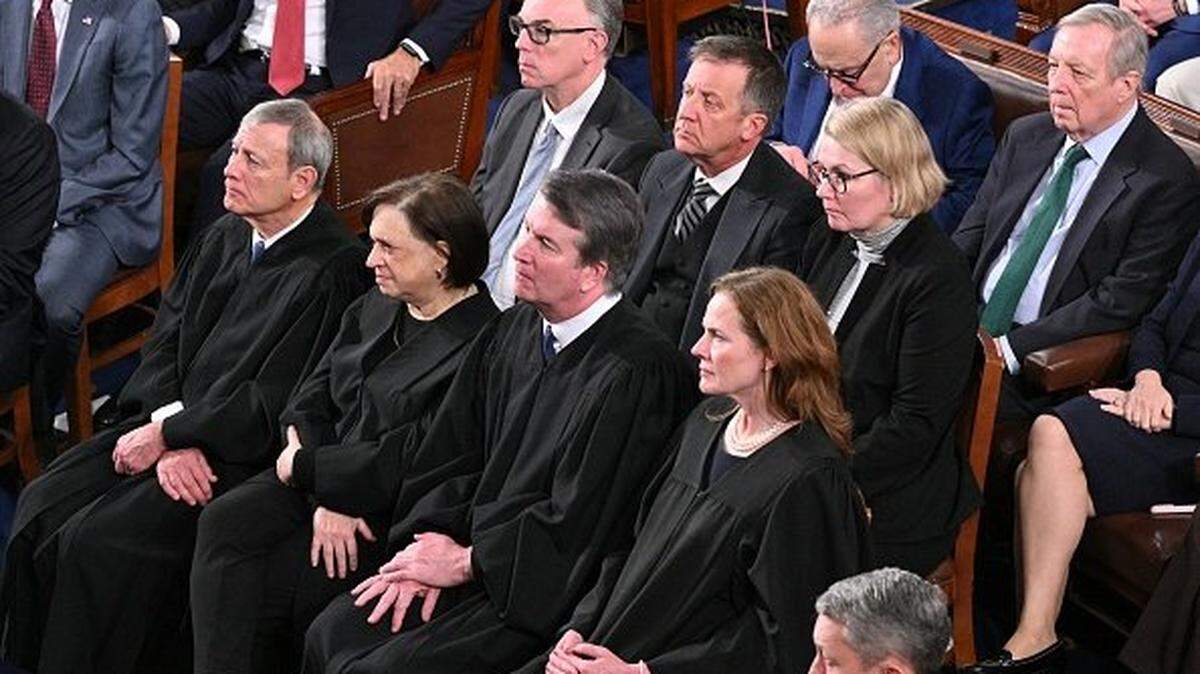
Last week the United States Supreme Court threw out decades-old limitations on presidential power; overturning well-settled constitutional constraints, in order to give Donald Trump unlimited discretion to violate federal statutory restrictions on firing independent agency officers. Nothing could have been more predictable.
By the now-familiar 6-3 partisan vote, the justices struck down a 1914 law that barred the president from removing members of the Federal Trade Commission except in cases of “inefficiency, neglect of duty, or malfeasance in office.” Trump argued that any such impediment to his unfettered power to fire executive branch employees at will violates Article II of the Constitution. The Court agreed, overruling the 91-year-old unanimous decision, in Humphrey’s Executor, that had — for almost a century — held exactly the opposite.
Unsurprisingly, there was no textual, historical, precedential or originalist basis for the new decision. Only ideology, politics, extremism and Trumpian submission supported the judgment. But the Roberts Court embraces boundless executive authority like a religion. And ditching Humphrey’s Executor assures a gigantic expansion of Donald Trump’s already seemingly inexhaustible and perilous power.
Writing for the majority, Chief Justice John Roberts declared that: “the president must have the assistance of officers he can trust. Then, and only then, can they remain accountable to the president, and the president to the people.”
It is modestly shocking for a sentence amplifying Donald Trump’s power to deploy the term “trust”. He is, of course, the least trustworthy, the most relentlessly dishonest public official in American history. He lies by habit, by disposition, by bent, by addiction. The Republican Party, under his leadership, now requires prevarication as a qualifying and dominant skill. You’d think Roberts and his crew would be sufficiently conscious to avoid using the term.
And can any person of sensibility imagine creating a new set of rules, in 2026, casting aside settled standards, in order to embolden, to inflate, to proliferate Donald Trump’s power? Really? Is this what our system of judicial constitutional review should deliver? What’s next? It is nearly impossible to imagine.
Ponder it. The president of the United States starts illegal wars on whim. He sends lawless, masked marauders to murder Americans on our city streets. He deploys the Department of Justice as a personal revenge bureau. Since federal expenditures flow through the executive branch, he feels free to extort every segment of American society – universities, law firms, the media, businesses, billionaires, non-profits, states, cities – “Give me what I want, or I’ll take everything you have.” He expends surpassing energy and resources to end democracy in the world’s greatest democracy. And, of course, he began his new term by illegally turning over the administrative state to a vile rich man with a chainsaw.
But all that, apparently, is not enough.
If you are wondering if there is something that requires American constitutional law to be this dangerous, this stupefying, this morally reprehensible – there is not.
And, as everyone knows, this is not the Roberts Court’s first trip to the plate. In July 2024, in Trump v. United States, our justices ruled — without text, history, precedent, or the working assumption of any prior American president — that our chief executive is absolutely immune from the reach of the criminal law. And that was AFTER the entire nation (including, I assume, the justices themselves) watched Trump try to overthrow the lawful government of the United States by violent insurrection.
I understand that we are now expected to forget the events of Jan. 6, 2021. But I’m pretty sure most of us can’t do it. No matter what Donald Trump and John Roberts may demand. We can’t be made to join in on the termination of the American project; even if the United States Supreme Court does so happily.
Contributing columnist Gene Nichol is a professor of law at the University of North Carolina-Chapel Hill.