
My 90 days of terror show why the WakeMed-Atrium merger is a bad deal | Opinion
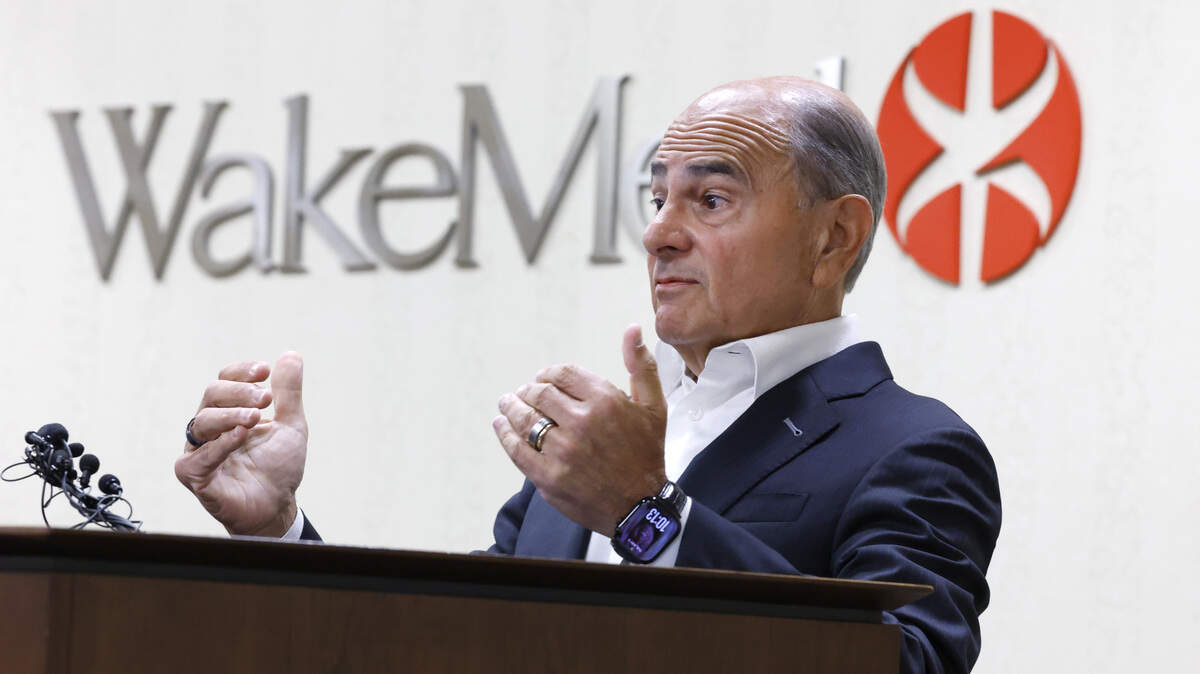
WakeMed fought for me. Now it wants to disappear into a system so large that the next patient may not be so lucky. Raleigh does not need this deal. Patients like me will pay for it.
Ten days after I learned my bladder cancer had returned, the FDA approved a drug called Anktiva that could treat it. I found out by chance, and I was desperate enough to chase it. I put the drugmaker’s representative in touch with my doctor at WakeMed, and my doctor went to work.
What came next was not Anktiva. It was a 90-day siege of paperwork. My insurer essentially said, “Not yet,” and then said it again through denials, appeals, secondary denials, and secondary appeals, each delay stacked on the last. In American health care, a denial is not a decision. It is a business model, and delay is its most profitable feature. For 90 days I did not know whether I would get the drug or whether I would be trading my bladder for a bag.
I got Anktiva. I got it because WakeMed was nimble, and because my doctor and a WakeMed administrator were relentless. They fought the denials, and they solved a second problem the denials obscured: how to actually deliver a drug that runs nearly 36K a dose and, given again and again across three years with a total cost of nearly a million dollars, without WakeMed taking a financial bath. Anktiva is administered through a hospital’s billing system rather than a clinic’s, and making the economics work inside that system, against an insurer that kept saying “not yet,” took people who understood the machinery and were determined to beat it. That is not how a bureaucracy behaves. It is how a hospital behaves when it is still small enough to move. My bladder was saved by their persistence.
I am told it is remarkable that the drug reached me just 90 days after it was approved. I believe that. But I know what those 90 days felt like, and I know what a few more might have cost. Which is why I read the news about the WakeMed-Atrium deal with a patient’s dread.
In May, WakeMed announced plans to combine with Charlotte-based Atrium Health— a deal the two systems are careful to call not a sale and not a takeover, but a “strategic combination” of nonprofits. Call it whatever softens it. Atrium is the largest health system in North Carolina, part of Advocate Health, which runs dozens of hospitals across several states. WakeMed would fold into that structure. Atrium has pledged $2B of investment in Wake County and thousands of jobs. State officials and the county commissioners who must approve the change have already pushed back hard enough to force a delay. They are right to.
Begin with what no one selling this deal wants to say out loud: WakeMed doesn’t need it. In its 2024 fiscal year the system took in about $2.3B in operating revenue and spent roughly $2.18B of it— an operating surplus near $135M, and around $176M in net income once investment returns are counted. It is the dominant hospital system in one of the fastest-growing and most prosperous regions in the country. It is not bleeding cash. It is not closing wings. It is thriving. And when UNC Health offered more — by WakeMed’s own account, choosing Atrium meant leaving roughly $3B on the table — WakeMed turned it down. A hospital that can walk away from $3B is not fighting for its life. It is shopping for power. It is an acquisition of leverage, dressed in the language of partnership.
Leverage, in this business, is measured in what a hospital can charge. Atrium can bill one patient 10K for a CT scan at 10 AM and the next patient 20K for the identical scan at 11 AM — same machine, same images, same building — because there is no posted price and no way to shop. Try that in any other industry and you are out of business by Friday. Hospitals do it because they hold something close to a local monopoly, one most patients never see.
And this is not a grievance; it’s a finding. Yale economist Zack Cooper, studying claims for tens of millions of insured Americans, has found that the price of even a standardized scan varies wildly not just between hospitals but within the same one, and that hospitals facing little competition charge roughly 15% more than those that don’t. The figure on your bill reflects not the cost of your care but the strength of the hospital’s hand. Consolidation is how that hand grows stronger.
So here is the bargain Raleigh is being offered, stated plainly: a bigger WakeMed will negotiate harder with insurers who cannot afford to exclude it, and the rates it extracts will surface in your premiums and your bills. The price in the exam room is the 90-day odyssey I survived, only slower, because everything I fought through grows more layered inside a system that answers to a corporate office in Charlotte. State leaders estimate this deal alone could raise premiums by more than a hundred dollars a year, and North Carolina has run this experiment before — Mission Health in Asheville, the public hospital in Wilmington — where prices rose and complaints followed.
Insurers have earned every ounce of the public’s contempt: rent-seekers who deny care, profit from the complexity they manufacture, and heal no one. But scorn is not diagnosis. As Cooper shows, the money in American medicine is not made where the denial letter is signed. It is made where the price is set at the hospital. Insurers and hospitals built this mess together, a cancerous tandem each feeding the other, and of the two the hospital is the greater culprit. We forgive it only because it is where life begins and ends, where we are cured and where we say goodbye. That reverence is human. It is also the cover under which the prices climb.
I got my 90 days, my drug, and my bladder. The next patient in Raleigh may not, and a hospital swallowed into a behemoth is not the one I would trust to fight the way mine did; it could just as easily lose the fight inside its own bureaucracy. For someone like me, that is not an abstraction. It is a bladder or a bag.
I am grateful to WakeMed. That is exactly why this alarms me. WakeMed does not need Atrium, and Raleigh does not need to hand its healthiest hospital more power to charge, more distance from the people it treats, and more of the bureaucracy that nearly cost me an organ. The deal is unnecessary. The ones who will pay for it are patients like me.
David L. McKenzie is a Raleigh-based attorney and bladder cancer patient under active surveillance and treatment at WakeMed Urology and WakeMed Oncology.