
Why imposing a lower NC tax cap is fiscally irresponsible
North Carolina's Republican legislative leaders have proposed a state constitutional amendment that would handcuff future legislators by capping the state income tax at 5.5 percent. It's now 5.49 percent and scheduled to drop to 5.25 in 2019. Previous to a flat income tax approved in 2013, North Carolina had a progressive income tax with three tiers of 6, 7 and 7.75 percent.
There's no reason for a new cap on the income tax. It's already capped by the state Constitution at 10 percent. Of 41 states that levy a broad-based personal income tax, North Carolina is one of only four with a constitutional cap.
There are plenty of reasons not to lower the cap. It would eliminate the ability of future legislators to raise the income tax in times of emergencies, or when the public supports a major state initiative, such as a big boost in school funding or a massive infrastructure improvement.
Reducing the current cap by half inevitably will lead to increases in other taxes and levies. Future legislatures that agree on a need for more state revenue would have to look beyond the income tax and raise the sales tax or increase fees. Meanwhile, local governments starved of state support will raise property taxes and fees.
That pattern is already here. State fees have gone up, the sales tax has been expanded and at least 50 counties have raised property taxes since 2013. The cap's backers would make this regressive increase in taxes and fees a permanent part of how the state funds its services.
Bond rating agencies don't like tax caps and lowering North Carolina's could hurt the state's triple-A bond rating; it is one of 14 states with an AAA credit rating from Standard and Poor’s.
Many business leaders have been quiet about lowering the cap. Some have criticized it. The N.C. Business Council, a group representing small businesses, is opposed to a lower cap because it would protect big businesses and wealthy taxpayers at the expense of public schools.
Some on the big business side oppose it, too. Bruce Nelson, former CEO of Office Depot, said in a recent conference call, “In my opinion, imposing a constitutional tax cap is fiscally irresponsible, economically unsound and politically motivated by a North Carolina legislative body more concerned over the prospect of losing their super-majority in the next election cycle.”
Beyond the burdens it would impose on those less able to pay, capping the income tax is undemocratic. Future North Carolinians should be free to vote for or against candidates who would increase the income tax. But under this amendment, the dead hand of a past legislature would continue to steer the state along a course of regressive taxation that hurts those with the least ability to pay.
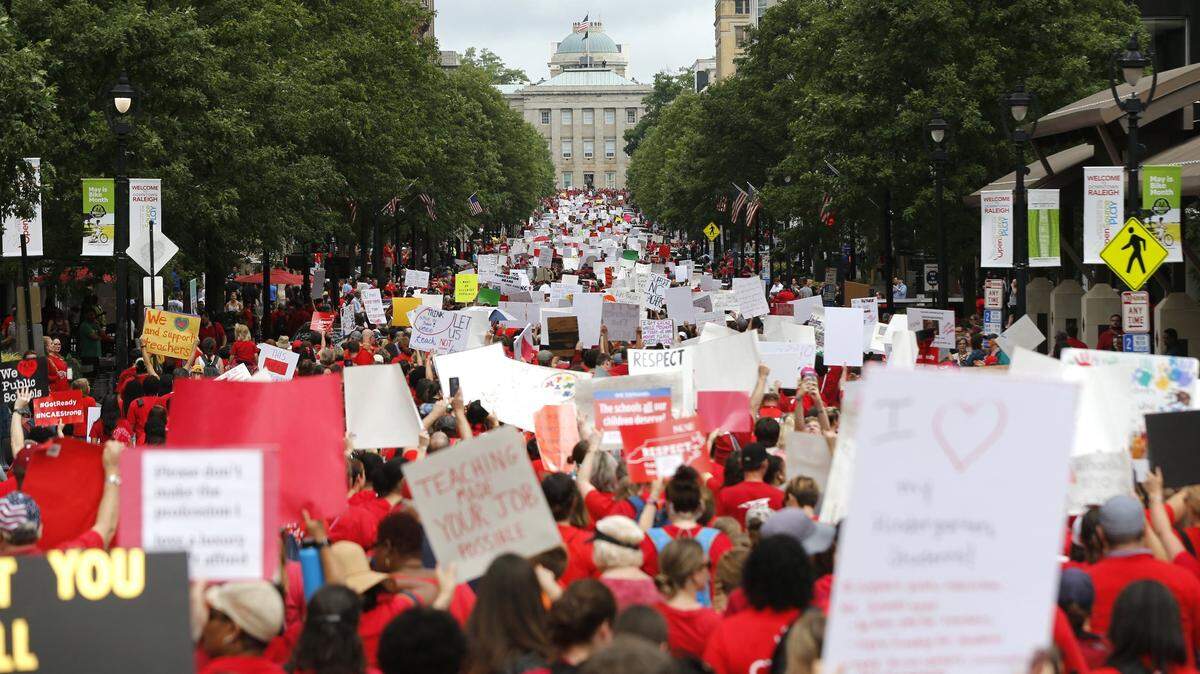
North Carolinians are growing weary of a state run on the cheap to support tax cuts that mostly benefit large corporations and the wealthy. Some 20,000 teachers and their supporters marched through Raleigh last month to demand more spending on public schools. State prisons are understaffed and growing more dangerous. Environmental protection and social services lack adequate funding.
Republicans have controlled the legislature since 2011. They've funded government and set tax rates their way. In November, voters will decide whether they want to stay that course or elect legislators who want the state to do more. What voters want and what the state needs are changeable and the legislature's options on taxing and spending should be flexible.
That's the way democracy works, or should.
This story was originally published June 25, 2018 at 11:49 AM with the headline "Why imposing a lower NC tax cap is fiscally irresponsible."