
Earth Day and how quality of life became a city necessity
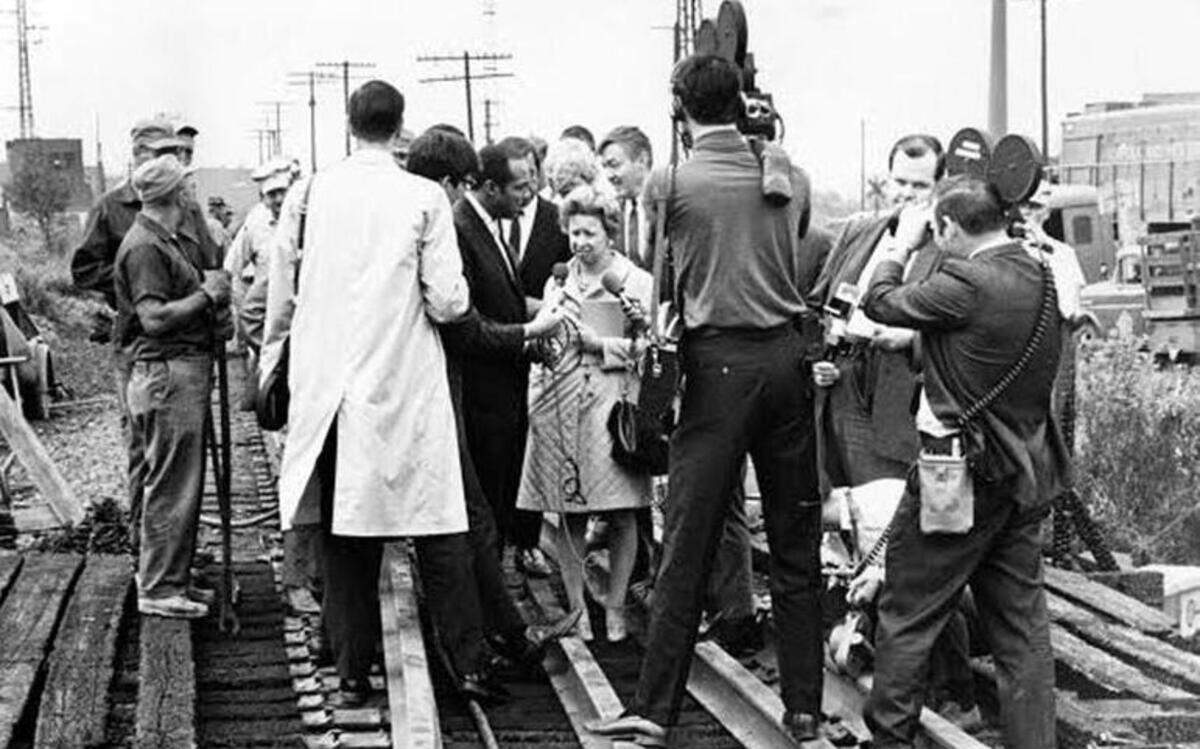
On the first Earth Day in April 1970, America’s cities were in trouble. They were dirty, polluted, deteriorating places, wracked by riots and crime and losing their middle class residents in alarming numbers.
In Cleveland, Ohio, a year earlier, the Cuyahoga River had caught fire, an event that became a national symbol of how badly things had gone wrong in a prosperous country. It became known in part because Cleveland’s mayor at the time, Carl B. Stokes, used the fire to seek state and federal help to control pollution and build sewer systems.
It was part of a broader effort by Stokes to make Cleveland a city where people wanted to live, not one in which they had to live. While the environmental movement can claim many successes since that first Earth Day, none may be more important than the change in living conditions in America’s cities, where quality of life is now considered a requirement for a strong economy.
Stokes recognized that the future of even a city like Cleveland, where many still worked making things like steel, chemicals and car parts, was in a service economy.
“Cleveland is still strongly involved and tied to the manufacturing era and is only just beginning to understand and grasp the potentials of the post-manufacturing period,” he said during a speech in June 1968, a year before the fire.
He referred to the post-industrial period as “the Human Resources Era,” to emphasize that people would be the center of the economy. The term never caught on, but the idea did.
It wasn’t just the economy that shifted. Government did, too. You can see it in places like the Triangle, Austin and Seattle, where educated, mobile workers live by choice and where local governments work to provide a quality of life that will keep them there, with safe streets and good parks, recreational facilities and schools. Today, effective local governments serve their citizens, not just business and industry, the way they did decades ago.
Workers today would never tolerate the conditions that seemed inevitable
The Cuyahoga River had been burning from time to time since the 1860s, and the air was thick with smoke from steel mills and refineries, and still Cleveland thrived, becoming the fifth-largest city in the country in 1920, with nearly 800,000 residents.
But that had begun to change by the 1960s. A new post-war affluence, combined with the automobile and new highways, made it possible for people to live outside the city even if they made their living in it. Those increasingly left behind were too poor to find homes in the suburbs or were prevented from doing so because of race.
As the first black mayor of a major American city, Stokes worked to reverse this decline, to improve conditions within his city and to argue for more regional approach to problems like pollution. It’s been a long struggle for industrial cities like Cleveland, one that continues today.
But the tone Stokes and other city leaders set in the 1960s and 1970s changed the fortunes of cities everywhere, including ones like Raleigh that didn’t have to make such a painful transition away from manufacturing.
The 1969 fire on the Cuyahoga River turned out to be the last one. So while on Earth Day the fire is often remembered as a milestone of how bad things had gotten in America’s cities, it should also serve as a marker of how much they have improved.
David Stradling, professor of history at the University of Cincinnati, and Richard Stradling, The N&O’s deputy metro editor, are authors of “Where the River Burned: Carl Stokes and the Struggle to Save Cleveland” from Cornell University Press.
This story was originally published April 21, 2015 at 12:59 PM with the headline "Earth Day and how quality of life became a city necessity."