
In Slovakia, a journalist is slain, but journalism will live
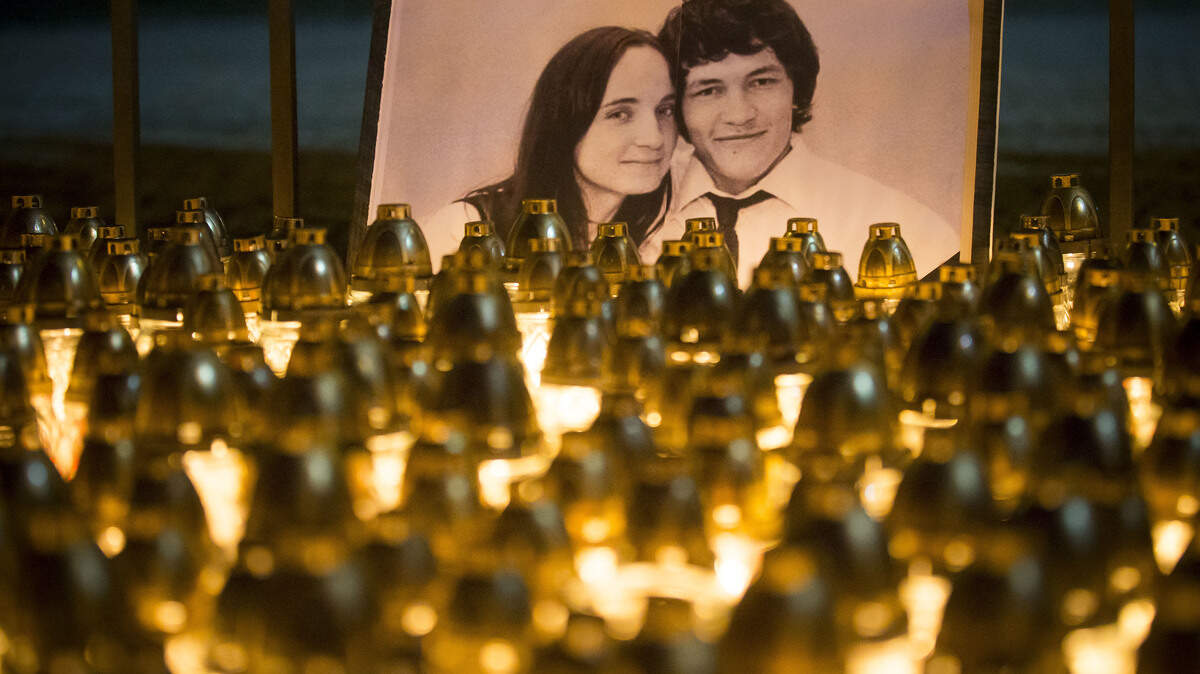
I was in Slovakia for a few days earlier this month, visiting friends and former students from my time there in 2016 as a Fulbright professor. I taught at the University of Constantine the Philosopher (known as "UKF") in Nitra, a small city in the western part of the country.
My academic assignment was in the department of British and American studies in the university's faculty of arts, but I knew people in other departments, including journalism, which is my field.
No matter what department or academic area was involved, the university, and indeed the city of Nitra and all of Slovakia, were united in their horror and disgust at the assassination in late February of investigative journalist Jan Kuciak, only 27 years old, and his fiancée, Martina Kusnirova.
This is a Slovak national crisis, but it was even more so in Nitra, because both victims were graduates of UKF. I met several people acquainted with Kuciak, who was scheduled to lecture in the journalism department shortly after his death.
Many Slovaks have a jaundiced take on their government, aware that corruption may lie just under the surface and knowing that government consists of a swirling mix of political alliances and coalitions that change from one election to the next.
Even so, the news that Prime Minister Robert Fico resigned was unexpected, as politicians there tend to hang on tenaciously to their positions. The resignation of the interior minister was also surprising, but it may clear the way for a professional investigation of the murders.
Kuciak, who worked for akuality.sk, a news site, was investigating corruption allegations that linked Fico and his allies to organized crime figures in the EU. Fico, for his part, pledged a no-holds-barred probe of the killings but then—like some other leaders in Central Europe—invoked the name of billionaire American activist George Soros as the source of efforts to destabilize his government.
Not many Americans know much about Slovakia, but these murders have pushed it into the news. It is a small country, with about 5 million residents, and is a full member of the EU and the euro zone. It emerged from Czechoslovakia in 1993, on the heels of the 1989 Velvet Revolution that ended communism. Slovakia and the Czech Republic share that history but are clearly two different countries.
I have familiarity with both, but the fact of the assassinations—and that is what they were—added a shocking note to my recent visit. The only working journalist I have known who died in the line of work was Getty Images photographer Chris Hondros, a friend of mine from N.C. State days. But in the aftermath of the deaths of these two young people, it seemed that everyone in Slovakia were their friends.
Protests brought tens of thousands of protesters into the streets, and banners, shrines and memorials materialized overnight. In Nitra, the protests were especially heartfelt because the two victims went to university there. It was especially hard for me to grasp the cruelty of the killings,
because as a journalist myself I see only good in the work of reporters and editors.
What can it mean when these deaths happen? It’s almost a sure thing that the perpetrators pulled the trigger hoping to frighten other journalists. But knowing young journalists as I do, and I have taught hundreds of them, I am sure that the murders would have the contrary result. The violence against a reporter will only encourage more incisive reporting into what may be links between corrupt individuals and organizations and the power in Slovakia’s government. Perhaps Fico’s resignation is proof of that.
Generally speaking, American reporters do not have to fear this kind of violence. Probably the most prominent case was the 1976 car bomb that killed Arizona Republic reporter Don Bolles. His car, on display on the Newseum in Washington, D.C., is a stark reminder of what can happen.
Two years ago during my Fulbright, and earlier this month during my visit, my students had a somewhat uneasy response whenever Robert Fico’s name came up. I don’t think they were afraid of anything, but I do think they were aware that the country’s leadership was not the democratic ideal it may have seemed. People did vote in free elections, but if a thug with a pistol is lurking in the shadows to suppress dissent, just how free were they?
There is no question that good journalism casts an important light on government. We see daily how important it is in the United States. It may be even more important in places like Slovakia, where traditions of democracy are still in their infancy and it falls to the young and idealistic to probe for corruption.
There is no certainty that the Slovak authorities will solve these terrible crimes, but I hope that the widespread protests and pointed criticism will keep heat on the government and encourage a steady pathway to untainted civil society in Slovakia.
This story was originally published March 16, 2018 at 11:51 AM with the headline "In Slovakia, a journalist is slain, but journalism will live."