
End of energy tax credits simply bad business for NC
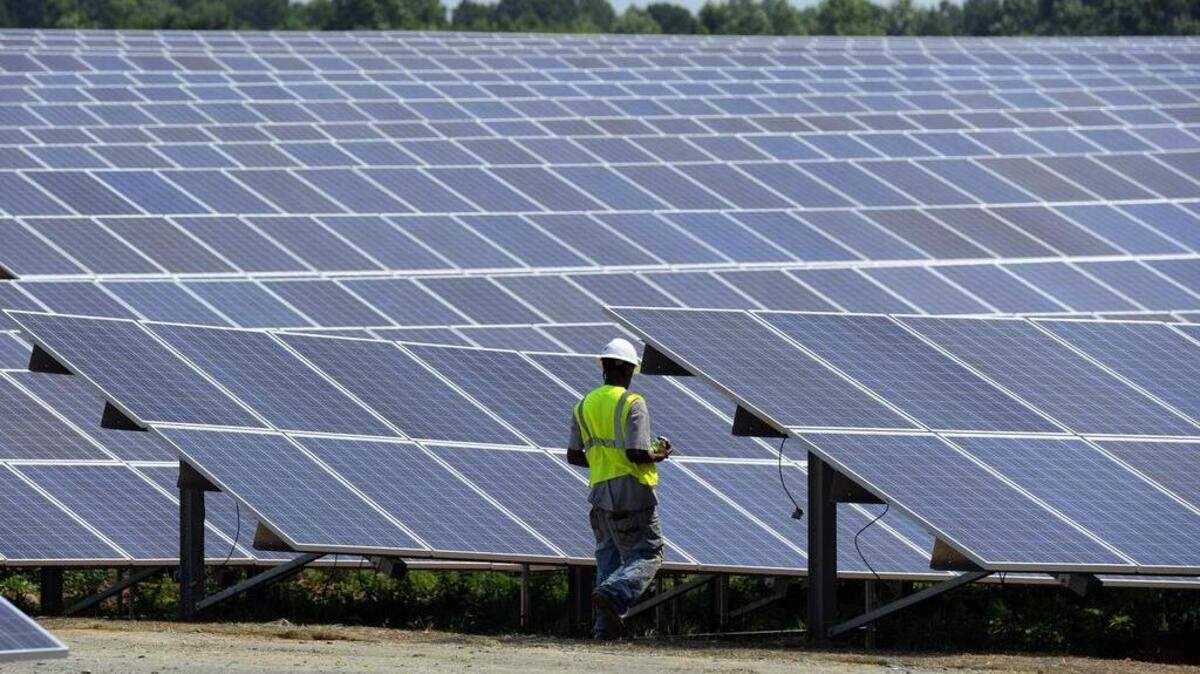
As a local economic developer, I’m troubled by the N.C. General Assembly’s refusal to extend the Renewable Energy Investment Tax Credit in its proposed budget. I hope legislators will reconsider before they adjourn.
Every dollar claimed in renewable energy tax credits generates $1.54 in local and state tax revenues. Ignoring a strong return on investment is just bad business.
North Carolina needs economic and business opportunities in all 100 counties. For generations, farm families depended on tobacco as a high profit margin crop per acre – an all but erased income. Now, two things hold us back from new, viable, economic opportunities: state lawmakers aiming their sights at renewable energy and ourselves.
While many North Carolinians continue the tradition of owning and operating farmland, some have had to rent their land to other farmers to supplement their income. Others have sold it for housing or commercial development. That additional rental revenue is often barely enough to pay their property taxes. However, when owners use some land for solar power generation, they often find their land income increasing by 500 percent or more.
The changing dynamics within the farming business create many challenges to achieve consistent profitability. Farmers who lease a portion of their acreage to solar projects share that they can now remain in farming with the new, steady stream of solar lease payments.
As an economic developer, I am tasked with bringing jobs and investment to my home county. In Columbus County, we began working to develop solar farms over three years ago. We now have nearly a dozen solar farms either online or in construction. And another dozen are in the planning or permitting phase.
Neighboring counties are seeing major renewable energy investments, which means more jobs and income. In Cumberland and Bladen counties, renewable energy projects are seeing investments of $6.3 million and $19.8 million respectively. Robeson County has realized $170.6 million in investments, more than any other county in North Carolina.
Some people have expressed concerns about the farm land being turned into solar farms. Adding solar to the land does not threaten agriculture. Instead, it protects our agricultural heritage by adding value to the land and providing cash flow to our farmers. I have done the math. In total, the addition of solar to our rural farmland is covering less than 0.2 percent of the land in Columbus County. In other rural counties, even less.
In fact, clean energy plays an important role in attracting companies, jobs, investments and new tax revenues to rural counties like ours.
On average, each large-scale solar project creates 100 to 120 construction jobs lasting four to six months. Those workers buy gasoline and eat at local restaurants. In addition to the increase in county tax revenues from the land housing solar farms, when our current and planned solar projects are complete, the personal property tax revenues alone will exceed $500,000 annually.
I believe, in time, North Carolina will see even more benefits from renewable energy efforts. Solar and biomass projects are made possible by our state policies, including the Renewable Energy Portfolio Standard (REPS) and the Renewable Energy Investment Tax Credit – and these policies should continue.
Our state has become a leader in clean energy. The business case for remaining a leader is strong. Ignoring a more than 50 percent return on investment due to N.C.’s Renewable Energy Investment Tax Credit is simply bad business.
Gary A. Lanier, Ed.D., is director of the Columbus County Economic Development Commission and Columbus County Planning Department.
This story was originally published September 16, 2015 at 5:04 PM with the headline "End of energy tax credits simply bad business for NC."