
Fixing what’s broken in big-time college sports
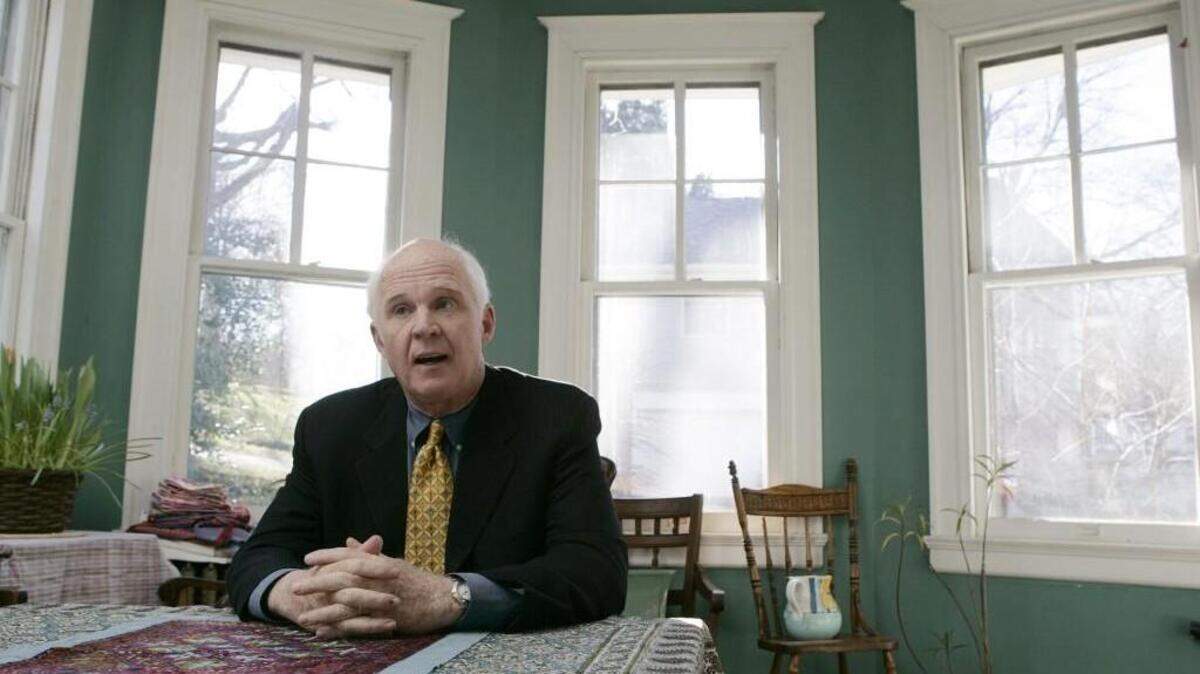
Taylor Branch, the author and historian, came from Atlanta in the mid-1960s to attend the University of North Carolina at Chapel Hill on a Morehead Scholarship. He remembers being struck by how strongly the campus supported UNC men’s basketball. He quickly caught the fever and has it still. He lives in Baltimore now, but even from there he’s worried about how UNC point guard Joel Berry’s broken hand could affect the Tar Heels this season.
That Branch is still a fan is a surprise given that he was also the author of a 14,000-word Atlantic Monthly cover story in 2011 titled “The Shame of College Sports.” The esteemed sports writer, the late Frank Deford, said, “It may well be the most important article ever written about college sports.”
The article has put Branch in the thankless role of criticizing the hypocrisy and injustices of college sports. His article focused on the inequity of sports that generate billions of dollars off of unpaid athletes. He wrote: “The tragedy at the heart of college sports is not that some college athletes are getting paid, but that more of them are not.”
The News & Observer’s next Community Voices event will look at such issues in a Nov. 15 forum titled: “How to fix what’s broken in big-time college sports.” I invited Branch to serve on the forum’s panel, but he is committed to be elsewhere. Nonetheless, the writer who won the Pulitzer Prize for “America in the King Years,” a historical trilogy on Martin Luther King Jr., is still eager to discuss the problems in college sports, including his alma mater’s troubles with athletes taking fake classes.
Branch is sympathetic to the goals of those who would reform college sports and reduce its commercialism, but he said such efforts are doomed if they do not address the need to fairly compensate athletes. Before he began research for his Atlantic article, Branch went to one of college sports’ most devoted, and perhaps most frustrated, reformers: former UNC President Bill Friday, a founding co-chairman of the Knight Commission on Intercollegiate Athletics.
Friday urged Branch to go forward with his project. “He said, ‘Taylor, you’ve got to take the university back from these commercial interests and give it to Socrates, to whom it belongs.’ But that is not realistic. I told him, ‘You can’t let your desire to drain the money out of it keep you from being fair to the athletes while the money is still there.’ ”
Branch said the NCAA is not a governing body of college sports so much as it is a protector of an unfair arrangement. Its rules, he said, are formed “under the rubric of what is dirty about college sports is when money leaks to athletes.” In fact, he said, what’s dirty is that the money doesn’t flow to athletes. He noted that many college students are also employees, but athletes are barred from earning.
“There are 20 million undergraduates and 14 million have jobs. Athletes are the only ones whose income is regulated and largely confiscated,” he said. “As long as that goes on, college sports are going to be under a cloud because they’re stealing money from the athletes and not educating them.”
That the only allowable form of compensation – a valuable education – is often denied took our conversation to UNC’s fake classes. Branch said the decision by the NCAA not to impose penalties because it doesn’t have jurisdiction over academics was “an extremely lame retreat.” But he said the episode has had the beneficial effect of exploding the myth of the NCAA as guardian of the “student-athlete” ideal.
“One good thing to come out of Carolina is people should stop saying it’s the NCAA’s job to make sure the athletes get an education,” he said. “The schools are responsible for what happens in the classroom. If they are going to corrupt their academics for the benefit of athletics, they can’t foist it off on the NCAA, and the NCAA can’t say it’s trying to get kids an education.”
Branch will be missed at the forum, but the event will still feature a strong panel of other voices. They are: Amy Perko, CEO of the Knight Commission on Intercollegiate Athletics and a former basketball All-America at Wake Forest University; Richard Southall, a University of South Carolina professor who teaches sports ethics and has testified in court and before Congress on the rights of student-athletes; Robert Orr, a former N.C. Supreme Court associate justice who filed a lawsuit against the NCAA on behalf of athletes who have been denied a true education; and Dan Kane, the N&O reporter whose investigation revealed the fake classes at UNC.
The forum will be held at 7 p.m. Wednesday, Nov. 15 at the N.C. Museum of History in Raleigh. It is free and open to the public, but please register in advance under under Community Voices at eventbrite.com.
Barnett: 919-829-4512, or nbarnett@ newsobserver.com
This story was originally published November 11, 2017 at 9:30 AM with the headline "Fixing what’s broken in big-time college sports."