
Hog farm verdict raises the price of defiance
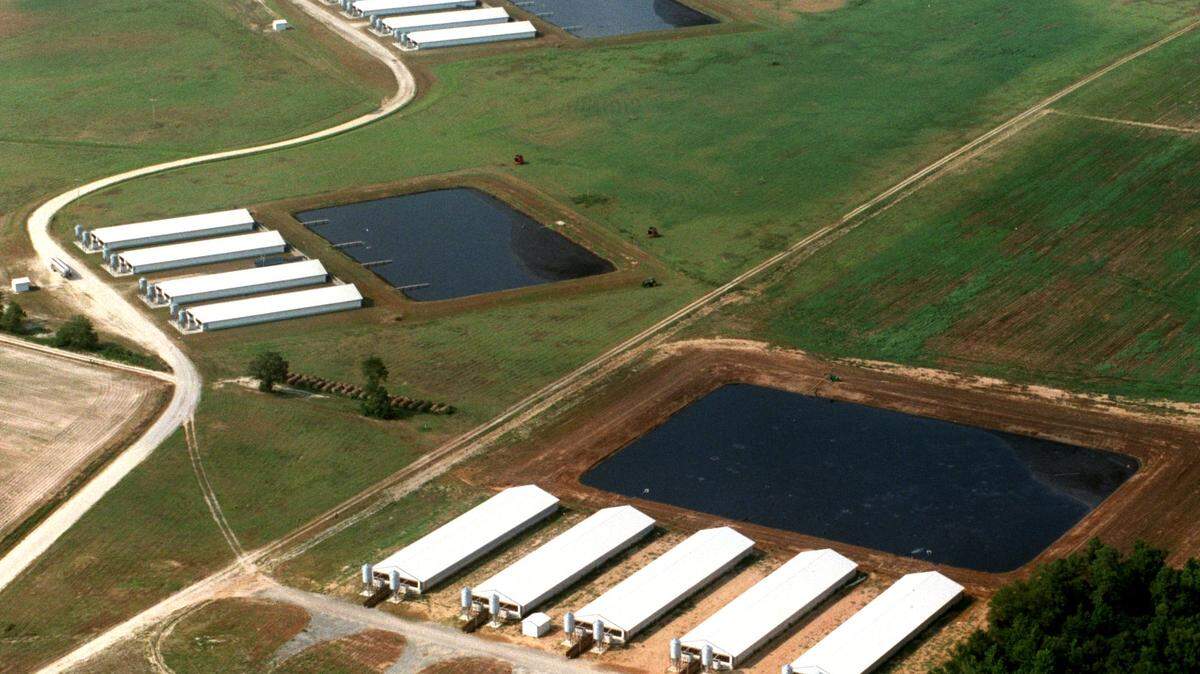
Hog farmers joke that the odor that sometimes wafts from their hog operations is a welcome one. “It’s the smell of money,” they say.
After Friday, that carefree humor is gone. The odor is still the smell of money. But it’s the smell of massive jury awards going to neighbors of industrialized hog farms. They’re being compensated for enduring the stench, the swarms of flies, the buzzards, the rumbling trucks stuffed with hogs alive and dead, and the indifference of a huge corporation.
About 500 neighbors filed 26 nuisance suits against Smithfield Foods and its pork subdivision, formerly named Murphy-Brown, for how the company oversees the raising of its hogs by contract farmers across eastern North Carolina. The company lost the first and second trials, both in federal court in Raleigh. But a total of $75 million awarded to the plaintiffs was sharply reduced by a state law that limits punitive damages to no more than three times compensatory damages.
Protected by that limit, Smithfield, based in Virginia but Chinese owned, came back for a third trial. Its lawyers continued with the same defense. They said living next to a farm with thousands of hogs confined to hog houses with the hog waste filling lagoons and being being sprayed over fields did not diminish the quality of the neighbors’ lives or harm the environment.
The six plaintiffs who live along Piney Woods Road near Greenwood Farms in Pender County made the same complaints as earlier plaintiffs. They testified to how the odor made it uncomfortable to be outdoors and embarrassing to have visitors.
But this time the attorney for the plaintiffs, Michael Kaeske, made it clear to the jurors that Smithfield wouldn’t hear them unless they spoke at a very high volume in the language of money. In his closing argument, he said, “Speak in the dollars that they understand.”
Kaeske said Smithfield is “not going to make a change to stop the odor until someone makes them stop.”
“Punishment is often meted out based on whether there is any remorse,” he said, but he said Smithfield has dismissed the neighbors’ complaints as “manufactured.” He said, “That defiance has to stop.”
After a brief deliberation, the jury came back Friday morning and awarded the plaintiffs $473.5 million in damages — including $23 million in compensatory damages.
For the plaintiffs, it was an impressive victory. But it’s hardly a decisive one. Not only does Smithfield Foods have deep resources — it’s a $15 billion company and the world’s largest hog producer — it has powerful allies.
As the verdict was announced, U.S. Sen. Thom Tillis and Rep. David Rouzer, U.S. House Agriculture Committee Chairman Mike Conaway of Texas, and North Carolina Agriculture Commissioner Steve Troxler were a few miles away at the State Fairgrounds leading a meeting on how to respond to such suits.
“Today’s nuisance lawsuits that are destroying livelihoods and communities in North Carolina are the tip of the iceberg for what is to come absent a well-informed public and good public policy,” Rouzer said in a statement.
The General Assembly did its part this year to shield the hog industry from accountability by passing legislation that will make it harder for neighbors to file such nuisance suits.
Republican politicians reflexively aligning with the hog industry and other polluters is the opposite of what they should be doing. Instead of denouncing the plaintiffs’ lawyers as “ambulance chasers” and doubting the veracity of the neighbors’ sworn testimony, they should welcome how these lawsuits have exposed, or rather re-exposed, a long-running problem in eastern North Carolina.
The politicians claim they’re standing up for “family farmers,” but these factory livestock operations are run by giant corporations that have largely replaced the family farmer. And this isn’t really about farming. It’s about polluting, not only the air that their neighbors breathe, but the wider natural environment and, as the State Fairgrounds meeting and the legislature’s action attest, the political environment.
Barnett: 919-829-4512, nbarnett@newsobserver.com
This story was originally published August 3, 2018 at 6:07 PM.