‘Hayti Reborn’ members protest Durham Housing Authority’s plan for Fayette Place
Last month, the Durham Housing Authority board approved $470 million in redevelopment plans for three properties, including the long-vacant Fayette Place site in Durham’s historic Hayti community.
Now, members of that community are asking DHA to rescind those plans and reconsider a proposal it rejected: one named Hayti Reborn that reimagined Fayette Place as a future hub for Black business and equity research.
Hayti Reborn was one of the five proposals submitted for Fayette Place in September 2021. It is led by Henry McKoy, a professor and director of entrepreneurship at the N.C. Central University School of Business, who signed a written protest submitted to DHA on Friday.
DHA signed purchase agreement
In his letter, McKoy argues that the proposal DHA selected does not fulfill a clause in the agreement the authority signed when it purchased Fayette Place from a Philadelphia-based developer in 2017 through a city-funded grant.
“Though DHA held a prior community conversation around Fayette Place some years ago, and has stated that the community will get a chance to offer feedback on the project chosen during RFP No. 21-006, the community does not feel this satisfies the original agreement,” he wrote.
DHA held a virtual community briefing for Fayette Place on July 15, 2021, about a month after the call for proposals opened according to a timeline in DHA’s request for proposals report. The briefing was actually held on July 29. Prior to that, on July 23, 2018, DHA and the city hosted a public workshop to discuss Fayette Place and Southside Phase III sites at the Durham County Social Services Building. According to the DHA report, 95 people participated.
Hilda Smith, who grew up and lived in Hayti from 1956 to 1998 and is considered a “Hayti elder,” doesn’t think those isolated meetings were enough to get a real sense of the community’s wants and needs. She says DHA should have made a greater effort to continuously engage with the community before approving a proposal.
“All you have to do is use social media, newspaper, flyers in the grocery stores, there’s a way you know, to get in touch with people if you want community input,” she said.
But what bothers Smith most of all is that DHA’s plan doesn’t prioritize the local Black community and ways it can build generational wealth.
“The rebuilding and revitalization of Fayette Place should be an opportunity for ownership, which is more than just throwing up some apartments,” she said. “Having something to hold on to, to say that it’s yours, your businesses... The ability to own something, even if it’s going to be apartments so that you have some type of co-ownership.”
Similarly, Melvin Speight says he was upset when DHA announced it had approved a development plan last month. He says the community didn’t want housing “like the projects.”
“We really want to have something better for the community. That it’s something that the community wants, it helps to develop the community, it brings wealth to the community,” he said.
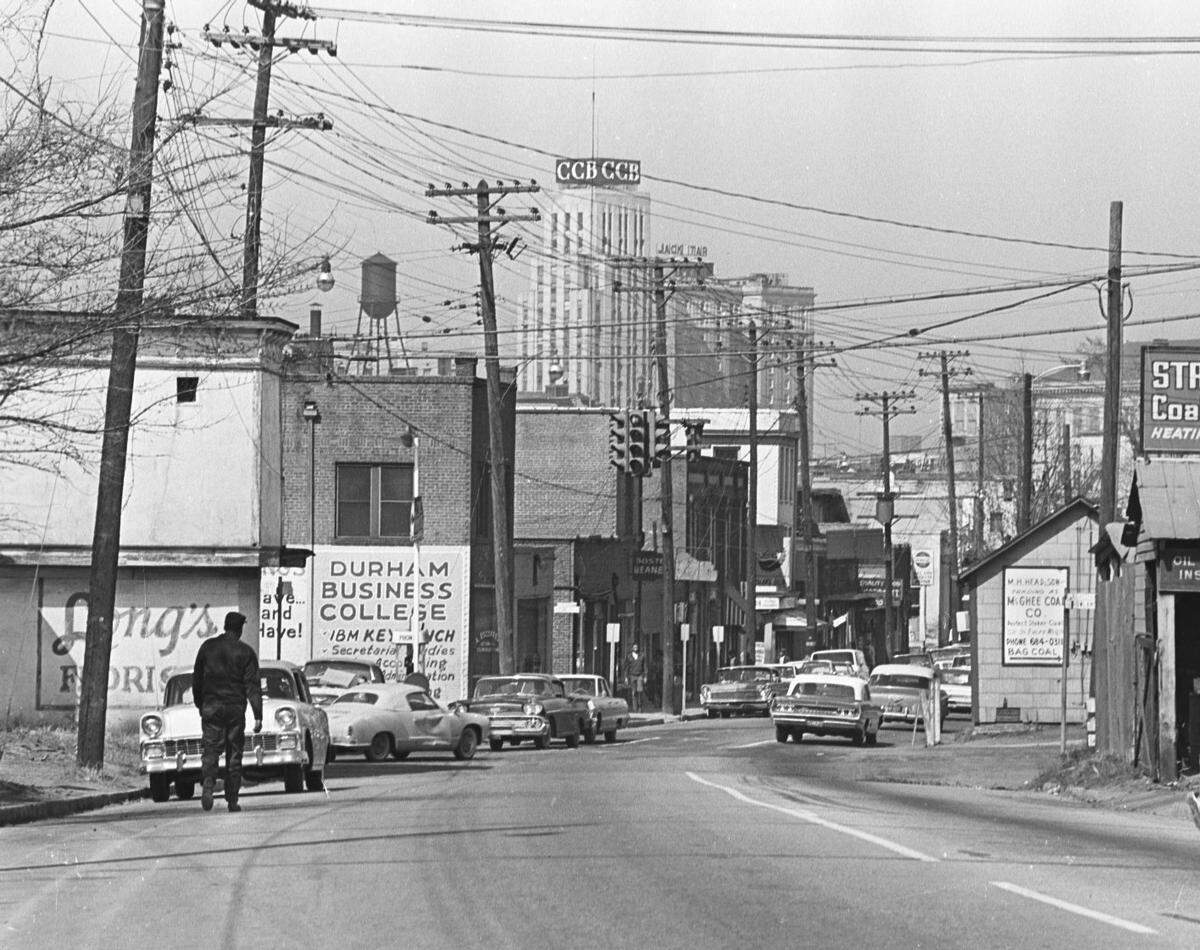
Speight’s father was the owner of Speight’s Service Station for more than 30 years at the intersection of Fayetteville and Pettigrew streets in Hayti. After urban renewal, the business became Speight’s Auto Repair Center further down Fayetteville Street.
Speight is still involved in the Hayti community’s affairs and serves as a board member for the Hayti Reborn organization.
“They’d feel really a big part of it if they are in the decision making process,” he said. “And that’s where they’ve been left out.”
Another Hayti elder, Anita Scott Neville, told The News & Observer that the Durham Housing Authority is repeating a mistake by building more public housing instead of providing means for homeownership. In 1967, DHA built the “Fayetteville Street Projects,” a former public housing complex on Fayette Place, to replace several Black-owned residences removed for the construction of the Durham Freeway.
“What could possibly be the rationale for repeating an action with evidence of failure to serve this community and the City of Durham at large?” Scott Neville said.
DHA’s response
A DHA spokesperson told the N&O that “the selection process was based on the criteria outlined in the Request for Proposal and the policies of HUD and DHA. DHA will respond to the bid protest accordingly and has no further comments at this time.”
Proposals were reviewed by an 11-person committee consisting of six DHA staff members, three city and county representatives, one community representative, and one DHA resident, the N&O previously reported. The top candidates were invited for interviews, and the committee again ranked and sent the proposal to Scott for approval.
The winner was a proposal by Durham Development Partners, a partnership of F7 International Development, Greystone Affordable Development, and Gilbane Development Company, companies that are based out of Raleigh and Rhode Island.
This story was originally published February 9, 2022 at 2:32 PM.