‘It’s past time to change.’ So why has this NC school kept its controversial nickname?
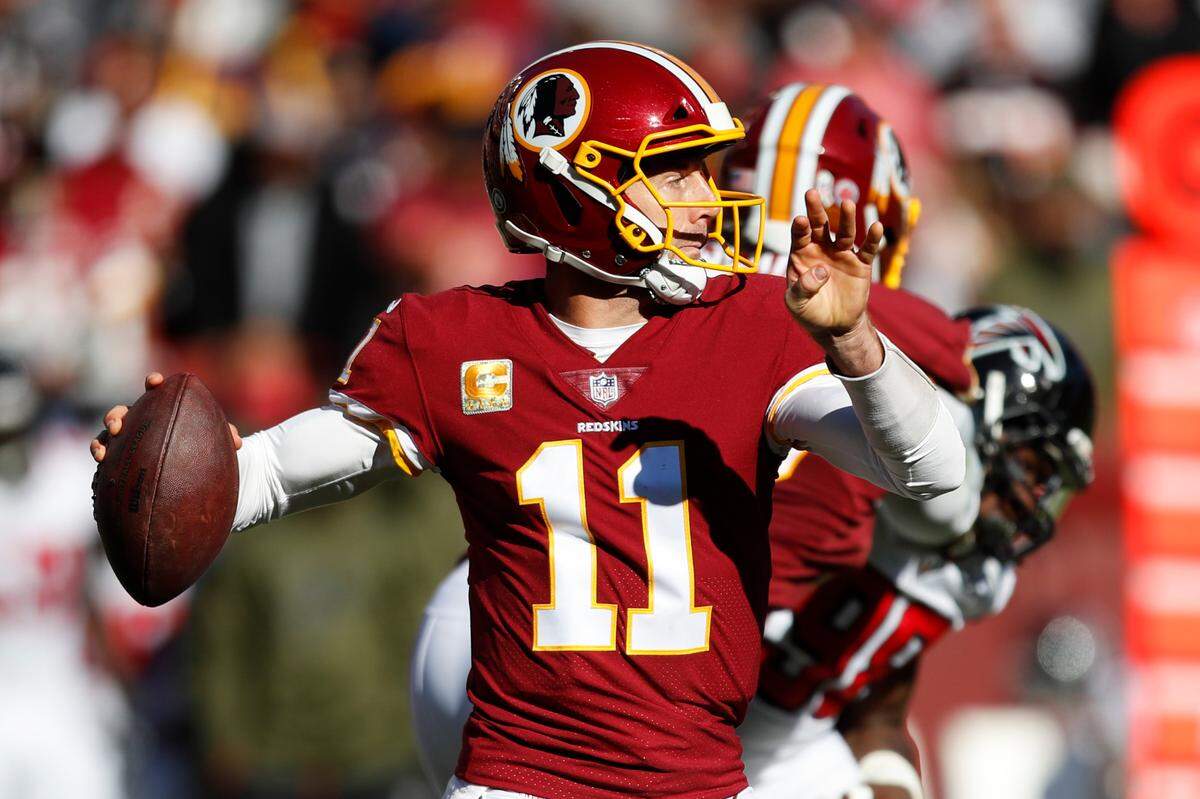
Back when the Washington Football Team of the NFL was still the Washington Redskins, Daniel Snyder, the franchise’s unpopular owner, once said that he would never change the name, regardless of the long-simmering controversy and uproar surrounding it.
In fact, he told USA Today in 2013, “You can use caps” with the word never. As in: “We’ll NEVER change the name,” Snyder told the paper. “It’s that simple.”
“Never” arrived this summer. After the death of George Floyd, and during a national reckoning with race that has inspired deeper conversations about everything from Confederate monuments to systematic inequality, the Redskins became the Football Team to be named later. Somewhere in Brooklyn, a 2005 Manteo High School graduate began her own internal dialogue, and research.
It had been a while, Holly Overton said, since she’d thought about high school. She’d grown up in Nags Head, on North Carolina’s Outer Banks, and ran cross country and track at Manteo before heading to New York upon graduation. When the NFL’s Redskins changed their name, Overton confirmed what she already knew: Manteo High was still using the same name. It was, and is, still the Redskins.
Overton, 35, called some old friends and reminded them of their high school mascot.
“All of them were like, ‘Wow,’ ” she said. “ ‘We’ve got to change this.’ ”
So began the latest effort to convince officials in Dare County, in the easternmost part of North Carolina, to rid Manteo High of its mascot. It is an effort that goes back almost 20 years, if not more, and it is one that has continued to fail.
While dozens of schools in other parts of the state have dropped Native American mascots and imagery over the past two decades, Manteo has not. It is the last high school in North Carolina to use the name, a descriptor widely considered to be an ethnic slur, and one that Merriam-Webster defines as “offensive” and “an insulting and contemptuous term for an American Indian.”
SCHOOL BOARD HEARS ARGUMENTS
Overton and others who have formed a group called “The Change the Manteo Mascots Initiative” made that point in September in a video presentation during a Dare County Board of Education meeting, which was held virtually because of the pandemic. Months earlier, the group had posted an online petition urging the county board to retire not only “Redskins,” but also the Braves mascot at Manteo Middle School.
More than 13,000 people signed the petition. During the group’s presentation in September, speakers detailed academic research into the negative effects of American Indian mascot names.
It included perspective from Manteo alumni calling for change. It featured testimony from Marilyn Berry Morrison, the Chief of the Roanoke-Hatteras Indians, who are the descendants of the tribes that once inhabited the Outer Banks centuries ago and long before the arrival of European settlers. Morrison, her long gray hair in braids, wearing a traditional necklace, looked into the camera and spoke softly, but with commanding force.
“The ‘Redskin’ does not inspire pride in everyone, especially my people,” she said. “It needs to change.”
“The name is “offensive to our culture,” she said, moments later. “The term and image of the mascot are racist ... if ever there is a time to make a change, it is now.
“It’s past time to change.”
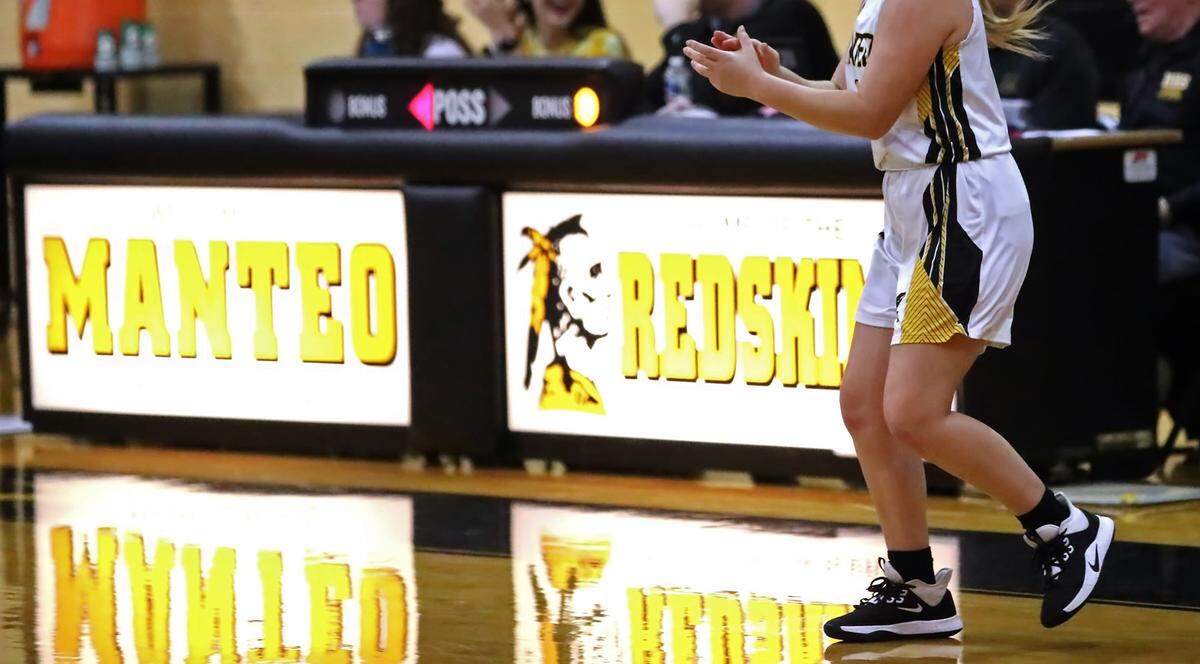
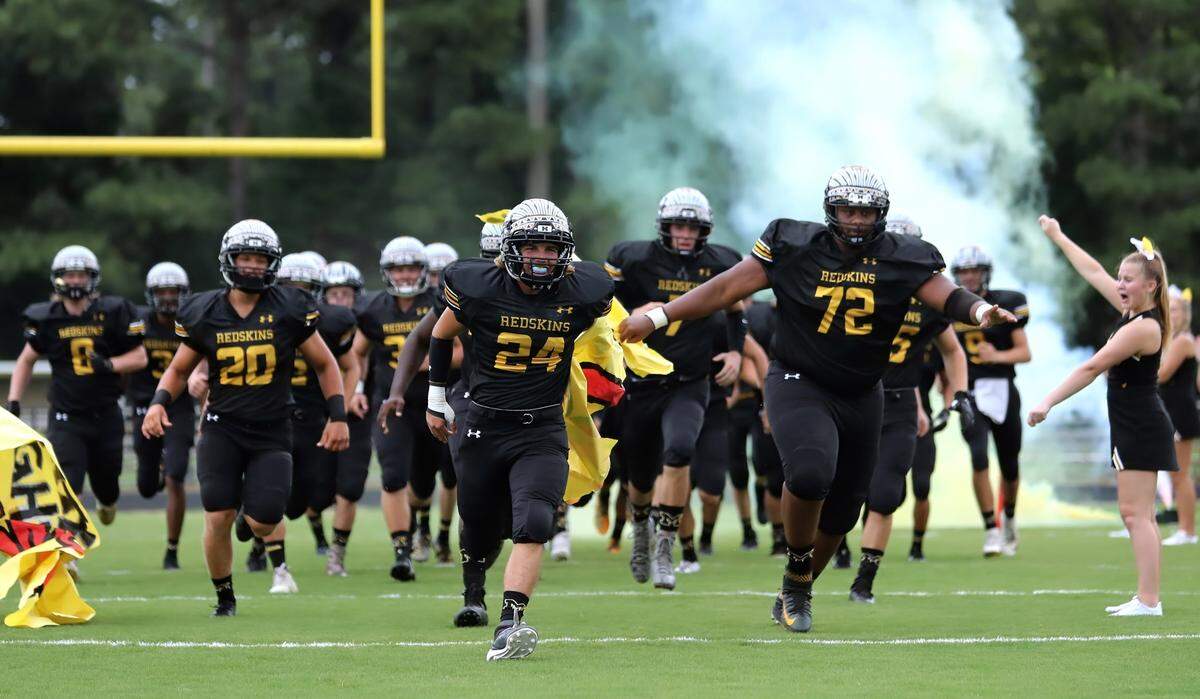
The next month, in October, the school board watched another presentation, this one from those in favor of keeping the mascots. The video began with a woman standing in front of the Manteo High football press box, where a banner that said “REDSKINS” was stretched across the front. “I’m asking you to save our Manteo Redskins,” said the woman, who was white. “It is about pride and honor. It is about tradition, and it is about heritage.”
The presentation included a montage of alumni, some who graduated in recent years and others decades ago, who voiced enthusiastic support for the mascot. At one point, a middle school student derided “the uninformed public” demanding change. At another, a 1956 graduate of Manteo High spoke of history and said the mascot “brought a sense of pride.”
“We are all Redskins,” she said, though most who appeared in the video were white.
After, there was a brief discussion among the seven-member board. Moments later they decided the mascots would remain, in part because board members didn’t want to make changes while students were out of school because of the pandemic. To change the mascots now, said Bea Basnight, the chairman of the school board, would be to take away one more thing from students who’ve already gone months without normalcy.
“One of the main issues for me, personally, is that our students have lost so much since our schools have closed their doors on March 13,” Basnight said during a recent phone interview, mentioning events like prom and in-person graduation ceremonies. “Taking away one more thing from them, regardless of how you stand on the name Redskins, that was a driving force for me.”
THE MEANING OF THE WORD
Basnight, who spent most of her 35-year career in education as a fifth-grade teacher at Manteo Elementary, acknowledged her belief that “Redskins” should remain. She spoke of the community’s support for keeping it, and noted that as an elected official part of her job is to represent the views of her constituents. Many of them view Redskins not as a slur but as something that generates nostalgia and pride, like an old letterman’s jacket hanging in the closet.
“I think it means a lot to them because I think a lot of them played a sport at Manteo High School, of some sort,” said Basnight, whose brother-in-law, Marc Basnight, was a prominent state senator who represented parts of eastern North Carolina for nearly 30 years. “And now the people who are here have children who play on the football team or basketball team or baseball team, and they look at it as being an honor.
“They are very proud to be Redskins.”
A man in the video from those supporting the name spoke to that. He’d graduated from the high school in 1970, and in a gruff voice he said he’d “had five children who graduated as Redskins, and (I) would strongly urge keeping it that way.”
That was what the word conjured to some — a feeling of shared experience across generations, rooted in attending the same high school or playing on the same sports team, only decades apart. But to Morrison, the chief of the local tribe, the high school mascot represented something else entirely.
It did not bring to mind thoughts of unity or pride or heritage or any of the other ideals those in support of “Redskins” talked about when they argued to keep the name. To Morrison, whose ancestors were pushed off their land, often through violence or deceit or both, the word brought life to centuries-old atrocities and reminded her of the subjugation that remains. Her people, she said, are still fighting for formal state recognition.
“The first word that comes to mind is that it’s derogatory,” Morrison said in a phone interview. “As I reflect on my ancestors, I think about how they were needlessly killed, and their skins were sold for bounty. And that’s the picture that stands out in my mind.”
She could trace a direct line in her ancestry to the 1750s, she said, and could trace the overall lineage of her people to the 1580s, when English expeditions began arriving on Roanoke Island, which is home to Manteo. One of those expeditions turned into one of the great mysteries of early-colonial America, resulting in what became the Lost Colony.
An earlier expedition, meanwhile, resulted in something that generated far less attention. Still, Morrison thought about it when she thought about Manteo’s mascot. She thought about her ancestors on the shores, as she described them, welcoming English explorers and settlers in the mid-1580s. They’d been sent to Roanoke Island by Sir Walter Raleigh, delegating from London.
“And we invited them into our village and town,” Morrison said. Her ancestors taught the newcomers how to make clothes and to fish, and how to cultivate a foreign land. “And in return, they beheaded our chief, Chief Wingina.”
HISTORY “NEEDS TO BE RETAUGHT”
Morrison, who lives in nearby Chesapeake, Va., said she has been involved in various efforts over the past decade to change the mascot at Manteo High, which is off a road named for Wingina. Two cousins also joined in, she said, but to this point their attempts have “just (fallen) on deaf ears.” Part of the challenge, as Morrison described it, is that some Native Americans “have a tendency to be in fear,” and are reluctant to speak out.
Going back decades and even centuries, she said, relatives and ancestors sometimes adopted other ethnicities. They did so because of the fear that “if you said you were Native American, you would be put on a reservation,” Morrison said. That was another part of why “Redskins” offended her: People who supported it thought it was some kind of honorific, while real American Indians sometimes grew up so fearful they pretended to be something else.
When the school board last month decided to keep Redskins and Braves, Morrison “wasn’t surprised at all.” Though this moment felt different, after a summer of nationwide social justice protests and after Washington’s NFL team made its change after years of stubborn refusal, Morrison had been anticipating a more difficult fight, anyway.
“I know that we’ll probably have to go through some more hoops and loops before anything is changed,” she said, and she focused her disappointment on a lack of education and how history, in her mind, had been white-washed — both in a literal and figurative sense. “History that was called history is not history itself, to me. It’s been a bunch of lies that have been taught.
“And it needs to be retaught.”
A lot of that school-taught history, to Morrison and others in favor of changing the name, has glorified the relations between early settlers and the American Indians they encountered. Manteo High School sits on the northern end of Roanoke Island, a skinny and curved piece of land about 10 miles long and 2.5 miles wide. To the east is Nags Head and the rest of the Outer Banks; to the west the North Carolina mainland.
The high school, like its namesake town, is named after Chief Manteo, who helped the English when they first arrived in the 1580s. Manteo was believed to be the first American Indian converted to Christianity; he also accompanied settlers on voyages back to England before returning to Roanoke. People who support the Redskins name point to the positive relationship between Chief Manteo and the early colonists he helped.
“Manteo was a trusted friend, teacher and guide to the English settlers,” Carol Meekins, the 1956 Manteo High graduate, said in the video presentation in support of the mascot. “(He) is one of the foremost examples of positive race relations in early American history.”
In Manteo the town, though, the legacy of Manteo and his people live on mostly in name only. Some of the streets have American Indian names, there are historical sites to visit and there is an annual play, “The Lost Colony,” that until this year had been staged every year since 1937. The organization behind the show, the Roanoke Island Historical Association, describes it as “the nation’s premier and longest-running outdoor symphonic drama.”
All around Manteo, there are nods to the past and to the American Indians who inhabited the area before the English arrived. There are, though, few remaining American Indians. According to census data, Manteo, with a population of almost 2,000, is nearly 90% white. Those who identify as American Indians don’t even constitute 1% of the population.
“We really don’t have any indigenous voices here, in town,” said Ebony Selby, a Manteo resident and a mother of three students who attend the high school. A native of the area, Selby has become active in the group pushing the school board to change the mascots. “Nobody here ever grew up knowing more than what our school books told us.”
Given she’s a local, and has kids at the high school, Selby has taken special interest in the mascot. Through self-education she has gained an awareness, she said, of how American Indians “feel about their culture being portrayed as a costume.” She came to believe that the history she’d been taught in schools had been “sugarcoated.” Though the group in favor of changing the mascots received 13,000 signatures on its online petition, Selby said that locally, in and around Manteo, people strongly support keeping the name.
“It’s just odd to me that somebody else’s heritage belongs to you,” she said.
Her son plays on the Manteo High football team, and the question of whether the mascot should be changed has come up in group texts among the players. Selby said most of them want it to remain, and don’t see or feel the need for change.
DECLINE OF AMERICAN INDIAN MASCOTS
Manteo is among the last remaining high schools in the state with an American Indian-based mascot. One of them is the Braves of Cherokee High, though that school is a part of the Eastern Band of the Cherokee Indians’ reservation in western North Carolina. Another is the Indians of St. Stephens High School, in Hickory.
Around Belmont in Gaston County, about 15 miles west of Charlotte, there have been calls, amplified in recent months, to change the name and imagery of the South Point High Red Raiders. There, the logo is similar to that of the old Washington NFL logo, with the head of an American Indian man adorned with a headdress, and a large hoop earring.
Overton, one of the organizers of the effort to change the mascots in Manteo, has been in contact with a group that is trying to do the same at South Point. She’s also sought insight from a man named Monroe Gilmour, who in the late 1990s and early 2000s led a movement to change American Indian-themed mascots and imagery at Erwin High School in Asheville.
Back then, and even still, the boys sports teams at Erwin were called the Warriors. But the girls teams were known as the Squaws, which is a vulgar term among American Indians.
“The Cherokee elders that came to a game here, between Cherokee and Erwin, just could not believe the girls were calling themselves that,” Gilmour said during a recent phone interview.
He became part of a movement that made national news. American Indian scholars and leaders visited Asheville to speak out about the name of Erwin’s girls teams; the U.S. Justice Department opened an inquiry about whether the school’s use of American Indian imagery violated the civil rights of Native American students. Eventually the girls teams dropped “Squaws” and became the Lady Warriors, and the school did away with some of the imagery that most closely tied Warriors to American Indians.
Gilmour, who’d been active in a group fighting institutional bigotry in the mountains, expanded his focus to American Indian mascots in schools across the state. In the early 2000s, the N.C. Mascot Education and Action Group identified 73 public elementary, middle and high schools with American Indian mascots. By 2010, more than half those schools had made changes, including West Mecklenburg High in Charlotte. There, in 2004, the Indians became the Hawks.
DEMAND FOR CHANGE REMAINS
More than 15 years later, the controversy surrounding the Manteo Redskins has taken Gilmour back to a time when he was fighting a similar fight, and one he acknowledges that he and other activists didn’t fully win. There’s still a tall American Indian-themed statue outside of Erwin High, Gilmour said, and now, like then, he questions its presence. The debate in Manteo, he said, is “exactly what we and many others have gone through.”
“Some people are so identified with that mascot,” he said. “It’s like a property right. And for you to challenge that, it’s like they no longer can see the rationale of the educational (argument) or the respect for American Indians, or anything.
“It’s that you’re taking something that is mine away from me.”
In 2002, after the controversy at Erwin High, the state superintendent of education sent a letter to district superintendents across North Carolina. The letter informed local leaders that the state’s board of education was “strongly encouraging” educators to evaluate the effects, both psychological and educational, of using American Indian mascots and imagery.
The state also requested that every district annually report “plans of action and actions implemented” concerning the review of Native American mascots and imagery. The next year, in 2003, then-Dare County superintendent Sue Burgess detailed plans to “phase out the imagery of American Indians on sports teams and logos.” In a letter to the state, Burgess also wrote of how the staff at Manteo High “would explore ways to consider a possible sports team mascot change” upon the anticipated construction of a nearby high school.
First Flight High opened in 2004 in Kill Devil Hills. Manteo’s mascot remained the same.
Sixteen years later, Bea Basnight, whose term as chairman of the Dare County Board of Education ends in December, doesn’t foresee the Redskins name going without a fight. To her, and others, the NFL franchise abandoned the name because of financial pressure from sponsors, and not necessarily because there was anything intrinsically wrong with it. When that happened over the summer, Basnight said, “I knew we’d get some backlash.” While the online petition gained momentum, though, Basnight scanned the names and didn’t notice many locals.
“In my opinion, if I was still going to be on the board, I don’t think I’d lean on the side of changing it,” she said. “Until someone in the state legislature or the (Department of Public Instruction) would say you have to change it.”
She figured that most of her colleagues on the school board felt the same way. Last month, during the public discussion about the mascot, the only board member who expressed any hesitation about the use of Redskins was Frank Hester, a 1980 graduate of Manteo High. During a phone interview, he said his family goes back at least seven generations on the island, and a DNA test proved his link, by blood, to some of Roanoke Island’s original inhabitants.
At Manteo High, he competed on the football and wrestling teams, and he said he never gave much thought to Redskins. In time, he said he’d come to understand why some wanted to see the name go, and he emphasized that the question surrounding the name “has not been ultimately decided.”
“We kind of saw it as a sense of pride, heritage and all that other stuff,” Hester said, speaking to how he and his classmates viewed the mascot when they were in school. And yet, he said after a pause, “When things change, you’ve got to pay attention.”
Now, after years of futile attempts calling for change at Manteo, there was a broader sense that this moment might be different. That while locals still supported the name, its opposition was growing stronger and louder. Hester was not sure when the board might again consider a name change. He was only sure that the controversy surrounding it, and the calls for change, would not go away.
This story was originally published November 24, 2020 at 6:30 AM.