Is it time for NC high school athletes to profit from their name and image?
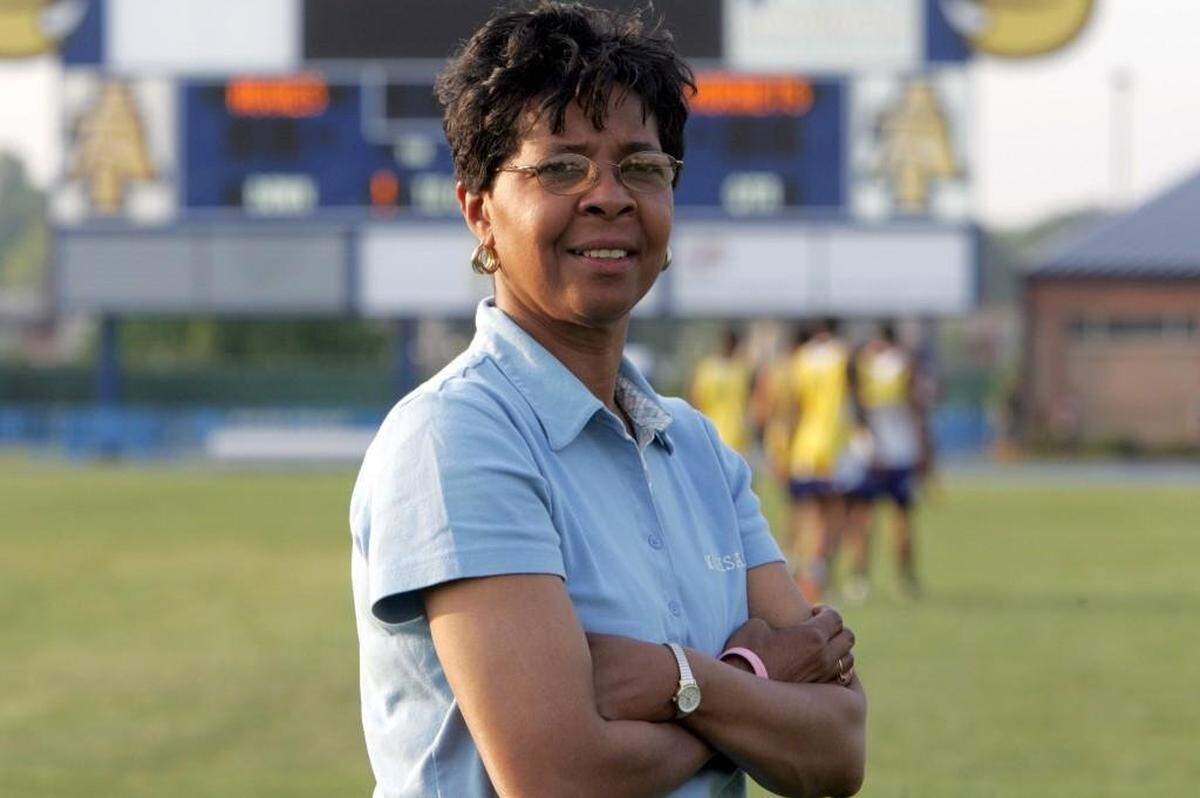
The question arrived in an email from a colleague in New York, and throughout a lifetime of work in high school athletics Que Tucker had never given it much thought. She’d never needed to, until now, and for a moment she wasn’t even sure what the term “social media influencer” meant — or how such a thing could be connected to high school sports.
“I was like, what in the world are we talking about here?” Tucker, the commissioner of the North Carolina High School Athletics Association, said with a laugh during a phone interview on Wednesday.
At the time of the email, a little more than a week had passed since the NCAA relented, after years of pressure, and allowed college athletes the right to monetize their name, image and likeness (NIL). Now Tucker and her colleagues, those charged with leading state high school athletic associations around the country, were evaluating what, if anything, it all meant for high school sports.
Suddenly, there were a lot of questions given the NCAA’s decision: Should prominent high school athletes have a similar chance to monetize their NIL? Should they be allowed to sign endorsement deals, if they had the chance? And what about the average high school athlete who might be able to develop a financially lucrative social media following? How would that fit into the rules?
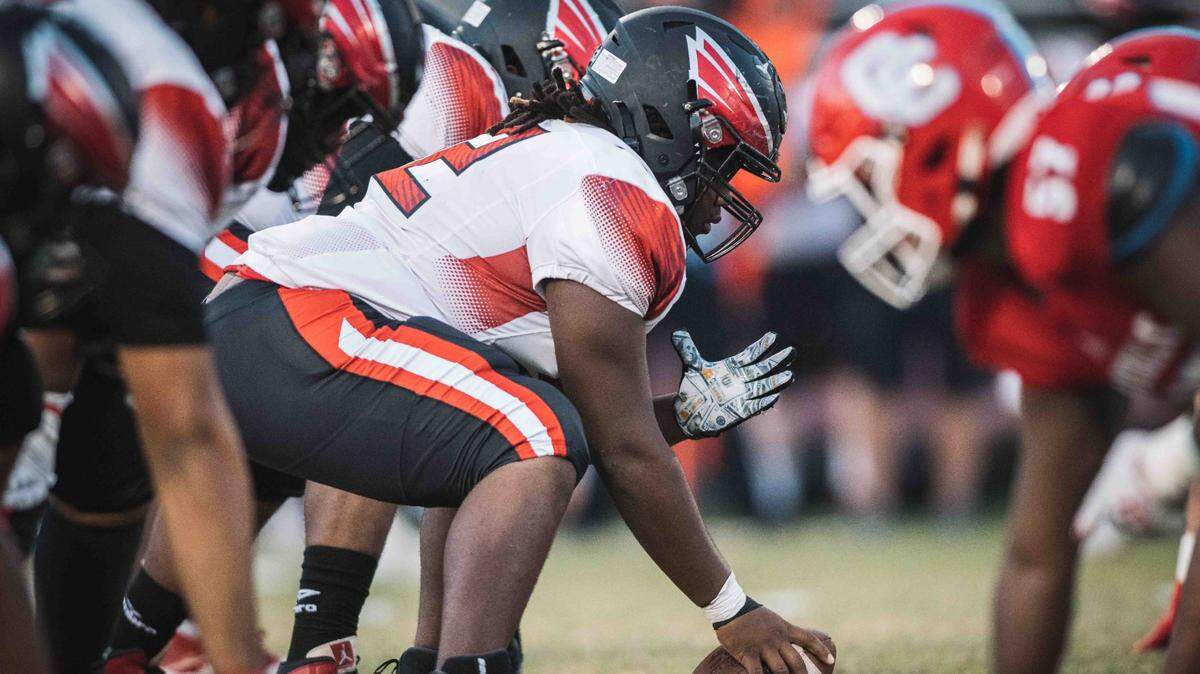
In North Carolina, and across the country, state high school athletics associations have long enforced the sort of amateurism rules that the NCAA fought to maintain. Which is to say that high school athletes are not allowed to profit off of their status of being an athlete.
They’re barred, for instance, from entering into endorsement deals, or making money from autographs. Doing so would endanger their eligibility to compete, at least at those schools that are sanctioned by the NCHSAA and similar associations in every state, and Washington, D.C.
“We do not have legislation that says high school student-athletes are able to engage in contracts and such that pertain to name, image and likeness,” Karissa Niehoff, the director of the National Federation of State High School Associations, said during a video conference with reporters earlier this week. “Hopefully, there’s no confusion there.”
Niehoff went on to list her concerns about high school athletes receiving NIL rights — concerns, she said, that administrators share nationwide. Some of the arguments against NIL rights for high schoolers are similar to those the NCAA long attempted: that they’d sully the sanctity of the mission of high school athletics; that they could create dissension among athletes; that money would be corrupting.
“We are extremely concerned that if NIL opportunities are available to high school-aged kids, it can be a real detractor from a healthy recruiting experience,” Niehoff said.
To be sure, the conversation surrounding NIL rights for high schoolers is much different than the one that has, for years, surrounded college athletics. High school sports are not a multi-billion dollar business. High school coaches and administrators are not making millions of dollars.
High school athletes, almost without exception, have not become national household names. And high school games, with few exceptions, have not become a regular part of prime-time (and daytime, and late-night, and sometimes early-morning) national television programming.
“The high school athletics space is not at all like the college model,” Homar Ramirez, the director of the North Carolina Independent Schools Athletic Association, said during a phone interview Wednesday. “I don’t know of any high school that is making millions of dollars from our March Madness tournament, or football championships.”
With member 96 schools, all of them private, the NCISAA could conceivably set their own rules when it comes to granting high school athletes NIL rights. The organization, though, is a part of the same national federation that guides the NCHSAA and other state associations. Besides, Ramirez said he hasn’t sensed much of a push among high school administrators to embrace NIL rights for high school athletes.
“I would say no, there’s probably not an opinion or a leaning toward NIL being a good thing for high school athletics,” he said.
For the overwhelming majority of high school athletes, NIL opportunities presumably would be scant, or nonexistent. As Tucker noted, “well over 95 percent” of North Carolina’s high school athletes do not go on to compete in college — at least not beyond an intramural or club team. And yet she acknowledged, too, that coaches and athletic directors “who have some of those Todd Gurleys of the world” could face dilemmas in a changing landscape.
Gurley was an all-state running back, and one of the nation’s most coveted prospects, during his days at Tarboro High, where he graduated in 2012. He played for three seasons at Georgia and became a first-round selection in the NFL draft. It’s not unreasonable to consider that he could’ve commanded NIL opportunities as a high schooler in Tarboro, if they’d been available.
But the 12th-grade version of Gurley, and athletes of his caliber, aren’t the only ones who could benefit in a hypothetical world in which high school athletes have NIL rights. What about those from small towns, even smaller than Tarboro, where high school athletics plays a larger role in community life? What if, for instance, the mom-and-pop diner in Wallace, near Wallace-Rose Hill High and its successful 1-A football team, wanted a few local offensive linemen to spread the word about its pancakes, in exchange for a little money or some comped meals?
Both Niehoff and Tucker have argued that NIL deals — any NIL deals — should not be a part of high school sports. They spoke recently with the kind of gravity that suggested a concern for where the smallest allowance might lead.
“It is our hope that student-athletes, and it is our desire that in education-based athletics, that students would remain amateurs,” Tucker said. “That they would play for the love of the game. That they play to have fun.
“... We recognize that we do have some elite athletes who could be impacted, in some way, shape or form by this whole topic. But to answer the question as to are our school people concerned — I can tell you with absolute assurance, I have not received a single call from a coach, or an athletic director, or a principal, concerned about the NIL issue.
“Now that’s not to say that it’s not sitting somewhere in the back of the mind of a coach or an AD who has an elite athlete right now. But as we speak at this moment, it probably is not the major issue that our 427 member schools are concerned with.”
Still, both Ramirez and Tucker said they want to be prepared for what could be coming.
“I think nationally, things may happen in other states that we’re not experiencing in North Carolina,” Tucker said, “but we’ll be able to benefit from what’s going on in another state. You take an Alabama, a Mississippi, a Georgia, where, for example, football is king. And so if they start to have some of these NIL issues, then certainly ... we’ll be able to share, OK — you guys need to be aware that this is coming down the pipe.”
Football is perhaps the one sport that could most threaten state high school athletic associations’ resistance to allowing NIL rights. In other sports, the most talented athletes often bypass traditional high school teams, and thus could pursue NIL opportunities without affecting their ability to compete. Top basketball prospects, for instance, have migrated more and more to private academies or prep schools. Elite soccer players or swimmers have their club teams.
Niehoff, the director of the national federation of state high school sports associations, emphasized that other paths exist for the most high-profile young athletes. Allowing high schoolers NIL rights, she argued, would “exacerbate a lot of inequities that exist.”
“When it comes to the actual high school locker room experience, the culture of the school community, the culture of the school locker room, and all that is unique about high school sports, we believe that professional contracts could be a real disruptor,” she said.
These days, though, even the definition of what might be considered “professional” is changing. Take the question that arrived in Tucker’s inbox earlier this week, for instance. Her colleague was seeking insight into where social media influencers might fit into the conversation surrounding high school athletics and NIL
“I asked one of my staff members — what are we talking about?,” Tucker said, before learning a bit about Tik-Tok and Instagram followings, and how teenage kids, or anybody, can sometimes turn large followings into revenue streams. She didn’t have an immediate answer to the question of whether that’d be allowed — whether, say, an average girls basketball player on an average team would be allowed to profit off of above-average Internet content.
Tucker tried to picture it through her days as a coach at Reidsville High.
“We’d have to look and see, OK, is this athlete, is he or she making money because they are wearing a Reidsville Rams uniform, know what I’m saying?” she asked. “Or, is it just simply an athlete who just has on a jersey who is not affiliated with anybody, it’s a multi-colored jersey and is spinning the basketball on the finger and dancing at the same time — and somebody’s paying for that ...
“We’ll have to define, what is the dividing line?”
A few moments later, Tucker paused and took a breath.
“It’s a whole new world out there, you know what I’m saying?” she said. “And when I answered my counterpart in New York, I said, you know what — this is all going to get so messy before it’s all over with. But we just have to try to stay ahead of it, or at least stay on top of it as best we can.”
This story was originally published July 15, 2021 at 6:30 AM.