North Carolina’s reign as nation’s golf capital starts now, as US Women’s Open begins

READ MORE
2022 Presidents Cup
Over 200,000 people are expected to attend this year’s Presidents Cup at Quail Hollow Club. Here’s our latest coverage, analysis and news from the tournament.
Expand All
There is not yet much to see around the site in Pinehurst, where work will soon commence to build a second headquarters for the United States Golf Association. Some of the tennis courts are still being removed. The land is being prepared. Soon enough a shovel will break the earth, a celebratory and symbolic milestone marking the arrival of a moment long-awaited.
That moment will come among a series of others that will allow North Carolina an arguable claim as the nation’s new golf capital. With respect to Georgia, and its hold on the sport every spring during The Masters, and with respect to the likes of California and New York and Pennsylvania, all of which have hosted their share of U.S. Opens, or even Myrtle Beach, S.C., few states can rival what this one has coming.
North Carolina this week is once again home to the U.S. Women’s Open, which on Thursday returns to Pine Needles in Southern Pines for the fourth time. The day after the Women’s Open is set to end, on June 6, groundbreaking is scheduled just down the road for the USGA’s new $25 million campus on the grounds of the Pinehurst Resort and Country Club.
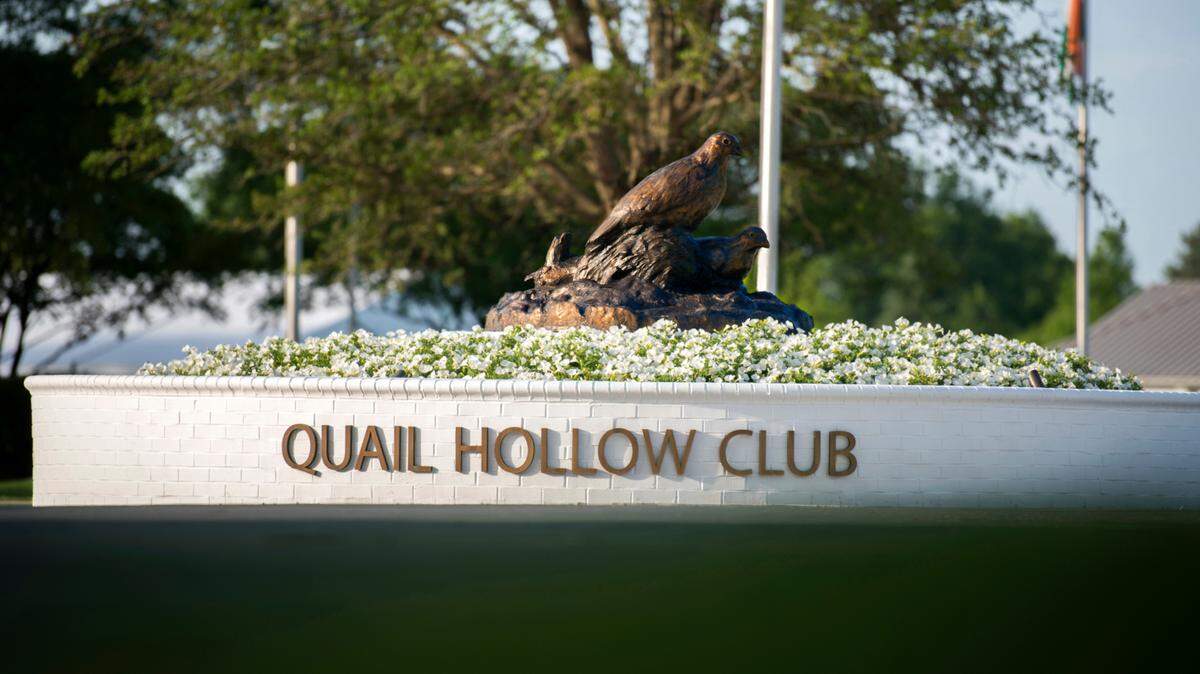
Come the end of summer and the start of fall, Charlotte’s Quail Hollow will host the President’s Cup, the United States vs. The Rest of the Non-European World event that for the first time will be held in the Southeast. The men’s U.S. Open returns to Pinehurst No. 2 in 2024 while the PGA Championship is back at Quail Hollow, for the second time, in 2025.
By then, that new USGA campus in Pinehurst will have been up and running for more than a year. When the USGA in 2020 announced its plans to build a headquarters in North Carolina, its agreement with the state included making Pinehurst even more of a regular host of USGA events. The men’s Open will be at No. 2 in 2024, 2029, 2035, 2041 and 2047.
In a way, then, the start on Thursday of the Women’s U.S. Open in Southern Pines and all that follows represents the beginning of a new era in North Carolina golf. The game has always held a strong presence here, from Sam Snead’s triumphs in the old Greater Greensboro Open to the courses in the Sandhills that have long made North Carolina a destination.
Yet now it feels different. The USGA is building a permanent home here. Pinehurst, which has already hosted three men’s U.S. Opens, has five more on the horizon. And about 100 miles west, Quail Hollow has become a major championship destination of its own, after establishing itself as one of the PGA Tour’s most attractive regular-season stops.
“It’s almost an embarrassment of riches, with what’s happening in the state of North Carolina as it relates to golf,” Tom Pashley, the President of Pinehurst Resort, said. “But I think it’s really been earned — it’s a culmination of a lot of hard work and a lot of effort, over decades.”
‘In front of the golfing world’
Pashley has worked at Pinehurst for 26 years. He has been the resort’s president for almost eight. Few have a better understanding of the history of the place, or more of a role in shaping its present and future. When Pashley goes to work, he is surrounded by reminders of the past, the mementos throughout the clubhouse; the black-and-white photos on the wall.
The story of Pinehurst is in a lot of ways the story of American golf. It is built into the sport’s lore, how in the early 1900s Donald Ross sculpted three courses out of the remnants of what was once a lush forest of pines; how the first of Ross’ courses there, Pinehurst No. 2, quickly established its reputation as a masterpiece.
No. 2 became the permanent home of the North and South Amateur, which is still played there, and it hosted the 1936 PGA Championship, the 1951 Ryder Cup, the 1962 U.S. Amateur, the 1989 U.S. Women’s Amateur and the 1994 U.S. Senior Open. It was a long time, though, almost 100 years, before Pinehurst hosted its first men’s Open in 1999.
That one, and the two that followed in 2005 and 2014, when Pinehurst became the first place to host men’s and women’s U.S. Opens on the same course in consecutive weeks, cemented its relationship with the USGA. By the time Pinehurst hosted its first men’s U.S. Open in ‘99, Oakmont, outside of Pittsburgh, had already hosted seven. Pebble Beach had hosted three.
But those courses, despite their longer U.S. Open history, were not the first to become quasi-permanent “anchor sites” for the U.S. Open. Pinehurst was. The USGA announced its move to an anchor site model for the Open in 2020, the same time as it announced that it would build a permanent facility at Pinehurst.
There are a lot of places “that would want to write a check to try to buy” the chance to host the USGA’s newest headquarters, Pashley said, “but it’s not for sale; it’s an earned position.”
“That is the culmination of what I like to think of as a long, slow dance that we’ve been in with the USGA since the late 80s, early 90s,” he said.
Nonetheless, the North Carolina legislature offered the USGA an incentives package that the state believes will pay dividends. The state in 2020 awarded the USGA an infrastructure and development grant worth as much as $18 million to build its second headquarters in Pinehurst. Those headquarters will consist of two primary buildings — one an 18,000-square foot research and testing facility and the other a 12,000-square foot building with offices and a museum.
According to the terms of the grant, the USGA in return agreed to invest $5 million into the project by the end of 2023 and to employ at least 50 workers in Pinehurst with an average salary of at least $80,000. It also agreed to commit to at least five men’s U.S. Opens and other yet-to-be announced USGA events. One that has been announced is the return of the Women’s Open to No. 2 in 2029. Like in 2014, the men’s and women’s events will be played there in consecutive weeks.
One of these days, it will all make for more modern photos to line the clubhouse.
“We really want to be in front of the golfing world,” Pashley said. “As often as we can, we really value the exposure that we get. ... Pinehurst has to continue to earn its relevance with each generation of golfers. And so the ability to add color photos to our hallways that have a lot of black and white images, is something that’s important to us.
“We don’t want to be a time capsule. We want to be a living, breathing, innovative destination that is planning for the future.”
.JPG "USWomensOpenGolf (3).JPG")
Evolution and economic impact
According to the state’s estimate, the new USGA campus and the events that will come with it will result in an economic impact of almost $850 million over a 25-year period. The Women’s Open, which starts this week, is the first USGA event that’s a part of that figure.
The event will be historic in its own right, given its $10 million purse. That’s the largest ever for a U.S. Women’s Open, an increase of almost double from a year ago. The purse grew thanks to the USGA’s new partnership with ProMedica, a non-profit women’s healthcare organization that has become the first presenting sponsor in Women’s Open history.
In the leadup to the event, at least, that partnership is “the story” of the U.S. Women’s Open as it arrives, said Morgan Pressel, a one-time phenom turned LPGA veteran who is now a member of the television broadcast team that will call the Open. Pressel made her professional debut as a 12-year-old, when she qualified for the 2001 Open at Pine Needles. The purse then was a little less than $3 million; Karrie Webb, who won by eight strokes, earned $520,000.
“It is a special place for me personally, a special place certainly for the women’s game,” Pressel told reporters during a teleconference in the days leading into the Women’s Open. She quickly emphasized the USGA’s partnership with “ProMedica jumping on board (and) really trying to draw attention to the pay gap and helping us continue to get closer there.”
Whomever wins the U.S. Women’s Open will claim the largest monetary prize in the history of the sport. Then the USGA will make more history almost immediately after, with the groundbreaking on its new headquarters. About three and a half months after that, while construction continues in Pinehurst, Quail Hollow will be hosting the President’s Cup.

The course has raised its profile in recent years, starting with the arrival of the PGA Championship in 2017. That event returns in 2025, giving North Carolina a three-year span in which it will host two men’s majors, one women’s major and an international event with several of the world’s best players. For Johnny Harris, the president of Quail Hollow, all of it is something like a dream come to life.
“Just do me one favor,” Harris asked during a recent phone interview, talking about how far the state’s place in the nation’s golf hierarchy had come. “Because Sam Snead would kill me if I didn’t mention the fact that nobody, nobody really understands how important the (Greater Greensboro Open) was to North Carolina.
“And the fact that it kept people aware of North Carolina and Sam Snead and all those guys who played in that tournament and helped make it great.”
In Charlotte, Harris’ father and almost two dozen other men started Quail Hollow in the late 1950s and early 60s. Harris could remember first meeting Arnold Palmer back in those days, and how Palmer helped the club land its first PGA Tour tournament, the Kemper Open, in 1969. When the Kemper left for Congressional Country Club in 1980, Quail Hollow hosted the PaineWebber Invitational for seven years before finding its long-term niche with the Wells Fargo Invitational, which began there in 2003.
Now it’s a major-championship course that’s about to be on the world stage, again. Harris, who has been the club’s president for more than three decades, has been around long enough to see it all, and see it from the very beginning. Now at Quail Hollow he can already see the hospitality tents and the grandstands and a two-story structure, with an atrium in the middle, that he recently called “the green mile,” same as the moniker for the course’s final three holes.
It will offer a prime view to take in the most important happenings during the President’s Cup, which begins on Sept. 19. Harris said there “are very few tickets left” for the event and also that “we have sold the largest amount of hospitality of any Presidents Cup in history, almost double the closest one.” It’s a testament, he said, to the sport’s presence here.
“North Carolina has always been a part of it, but never to the extent that they are now where all the different bodies of golf are doing things in North Carolina, to help us bring the game here for the people in the Carolinas,” he said. He went on to describe the 2017 PGA Championship as one of the most successful in history, and promised the same for the event Quail Hollow will soon host.
He sounded free to talk his talk. Others around the state could, too. North Carolina finds itself at the start of perhaps its greatest golf moment yet.
This story was originally published June 2, 2022 at 6:00 AM.