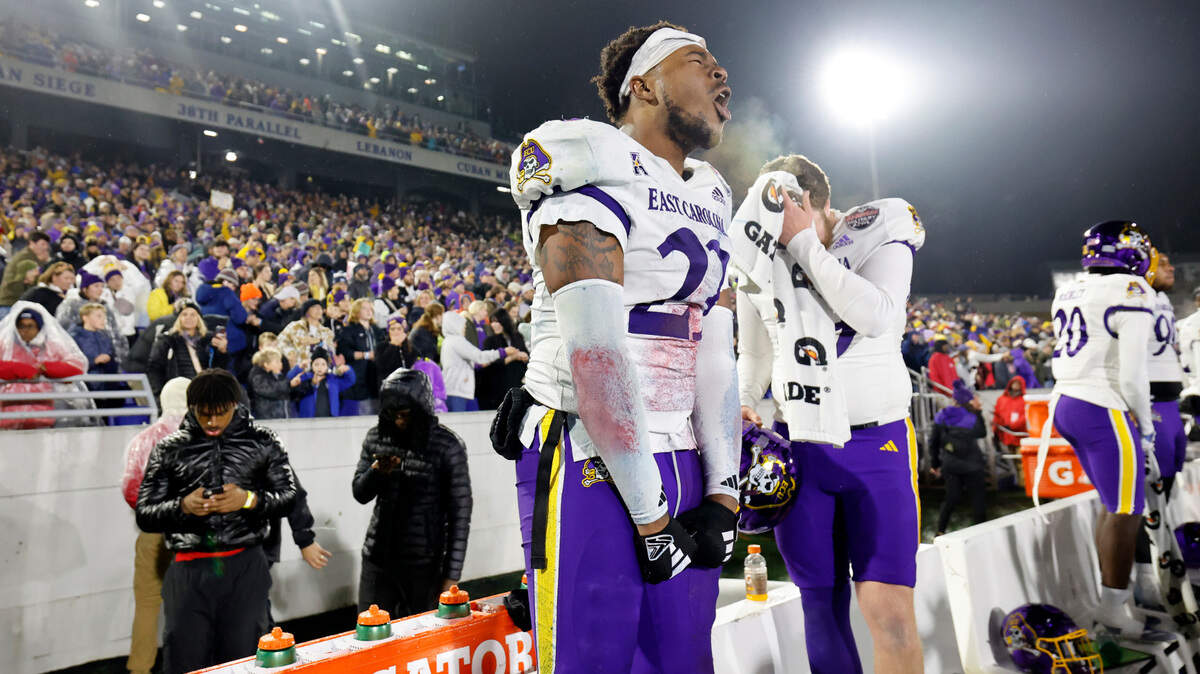
East Carolina defensive back Ja’Marley Riddle (22) celebrates during the second half of ECU’s 26-21 victory over N.C. State in the Military Bowl at Navy-Marine Corps Memorial Stadium in Annapolis, Md., Saturday, Dec. 28, 2024.
Ethan Hyman
ehyman@newsobserver.com
New NCAA settlement allows direct athlete pay, replacing scholarship limits.
NC schools like Elon and ECU plan strategic budgets for future compensation rules.
Revenue-sharing splits likely to widen gap between large and smaller athletic programs.
RALEIGH
After two months of delays, the House v. NCAA settlement was approved in June, officially implementing changes universities anticipated. Nearly 320 of the more than 350 Division I institutions opted into the new settlement rules for 2025-26, which includes schools at the low- and mid-levels of the division.
Elon, Campbell, East Carolina, Appalachian State and Charlotte are among the NC institutions, from non-Power Four conferences, opting into the settlement.
Jennifer Strawley, Elon University athletic director, called the settlement approval a “transformational time and change in college athletics.” Its full consequences remain to be seen, especially among smaller institutions.
“I think those changes are both financial and cultural,” Strawley said. “From our perspective, we look at it as an opportunity to be innovative, an opportunity to figure out how we embrace the change and find our advantages.”
ECU athletic director Jon Gilbert shared a similar message in a statement to supporters. He said ECU’s leadership is confident the university has created a “sustainable path forward that is best for our institution.”
Campbell was another one of the 300-plus schools to opt in. Director of athletics Hannah Bazemore was not available for an interview but the department provided a statement.
“The House settlement is one of the biggest changes ever to college athletics,” the statement said. “Through this process, Campbell has planned and prepared, and as a result, our department is stable and poised for growth. There will be more challenges ahead as we enter this new era, and we will continue to prepare for and meet these challenges head on.”
The settlement implemented guardrails on athlete compensation by effectively creating a salary cap — up to $20.5 million in the first year — and allows athletic departments to pay student-athletes directly through the new revenue-sharing model. The third-party NIL agreements, allowed since 2021, will continue but an oversight committee will evaluate the legitimacy of these contracts.
The settlement created a way to distribute $2.7 billion in back pay for student-athletes, primarily football and men’s basketball players, who did not benefit from the NIL. Additionally, the settlement replaced scholarship limits with roster limits.
Like Campbell, Strawley also isn’t afraid to admit there are challenges, some of which remain unknown. The most obvious challenges, however, come from a financial standpoint. Schools must determine how they can best prepare for the increased or altered expenses, such as the change from scholarship to roster limits. They have to determine ways to increase fundraising, increase revenues and seek opportunities to broaden current partnerships or revenue streams.
“Financial challenges, I think, exist for all of us, no matter what institution you’re in, what level of competition or any of it,” Strawley said. “We’re all trying to figure out, ‘How do we maximize our resources at this point?’”
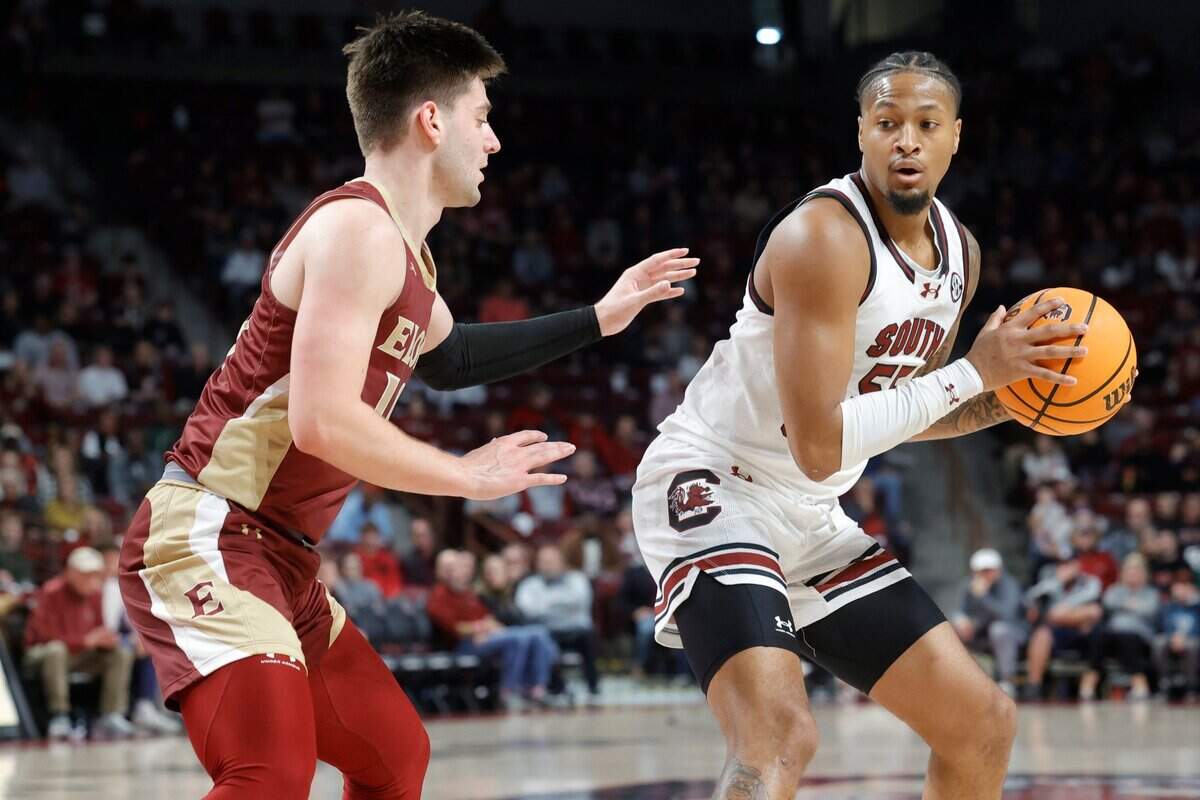
South Carolina guard Ta’Lon Cooper (55) plays Elon at Colonial Life Arena on Friday, December 22, 2023. Joshua Boucher jboucher@thestate.com
Full impact still uncertain
Schools spent the last year preparing for the settlement’s approval, which provided time to develop fundraising, budgeting and long-range plans.
Revenue sharing is one of the biggest changes with the settlement, allowing schools to pay players and make decisions based on each institution instead of relying on third-party collectives. Many schools will bring collectives in house or work directly with them. It’s a major shift after schools previously relied primarily on boosters to fund compensation through NIL deals.
“We obviously aren’t going to be able nor should we, at our level, provide anywhere close to that $20 million but it does give us greater flexibility in how we choose to administer direct benefits to students,” Strawley said. “Being able to have greater flexibility and how you provide some of those benefits is an advantage, even for smaller schools. … We’ve been preparing for it from a financial standpoint.”
Elon recently announced record-breaking fundraising, leading to increases in operational support, cash donations received and total fundraising. In 2024-25, the university boasted $2.3 million in donations for annual operating support, surpassing the $2 million mark for the first time in school history, and $6 million in donations across the entire athletic department.
At Appalachian State, athletics director Doug Gillin said last month his team examined all areas of the department to prepare for revenue sharing.
“We have been evaluating current internal structures, operational workflows and resource allocation to ensure we are positioned to thrive in the new era of college athletics,” Gillen said in a statement. “We will implement a sustainable and strategic resource allocation model to offer scholarship enhancements that meet the needs of our sport programs. We will continue investing in our student-athletes and programs, positioning App State athletics to attract and retain top talent in an increasingly competitive landscape.”
Around the country, football and men’s basketball are set to benefit the most from revenue sharing, while Olympic sports will see far less money. Questions have been raised about potential Title IX violations if the revenue is not distributed equally.
There are exceptions but, according to data from the NCAA, football and men’s basketball are typically the only sports to finish with a financial surplus, even at Power Four programs. Their profit supports the remaining sports.
The settlement, however, does not mandate where money goes. Gilbert said in May that FBS schools will need to fund football and men’s basketball as well as possible due to the financial value they provide. A reporting system will monitor overall spending, but institutions retain autonomy for specific decisions.
“You’re going to see schools, like East Carolina, where baseball is really important,” Gilbert said during a forum with UNC’s Bubba Cunningham and Wake Forest’s John Currie. “We will revenue share with our baseball program. [If] men’s soccer is really important to a different school, they’re probably going to revenue share with the men’s soccer team. I think you’re going to see some uniqueness, school to school.”
Gilbert, like Strawley, said ECU does not have the same revenue of a Power Four institution and will have a lower revenue sharing amount. He expects conferences to be split into tiers, based on the amount spent.
“You’re going to see schools at the very high end of the spectrum sharing the full $20.5 million, and then you’re going to see a school in that same league sharing a number that is much less than that,” Gilbert said. “The crazy thing about it is we — all three schools, despite our financial differences — all compete in [FBS] football. It’s going to be a very interesting dynamic moving forward.”
Like Gilbert at ECU, Charlotte athletics director Mike Hill oversees a program that competes in the American Athletic Conference. That league, last March, agreed that its schools (except Army and Navy) will share at least $10 million over the next three years (an average of $3.3 million per year) with athletes as part of the House settlement.
Hill said last month the school prepared for revenue sharing with strategic planning.
“There are no new institutional revenues associated with the settlement,” Hill said in a statement, “However, it is incumbent upon us to maximize our current revenue streams and find new revenue sources to build competitive rosters. Our bold choices to launch Charlotte 49er Ventures, expand Jerry Richardson Stadium to allow for premium seating options, and hire a football coaching staff that has accounted for 30 wins over the past three seasons have all been made to set Charlotte up for success in this new era.”
There is also the question of a widening gap between the top programs and those on lower levels. This has been an issue for several years since college athletics became more transactional, Strawley said.
Earlier this year, attendees at the annual American Football Coaches Association convention said the changes have made it difficult for smaller schools to retain players due to their funding. It’s hard to blame a player for transferring to a school offering thousands, if not millions, and other benefits.
Strawley, who has experience at the Power Four, Ivy and mid-major levels, isn’t sure if the gap will widen.
“I think you could see an expansion of the benefits that are provided at that level, but there’s still only so many roster spots,” Strawley said. “There’s only so many student-athlete opportunities that exist at those levels, so how drastically does that actually change student-athletes that are competing for Elon? I’m not sure, because, ultimately, there’s still going to be students who find value in an integrated athletic experience where the total, holistic student-athlete experience is valued.”
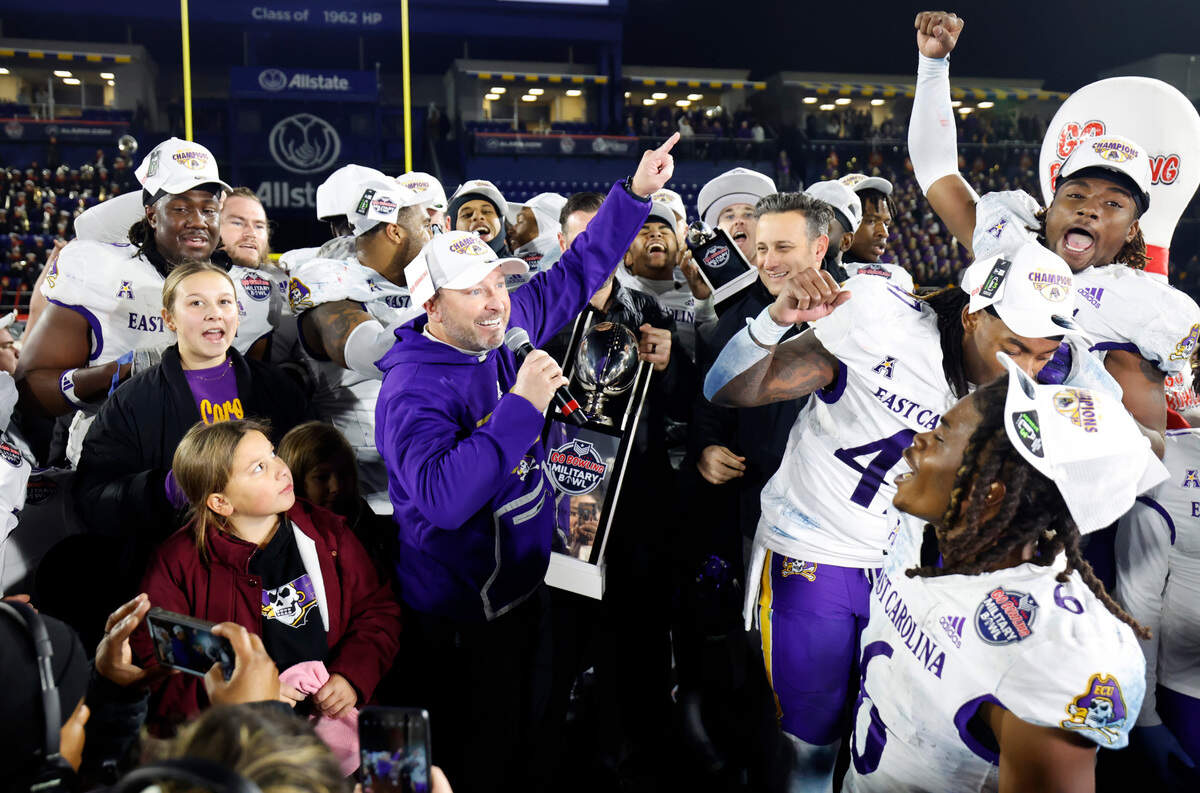
East Carolina head coach Blake Harrell acknowledges the fans after ECU’s 26-21 victory over N.C. State in the Military Bowl at Navy-Marine Corps Memorial Stadium in Annapolis, Md., Saturday, Dec. 28, 2024. Ethan Hyman ehyman@newsobserver.com
Development over dollars
While the monetary aspect is a major variable, the settlement is forcing institutions to grapple with the climate of college athletics and their own value.
Schools have to decide what financial investments make sense and how to enhance their unique traits, Strawley said. Some schools have more money and larger campuses. Others boast more personalized academic opportunities and focus on specific areas of study.
Sports have become professionalized and transactional, but there remains a place for a more traditional approach. ECU and Elon are committed to providing holistic education, that includes resources and opportunities to promote success in every area of a student-athlete’s life.
Smaller schools have to make adjustments, Strawley said, but there’s still a place for them to thrive in the new college athletics environment if they can lean into their unique strengths.
“This is higher education. How do we continue to develop young people? How do we invest in that in a way that aligns with our values?” Strawley said. “As we move forward, that is what’s most important.”