
How Supreme Court upholding transgender athlete ban in women’s sports impacts NC
AI-generated summary reviewed by our newsroom.
- The Court allowed states to bar trans athletes, as applied to Idaho and West Virginia.
- North Carolina’s 2023 Fairness in Women’s Sports Act bars trans women from K-12 and.
- Experts say differing parts of North Carolina law could still be legally contested.
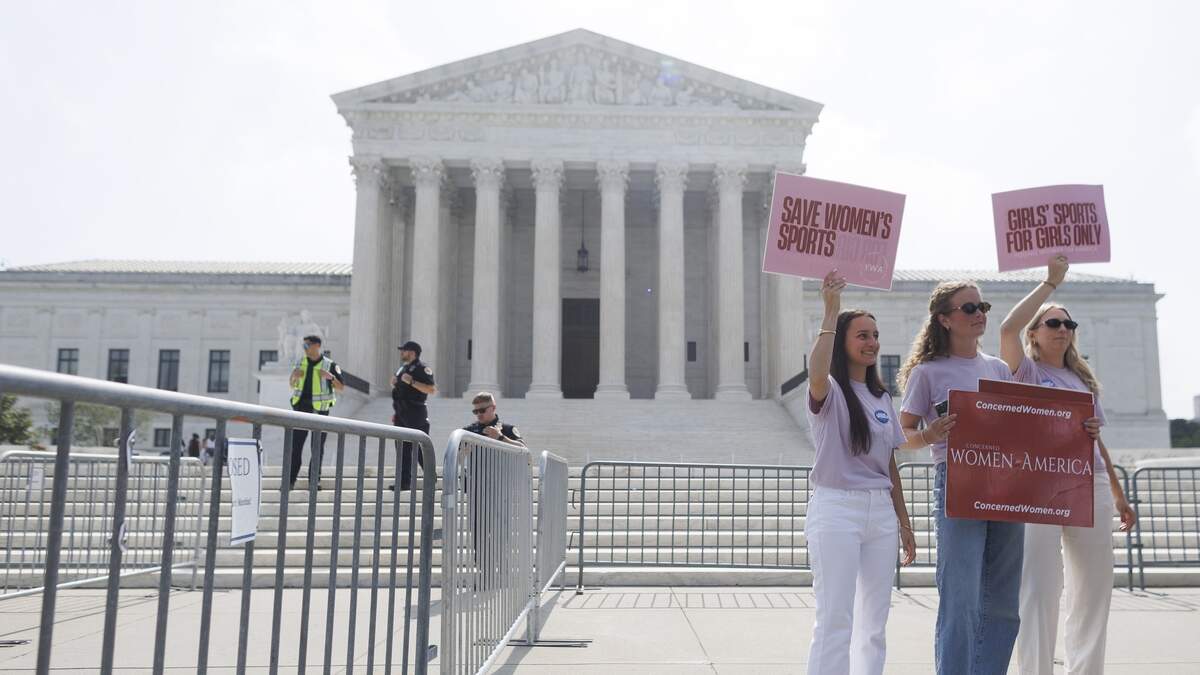
The U.S. Supreme Court permitted states to prevent transgender athletes from playing on women’s and girls’ teams in a 6-3 decision Tuesday that has significance for the 25 other states with bans on transgender athlete participation, including North Carolina.
The court’s majority found that West Virginia and Idaho’s laws barring trans athletes from competing in women’s sports do not violate the Constitution’s 14th Amendment Equal Protection Clause nor Title IX, a federal statute that outlaws sex discrimination in education.
In North Carolina, House Bill 574, also known as the Fairness in Women’s Sports Act, has prevented transgender women from competing in K-12 and collegiate sports since it became law in 2023 following a veto override.
Duke Law Professor Doriane Coleman said Tuesday’s ruling affirmed that the prominent aspect of the state’s statute, which restricts girls’ and women’s sports eligibility to biological females, is permissible under the Constitution and federal law.
Parts of North Carolina law that differ from the states in the Supreme Court ruling could still be contested, UNC Adjunct Law Professor Barbara Osborne said. But because the court ruled that the decision on transgender women in women’s sports is about competitive fairness and safety, she does not expect other courts to gravitate toward similar thinking if considering differences between statutes.
“Allowing biological males to play on women’s and girls’ sports teams,” Justice Brett Kavanaugh wrote in the court’s 29-page majority opinion, “can put women and girls at significant risk of injuries.”
When the North Carolina statute was originally passed into law, Republican State Sen. Vickie Sawyer lauded it by noting examples of women losing against transgender females.
On the contrary, Democratic State Sen. Julie Mayfield said it was an “attack on transgender youth” and would further exacerbate vulnerability among those people.
President Donald Trump called Tuesday’s Supreme Court decision a “BIG WIN” on his Truth Social platform.
“That takes that ridiculous situation off the table!!!” he wrote.
Northwestern Clinical Assistant Professor of Law and LBTQI+ Rights Clinic director, Kara Ingelhart, said she is concerned about the way the ruling creates confusion about the meaning of “sex” in different statutes. While the 2019 decision of Bostock v. Clayton County found that an employer who fires an employee for being transgender would violate Title VII of the Civil Rights Act of 1964, which prohibits employment discrimination “because of … sex,” Tuesday’s ruling provided a different application of sex pertaining to sport. She said the difference could lead bad actors to seek further exceptions to uniform treatment.
Ingelhart added she is also worried about a part of the Idaho statute that requires a “dispute” over a student’s sex to be resolved via a “health examination and consent form or other statement signed by the student’s healthcare provider that shall verify that student’s sex” being affirmed because of its invasiveness to personal health care records and privacy rights.
“When the call is to quote-unquote protect girls,” Ingelhart said, “I’m concerned when the means of doing so is inspecting girls’ bodies.”
According to the Williams Institute at UCLA, transgender people make up just 0.5% of North Carolina’s adult population. Between 13 and 17 years of age, they compose 3% of residents.
In the United States, transgender people make up about 0.8% of the adult population and 3.3% of the youth population.
Of adults surveyed by Pew Research Center in 2025, 66% said they favored laws and policies that “required trans athletes to compete on teams that match their sex assigned at birth.”
Kavanaugh, near the end of the majority opinion, said that transgender athletes’ “desire to compete warrants respect.”
“No student-athlete on either side of the issue,” he wrote, “whether a biological female or transgender, deserves to be ostracized or vilified.”