
1981 Clemson title team set the standard. Now they’re biggest fans of today’s Tigers
The guys who authored Clemson’s first national football championship know from experience the requirements to triumph at the highest level, and they always will cherish the memories from 1981.
Two generations later, they assess the Tigers’ accomplishments of late — five straight journeys to the College Football Playoffs, two national titles and the opportunity to earn a third Monday night, and a 29-game wining streak — and they marvel.
“The team’s so good now that nobody calls about 1981 anymore,” defensive end Bill Smith said and laughed. “Seriously, where the program is and what they have accomplished is pretty neat and just amazing. It’s been building since Day 1 with Coach (Dabo) Swinney and keeps getting better. In the ’80s, we had a good run, but that was nothing quite like this.”
Those “old” Tigers won the 1981 title by going 12-0 and compiled a 30-2-2 record over three (1981-83) seasons. Then, they forged a 57-12-3 mark over six years (1986-91). A roller-coaster ride — “Up and down for the Tigers,” Smith said — followed until Swinney’s influence began to take root.
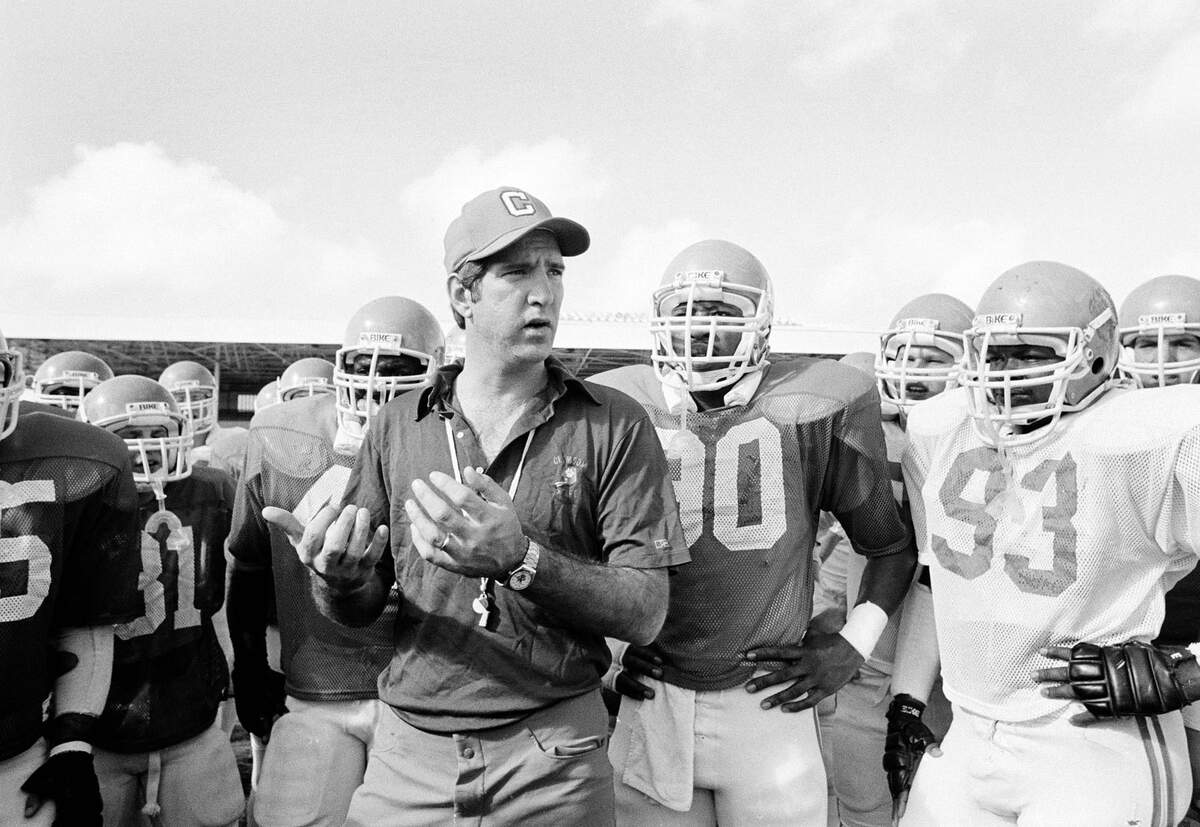
“What the recent teams have done is pretty special, really incredible,” said Danny Ford, the Tigers’ coach from 1979-89. “The university has made a great commitment to athletics, and that has paid off on the field.”
Mark Richardson, a defensive end in ’81 and former president of the Carolina Panthers, now lives in Charleston and operates a commercial real estate and investment firm. He went beyond the games in evaluating the program.
“I’m just as proud of what his players have accomplished off the field as what they have done on the field,” said Richardson, a member of Clemson’s board of trustees. “They have a lot of talent and are so much fun to watch, and the success of the football team has created a lot of exposure for the university, really raising the profile in all aspects.
“What’s impressive to me is the football program has climbed to the mountain top and has been able to stay there. A lot of teams can get up there briefly, but it’s special to be able to stay there.”
“Staying there” is challenging, agreed 1981 quarterback Homer Jordan. The Tigers, with 13 straight wins, opened the 1982 season at Georgia, the 1980 national champs, in a game moved to Labor Day night for television. The Bulldogs won 13-7, and Clemson followed with a 17-17 tie with Boston College.
“We won the rest to finish 9-1-1, and that’s what makes winning 29 in a row so impressive,” said Jordan, a businessman in his hometown of Athens, Georgia. “We had a mindset that nobody could beat us but us, and I think the players now feel the same way.
“We went to the Orange Bowl (to face Nebraska) ranked No. 1 and we were the underdog. We thought, ‘We’ll show you who we are,’ and we did. The Tigers are underdogs against LSU this year, and we hope history repeats.”
Perry Tuttle, the Tigers’ All-American wide receiver in ’81 who graced the cover of Sports Illustrated after the national title game, “loves the whole team and especially the wide receivers now. They’re so good; I get jacked up watching them play.”
In reflecting on the sustained success, Tuttle said, “Forget it’s Clemson. In pee wee football, high school football, in anything, what they’re doing is hard to accomplish. The game’s different now, but the same things go into winning — talent, passion and football IQ. And these guys, players and coaches, work.”
Tuttle, a motivational speaker based in Charlotte, calls himself “75 percent a dad and 25 percent a worker” two generations after Clemson’s first championship season and said, “A program doesn’t get where Clemson’s is by accident.”
Smith, a commercial developer who lives in Columbia and is a member of the university’s board of trustees, concurs. Clemson fans will remember him for his 10 tackles in the 22-15 victory over Nebraska and, perhaps more significantly, for forcing the fourth-quarter fumble that sealed the 10-8 win over eighth-ranked North Carolina.
“The expectations are obviously different now,” he said. “We were coming off a 6-5 season and didn’t get a vote in the pre-season polls in 1981. It’s truly amazing how Coach Swinney has built the program and he has built it the right way. Coaches, players, philosophy ... it’s all there. They all believe.
“I give (now retired athletic director) Terry Don Phillips a ton of credit for believing in Dabo. Yes, there were growing pains, but Terry Don believed in Dabo and his philosophy and we (the board) followed his recommendation. Terry Don believed we had the right person and we had to hang with him. The success is no surprise. He’s very driven and believes in his process.”
Dan Benish, an All-ACC defensive tackle in 1981, joins the chorus of believers. Sure, the Tigers could win consistently, he said, “but no one would foresee what has happened. The chance for three national championships in four years? That’s incredible.”
Benish, who lives in the Atlanta area and works with a medical group that provides primary care, is an uncle of Mitch Hyatt, the Tigers’ all-star offensive tackle who graduated last year. The association gave him an inside look at the program.
“Consider the whole picture,” he said. “The way they do things. The incredible facilities. It’s truly amazing and exciting.”
Like anything else, football has evolved over the years and of course offense rules today. Ford, a disciple of defense, calls the emphasis on summer programs and 7-and-7 competitions the difference maker and joked, “I’d like to see some 5-on-5 camps” for linemen.
Still living on his farm near Clemson, he tailgates at Death Valley to associate with fans before heading home to watch the games on television.
“You have to recruit well and have players develop,” he said. “They didn’t miss a beat between (DeShaun) Watson and (Trevor) Lawrence, and they have reacted (well) to adversity. They’re doing what our team always wanted to do — be the best you could be.”
Common denominators? There’s talent, of course. There’s coaching. There’s leadership. There’s accountability.
“We were a heavy junior-senior team and the current team is younger, but they are building on (the legacy) left by classes that have moved on,” Smith said. “We held each other accountable, and this team does, too. Coach Ford and his staff did, and Coach Swinney and his staff do.
“This is not a fluke. To get in the college football playoffs every year ... you don’t do that by getting lucky. I couldn’t be prouder of the program or the university. ... It’s One Clemson, and it’s more than football. Get people pulling in the right direction and pulling together, and it’s amazing what can be accomplished.”
The 1981 Tigers set the standard, illustrating they could triumph at the highest level. The current Tigers have raised the bar higher ... and the “old guys” could not be more thrilled.
This story was originally published January 11, 2020 at 9:15 AM with the headline "1981 Clemson title team set the standard. Now they’re biggest fans of today’s Tigers."