What’s it like to face Brent Venables’ defense? We asked former college QBs who did
For former college quarterbacks who faced Clemson during their careers, there was film study for every other opponent ... and then there was film study for a Brent Venables defense.
“The majority of defenses that I played against, if you study them enough on film, you see a defense in a certain package or a certain formation, there’s really two or three options that that defense can run,” former Syracuse QB Zack Mahoney told The State. “When you’re playing Clemson they can come out in the same thing and run seven different things. And it sucks the most because they have the athletes to do it.”
Coaches and players spend hours upon hours watching film each week, searching for tips and tendencies to carry over to game day.
Oftentimes, when you’re playing Clemson, you get to the game and see something completely different from what you watched on film all week.
“When you prepare for Clemson you’re pretty much preparing for the unknown,” said former Wake Forest QB and receiver Kendall Hinton. “Every week we would go into Clemson we would have no clue what Venables was gonna show us. We know what he’s shown the past six weeks, and it’s been different four times.”
The State spoke with five former college quarterbacks and two former head coaches about facing Venables and what makes his defenses so tough.
They offered insight into his exotic blitzes that keep quarterbacks and coaches up late at night, and also offered tips on how to try to attack the Tigers. They also warned that if you do happen to find something that works, don’t expect it to work for long.
“The biggest thing is once you find an area that you think you can exploit or a little bit of a hole, he can adjust pretty quickly,” former Georgia Tech coach Paul Johnson said. “He didn’t make anything easy for long. If you found something, I think he’s got a system and he knows how to fix it.”
‘It was like a tornado’
Hinton faced Clemson four times during his college career — three times as a quarterback and once as a receiver.
What stands out the most about those meetings?
“It’s no telling what you’ll see with Venables ... especially with those third-down blitz packages,” Hinton said.
Clemson has finished in the top 15 nationally in opponents’ third-down conversions every year since 2013, and those third-down blitz packages are a big reason why.
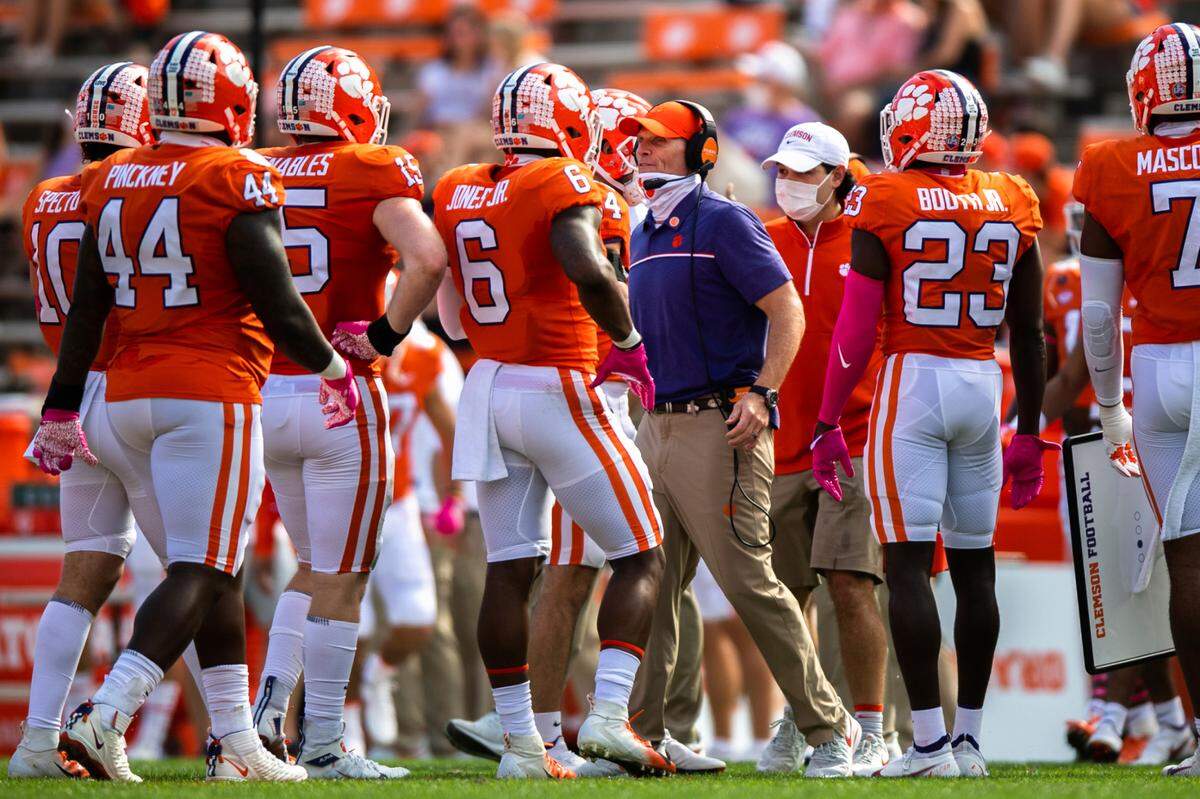
“It was like a tornado,” Hinton recalled. “Guys were moving everywhere. And you never know who’s coming. That’s one of the difficult things is that they’ll show a Cover 2 look and end up bring Cover 0. Or they’ll show Cover 0 and drop into an eight-deep coverage. When you’re able to disguise like that, it makes it really tough.”
Mahoney, who started against Clemson in 2015 and saw action as a backup in 2016 and 2017, remembers going through walk-throughs the week of the Clemson games and trying to take everything in.
“There’s more blitzes that they run than anybody else. Normally a blitz walk-through period is 10 minutes and you’re going over who’s going to blitz and this and that,” Mahoney said. “You can’t get through all of Clemson’s. ... And if they’re showing something on film they’re probably going to switch it up the next week.”
Former South Carolina quarterback Perry Orth, who started against Clemson in 2015, added that in a third-and-long situation there is no telling what you will see.
“The only tip that I remember was we knew on third-and-7-plus that something funky was coming, but we didn’t know what it was,” Orth said. “There were times he blitzed all the linebackers and dropped all the defensive linemen. Like, who the hell does that?”
It’s more than just the scheme
Before Mark Richt was the head coach at Georgia from 2001-15, he served as an offensive assistant at Florida State.
During that time, he faced “some of the greatest defenses I’ve ever seen” going up against Miami in its heyday.
“Miami quite simply lined up in a 4-3 look and a Cover 2 and played it almost every single snap, because they were just that good,” Richt said. “They didn’t have to do anything schematically. They just let their players play.”
The two times Richt faced Venables during his tenure at Georgia, and their one meeting during Richt’s three years at Miami, he was reminded of his matchups with those Miami defenses from the 1990s.
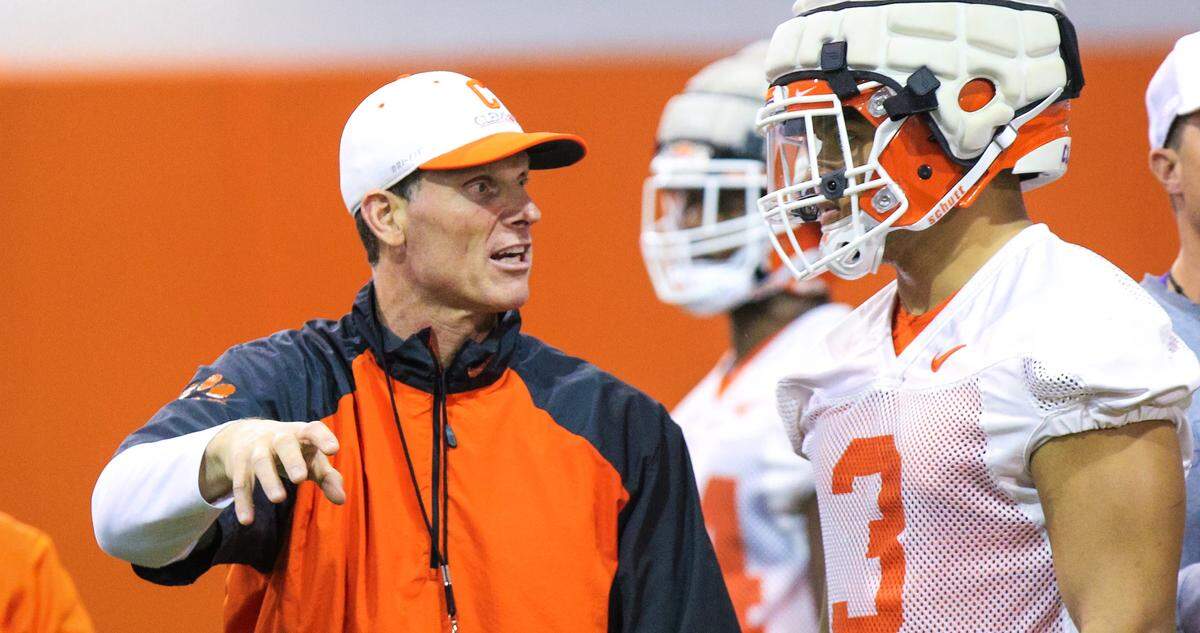
“He’s got that kind of talent,” Richt said. “Plus, he’ll add the flavor of blitzes and forcing quarterbacks to scramble to their off throwing hand. He’s a sharp guy with a great mind. And a quick-minded guy that can make the call at the last possible moment to get them in the best situation.”
Clemson has more talent than any other team in the ACC, which is part of the reason Venables can be so multiple. He can take chances and trust his defensive backs to play well in one-on-one situations, and he can also bring blitzes from all over the field and trust that his players can get there in time to make plays, thanks to their speed and athleticism.
“When you have players that can get across the field on a normal three-step drop, you can really have fun,” Mahoney said. “I think Brent does a great job of having fun with the guys and trying new stuff out.”
Clemson has signed a top-20 recruiting class every year since Venables arrived at Clemson in 2012, according to the 247Sports Composite rankings. That includes a top-10 class each of the past three years.
Richt believes that the talent Clemson has allows it to overcome injuries and continue to put out top-10 defenses year in and year out, no matter who moves on to the NFL.
“You’ve got the starters doing their thing and the backups get a lot of work because of the margin of victory. So those guys are developing. The second-teamers and even third-teamers are developing,” Richt said. “So by the time the guys turn pro and hit the road, the next group is ready. They’ve been playing a good bit, being developed and are already very talented to begin with coming into the program.”
How can you have success against Clemson?
As good as Clemson’s defense is and has been under Venables, no one is unbeatable.
The Tigers had trouble stopping what was arguably the greatest offense of all time last year against LSU in the national title game and have lost fives games since the start of the 2015 season.
One of those losses — and Clemson’s most recent regular-season loss — was to Syracuse and QB Eric Dungey in 2017. Yes, Tigers starter Kelly Bryant was injured during that game, but Syracuse also moved the ball on Clemson most of the night.
The Orange used a hurry-up attack to keep Clemson off balance and finished with 440 yards of offense, with Dungey accounting for 339 yards and three scores.
“For the first most part, we really just harped on tempo. I remember that week we tried to get the most plays that we could, because we were going to use tempo to our advantage,” Dungey said. “We were overmatched size-wise, but I think when we used our tempo, and obviously it showed, we were able to make plays. We really harped on taking care of the ball, and if we win the turnover battle we had a higher chance of winning the game. Obviously, that worked out.”
Former Georgia quarterback Hutson Mason, who helped the Bulldogs to a win over Clemson in 2014, also pointed to tempo and establishing the run as ways to move the ball against the Tigers.
“You’re giving up execution because you know it’s going to be a little more sloppy when you’re going fast. But you believe that going fast will make up for the lack of execution because defenses won’t be able to get lined up,” Mason said. “Those are some parts that I think still remain true today.”
All five quarterbacks who were interviewed for this story mentioned using tempo as a way to have success, stating that Clemson can’t be as creative and multiple with its defenses when you’re lining up quickly and snapping the ball.
Former South Carolina QB Jake Bentley passed for 510 yards and five touchdowns against Clemson in 2018, and while Orth was no longer on the team, he could tell what the Gamecocks were doing to have success.
“It was the tempo and the changing around of the receivers. They had Deebo Samuel playing slot, playing outside, doing a bunch of different stuff to keep Clemson playing on their heels. They lined up in different, odd formations. They had new plays and new formations for the week, stuff that Clemson had never seen before,” Orth said. “And then ultimately they pushed the ball vertical.”
Taking shots down field is something both the coaches and quarterbacks agreed upon.
“When we had some success, we hit some big plays,” Johnson said. “They’re hard to go down the field 4 and 5 yards a pop on. If you’re gonna have any success against their defense, you’ve gotta hit big plays.”
Having a running quarterback also helps, if you’re able to avoid blitzing defenders and get into the open field. When Clemson is playing man coverage and defenders have their backs turned, it can open up running lanes.
“A lot of times I was running, because when you play a man team, especially a Cover 1 team, they account for everybody and the quarterback’s not accounted for,” said Hinton, who rushed for 92 yards against Clemson in 2017. “So it opens up a lot of things.”
Attention to detail
While teams have found ways to have success against Clemson, it usually doesn’t last for long.
Syracuse ran plays out of formations it hadn’t previously shown when facing the Tigers in 2015 and rushed for 242 yards. Mahoney, who was the starting QB that evening, said he had an unusual experience after that game involving former Tigers star linebacker Ben Boulware.
“He came searching for me. When he finally found me he said, ‘Hey, great game, but man, you gotta break it down. How the hell did you run all that stuff?’” Mahoney recalled. “We didn’t show a lot of stuff in earlier games, so there were certain formations that we definitely brought out. From a player perspective we were running the same stuff, it was just a different presentation.”
Boulware wanted a breakdown in case another team tried something similar later in the year.
In 2016, Clemson suffered a 43-42 loss to Pitt, its only defeat of the season on the Tigers’ way to a national title.
The Panthers had success throwing to running backs, tight ends and fullbacks against Clemson, and in particular used the shovel pass to carve up the Tigers defense. Pitt passed for 308 yards in the stunning upset.
The next week at practice?
“We ran that shovel pass a billion times, and if we didn’t stop it, it was run again,” former Clemson linebacker Judah Davis said.
Teams tried it over and over against Clemson the rest of the year, with no luck.
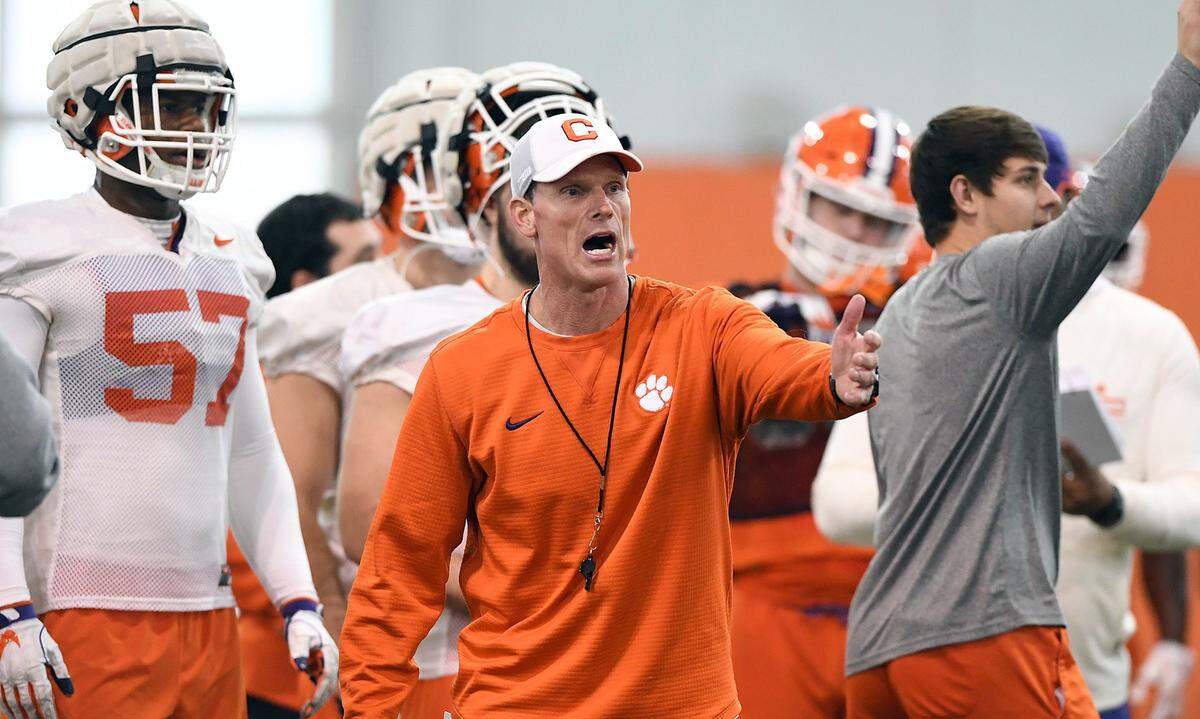
“On the sidelines you could see his pride every time we stopped it,” Davis said of Venables. “That’s part of what makes him special is his ability to mastermind and scheme things, especially once he’s seen it. He has the ability to fix a lot of stuff in game, and if not it will be fixed by the next Monday.”
After Syracuse used tempo against Clemson to pull off its upset in 2017, other teams tried that as well. You can still limit Clemson’s ability to be creative with tempo and can occasionally catch a player off guard here or there. But as far as running plays before Clemson can get lined up?
“After that game Venables didn’t allow it to happen again,” Richt said. “You might catch them once a game or something.”
Staying at the top
In today’s world of college football, it is becoming harder and harder to play defense consistently well.
Programs like Alabama and LSU, which used to set the standard for playing great defense, are now finding themselves in occasional shootouts.
Already this year, Alabama has allowed 48 points to Ole Miss, while LSU has surrendered more than 40 points twice.
Despite the new-look offenses and evolving schemes, Venables has found a way to keep his unit consistent. The Tigers are the only program in the country to rank in the top 10 in total defense each of the past three years. In fact, Clemson has ranked in the top 10 in total defense for six consecutive years heading into this season. The Tigers’ defense is currently No. 10 nationally in 2020, despite having to replace eight starters off of last year’s unit.
“There’s a lot of defenses, especially right now like at Florida, LSU, a lot of them are playing really, really bad defense. But Brent really hasn’t had that roller-coaster of performances,” Mason said. “His defense has been very, very consistent and stable. That’s a tribute to his system, how it’s very flexible to the players’ skill sets. It’s a credit to his ability to simplify his system to get his players to play at a high level.”
Venables was recently asked if big plays are inevitable in today’s world of college football with the way offenses are designed.
“We gave up two big plays the other day (against Syracuse),” Venables said. “There’s nothing that’s OK with that. You give up a 60-yard run or an 84-yard pass, it’s never fine. It’s never OK, regardless of the situation.”
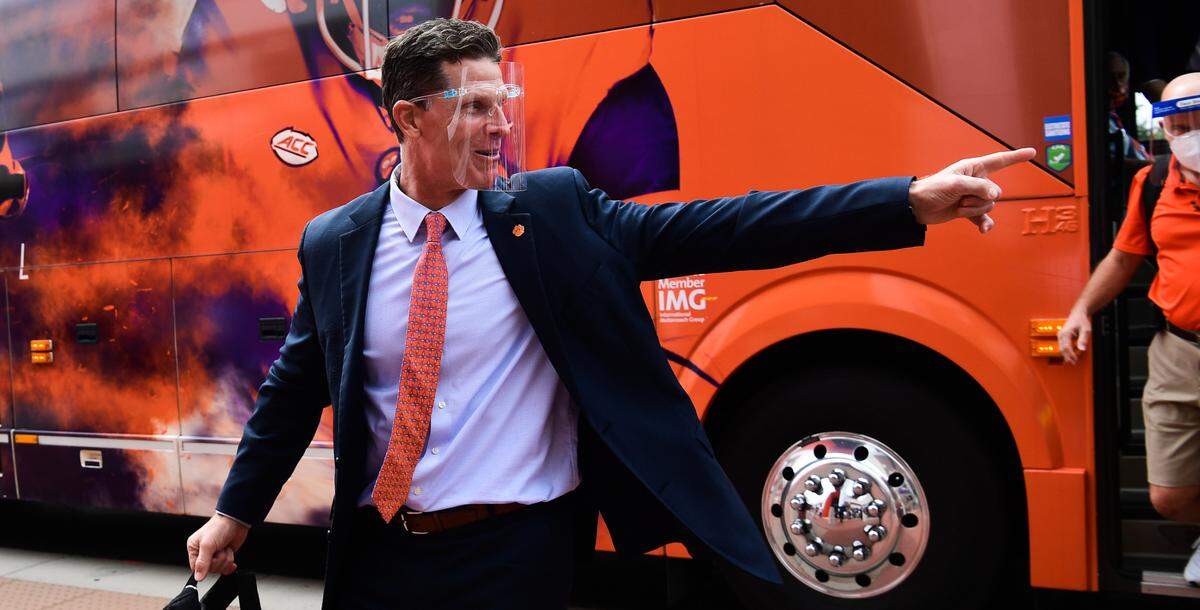
It’s that mindset and attention to detail that make Venables’ defenses so good, year in and year out.
“He demands the best from everyone,” Davis said. “That can go from his starting Mike linebacker down to a redshirt guy who is on scout team. The bar is set and it doesn’t change no matter what state in your career you’re in. I believe that’s what really fosters the environment of competition and wanting to be the best that you can be.”
This story was originally published October 29, 2020 at 5:00 AM with the headline "What’s it like to face Brent Venables’ defense? We asked former college QBs who did."