How are UNC, NC State, Duke ADs approaching ACC and college sports evolution?
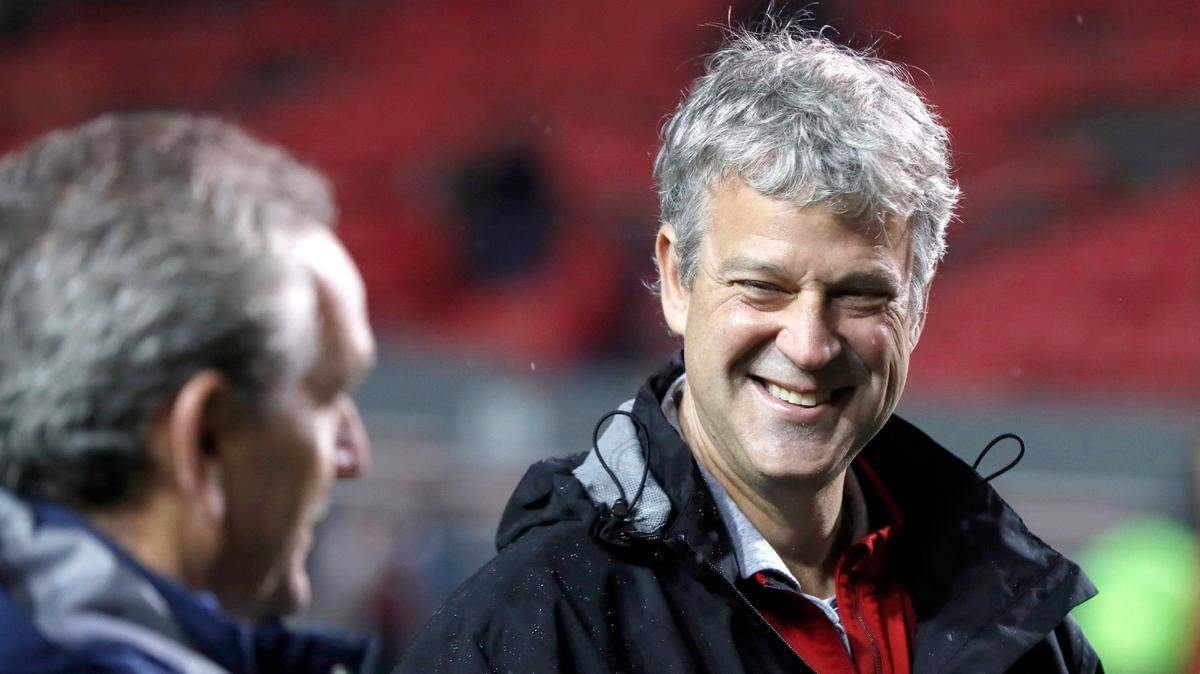
Editor’s note: This story is part of an occasional series about the future of the ACC, and college athletics, and questions facing both in a rapidly changing landscape. In this installment, reporter Andrew Carter explores multiple different topics with the ADs from three Triangle ACC schools.
The rivalry among the Triangle’s three ACC schools is well-documented and well-established and as old as time itself — or at least as old as the its origins in the old Southern Conference, and the olden days of the ACC. And so the most impassioned supporters of Duke, N.C. State and North Carolina might be disappointed to learn an uncomfortable truth:
The leaders in charge of running all three athletic departments are fairly good friends. And, in the case of UNC’s Bubba Cunningham and N.C. State’s Boo Corrigan, close friends, indeed. Quick trivia question: When Cunningham worked as an administrator at Notre Dame in the late 1990s and early-2000s, which current ACC athletic director babysat his kids?
The answer: Duke’s Nina King, who then was a student at Notre Dame before returning to work in the athletic department there. Corrigan, Cunningham and King are all Notre Dame alumni, and all, in one way or another, got their starts in college athletics administration there. Now, they’re in the same neighborhood, charged with leading their schools through a particularly turbulent time.
The News & Observer’s Andrew Carter recently spent time with all three of them during the ACC’s annual spring meetings in Amelia Island, Florida. Here’s a roundtable conversation, of sorts, about some of the issues facing the ACC and college athletics, at large. (Though, for the record, the conversations with each took place individually.) The interviews were edited for length and clarity.
ANDREW CARTER: What’s your level of anxiety about the so-called elephant in the room — that being that the ACC is falling farther and farther behind the Big Ten and SEC in revenue?
BUBBA CUNNINGHAM: We talked about it at length. I think the biggest part (of consternation within the conference) is probably some poor communication. I think everybody in the room is interested in generating more revenue ... And the gap between where we are and where we’re going compared, compared to the SEC and Big Ten, is real. And so how do we go about trying to solve that?
BOO CORRIGAN: We just have to continue to explore as many options as we can. And it’s easy to say, “We got to find more money,” right, but we need to make sure whatever we’re doing, we’re doing it the right way. Does it balance with what we’re providing for our students? Are we providing mental health (care)? ... You know, what do we do to be a great partner with ESPN, but a great partner with each other? To make sure that we’re scheduling competitive games and everything that goes into it. So it’s not just “we’ve got to have more money,” it’s all the steps along the way to figure out if we’re maximizing everything on our campus, at N.C. State, and that Bubba’s doing it and then Nina is doing it and then the rest of it — but that we’re looking at everything, individually and collectively.
CARTER: There was a lot of angst during spring meetings surrounding the tweet about the so-called “Magnificent Seven” — that seven league schools were exploring the strength of the ACC’s grant of rights. It took on a life of its own on social media. What was your reaction?
KING: I mean, the social media machine sucks (laughing). There’s no other way to put it. But my initial reaction was, ‘Oh, boy, here we go.’ Because I’ve been in these rooms. And I’ve been talking to colleagues, and we’re having conversations. And so I know, I haven’t been asleep on the job that I’ve been in for the past two years. ... I didn’t panic. But it just set us up to have some conversation here, and let’s talk. We’re still continuing to talk about how the 15 (members) can continue to work together. And we need to figure out as a league, how do we get bigger, faster, stronger?
CARTER: After that came out and amid all the Twitter hysteria, the league’s athletic directors — minus Notre Dame’s Jack Swarbrick, who wasn’t in attendance — met behind closed doors for a while. Did you leave feeling more unified than before?
CORRIGAN: I don’t know that it was ever completely ununified. But I think there’s a recommitment to (the league), sure. I do. Like, we’ve got to figure this out together. Because we’re going to be stronger together than we are as individuals.
CARTER: What’s your level of confidence in the ACC finding a viable path forward?
CUNNINGHAM: I have tremendous confidence and faith. I think it’s great league — always has been, (and) will be. You know, I do think that lawsuits, new legislation, media rights, all of those things — could it change things in the future? Sure, maybe probably. But short term, I think we’re in good shape.
KING: I think that’s where that’s where we all need to be working together to work on that. We’re hoping for federal legislation and NCAA, with Governor Baker coming in, to kind of come in and be our Savior, right, and fix the mess, which is certainly going to take some time. But I think we’ve got leverage as a conference where we’ve got 15 incredible institutions where we can work together to figure this out, at least for the good of our institutions.
CORRIGAN: I’m very confident in ACC. The idea of being able to predict what’s going to happen in 20 years — who knows, right, what 20 years looks like? But as far as the ACC, I think it’s going to be around for a long time. Much of what we do has changed so dramatically in the last three years. Does it continue to change or not? I don’t know. But, you know, the ACC has been around 70 years and I’m sure it’ll be around for a 100th celebration at some point.
CARTER: To Nina’s point, hoping for Congressional intervention on things like NIL — that’s been the hope now among college athletics administrators and leadership for a while now. How much optimism should there be that Congress gets anything done on this front any time soon?
CUNNINGHAM: I don’t know the answer to that. I’ve heard people say that our Congress is more interested now than they’ve ever been. I’ve heard others say, “No way. They’re not going to do that.” So, I’m not sure which one’s right. And I’m not a DC expert.
CARTER: As it relates to N.C. State in particular, Boo — what would you tell Wolfpack supporters who might be concerned about N.C. State’s place in a world of continued conference realignment, and concerned in particular about State maintaining its place at the table?
CORRIGAN: Let’s continue doing what we’re doing. Let’s continue to win, let’s continue to fill stadiums, let’s continue to watch games, let’s continue to be engaged with this great university. If you get into a situation, that’s what people are going be looking for. They’re not going to be looking for, you know, a university that sells half their football tickets, goes to half the basketball games, graduates, half our people. ... As a group, we are doing really good things right now. And that’s the attractiveness. I mean, is there a better city than Raleigh, and where we are, and a better university; a growing university, and companies coming to Raleigh to recruit our students and go to Carter-Finley and have a great time. Those are the elements that people are going to look for, so let’s continue to lean in to who we are and what we are and make it even greater.
CARTER: A similar question for Nina. In a college athletics world so driven by football, how concerned are you about Duke’s ability to maintain its place? The university has invested in football, yet it has been a slow process, especially when it comes to filling the stadium and generating interest.
KING: Of course, there’s a concern when we’re so dependent on football. But I think for us, it’s the opportunity — like, we realize what it can be at Duke. And so that’s why (we’ve had) so much focus on football and really building the program and building community around football. And no, sure, we’re not packing Wallace Wade for six or seven Saturdays a year, but there’s the opportunity of how we get there. And and so when Mike (Elko) came and brought an incredible staff, I mean, the first thing was building community. And he started within our campus, and students are coming to games, and they’re fired up. ... So the students are excited and the campus community is excited, and we’re pulling the Durham community in. And I have read that Duke has 21,000 new employees since Covid. The turnover’s just been incredible. So there’s (potential for) 21,000 new season ticket holders — get their butts into Wallace Wade, right? So let’s find those opportunities to get people supporting our program.
CARTER: It seems like a lot of what ails college athletics could be solved — or at least addressed in a sufficient manner — if football could just be separated. It’d be complicated and perhaps it’s a pie-in-the-sky thought, given everything such an arrangement would entail. But why can’t the commissioners from the power leagues get together and figure out a way to work together for the future of the sport? Have the top 48 or 64 teams whatever the number is — and separate them and share TV money that way.
CORRIGAN: I think it’s a worthy exploration. And (having) a commissioner of football, a commissioner of basketball, commissioner of women’s basketball. ... It is really different. It’s a different way of looking at it. But my thought process at this point is that everything has changed so much. Why not continue to think differently? Because the traditional model is not what it was, I don’t know, five years ago. Much less 20 years. So why why do we need to think about everything on the same plane that we always have, because that’s the way we always have. So I think (separating football) is worthy of exploration.
CUNNINGHAM: It could be — and it may be. There’s certainly a lot more discussion about that. But, you know, college sports was managed centrally by the NCAA for a long time. And in 1984, there’s a lawsuit that said you’re in violation of antitrust, which broke it into conference (television) contracts. And so now we’re defined by our conference. So you do have football, (the College Football Playoff) sitting out there, you got the NCAA basketball tournament that drives this funding the NCAA, and you have conference contracts from all of our Olympic sports, if you will. So, you do have to follow the money to figure out a solution. We’re singular members of the NCAA by school, not by sport. So the entire governance structure is predicated on competence. And so you’d have to unwind all of that.
KING: I think you should do your pie-in-the-sky story idea (laughing). Listen, it’s something that we certainly talk about. Like you said, it’s complicated, right? I mean, the money that goes into football that supports the rest of our programs, you know, how do we kind of reconcile how we make all of that work?
CARTER: Not that any of your schools would ever consider this, or are, but could you foresee a day when a major-conference school just decides to get out of major college athletics? Like, pulls a University of Chicago from the 1940s (when that university decided to give up football and leave the Big Ten) and just says, “this isn’t for me?”
CORRIGAN: At its core sports, to a large degree, brings people together to celebrate the university. They’re going to come back for the football game or the basketball game, or whatever that is ... (and) they’re not coming back for the big physics test. It’s such a gathering point. It’s such a fabric of what we do. ... We’re not going to do it. But I’m sure other schools — everyone’s fighting a different fight, and I understand what’s going on. But man, I think it would be really hard to go away from it.
KING: I don’t know. I mean, what we add to the brand, I think, can’t be overstated. What’s interesting is we just had a trustee meeting and I presented and afterwards, they’re all buzzing about athletics, and they all want to talk about athletics, the good and the bad, and just, you know, peek behind the curtain and understand what’s going on how we’re doing things at Duke. And then we talked about the hospital, but then they want to come back to athletics. And so just the interest and the buzz around it, and I think you’re going to find that on a lot of campuses. And so figuring out the financial challenge, how to get a return on that investment, is really important.
CUNNINGHAM: I think that’s a possibility (that a school could give up major college sports). I think that, you know, again, if the National Labor Relations Board or a court or the NCAA drastically changes the relationship between students and the university, I see schools making different decisions. But I don’t know what would be the tipping point for each individual school.
This story was originally published June 9, 2023 at 12:07 PM.