‘It’s where I belong’: Triangle college football teams continue in-state player push
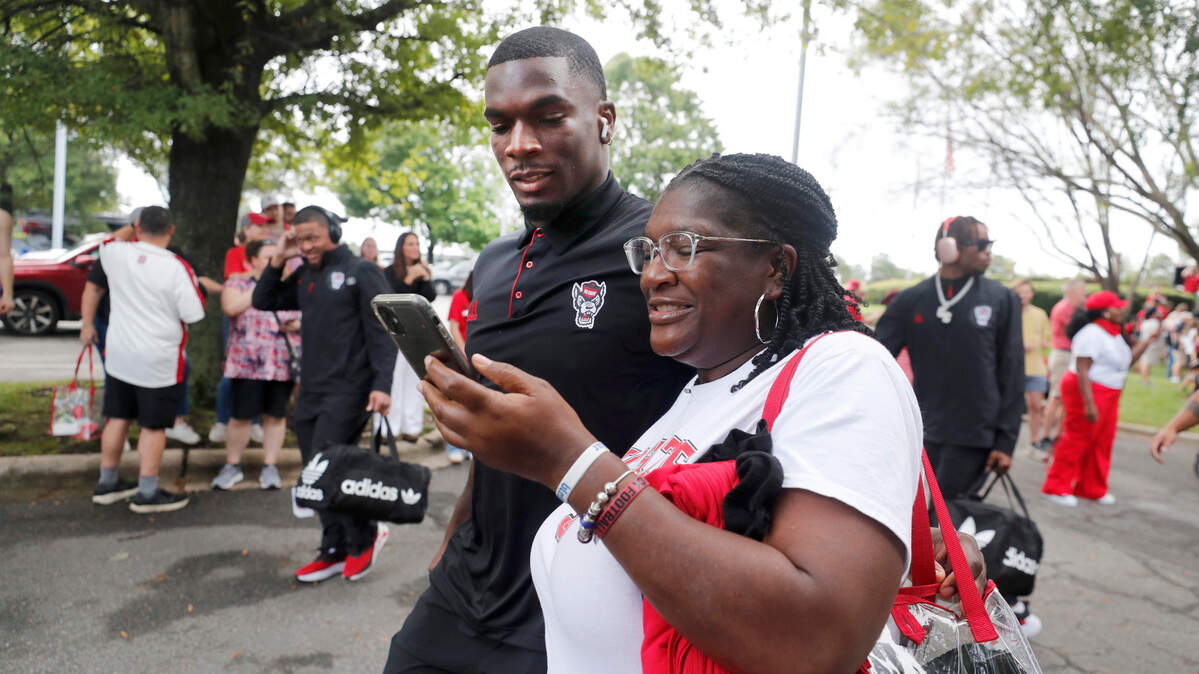
Tonya Fleming, mother of Duke-turned-N.C. State running back Jordan Waters, greeted her son with a big smile during the Walk of Champions on Sept. 14 as the Wolfpack entered Carter-Finley Stadium for its game against Louisiana Tech.
Fleming, of Fairmont, North Carolina, made the two-hour drive to be at the game.
North Carolina defensive lineman Jahvaree Ritzie is featured multiple times on his mom’s social media pages as she brags about his career with the Tar Heels. She, too, has easier-than-most access to see her son in action, traveling to Kenan Stadium from Kernersville, North Carolina, just 70 miles away.
In the past five seasons, approximately 320 players from the state of North Carolina played for one of the three FBS football programs in the Triangle. The reason they stayed — or, in some cases, returned — was largely determined by the idea of home. They were attracted to the comfort and familiarity, to the proximity of being near the people who love them most.
“Playing in front of my sisters and my momma, just having them at my games, that means a lot to me. It makes me play harder,” Wolfpack cornerback Tamarcus Cooley said.
Cooley is from Knightdale, went to school at Rolesville, and started his college career at Maryland before transferring to N.C. State.
“It’s home,” Cooley said. “Eventually, I was gonna have to come back, and I wanted to, because it’s where I belong.”
Added Ritzie: “You’re able to represent for your state, represent for your city, just playing in your backyard. I think that’s so epic, because why not rep your school? Why not rep where you’re from? I’ve been in North Carolina all my life, so it’s like, Why not Carolina? I feel like that’s just something major to me, because not a lot of guys do that.”
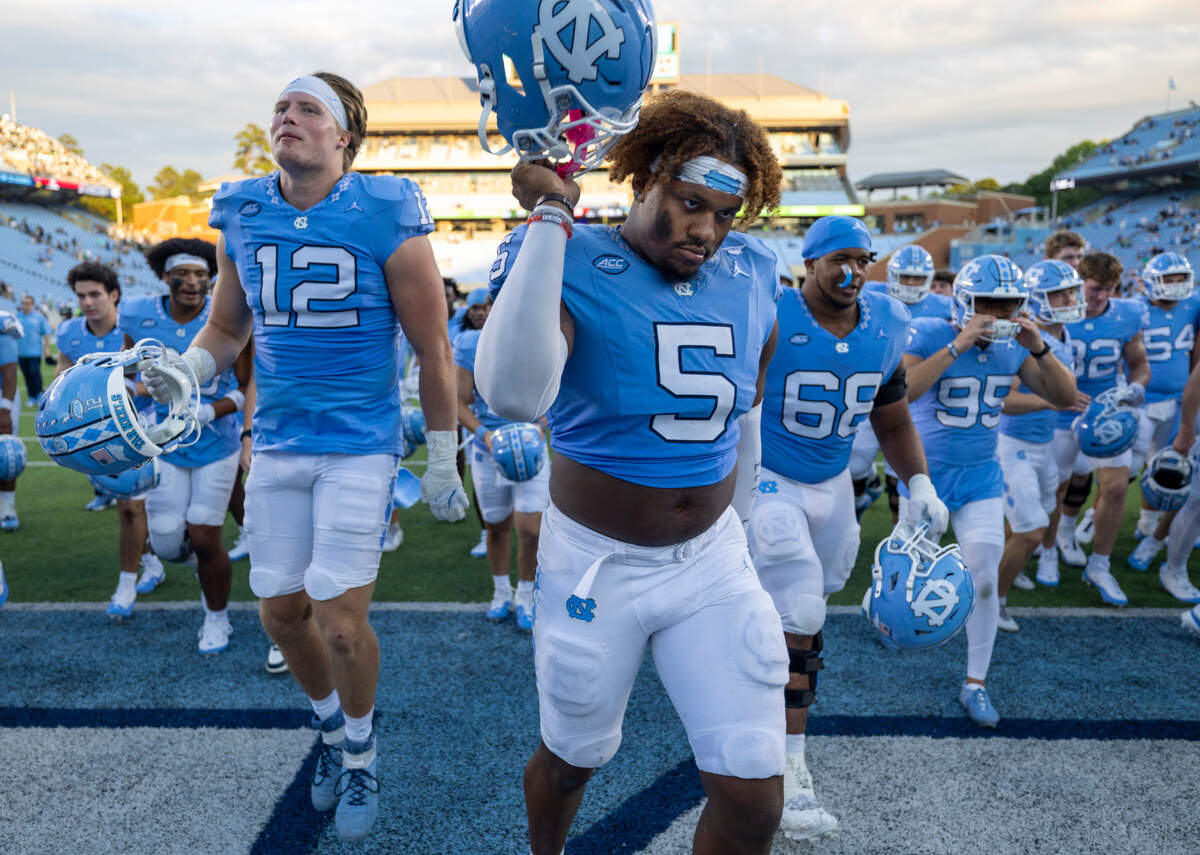
There’s a good reason the schools themselves want to recruit these players, too: North Carolina knows how to produce pro players.
According to a study of NFL rosters published in 2022, the state of North Carolina had the fourth-most homegrown players in the NFL with 110, behind only Texas (211), California (151) and Florida (149).
Which football program has had the most success recruiting in-state players? That all depends on the metrics, of course — and there are plenty to use.
The News & Observer evaluated the number of in-state players at N.C. State, UNC and Duke over the past five seasons to determine trends. All numbers in this report are based on combined information from each athletic department and the NCAA. There is an estimated 3% margin of error.
Here’s what we found from the 2020-24 rosters:
N.C. State leads the pack
The Wolfpack led all football programs with 166 players from North Carolina in the past five years. UNC featured 117, and Duke came in with 38.
These numbers reflect N.C. State and UNC’s overall recruiting philosophies, with both programs aiming to keep local players from leaving the state, an approach that’s been in place for several years.
“I think guys want to stay at home,” outgoing UNC coach Mack Brown said in 2018 after he was hired for a second stint at Carolina. “If you can find what you want at home, you’ll stay. Your parents can see you play. Your friends can see you play. Your high school coach can see you play. It’s our job to make sure that we have a product that’s the cool place to be and something they would like to be involved with.”
The Wolfpack’s 166 players have appeared in 2,382 games, as of Oct. 24, which leads all three schools and reflects the Pack’s larger number of in-state athletes.
UNC’s in-state players have appeared in 1,788 games, while Duke rounds out the group with 676 games played.
The 2024 rosters also reflect the continuing trend: On N.C. State’s roster, 73 of the 123 players listed (59.3%) have a North Carolina hometown. At UNC, that number is 48 of 122 (39.3%), while at Duke it’s 18 of 113 (15.9%).
Linemen on both sides of the ball, linebackers and wide receivers made the most appearances, while positions like long snapper, quarterback and punter had the fewest number of games. These results mirror the number of total players at each position; typically a team has more linemen than, for example, punters.
UNC, however, has had the most success at QB — both Sam Howell and Drake Maye, the Tar Heels’ recent star quarterbacks, are from North Carolina.
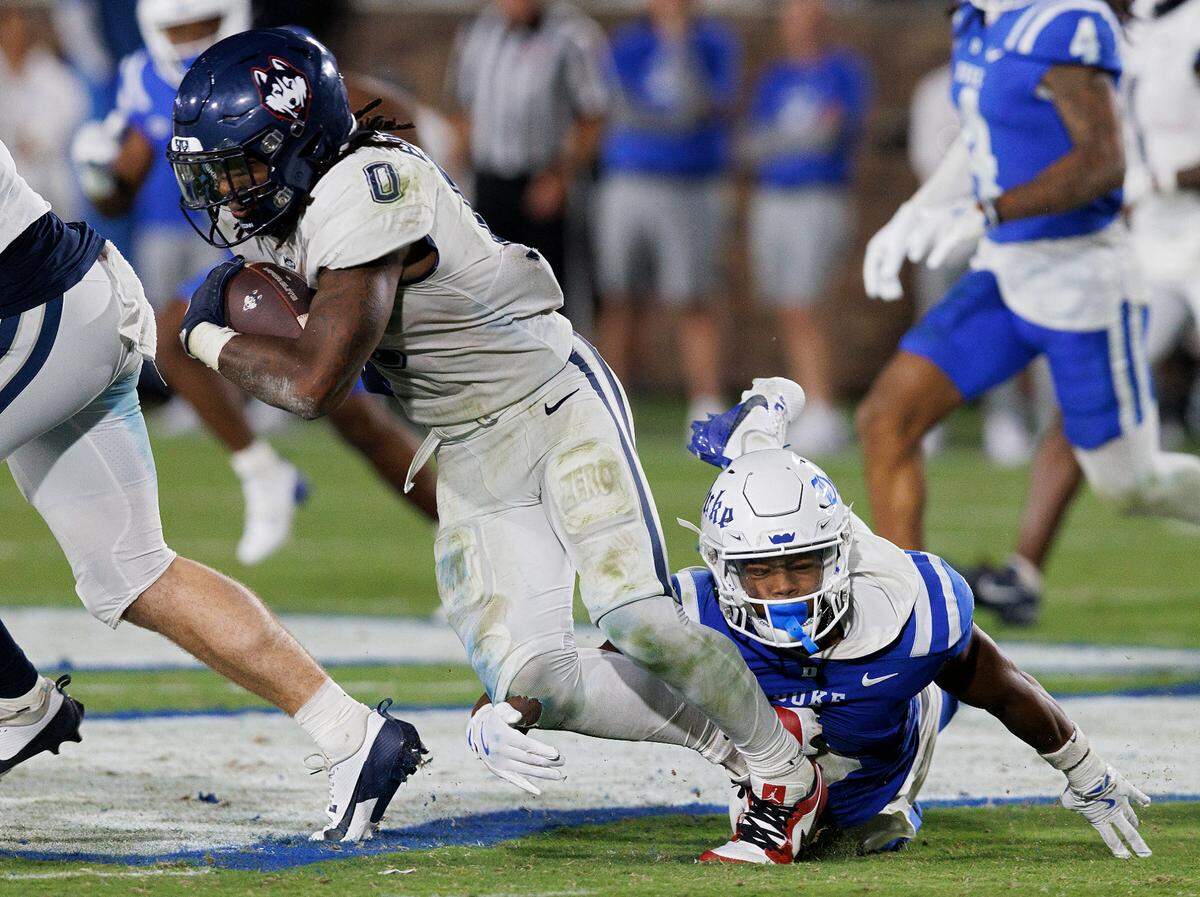
Drilling down to the city and town level, Charlotte is well-represented on the three rosters and leads with 43 players (this reflects players from within the city limits. Charlotte suburbs do not count here). UNC nabbed 22 of those players.
N.C. State had 18 recruits from the Queen City in the five-year data set, and this year alone the Pack has eight from Charlotte.
“It’s an important recruiting area for us,” N.C. State head coach Dave Doeren said in September. “We’ve always had success recruiting in Charlotte, so our roster’s represented that way.”
N.C. State, meanwhile, also nabbed 15 players from Raleigh, while 24 Raleigh natives played for one of the three programs during the five-year period.
Wake Forest (16) and Greensboro (14) were also among the top recruiting areas.
Doeren won championships during stints as an assistant with Montana, and as a head coach at Northern Illinois, and said those rosters always had something in common: They heavily featured local players.
That alone doesn’t guarantee titles, he said, but representing their home state provides players additional motivation to do well. When a player stays home, they often have the backing of an entire fan base and community, Doeren said. It’s just different.
Duke leads in retention, graduation rates
Last month, Duke safety Terry Moore, from Washington, North Carolina, couldn’t find his car keys anywhere, a conundrum that could have put him in quite a bind had he been sitting in a dorm room some 2,000 miles from home.
Instead, after a quick phone call, Moore’s parents drove to Durham with his spare key, so he could get to class and practice. Little things like that made him want to play for a program close to his family.
But, that wasn’t the only reason to stay home. He is, after all, a student at Duke, a private school with a relatively tiny acceptance rate.
The Blue Devils have far fewer in-state players — and fewer students overall — due to their stringent academic standards. Duke ranks No. 2 in the ACC in overall acceptance rate (6.3%), second to conference newcomer Stanford (3.7%).
Those high academic standards and the value of a Duke diploma, however, mean players tend to stick around longer — even if they don’t see the field.
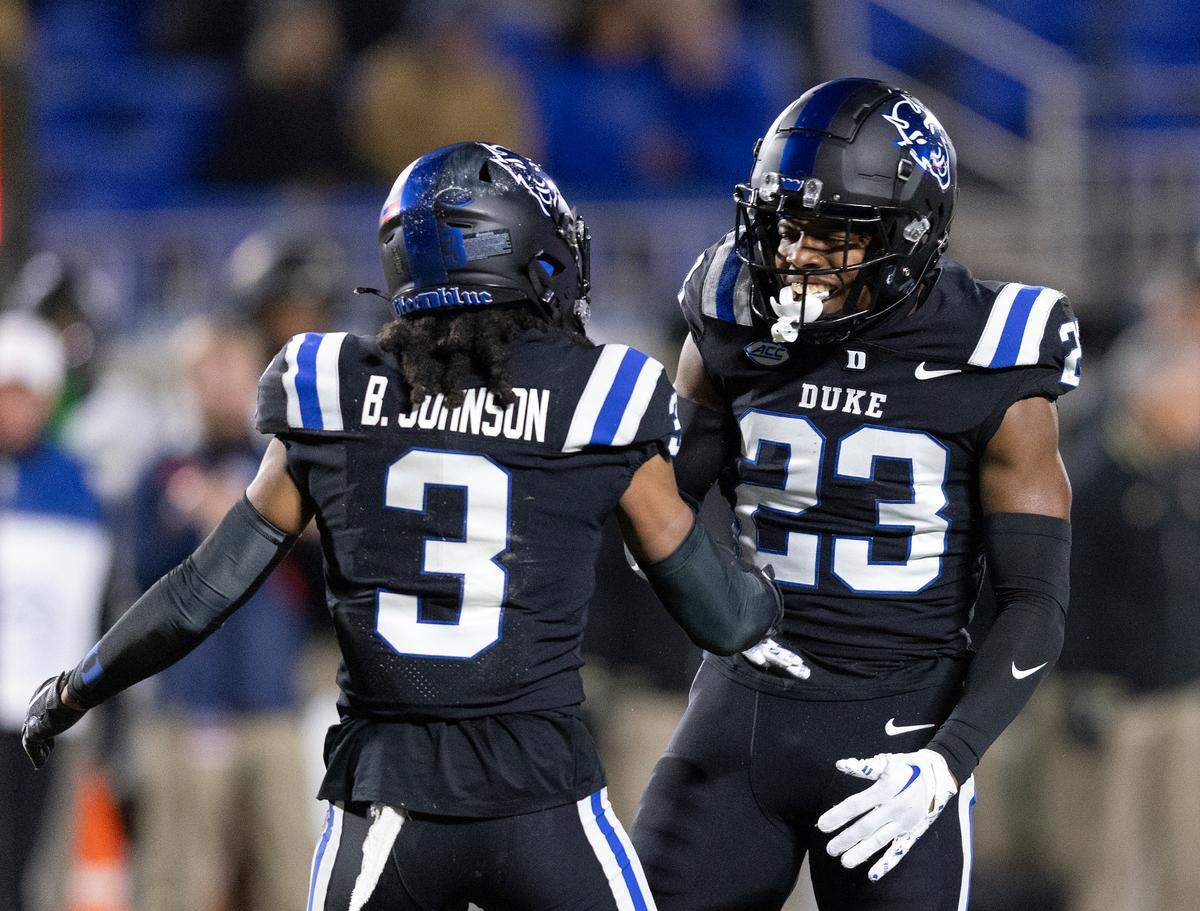
Seventeen of Duke’s 19 eligible players (89.5%) stayed with the program at least four years. Player eligibility in this analysis was determined by the year they began college. Players who started their careers in 2021 — they could graduate this academic year — or earlier were included.
Anthony Hinton, for example, was a four-year walk-on at defensive end. He played one game while studying neuroscience. He is now a student at Duke Medical School.
Moore, meanwhile, is not yet ready to graduate, but he is studying sociology and earning a certificate in markets and management, according to his biography on Duke’s athletics website, goduke.com.
UNC ranks second among the three schools for the number of players who stay at least four years, with 42 of 73 (57.5%). N.C. State is third with 46 of 95 (48.4%) eligible players staying on the roster for at least four years, but that’s not entirely unexpected. With more in-state players comes a higher attrition rate.
Players from every school said the opportunity to earn a degree — especially in the case of Duke and UNC — made a difference in their decisions to stay with their respective programs.
Moore was an All-ACC Academic Honoree in his first two seasons and, after logging 43 tackles, 3.5 tackles for loss and 2.5 sacks in 2023, he was heavily recruited as a possible transfer after coach Mike Elko left for Texas A&M.
He opted to stay in Durham.
“I couldn’t really get those two things anywhere else,” Moore said. “That was really just the selling point for me: playing Power Five football and getting one of the best degrees in the world.
“I know football is going to end at some point. I need some kind of back up plan. Having a degree was definitely a big reason for me staying.”
Transfer portal impacted retention
Players who started their careers in 2019 or earlier were more likely to remain at their schools until they finished their education. These are players who began college before COVID-19, before the NCAA transfer portal opened wide, and before NIL rights shifted to the players.
Duke had 12 players who started in 2018 and 2019, according to our analysis. All 12 stayed for at least four seasons.
N.C. State had 44 in-state players and 30 (68.1%) who started their careers in 2017-19 that stayed long enough to earn an undergraduate degree.
UNC had 30 athletes out of 44 (68.1%) who began their careers in 2016-19 that stayed a full four years.
These numbers indicate a significant increase in transfers during the pandemic, and once the portal opened.
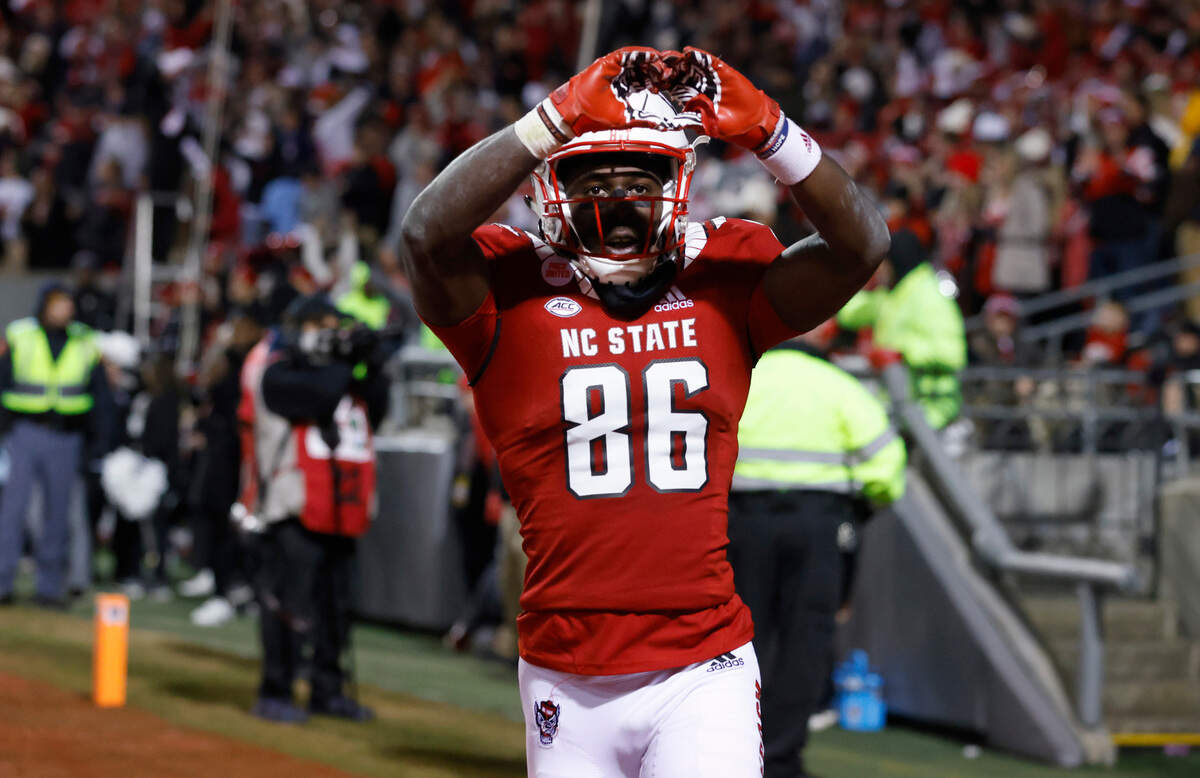
The Wolfpack and Tar Heels’ extrapolation includes additional seasons due to players staying longer than four years but finishing their careers during the seasons being evaluated. For example, N.C. State wide receiver Emeka Emezie began his collegiate career in 2017 and ended it in 2021, falling into the analysis period.
Duke is not entirely immune to transfers under the new rules, though, as seen in Waters’ decision to join N.C. State, but athletes are still more likely to finish their education at Duke before seeking opportunities elsewhere.
Waters earned All-ACC third team honors and recorded 2,006 career rushing yards as a Blue Devil and transferred to N.C. State, like the other players, because he wanted to stay near his family.
Ritzie, the UNC defensive lineman, began his career in 2021 but, unlike other players, he has never considered leaving the program.
“That hasn’t even been a topic of discussion for me,” Ritzie said. “I was Tar Heel born and I’m Tar Heel bred, so I’m gonna be a Tar Heel for life.”
NFL opportunities can impact retention rates
Fans at Kenan Stadium chanted, “One more year, one more year ...” during UNC’s 2023 senior day game against Duke. They didn’t want Maye to leave Chapel Hill early to turn pro.
NFL opportunities can impact whether a players leave programs early or stay for another season, and the Tar Heels and Wolfpack have examples of both.
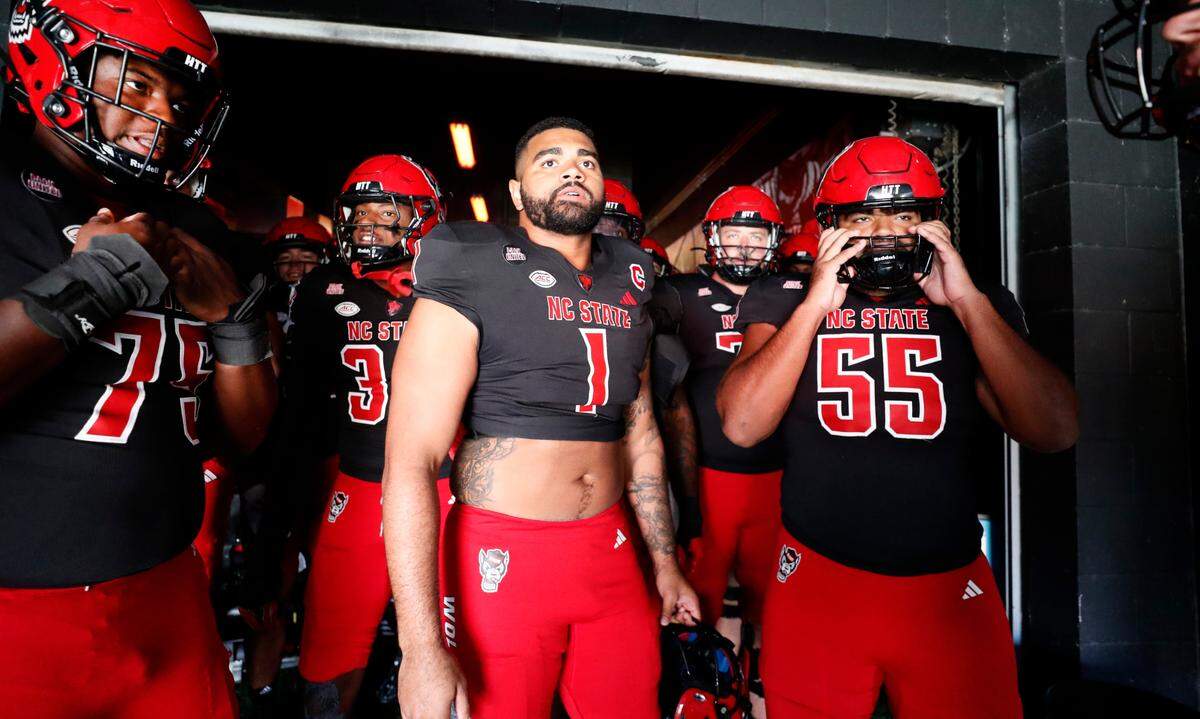
N.C. State defensive end Davin Vann used his additional year of eligibility to improve his draft stock.
“Where I was at mentally, emotionally and especially physically, I just kind of felt like I wasn’t ready,” Vann said this season. “Coach Doeren always says, ‘Don’t pull the cake out half baked.’ I wanted to take some more time to just develop myself. I think it’s starting to pay off.”
More notably, the teams feature athletes who did not stay four years due to their NFL prospects, something that many view as success in its own right.
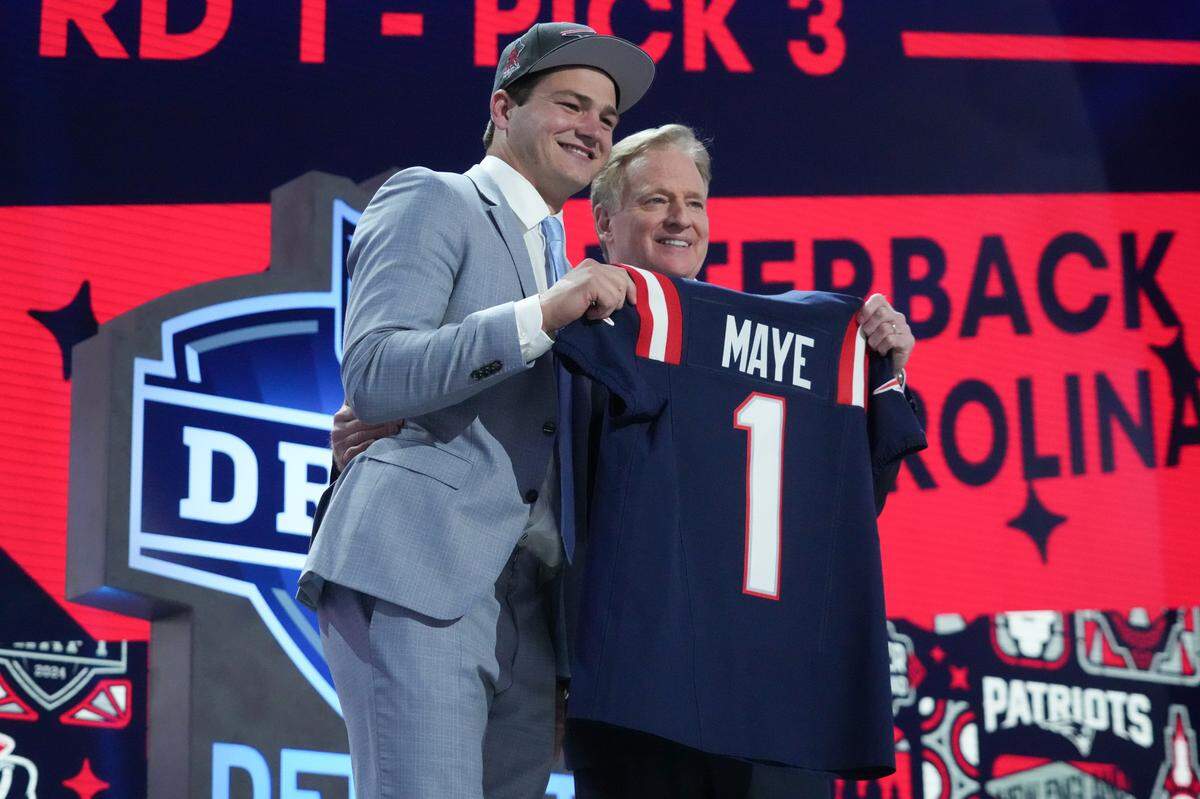
Dyami Brown, Howell, Maye and Javonte Williams are all North Carolina locals who left UNC early. Maye played three years for the Heels and was drafted in 2024. Howell also played three seasons for North Carolina.
Ikem “Ickey” Ekwonu, Alim McNeil and Zonovan Knight left the Wolfpack to pursue professional opportunities.
The Carolina Panthers selected Ekwonu, whose family hails from Nigeria, No. 6 overall in the 2022 draft. The New England Patriots selected Maye with the third pick overall.
“This is the best decision for me and my future,” Maye said when he declared. “It was my lifelong dream to play quarterback at North Carolina, and I get a chance to check off another dream and play quarterback in the NFL.”
A return to North Carolina
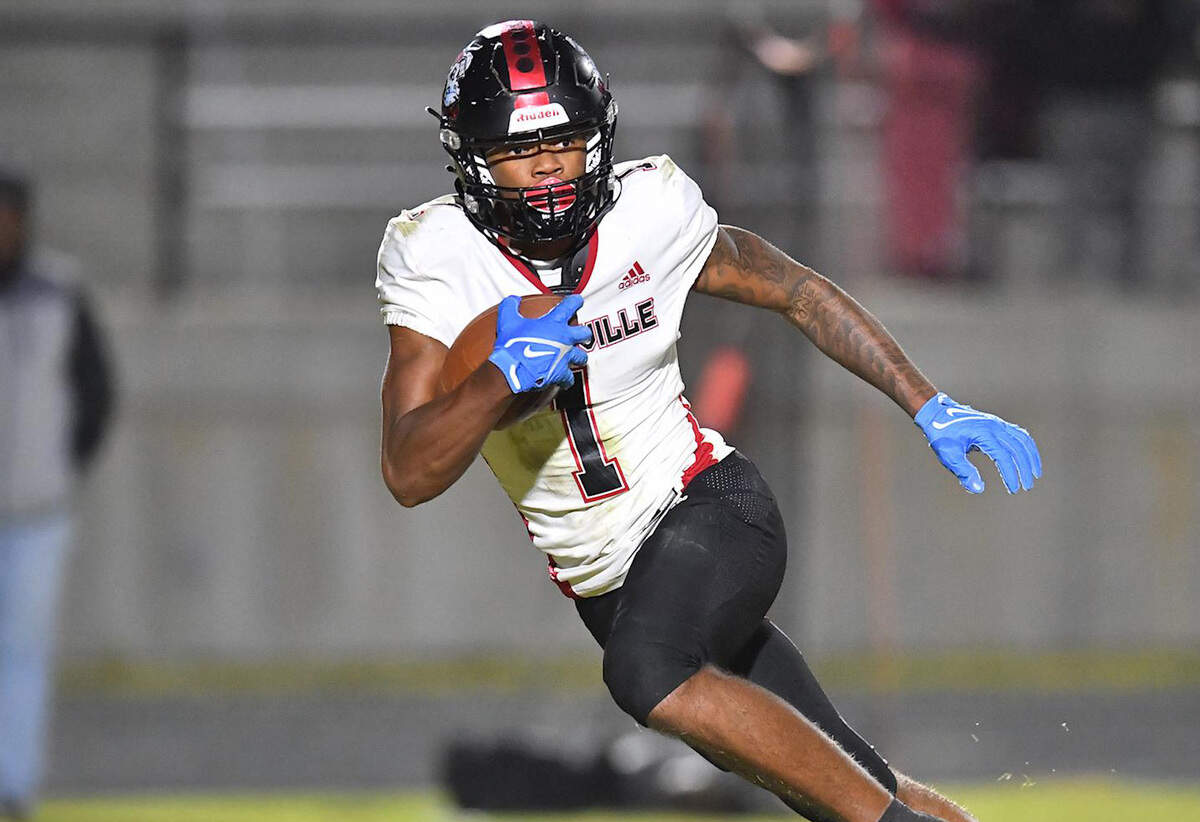
All three programs had at least three players return home during the analysis period, as well.
N.C. State nabbed Cooley, Jake Mann, Grayson McCall, Noah Rogers and Hollywood Smothers out of the portal and brought them back to North Carolina this season.
Rogers and Cooley attended Rolesville, and were teammates there in the Class of 2023. Cooley verbally committed to N.C. State in 2022, but ultimately signed with the Terrapins. He played three games before entering the transfer portal.
Before the Wolfpack’s game against Tennessee in Charlotte, Smothers, who transferred from Oklahoma, called it a “blessing” to be back in North Carolina with his family.
Being around family and other loved ones is significant during a college student’s life, Doeren said, and points to that as a reason for the number of returners.
“(It’s) probably why you saw so many kids come back home that left our state and transferred here,” Doeren said earlier this year. “They missed that connection at home when they weren’t playing in their own state.”
Cooley said he and Rogers are close friends and used to talk about leaving the state. It doesn’t come up as much anymore, but when it does, the conversation usually focuses on one question:
“It’s really just laughing, because, why did we leave?” Cooley said in October.
He admits there was a desire to leave home and make a name for himself, but it didn’t go as planned. It’s nice to be surrounded by loved ones.
Joshua Harris, from Roxboro, started his career at N.C. State before transferring to Ole Miss and then to UNC. Harris, a father and husband, said he joined the Tar Heels for his family’s sake. Harris told the N&O in August that his wife’s family lives five minutes away and he’s desperate to earn an opportunity in the NFL.
“I got somebody I got to provide for now,” Harris said. “I’m not just doing this for me, you know what I mean? So now that I have two kids and a wife and another [kid] on the way, I feel like I gotta get this, you know?”
When he committed to the Tar Heels, Harris said the coaching staff was shocked.
“I was just like, ‘Yeah, I’m coming here. I’m coming home.’”
‘It just means more’
Beyond educational, NIL and professional considerations, playing at home can be significant for other reasons.
Take, for example, Walt Gerard V, a walk-on cornerback at N.C. State from Washington, North Carolina, and UNC walk-on linebacker Gibson Macrae.
Gerard is a second-generation N.C. State walk-on. His father, Walt Gerard IV, started his collegiate career in the 1990s and earned a scholarship, so the younger Gerard grew up a Wolfpack fan. He received a scholarship offer to a Division II school but decided to take his chance with an N.C. State walk-on spot. Gerard admits he would’ve gone elsewhere — except UNC — if he’d received a scholarship, but “the dream was always here.”
Macrae had multiple FCS offers but UNC, one of his favorite teams a child, was the only FBS program to give him a chance.
He took it.
Gerard and Macrae have at times questioned why they put in so much effort; it’s not like they’re getting a ton of playing time, or NIL money. Macrae considered transferring at one point, but is now a valuable backup. He has appeared in 33 games since 2021.
Gerard has played in two. He regularly reminds himself of what it means to play for N.C. State, what it means to his family — his parents are “tickled to death” — and the lessons he’s learning.
“It isn’t easy. It’s tested me big time,” Gerard said. “That’s the beauty in it. When I’m done with it, I’ve grown so much as a man, as a person. It’s gonna carry me far in life. It’s a struggle, but that’s where I find motivation with it; I know that it’s gonna prepare me for the real world.”
They wouldn’t change anything.
Macrae’s decision to stay home also keeps him connected with his brother — Jackson Macrae is a walk-on at rival N.C. State, and their parents often pull double duty, attending Wolfpack and Tar Heels football games when both teams are in town. They even own split jerseys to represent both sons.
While it would be nice for them to wear the same color this weekend, they’re both doing what they love — and representing their local ties.
“It’s a lifelong family goal. We both dreamed of playing big-time ball,” Gibson Macrae said. “Seeing him across the sideline, it means everything; that all our work that we put in paid off.”
“And, it’s my home state. It just means more.”
Editor’s note: This story was researched, reported and written before the recent coaching change at the University of North Carolina.