UNC basketball’s loss to Alabama epitomized the ACC’s woeful showing in SEC ‘challenge’
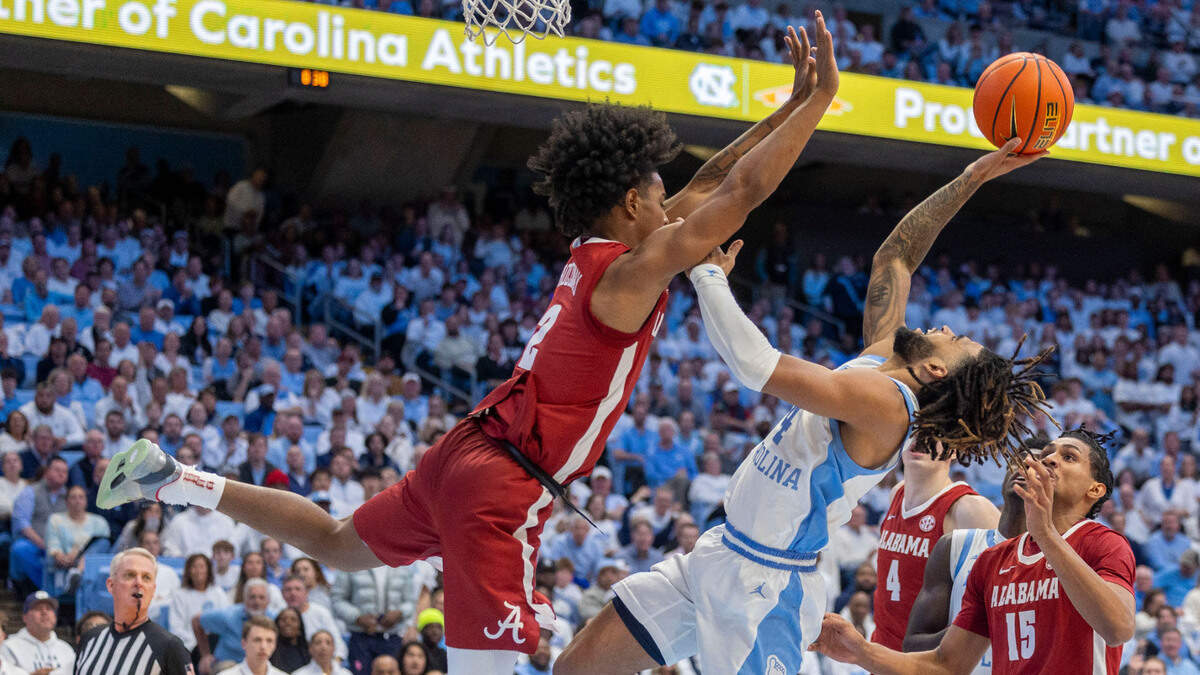
Fans of the University of Alabama are known for their fervor and for that Southern twang-tinged chant of “Roll Tide” that follows them everywhere. They are not, though, necessarily known for their rampant basketball enthusiasm (though that may be changing). And they are certainly not known for breaking out a sustained “Roll Tide” back-and-forth in the heart of ACC country.
And yet that’s what happened in the final moments of Alabama’s 94-79 victory at North Carolina on Wednesday night in the Smith Center — a victory that felt much more decisive than the final 15-point margin. It was a surreal sight, watching the behemoth of a football school from the Deep South come into Chapel Hill and bully UNC — in basketball! — almost start to finish.
And then came perhaps the most surreal moment of all: that chant echoing around the arena in the final seconds, bouncing off the rafters and a good number of the 21,500 Carolina blue seats that were now vacant, left empty by the folks who’d departed early to beat the traffic; left empty by the home fans who walked out frustrated and maybe even a bit disillusioned.
“Roll ... Tide!”
“Roll ... Tide!”
It was a Smith Center first. A Tobacco Road first.
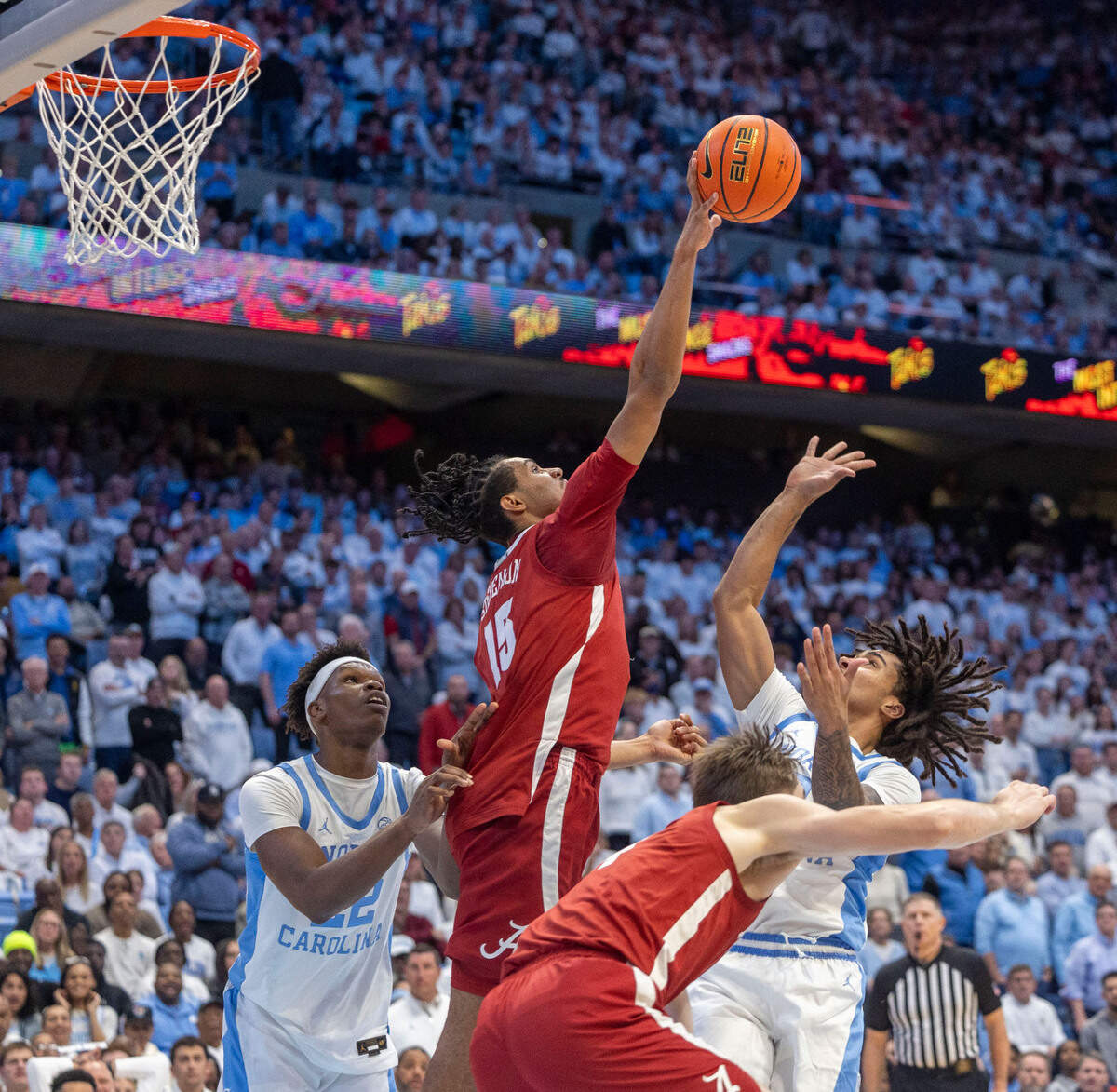
To be clear, this wasn’t an upset. Alabama beat UNC last March in an NCAA Tournament West Regional semifinal in Los Angeles. It beat UNC before that, in four overtimes in 2022. It has beaten UNC in at least two high-profile recent recruitments. Nate Oats, in his sixth season as the Crimson Tide’s head coach, has built a power. The Tide is indeed rolling, in basketball.
And yet, still: Alabama coming into the Smith Center and handling the Tar Heels with such ease — such disregard — is the sort of development that threatens the natural order of major college athletics as they’ve been known since, well, just about forever. The Crimson Tide didn’t just win. It won in a man-vs.-boys kind of display. It won with conviction.
It won with the sort of assurance that has accompanied so many Tar Heels’ performances in big games, for decades — but now they found themselves on the other side. Indeed, this was a game and result that epitomized the ascent of Alabama and the SEC in the men’s basketball, and the comparative descent of the ACC in the one sport that has long defined it, for better or worse.
And even worse, for the ACC, the Crimson Tide’s victory came in a made-for-TV event in which the league’s basketball ineptitude became something of a main character; a national story line. For decades, the ACC more than held its own, and often dominated, the old ACC/Big Ten Challenge, an early-season showcase between two power conferences broadcast on ESPN.
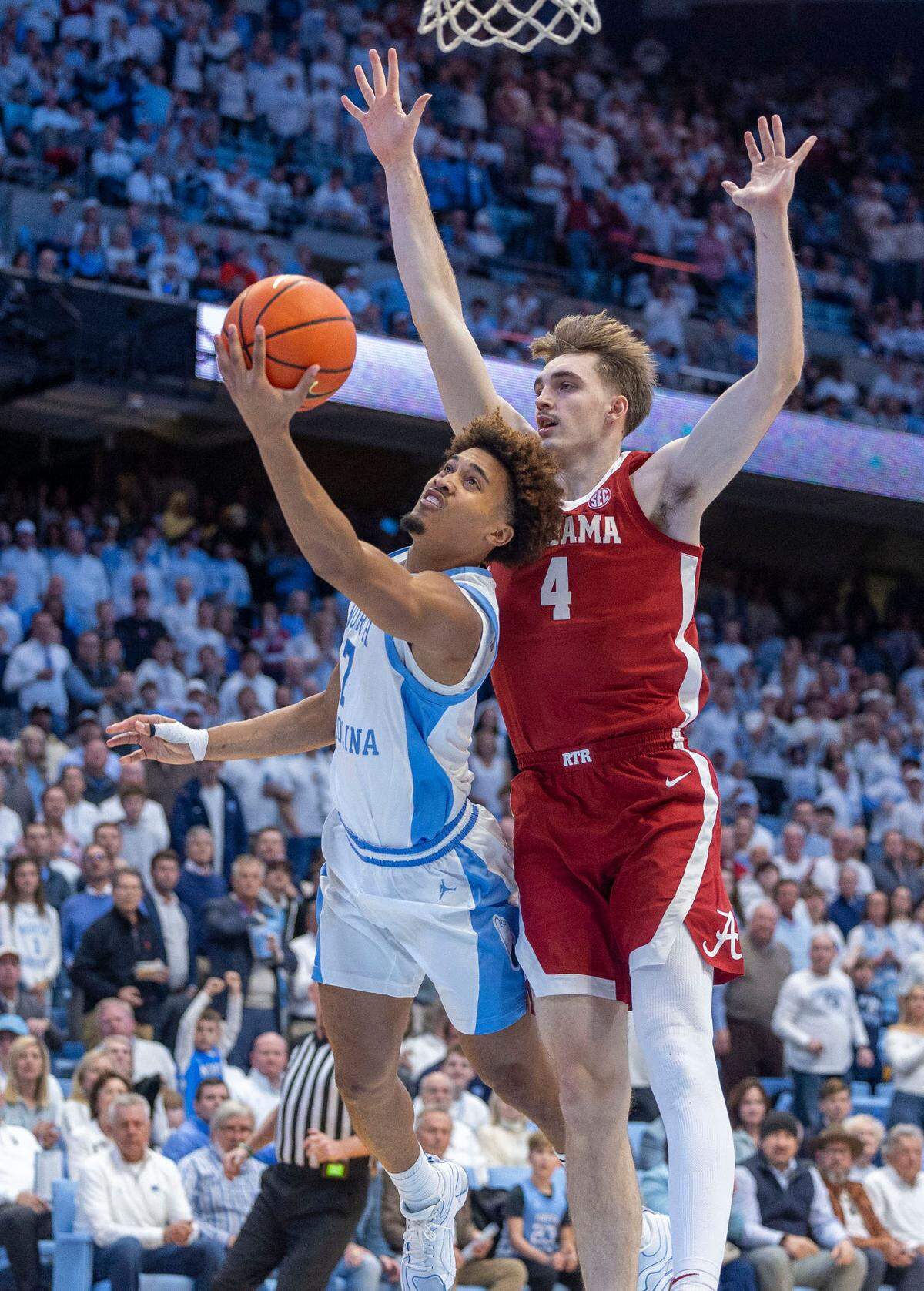
But when the Big Ten before last season began a new television deal with Fox Sports, the ESPN-backed Challenge needed a new pairing. Enter the SEC. In terms of history and prestige and tradition and all those things that used to matter a lot more in college athletics, the basketball reputations of the ACC and SEC aren’t all that comparable.
One conference is arguably the greatest in the history of the sport. The other is the SEC. Kentucky is arguably the greatest program in college basketball history but, beyond that, the SEC cannot match the historical might of the ACC in men’s basketball. In that sport, the conference has for so long been what the SEC remains in football.
But history is, well, history. In the here and now, the SEC just went 14-2 against the ACC in their Challenge, with only Clemson (at home against Kentucky, on Tuesday) and Duke (at home against previously unbeaten Auburn, on Wednesday) saving the ACC from further embarrassment. Yet for a league desperate to change its men’s basketball narrative, a 2-14 showing in this event was more than enough of a debacle.
Yes, it should be noted — we’ve been here before, to a degree. The ACC the past several seasons has fought the notion that it has lost a step or several in basketball; that other conferences (the Big 12, for one, and even the reformed Big East) have surpassed it. And the ACC’s recent performances in the NCAA Tournament have suggested some of the doom and gloom to be overblown, and some of those unkind metrics to be, perhaps, too heavily weighed or not quite accurate enough.
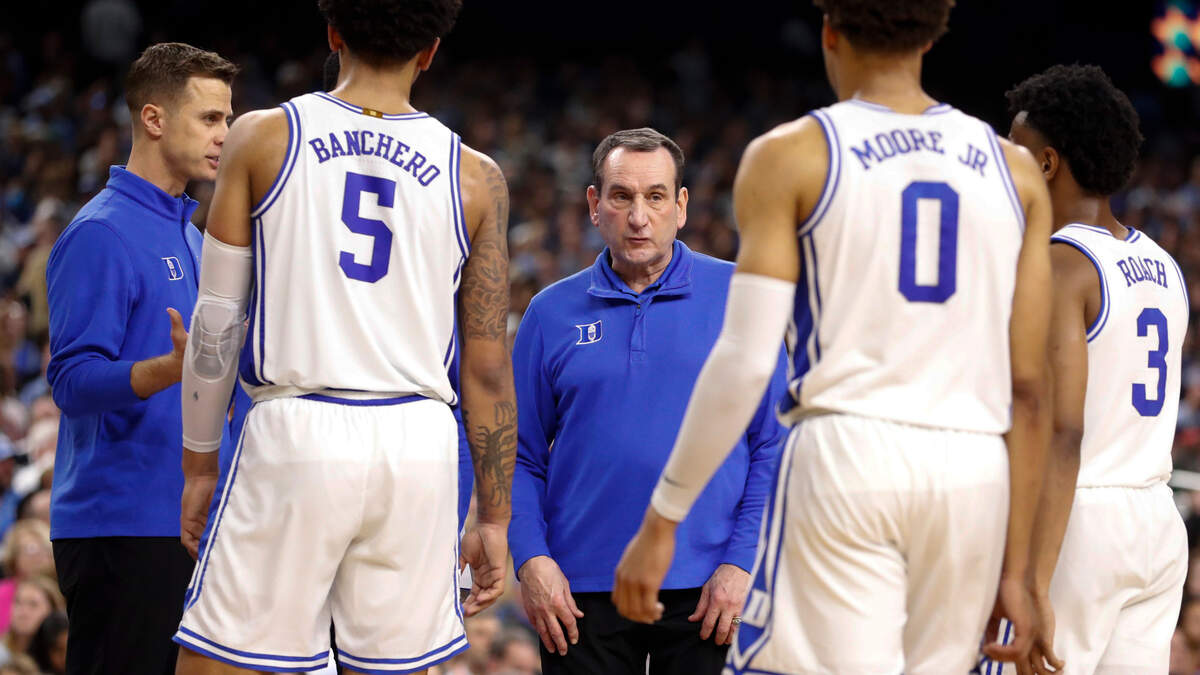
The league’s basketball reputation over the past three seasons has taken a beating and yet it has still sent four teams to the Final Four. Virginia’s 2019 national championship isn’t that long ago. Neither is the epic 2022 national semifinal between Duke and UNC, in what was Mike Krzyzewski’s final game. And just eight months ago, N.C. State became a national darling, again, amid one of the most unlikely runs, ever, to the Final Four.
Still, the conference’s relatively poor start to this season feels different, and worse, than the others that have preceded it. Jim Phillips, the ACC Commissioner, and the conference’s coaches spent a lot of time after last season trying to address the conference’s perception problem. They studied those metrics. They evaluated non-conference scheduling. They even invited Joe Lunardi, the ESPN bracketologist and one of the sport’s narrative-setters, to the league’s spring meetings.
There are ways to game the system a bit, especially through scheduling, but the solution to the ACC’s recent basketball problems has always been straightforward: Win. Win games that matter, nationally and, especially, don’t lose games like, say, the one Miami recently lost against Charleston Southern — or the one Notre Dame lost against Elon; or the one Stanford lost against Cal Poly; or the one Georgia Tech lost against North Florida; or the one Virginia Tech lost against Jacksonville.
Similarly embarrassing defeats have dragged down the entire league the past few years, and those recent ones did, again, this season. The ACC/SEC Challenge, then, offered some degree of redemption — a chance for the ACC to prove itself. Well, so much for that. The Challenge was over on the first of its two nights, with the SEC winning nine of the 10 games Tuesday night.
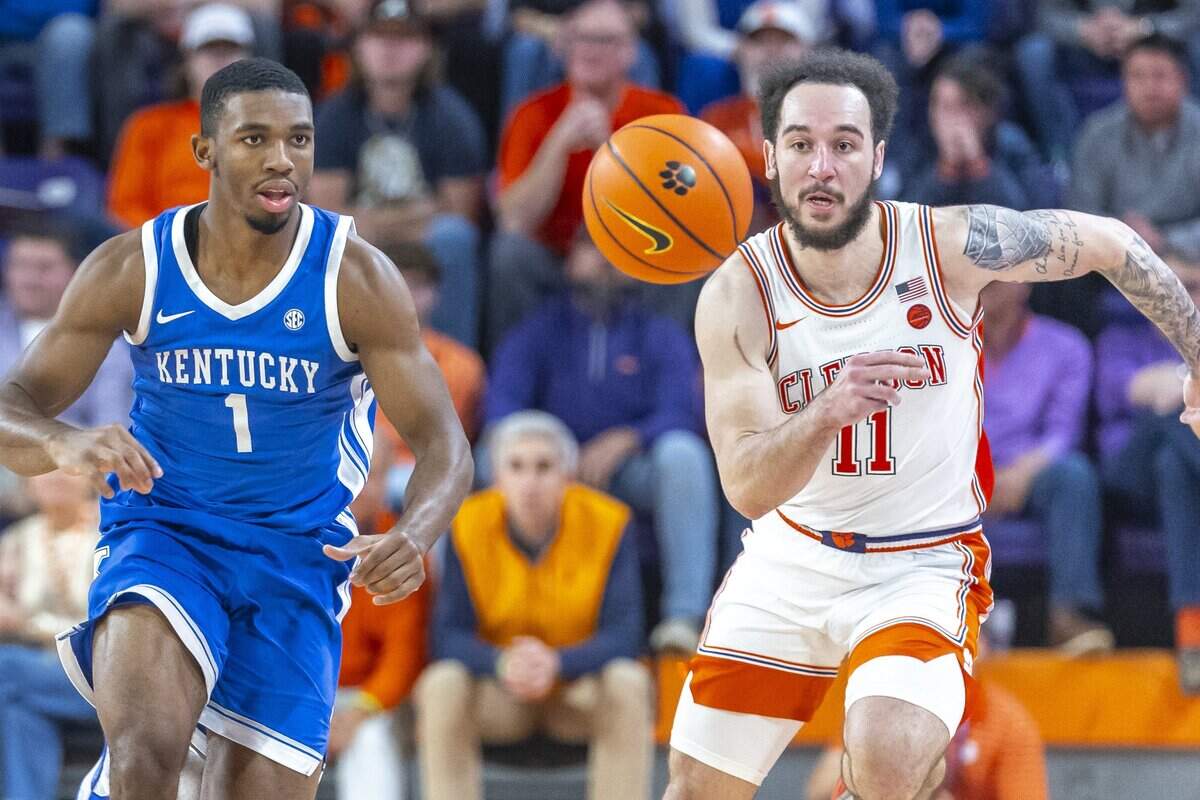
And not just winning most of those games, but imposing its will: a 26-point victory for Tennessee against Syracuse; a 23-point victory for Mississippi, at Louisville; a 21-point victory for Georgia against Notre Dame; a 22-point victory for South Carolina against Boston College. In comparison to those, Georgia Tech’s 15-point loss at Oklahoma and Wake Forest’s 13-point defeat at Texas A&M felt like relative nailbiters.
The second night of the Challenge went no better for the ACC, what with UNC’s showing (or non-showing) in Chapel Hill and Virginia, Virginia Tech and Pittsburgh all losing comfortably. N.C. State kept it close, at least, in a four-point loss against Texas — but one that could have ramifications, again, in March (barring another miracle ACC Tournament run for the Wolfpack).
As bright of a spot for the ACC as Duke’s victory against Auburn was, Pitt’s 33-point defeat at Mississippi State might’ve been the most disappointing result of all. The Panthers, ranked 18th nationally, had actually looked good, and like they might be the ACC’s second- or third-best team, behind the Blue Devils and possibly a contender-to-be-named later.
But, alas.
In the aftermath of such a two-day debacle for the ACC, the narrative will take an even firmer grasp and the takes will rage. The most obvious one is that SEC’s burgeoning financial supremacy, fueled by the riches of a television deal driven by the value of its football broadcast rights, is allowing that conference to separate itself in basketball, too. And undoubtedly, money is a part of the story. It explains the SEC’s rise, at least.
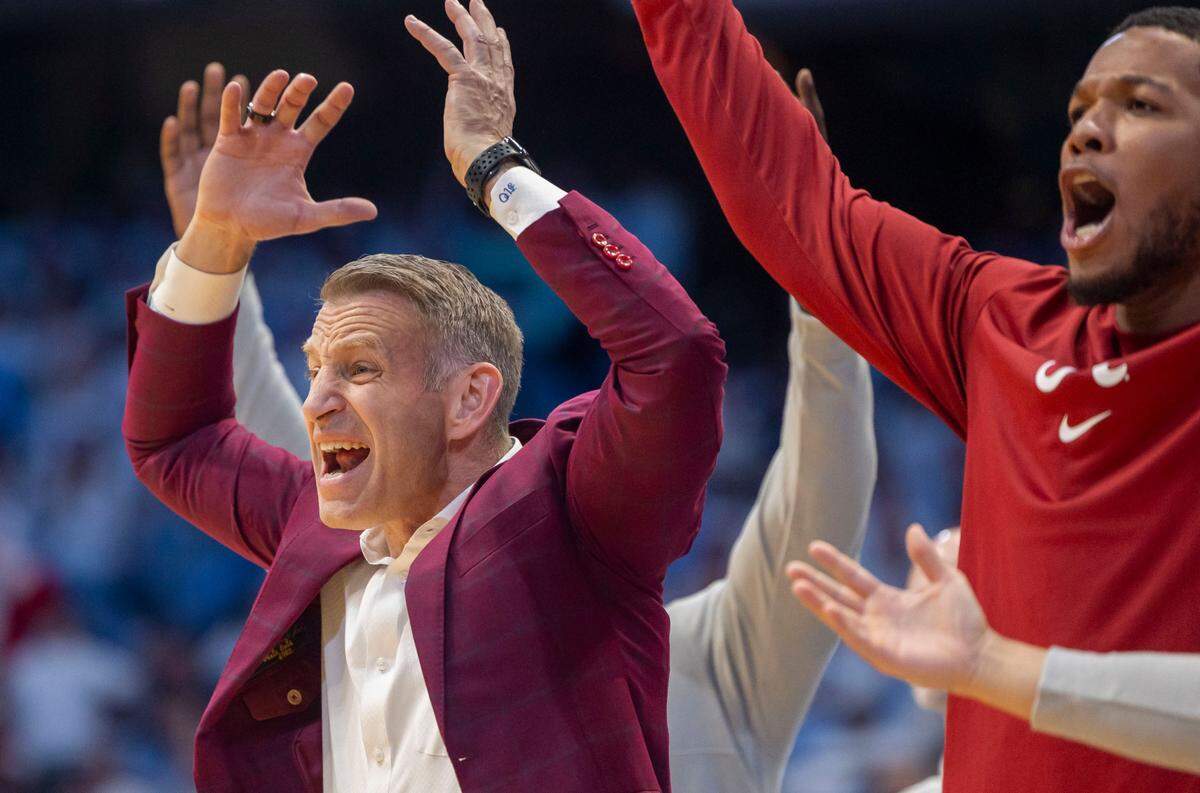
“I do think the financial resources are a big deal,” Oats, the Alabama coach, said after his team’s victory Wednesday night. “Like, I think the league decided they want to be good in basketball — (that) it doesn’t need to just be a football or baseball league ... and basketball being one of the more popular sports in college athletics, they decided to put a big point of emphasis on it.”
Oats highlighted the SEC’s hiring, in 2016, of Dan Leibovitz to be the conference’s Associate Commissioner for Men’s Basketball — a role the league created to address its longtime shortcomings in that sport. Leibovitz, a former head coach at Hartford and an assistant at Temple and Penn (along with a brief stint with the Charlotte Hornets when they were still the Bobcats), left in 2023 for a similar position with the Big East, but not before raising the stature of SEC basketball.
Clearly, SEC schools have invested in the sport in recent years. The conference has attracted an enviable roster of head coaches, from Buzz Williams (Texas A&M) to Porter Moser (Oklahoma) to Chris Beard (Ole Miss) to Mark Pope (Kentucky). John Calipari left Kentucky for Arkansas after last season. Bruce Pearl has been at Auburn since 2014 and Rick Barnes at Tennessee since 2015. Oats, at 50, has become one of the sport’s emergent coaching stars — especially as several prominent coaches have left the game.
That development, as much as any, explains the ACC’s decline. It’s not the money, at least. The ACC is not as wealthy as the SEC (or Big Ten), but it still makes more than the Big 12, which is also out-performing the ACC in men’s basketball. The ACC makes significantly more than the Big East, the conference it raided, repeatedly, in the 2000s and 2010s — but the Big East, too, has arguably been the better basketball league in recent years.
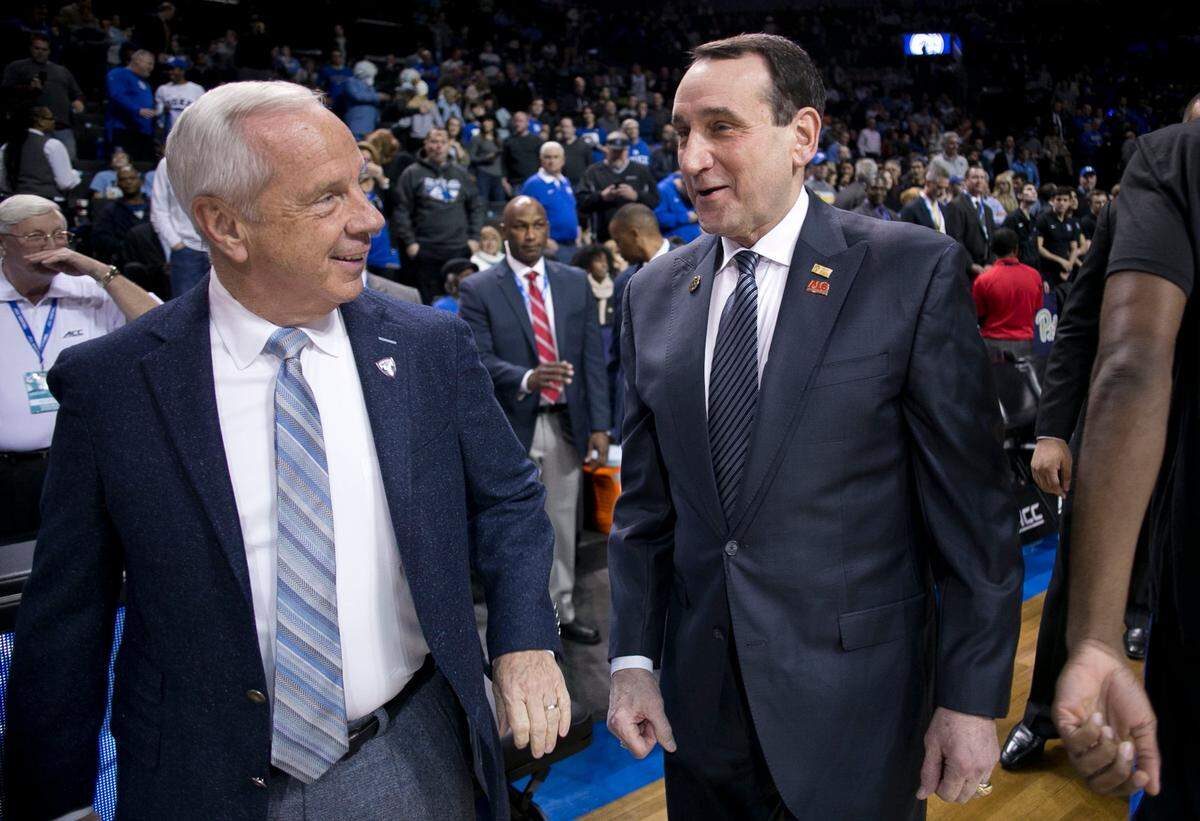
No league, though, has suffered a greater depletion of coaching talent than the ACC has over the past few years. Roy Williams retired in 2021. Mike Krzyzewski retired in 2022. Jim Boeheim retired in 2023. Tony Bennett retired two months ago. They combined to win 10 national championships, and Bennett’s retirement at Virginia in October meant the ACC entered this season without a national championship-winning head coach for the first time since 1981, just before Dean Smith won his first at North Carolina.
In addition to the exodus of title-winning coaches, Mike Brey also retired at Notre Dame. Buzz Williams left Virginia Tech for Texas A&M. Louisville, a longtime national contender, devolved into one of the worst power-conference teams in the country (though the Cardinals appear to be climbing out of the abyss this season under first-year coach Pat Kelsey).
Of the ACC’s 18 head coaches, nine have yet to complete their third season on the job. Another two, Boston College’s Earl Grant and UNC’s Hubert Davis, are in their fourth season. The coaching turnover has coincided, too, with a time of immense change throughout college athletics, with new coaches in new roles figuring out how to navigate the transfer portal and NIL.
Even at UNC, one of the most established and successful programs in college basketball history, the transition to a different time has not proven easy. The Tar Heels on Wednesday night came undone for several reasons but their deficiencies in the front court arguably proved to be the most glaring. After the end of last season Davis and his staff tried, unsuccessfully, to recruit several transfers who could’ve provided UNC with some size and skill on the inside.
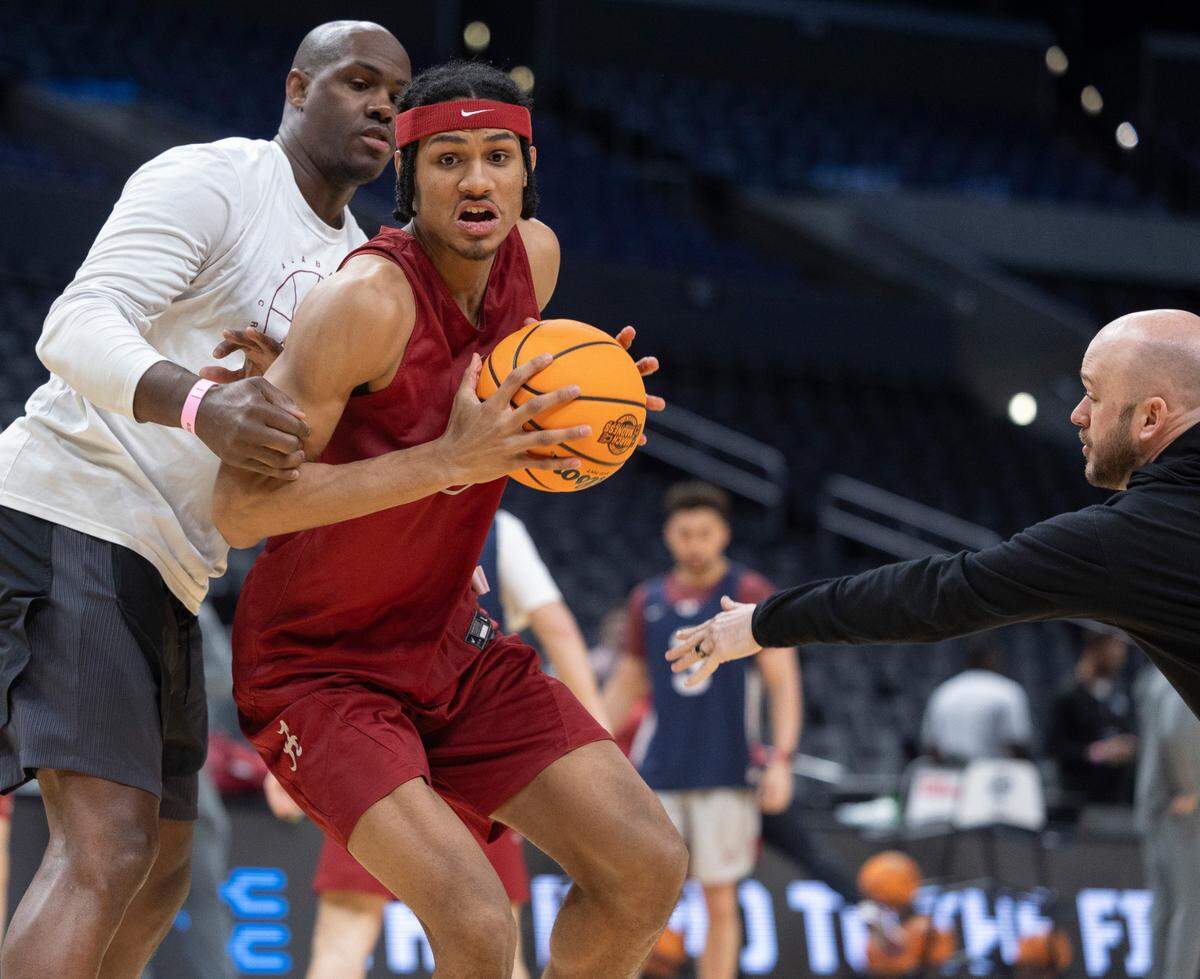
None of the top targets decided to come to UNC, though. One of them, Clifford Omoruyi, transferred to Alabama, which the year before beat UNC for Jarin Stevenson, a coveted prospect who grew up about a 15-minute drive from the Smith Center. Both Stevenson and Omoruyi had their moments in the second half Wednesday, while UNC labored to stay in the game.
By the end, the Crimson Tide and Tar Heels looked like teams headed in opposite directions. That “Roll Tide” chant echoed in Chapel Hill. Alabama’s victory only cemented the SEC rout already in progress. In Durham, later in the night, only Duke’s close victory against Auburn — regarded as the nation’s best team a month into the season — prevented a Tobacco Road takeover among schools known much more for football.
It’d be one thing — and an expected thing — for Alabama and Texas to come into the Triangle and emerge victorious in football. But in the sport upon which the ACC was built, and rose to national prominence? Well, it only underscored that we’re in a new world. The ACC entered this men’s basketball season with a desperate yearning to change the narrative. A month into it, the league’s perception problem is worse than ever. And worst of all, for the ACC, it looks closer to reality, too.
This story was originally published December 5, 2024 at 11:02 AM.