Triangle ACC hoops teams have tough nonconference schedules. That’s on purpose
AI-generated summary reviewed by our newsroom.
- Triangle programs schedule rigorous nonconference slates to test rosters early.
- Duke, N.C. State and UNC face multiple Power Four and 2025 Final Four teams.
- Coaches prioritize early exposure to identify weaknesses and build postseason depth.
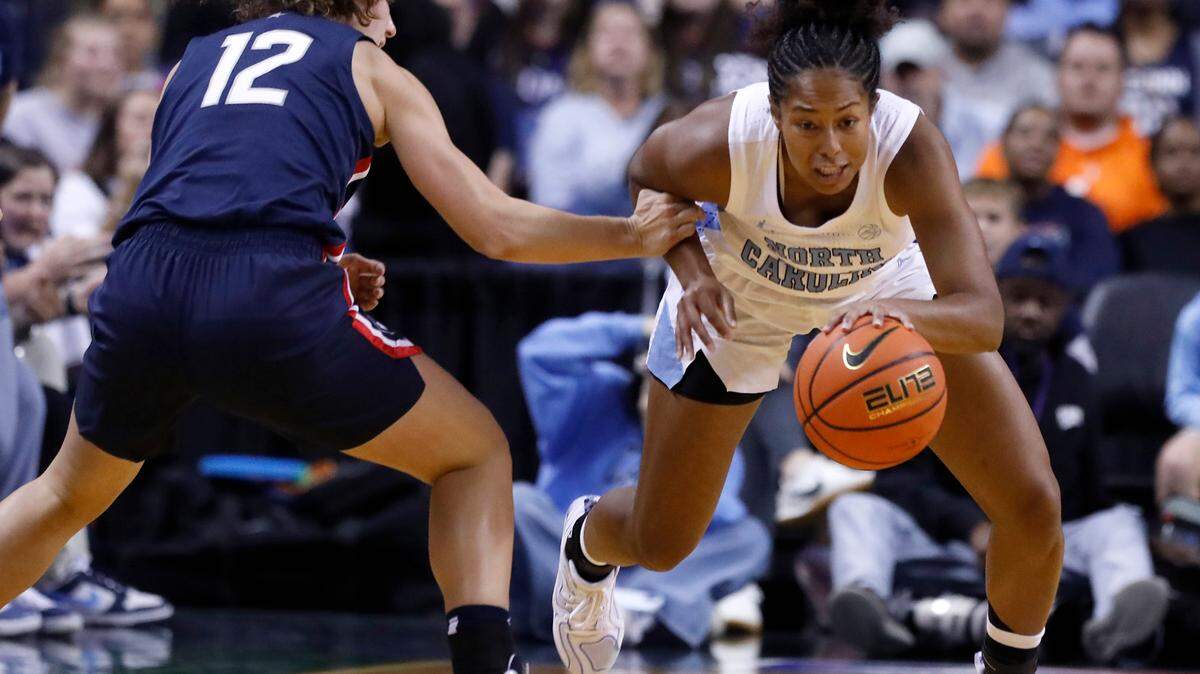
Few things are guaranteed in a basketball season, but the Triangle’s ACC women’s teams have at least one thing they can consistently rely on: coaches who aren’t afraid to schedule tough competition, especially nonconference teams.
In the last four seasons, Duke, N.C. State and North Carolina featured an average nonconference strength of schedule of 30.9. This season is no different .
“Unfortunately, whoever made this thing, this schedule, we don’t get to ease into it,” N.C. State head coach Wes Moore said at ACC Tipoff this week. “We’re going to jump right in the fire, but hopefully it comes together pretty quickly.”
“Wait, you didn’t make the schedule?” Wolfpack guard Zoe Brooks asked.
“Yeah, I did,” Moore said, a teasing smile on his face.
All jokes aside, Moore and his counterparts — Duke’s Kara Lawson and UNC’s Courtney Banghart — have set their programs up for early tests.
Duke and N.C. State face five Power Four opponents this season, including exhibitions, while UNC has four coming up.
Additionally, the Wolfpack’s schedule features seven 2025 NCAA tournament teams, while the Blue Devils and Tar Heels play eight.
Nonconference schedules for NC State, Duke and UNC
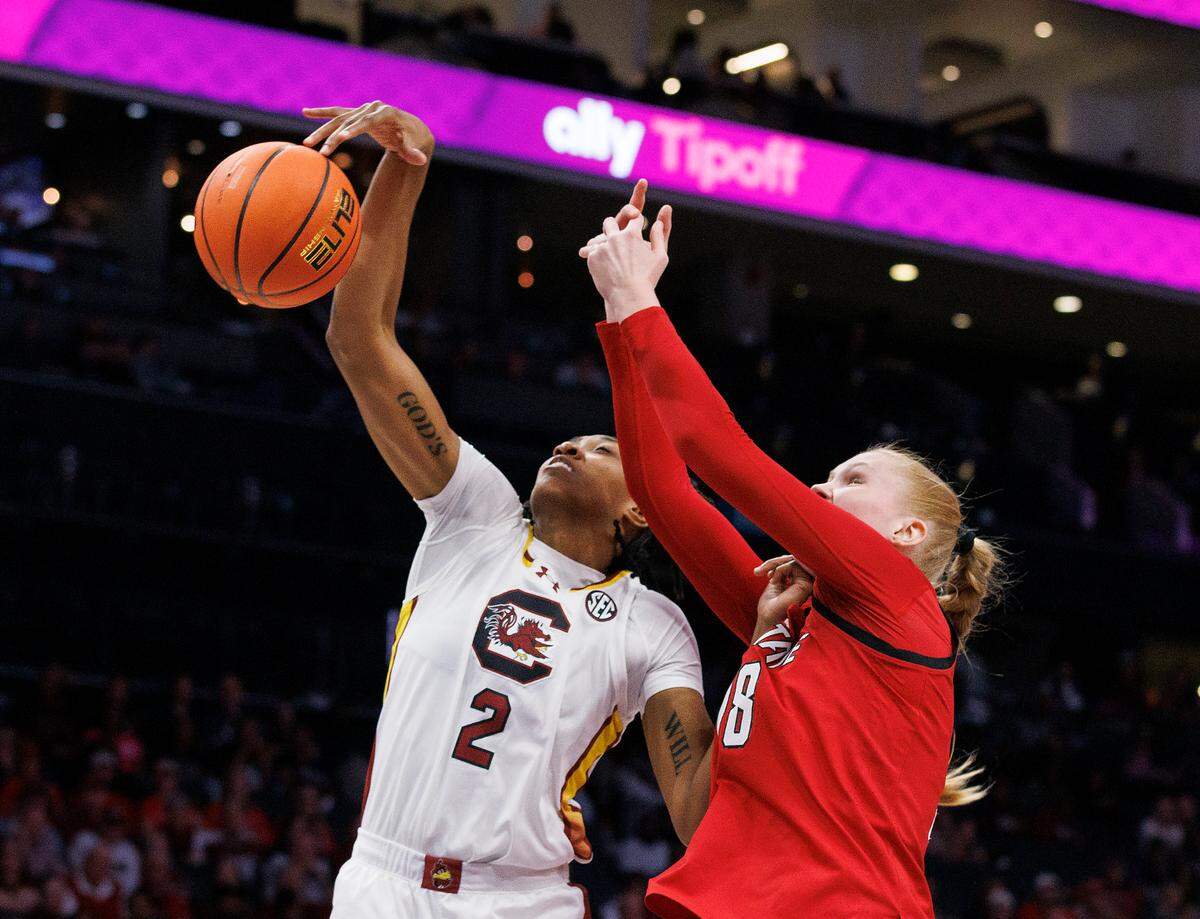
N.C. State will face its first test on Oct. 26 when it plays Maryland in an exhibition in Greensboro. UNC follows with an exhibition on Oct. 30 against South Carolina. Duke does not have any open exhibitions, but it opens its season against Baylor in Paris on Nov. 3.
In addition to the Terrapins, the Wolfpack faces Tennessee (Nov. 4) and Southern California (Nov. 9) in neutral-site matchups. They host TCU (Nov. 16) and travel to Oklahoma (Dec. 3).
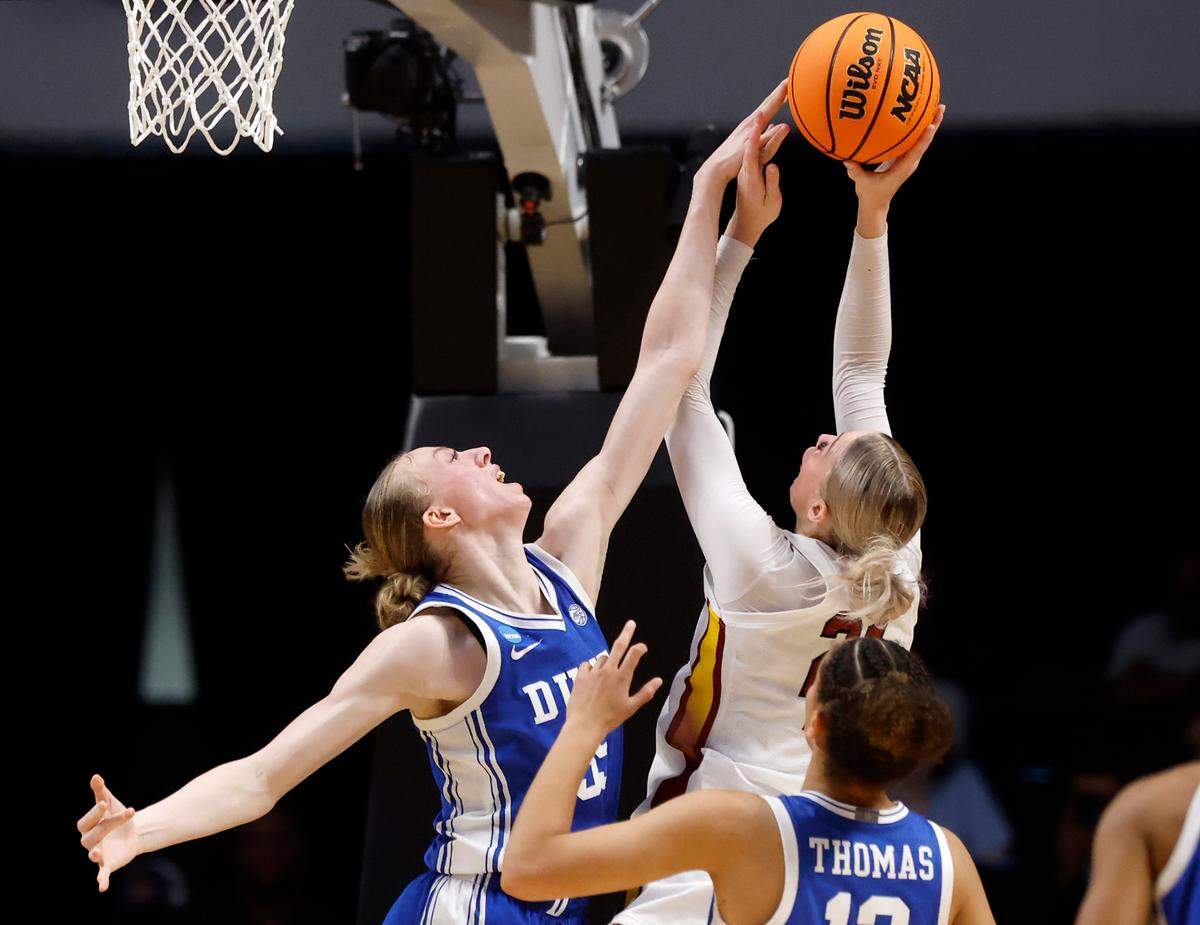
Duke plays West Virginia (Nov. 14), South Carolina (Nov. 26), Texas or UCLA (Nov. 27) for the 2025 Players Era Women’s Championship, and then LSU (Dec. 4).
UNC’s schedule features UCLA (Nov. 13), Kansas State (Nov. 28) and Texas (Dec. 4), guaranteeing games against three teams from the 2025 Final Four field.
All three teams play more half of their nonconference matchups on the road, with the Blue Devils leading the group with seven away games.
“The philosophy is really to get exposed, I think it’s really hard to get exposed in games you win by 60 or 70,” Lawson said. “If you’re playing a ton of those, then I don’t think you know a lot about your team or everything that you need to know about your team. … We want to know what we need to work on, so that when we get into conference play, we have an idea.”
Tough schedules and the NCAA tournament
Lawson said the tough games have created a group of resilient players who have been a “second weekend” team in March the last two years. Duke advanced to the Sweet 16 in 2024 and narrowly lost its Elite Eight matchup this spring.
“Sometimes, in the moment, it doesn’t feel good, but I think we’ve grown a lot from the tough nonconference schedule,” Lawson added. “This is definitely the toughest one that we’ve had since I’ve been at Duke.”
Banghart and Moore shared the same message. They want to see their teams in difficult situations and identify deficiencies as early in the season as possible to ensure success in the ACC and prepare their programs for the postseason.
N.C. State played in the ACC Championship game the last two seasons, in addition to making the Final Four in 2024 and the Sweet 16 in March.
UNC, which lost 60% of its production to graduation, hosted first-round NCAA tournament games in Chapel Hill this year for the first time during Banghart’s tenure and advanced to the Sweet 16, falling to Duke.
“We have to get as much game pressure and not worry about wins,” Banghart said. “It doesn’t matter. What matters is how can I quickly get game pressure so that the available players become reliable players so that we can be good in the ACC season.”
Coaches aren’t the only ones who appreciate this scheduling model, even if it’s difficult. The players said playing difficult opponents in the first month of the season pays off. Plus, they like the challenge.
“There’s a lot of pressure, but I think that we’re also super prepared for it,” Toby Fournier, a Duke sophomore forward, said. “Coach Kara also does that on purpose, because you don’t want to have all the easy games in the beginning, then you get to the end and you’re in March Madness, you’re like, ‘Oh, like this feel this is what it feels like to run up and down the court at full speed for 10 minutes straight because they haven’t stopped the game.’ I think that it’s very intentional who we play, and I think that that’s going to prepare us for what we have to come.”
Where the teams fall in strength of schedule
Duke, N.C. State and North Carolina each ranked in the national top 30 for net strength of schedule in the past two seasons, with the Blue Devils leading in both years.
In the last four seasons, no team in the Triangle finished with a nonconference average strength of schedule ranking lower than 42.
The Tar Heels, skewed by a ranking of 97 in the 2021-22 season, trails the area with a 41.75 average. The past three years, however, UNC finished with a nonconference strength of schedule above 40.
The Wolfpack, meanwhile, leads the group with an average nonconference schedule of 16.5 in the past four years. The team never finished ranked below 26 and finished ranked No. 10 in the metric last season, a high in the sample size.
Duke is in the middle with an average 34.5 SOS ranking for opponents outside the ACC, but it featured a massive jump from Lawson’s first two full seasons to the most recent two. In 2021-22 and 2022-23, the Blue Devils ranked in the 60s for nonconference strength of schedule. It ranked No. 6 last season and No. 8 a year before.
Last season, Duke led the Triangle with 10 Quad 1 wins, with UNC and N.C. State contributing eight and nine, respectively. The group finished 27-19 in Quad 1 games. The Wolfpack went 19-0 in the rest of the schedule. The Blue Devils finished 19-2 in their remaining contests, and the Tar Heels rounded out the group with a 21-2 record in Quads 2-4.
“I love that (Moore) did this,” Brooks said. “Last year he did this, and we didn’t have the greatest start. We started off 4-3. We had a really hard schedule.”
N.C. State went on to win 16 of its next 17 games, played Duke in the ACC title game, and made the Sweet 16. The Blue Devils finished their season in the Elite Eight.