
Why July provides a ‘lane’ for Congress to pass a law governing college sports
With Congress’ window of action short ahead of November’s midterm elections, this could be the month a bipartisan bill aimed at providing structured governance for college sports passes the Senate.
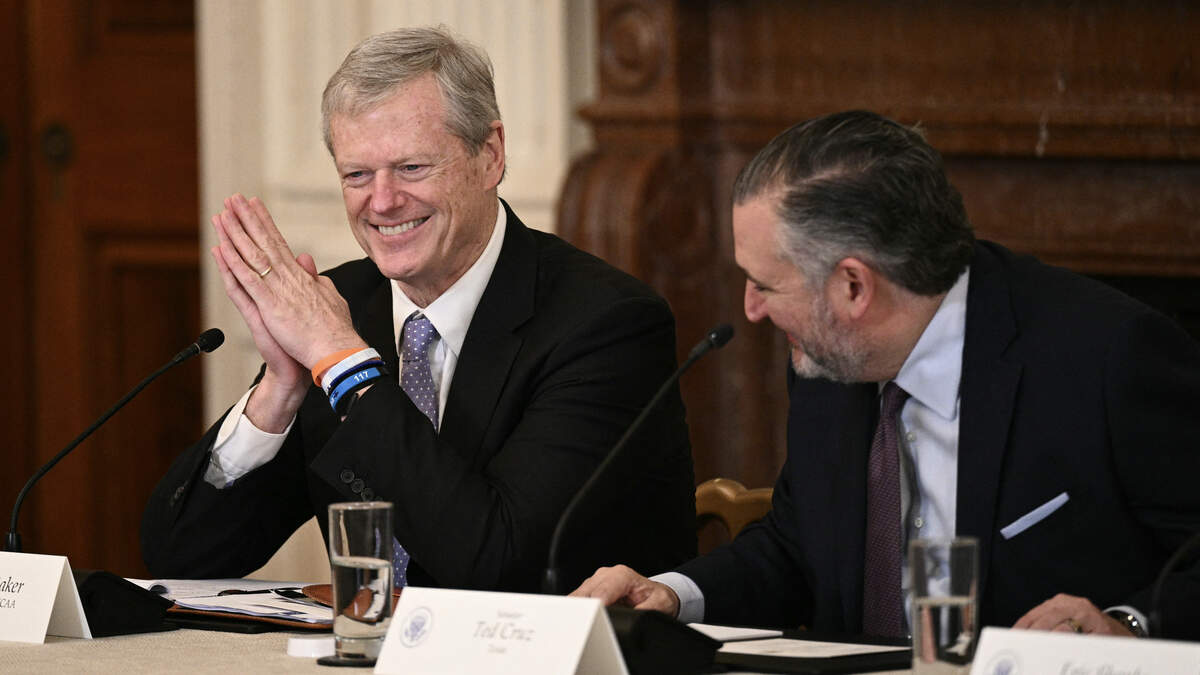
On Friday, speaking during the AP Sports Editors summer conference in suburban Washington, D.C., NCAA president Charlie Baker and Sen. Eric Schmitt (R-Missouri) said the timing is right for the bill to finally come before the full Senate, and perhaps be approved.
“We probably have 60 votes,” said Schmitt, one of the bill’s co-sponsors along with Sen. Ted Cruz (R-Texas), Sen. Maria Cantwell (D-Washington) and Sen. Chris Coons (D-Delaware).
The bill would provide stronger rules governing college athletics at a time when the NCAA’s traditional power to police the colleges has been eroded by a number of legal setbacks in state and federal courts.
Among its most impactful provisions are rules setting guidelines for revenue sharing and name, image and likeness (NIL) payments to players, as well as rules on student transfers and coaching moves aimed at stabilizing what’s currently a chaotic landscape.
The bill passed on a bi-partisan 19-9 vote out of committee on June 18, paving the way for the full Senate to consider the plan.
ACC commissioner Jim Phillips, who also chairs the NCAA’s Board of Governors, this week called this “the best chance for Congress to assist college sports and address some of the major issues that plague it in the near term.”
Legislation critical to the future of college sports
With Congress set to begin a recess after Aug. 7, and lawmakers moving into campaign mode ahead the Nov. 3 election, a short timeframe exists to get this bill passed. A vote is needed to maintain government funding ahead of a Sept. 30 deadline, so that will be Congress’ focus after the recess.
“September will be difficult if it’s still in the Senate,” Schmitt said. “So July really is the operating month to get it out of the Senate. And again, the more votes you have coming out of the Senate, going over to the House adds momentum.”
The importance of the legislation is critical to the future of college sports, Baker and Schmitt said Friday.
“The way I see it,” Schmitt said, “if we don’t do something, and we talk about what that looks like, the trajectory of this in three years will be even further unrecognizable from what people see. A lot of the sports that people take for granted, that we should expect to have, like women’s sports, a lot of those will either go away or be club sports. There will not be scholarship opportunities, which would be a real problem for the half a million student athletes in this country.”
What if the bill doesn’t pass?
Baker, a two-term Massachusetts governor prior to taking over the NCAA in 2023, is working with Congress and the college conference leaders and athletes to forge a deal that works for all. The stakes could not be higher, he said.
“I think if the bill doesn’t pass,” Baker said, “and I’m of the mind that it’s a good piece of work, and I hope it does, I do think the Olympic sports challenge will become more severe, and I think schools will basically just have to make decisions about which sports they’re going to choose to be part of and which sports they’re not going to choose to be part of.”
All sides agree that football generates the bulk of the revenue that allows schools to sponsor a host of other sports with scholarship athletes. Much of that revenue comes from media deals to televise football games.
That’s caused the two most prosperous leagues, the Big Ten and SEC, to voice opposition to the Protect College Sports Act. SEC commissioner Greg Sankey believes the legislation could lead to more lawsuits rather than protecting college sports from so much litigation.
The two leagues also oppose any idea of pooling media rights into one entity, something supporters of that plan believe could maximize the overall return.
The lawmakers continue to negotiate and make revisions to the bill, hoping to find something that all can live with to stabilize college athletics.
“If you can get the SEC and the Big 10 to be supportive,” Schmitt said, “that certainly helps with momentum. So that’s really what we have to get over the next couple of weeks. So, if there’s any action, this I think would be meaningful. Get this done. The best time to do it is the next couple weeks.”
As for Phillips and the ACC, he sees this as something necessary to ensure college sports’ future.
“We are engaged daily with members of Congress as the time has come for action,” Phillips said. “A great deal of negotiation has led us to this point, and it’s notable to have bipartisan bills that provide for continued protections for student-athletes, liability protection on a new eligibility and transfer model, state preemption, and enhanced federal regulation of agents.
“I look forward to continuing the collaboration with members of Congress to stabilize and modernize sports for the future.”
This story was originally published July 17, 2026 at 1:57 PM.