
Duke football has a new coach. Could upgraded facilities be next for Blue Devils?

Mike Elko’s hiring as Duke’s new football coach, along with his ongoing overhaul of the program’s staff, occurred with an eye toward making the Blue Devils more competitive than the past two seasons, which included losing 13 consecutive ACC games.
The personnel change, though, comes while the school also has plans to make physical changes to the team’s home, the Yoh Football Center.
“We know that we need to renovate,” Duke athletics director Nina King said on Monday, a few minutes after Elko’s introductory press conference. “Yoh hasn’t been touched since it was built. So it’s on the radar. It’s on the wish list and it always has been, frankly.”
At 70,000 square feet, the Yoh houses locker rooms and training facilities as well as coaches offices, plus areas for entertaining recruits and alumni. It stands adjacent to Wallace Wade Stadium, with a tunnel connecting Duke’s locker room at the Yoh to the playing field.
Facilities age quickly
The problem is it was built in 2002, which in the fast-changing world of college football facilities might as well have been 100 years ago. It’s total cost then was $22 million. The planned renovation 20 years later will exceed that cost.
Since the Yoh opened, Duke built the Pascal Field House indoor practice facility in 2011 and constructed the Brooks Practice Facility with the full-length outdoor practice fields the program lacked prior to David Cutcliffe’s arrival as head coach in December 2007.
The school also completely overhauled Wallace Wade Stadium during the middle of the last decade. The running track that encircled the playing field was removed following the 2014 season with the playing surface lowered to allow for additional seats closer to the field.
Between the 2015 and 2016 seasons, Blue Devil Tower was built featuring premium seats and luxury suites as well as improved operations facilities.
But the Yoh building, particularly Duke’s locker room, is in need of an overhaul.
Start over, or add on?
A few years ago, discussions centered on possibly squeezing a new locker room building behind the end zone that’s nearest the team’s practice fields next to Wallace Wade Stadium. The new scoreboard that was built during the recent stadium renovation could have been placed on top of that building.
In the end, though, Duke opted against that tight fit and is focused on renovating Yoh for about one-third the cost of what a new building could have cost. In 2019, the school spent around $75,000 for a study of what was possible to improve within the existing Yoh building.
The hope then was to start fundraising for the project, with a price tag around $25-30 million, in spring 2020.
Of course, the COVID-19 pandemic hit in March 2020, putting a halt to not only that, but many other plans not only at Duke but around the world.
So, the time to start fundraising for that project is expected to arrive in 2022 instead. That’s provided Duke’s Board of Trustees approves the plan. King and her staff talked with the board during their meeting Dec. 3-4.
While those meetings are closed to the media due to Duke’s private school status, a summary of the meeting provided by the school said the board held “a strategic discussion with Vice President and Director of Athletics Nina King and members of her senior team, focused on recent developments and current issues in intercollegiate athletics.”
Asked about the facilities projects specifically, Duke spokesman Mike Schoenfeld, in an email to the News & Observer, said “All of these projects are still in the planning, design and development phases.”
‘Last piece’ of the puzzle
No action was taken on any facilities projects. But they are expected to be on the agenda for the group’s May meeting.
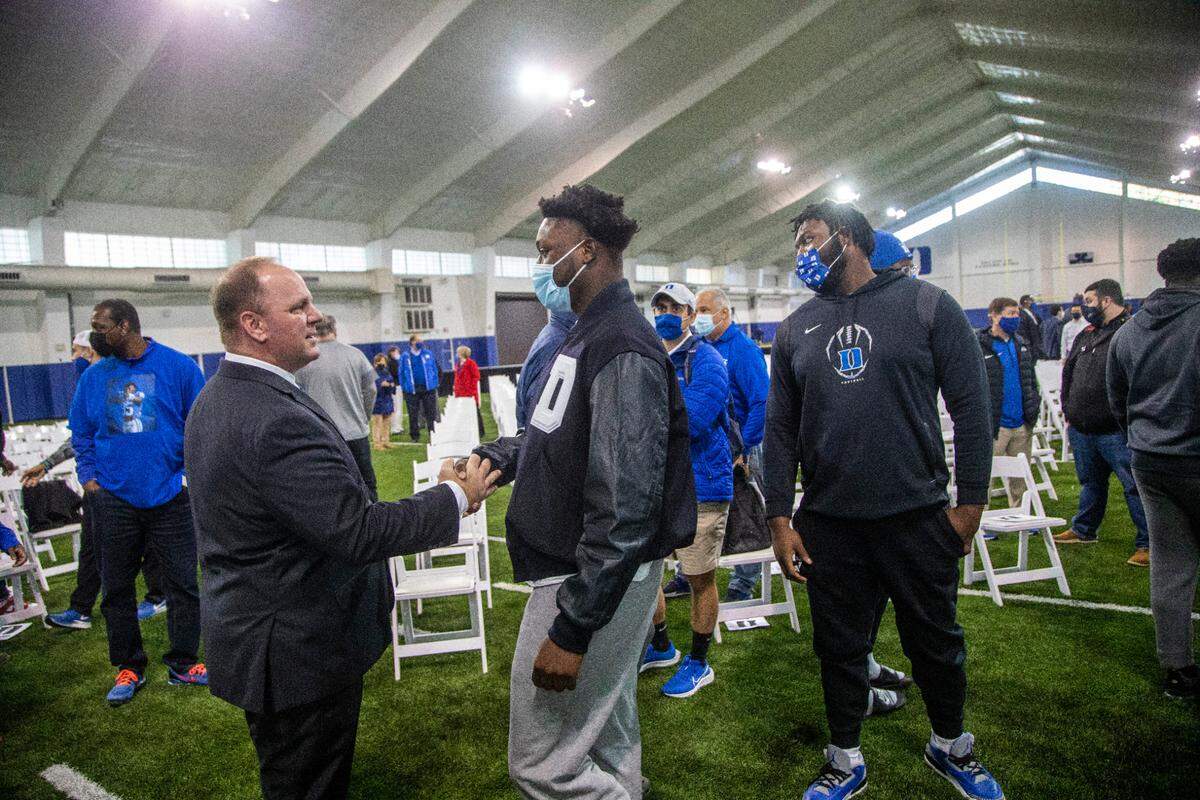
“It’s gonna take significant philanthropic support to do some renovations there,” King said. “And so we’re gonna hit the ground and eat a lot of chicken dinners with donors and get some folks to help us out there. But we’re ready, we’re ready to look and see where we can renovate what we can do.”
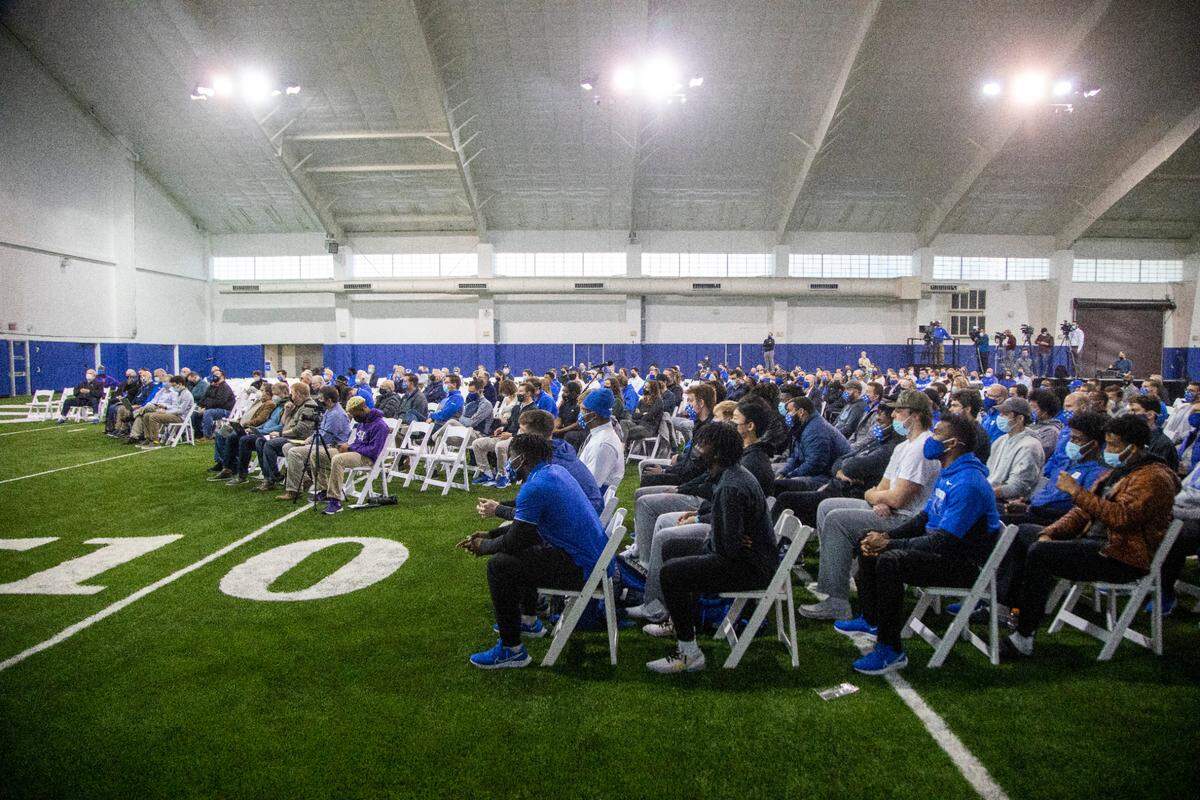
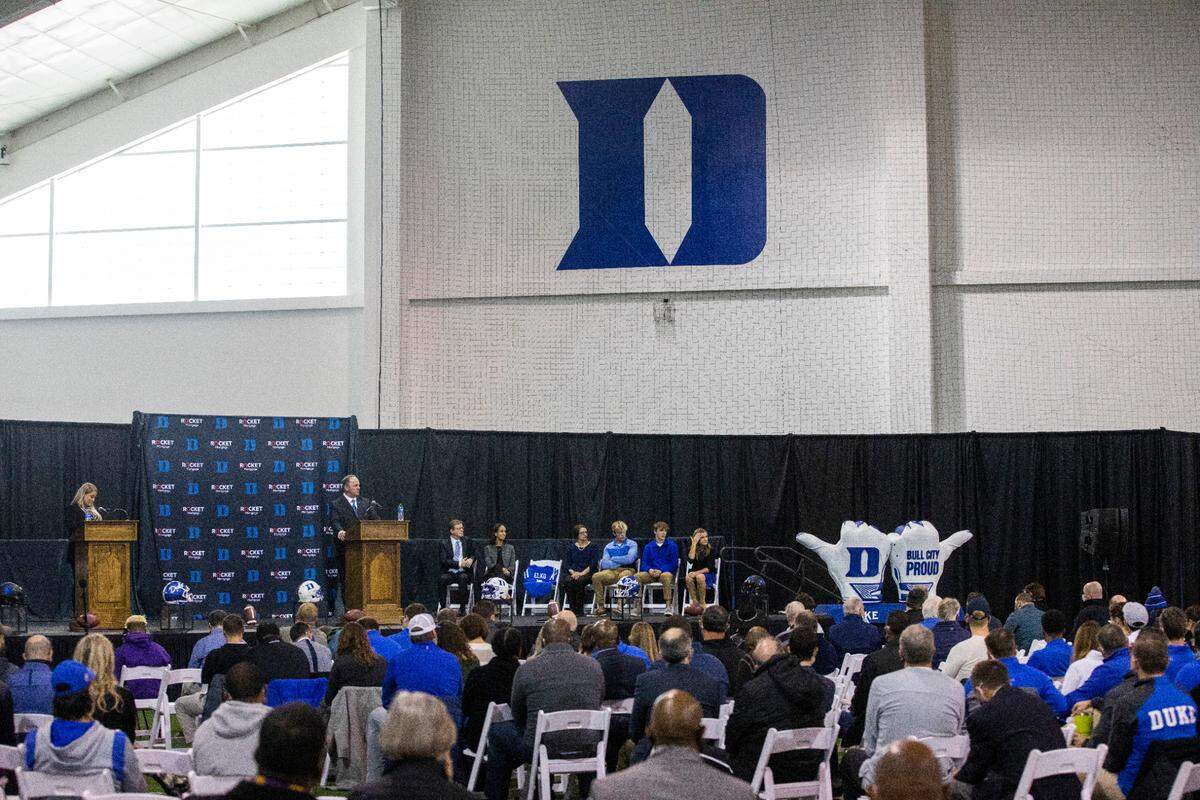
Elko’s press conference last Monday was held in the Pascal Field House where a temporary podium stood on top of one of the full-length field’s end zones. The school’s large blue “D” logo adorned the wall behind him.
Citing the stadium renovations, the practice field upgrades and the indoor practice facility, King believes the Yoh project, for now, would complete the overhaul of Duke’s football facilities that began during the first decade of this century.
“I mean, we’ve got this beautiful indoor facility, the stadium is in great shape,” King said. “And so that’s kind of the last piece for now, in the college arms race.”
Duke basketball’s wish list
But it won’t be the lone project Duke’s athletics department will be asking the board to greenlight.
Mike Krzyzewski, Duke’s Hall of Fame basketball coach, has long wanted a new building for the school’s men’s and women’s basketball players to use. Around the country, schools have constructed facilities that include spaces for athletes to gather in private settings still under the athletic department’s umbrella.
Clemson, for example, has its Reeves Football Complex that includes a 24-seat movie theater and player’s lounge that includes two pool tables, two Ping-Pong tables, two arcade basketball games and other video games including Big Buck HD hunter, Air Hockey, Pac-Man, XBOX Ones, and PS4s.
There’s also a recovery/nap room and the team’s nutrition center.
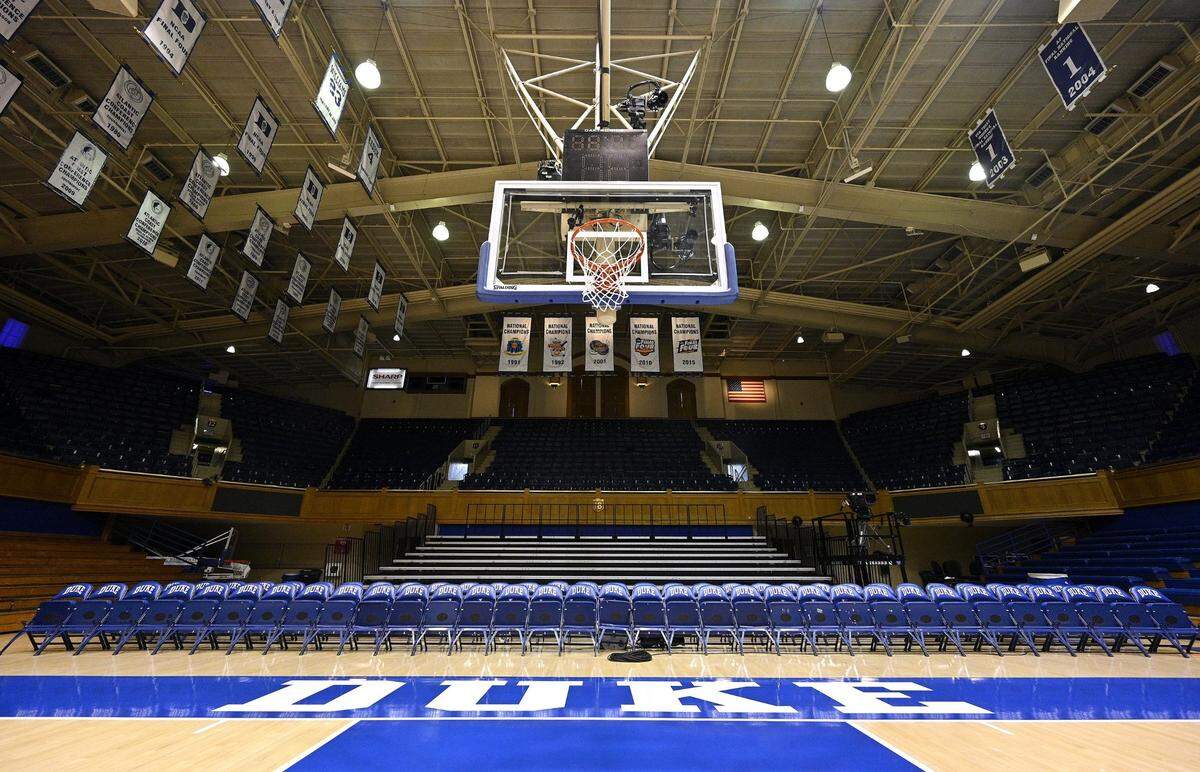
Unlike Duke football, which still needs to raise the money for its locker room renovation, the basketball program has the money on hand. That’s thanks to the Duke Basketball Legacy Fund, a donor program dedicated to the school’s basketball program that’s among the nation’s best.
How the Legacy Fund fits
Legacy Fund members must donate a minimum of $1 million. The fund has already helped endow all 13 scholarships allowed under NCAA rules, as well as all of the program’s coaching positions.
The legacy fund is not controlled by Krzyzewski or solely the basketball program though. Just like any donated money that is dedicated to a specific sport, the athletic department and the board of trustees must approve any disbursement.
“Theirs just happens to be a little more high profile,” King said of basketball’s Legacy Fund. “So when those dollars are restricted to a specific program we work with the coaches to budget how are we going to use those dollars, what does our program want and need over and above the standard, travel, recruiting?
So we work with Coach K and his staff. We have a couple of development officers who work on the legacy fund. So we work with them to figure out how to use those dollars for the benefit of the program.”
The next project for the fund will be the new building for the players to utilize.
“We already have the money to build a new basketball building for men and women,” Krzyzewski said. “Not a place to play, but a legacy room. We’ve raised over $60 million. We’re just waiting on the school to say, ‘Let’s go.’ We’ve had the money. We’ve raised it. That’s what our program, the women’s program, that’s what we need.”
Over the past 20 years or so, needs when it comes to facilities in college athletics have become insatiable.
From 2012-17, Duke athletics raised $341 million, after initially targeting $250 million, for its Building Champions Campaign. A large portion of that money, $100 million, went toward the Wallace Wade Stadium upgrades.
Tom Coffman, Duke’s top athletics fundraiser, spearheaded that campaign. Coffman has announced his plans to retire this summer.
King, and Duke’s football program, have one more project for him to tackle first, though.
“Exactly,” King said. “We’re gonna put him to work right up until June 30.”