
Duke basketball found ‘collective purpose’ at home. Now, Blue Devils need it vs. Baylor

Duke basketball’s collective mood shifted 180 degrees over the past two weeks, from the depths of a two-game losing streak, through a week of hard-nosed practices and the joy of two home wins.
“I just liked the response from our team,” Duke coach Jon Scheyer said after Tuesday night’s 89-68 win over Hofstra at Cameron Indoor Stadium.
That doesn’t mean all is well with the No. 21 Blue Devils, not by a long shot.
Through the season’s first 10 games, Duke (7-3) racked up wins over the teams the Blue Devils are expected to defeat — from Dartmouth and Bucknell to La Salle, Southern Indiana, Charlotte and Hofstra. Duke’s 1-3 record against teams from Power 5 leagues, though, reveals work the staff and players are continuing to plan and execute.
On Nov. 30, following Duke’s 75-70 loss at Arkansas, Scheyer lamented his team’s missing “collective toughness” that’s needed on the road. The Blue Devils followed that performance by losing 72-68 at Georgia Tech in their ACC opener three days later.
Duke’s practices between that loss in Atlanta and an 80-56 win over Charlotte on Dec. 9 were their most intense of the young season. A news conference planned for Dec. 8 was canceled so the coaches and players could stay locked in on their internal concerns, not what the world outside Cameron Indoor Stadium thought of the team.
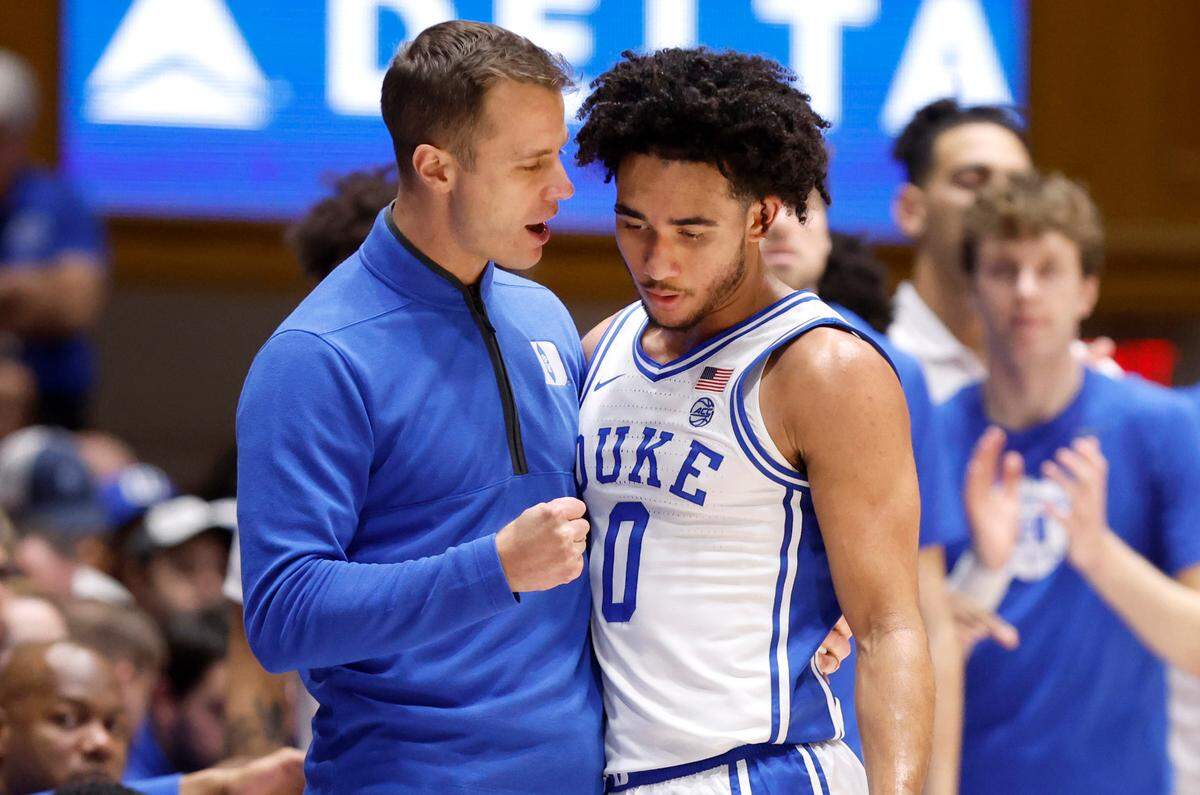
Beating Charlotte and Hofstra soundly is a good start. As Scheyer has often said, he believes Duke basketball is renowned for its strong response when challenged.
“Coming off two losses,” Duke junior guard Jaylen Blakes said after the win over Charlotte, “this was kind of a statement game. We had a collective energy. We talked about our purpose for this game. We had a collective purpose.”
Well, there’s another challenge upcoming that, in the long run, will say even more about the work that was done. Duke next faces No. 6 Baylor (9-0) on Wednesday at New York’s Madison Square Garden.
None of Duke’s losses thus far, a 78-73 home loss to now No. 1 Arizona (8-0) plus on the road at Arkansas (6-4) and Georgia Tech (5-3), are the kind that kill NCAA tournament hopes or seeding potential come March. Only Georgia Tech, currently No. 159 in the NET, is mildly concerning.
But, at some point, Duke needs to start piling up wins against teams at the top of the NCAA’s Evaluation Tool (NET), like a Baylor team that’s currently No. 5 in the NET.
To do that, the Blue Devils must become more efficient and effective offensively when playing those top-level teams.
According to Synergy, Duke’s offensive efficiency of 1.044 points per possession ranks in the 96th percentile nationally. That earned Duke an “excellent” rating from the basketball analytics service.
But the Blue Devils haven’t been nearly as efficient against their best opponents. Duke’s points per possession were subpar against Arizona (0.901), Michigan State (0.987), Arkansas (0.835) and Georgia Tech (0.883).
Compare that to Duke’s season-best 1.278 points per possession against Dartmouth, its 1.173 against La Salle and its 1.163 against Hofstra.
So as good as the Blue Devils felt after Tuesday night’s win, they know they still have plenty to prove against Baylor, and then in the ACC regular-season gauntlet to come.
“A lot of people say these games don’t matter, these home games,” Duke freshman guard Jared McCain said after the Hofstra game. “But for us, every single game matters to us. But Baylor is a big one.”
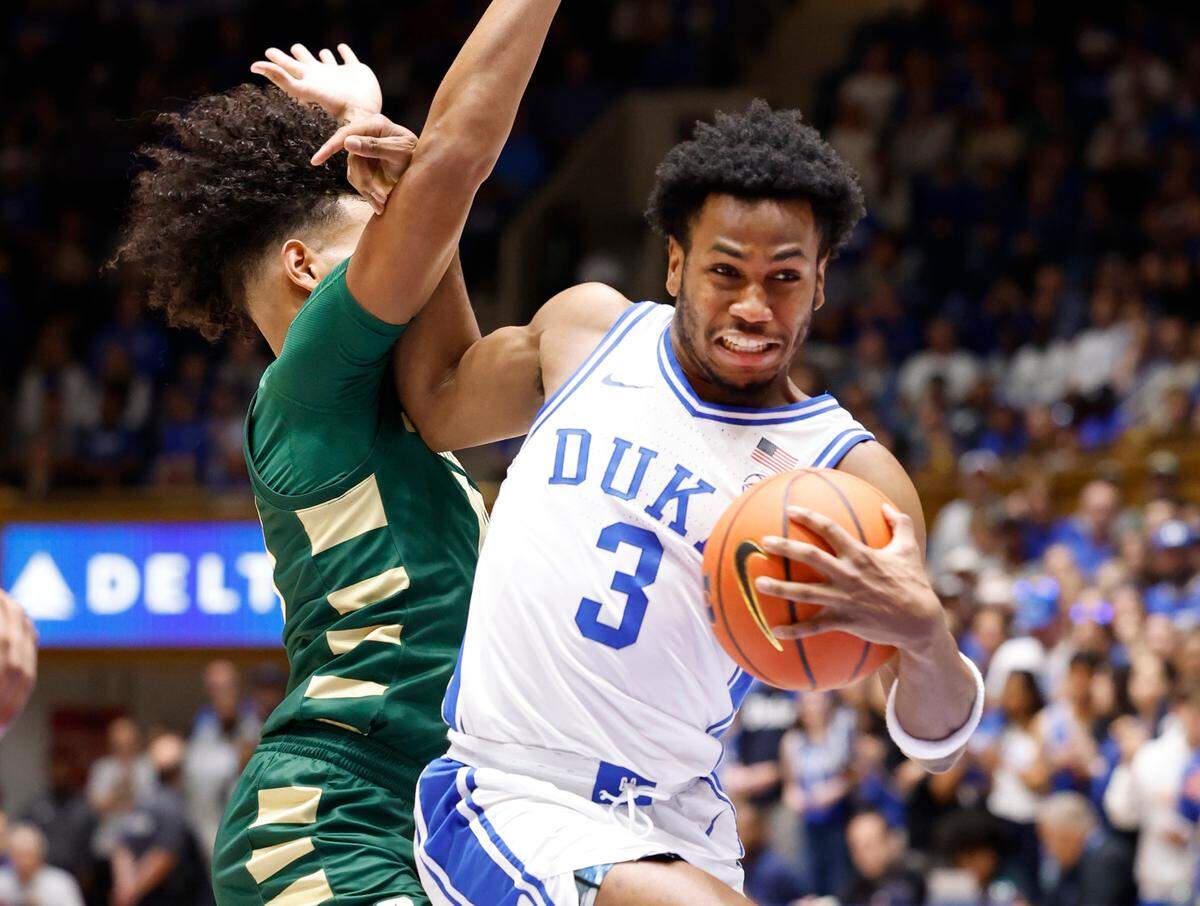
Of late, two Duke players are showing they can play at the high level needed to propel the Blue Devils back into the nation’s top 10.
Senior guard Jeremy Roach has scored 18 points or more in five consecutive games. During that stretch, he turned the ball over just three times while collecting 17 assists.
“I thought Jeremy was in great control of the game,” Scheyer said after Roach produced 19 points with eight assists and no turnovers in 37 minutes of play against Hofstra.
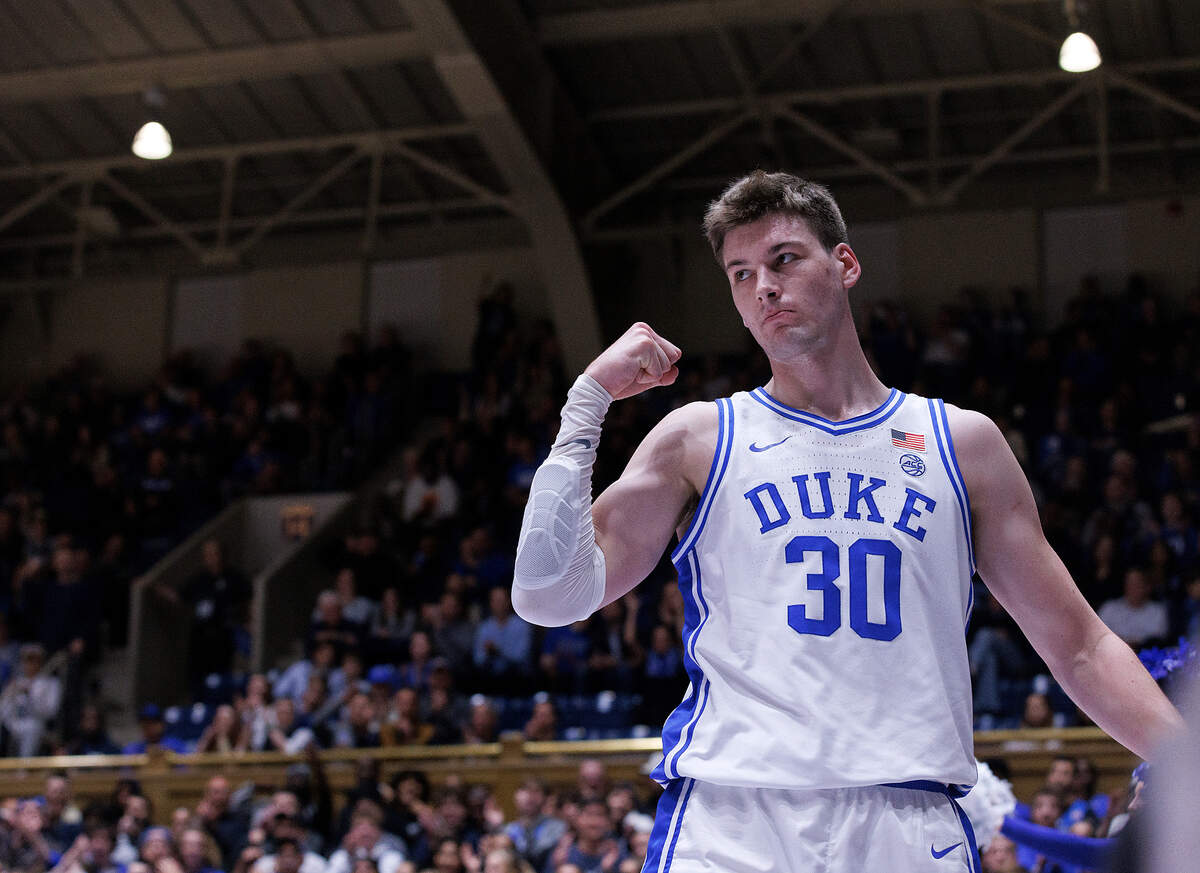
Sophomore big man Kyle Filipowski’s production is living up to his preseason All-American status. After scoring 28 points with 12 rebounds and eight assists against Hofstra, the 7-foot center is averaging 18.4 points, 9.2 rebounds and three assists per game this season.
In October, Scheyer said the offense had to run through Filipowski and that he’d look to his star player for more than just scoring. Scheyer needed rebounding and play making, too.
That means Filipowski has to pass the ball out of double-teams back out to open shooters or to an open man down low, like 6-9 sophomore Mark Mitchell, for easy points.
“Flip can be a piece like the queen on the chessboard,” Scheyer said. “He can move all over the place and Mark can be that way. He can be the queen on the chess board in a different way. And so the positioning of those two guys is key for our offense.”
As Duke continues to play without injured point guard Tyrese Proctor (sprained ankle) for the foreseeable future, Mitchell’s development is of utmost importance. He’s a slumping shooter, having hit only 1 of 17 3-point shots this season, but Duke needs his toughness on defense and his rebounding and scoring inside along with Filipowski.
Mitchell scored 14 points against Hofstra, but did so while only making 5 of 13 of his 2-point shot attempts.
“Mark didn’t finish as much but Mark had some great moments,” Scheyer said. “Like, he’s so close. I’m telling you, Mark is so close to having just some big time games. He’s right there.”
The Blue Devils need him to get there, along with a few other players, beginning Wednesday night against Baylor.
This is Duke’s last chance to collect an impressive nonconference win. Its final game against a non-ACC foe is Dec. 30 against Queens. After that, the Blue Devils will have to hunt Quadrant 1 wins in league play, and those haven’t been readily available in recent years.
So, as good as the Blue Devils feel carrying their modest two-game winning streak into the game with Baylor, it’s imperative they leave New York having won three in a row.