
Why Duke basketball must be more physical against Auburn, after ‘soft’ game against Seattle
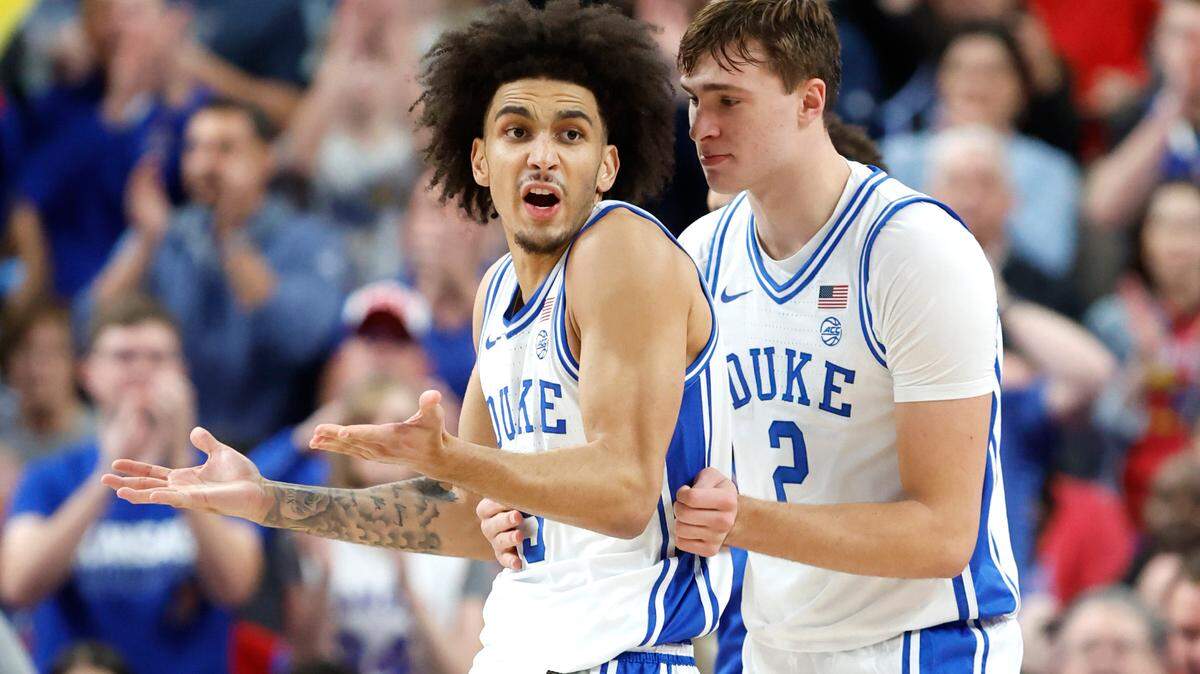
Though Duke stifled Seattle with tough defense to post a 70-48 win Friday night, Jon Scheyer looked back — and ahead — and expressed some concern.
Scheyer’s No. 9 Blue Devils (5-2) have already suffered frustrating losses to now-No. 4 Kentucky, 77-72, and No. 1 Kansas, 75-72. In between those two, Duke won, 69-55, at Arizona.
The next big-time game comes Wednesday night against No. 2 Auburn.
When Scheyer saw his Blue Devils only lead by three points over Seattle 12 minutes into play, and eight points over with three minutes left until halftime, he didn’t see the response he wanted three days after the tough loss to Kansas.
“I just thought we were really soft in the first half,” Scheyer said. “They were more physical with us. That’s two games in a row. They came out more physical than us on defense. We were softer.”
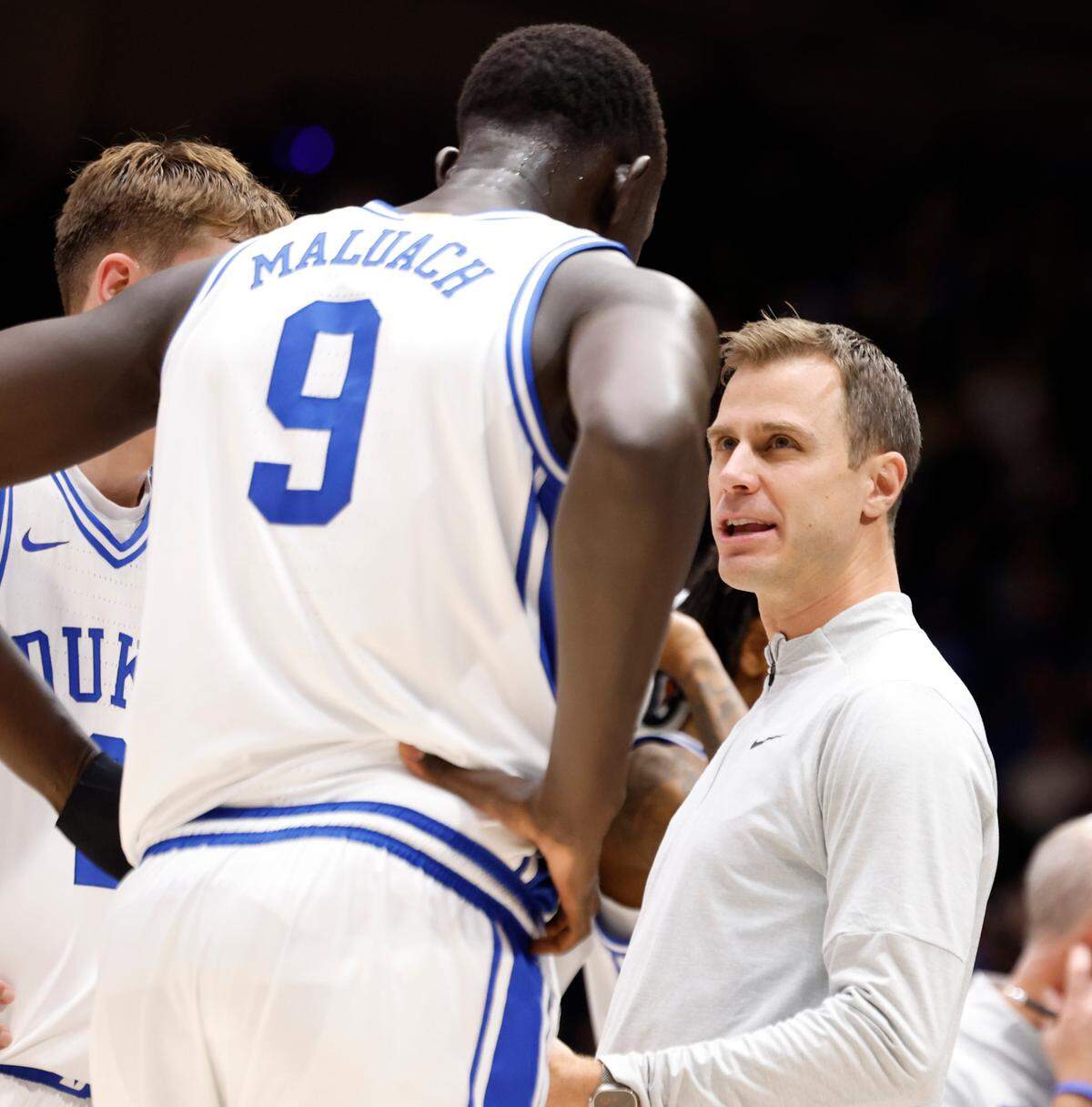
Scheyer sounded that alarm because there’s nothing soft about Duke’s next opponent. Auburn (7-0) is armed with 6-10, 240-pound center Johni Broome, a candidate for national player of the year. The Tigers also start senior guards in 6-6 Miles Kelly, 6-7 Chad Baker-Mazara, 6-4 Denver Jones and 6-11 Dylan Cardwell.
The Tigers are older, physical and tested, having already defeated Houston, Iowa State and North Carolina this season.
Scheyer designed a schedule designed to help his team, which starts three freshmen in 6-9 Cooper Flagg, 6-7 Kon Knueppel and 7-2 Khaman Maluach, grow up fast. He spoke positively after the Kentucky and Kansas losses about how, despite late-game failures, his team would learn from these experiences and be better in the long run.
“We play on the hardest schedule in the country,” Proctor said. “Obviously, going to Arizona was a challenge. The game we lost out west to Kansas. They’re a really good team. And then we got a big-time game (against Auburn), and it’s gonna prepare us for a championship run in March, and that’s what we’re aiming for.”
The short run, though, brings Auburn to Cameron Indoor Stadium and Scheyer doesn’t have time for his team to be soft in any way.
That’s why he was more critical after the Seattle game despite the 22-point win.
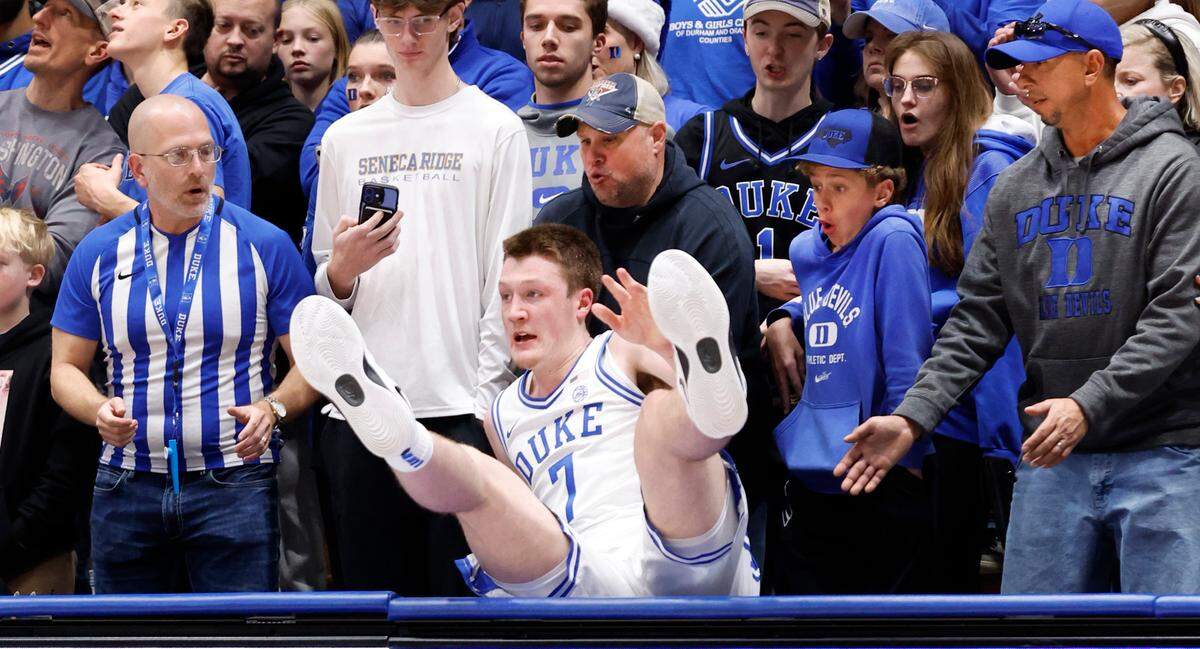
“I thought we were rushing shots,” Scheyer said “We had too many turnovers. We need to finish stronger, drive stronger, make extra passes.”
A lot of that falls on Flagg and Knueppel.
Flagg, the nation’s No. 1 ranked incoming recruit and the favorite to be the nation’s top freshman player, is still just 17 years old and will play against much older players. He’s experienced that against Kentucky, Arizona and Kansas.
As good as he was in the win over Arizona and, on the whole, the loss to Kentucky, he still had late turnovers against Kentucky and Kansas that cost Duke a chance to win.
“I think for us, it’s just about experience,” Flagg said. “We have some people, me included, that haven’t been in these types of situations before. So we’re just going to keep learning, keep doing our best. We trust each other, we trust the plays coach is calling. It just comes down to us executing and getting the shots that we want. And just comes with experience.”
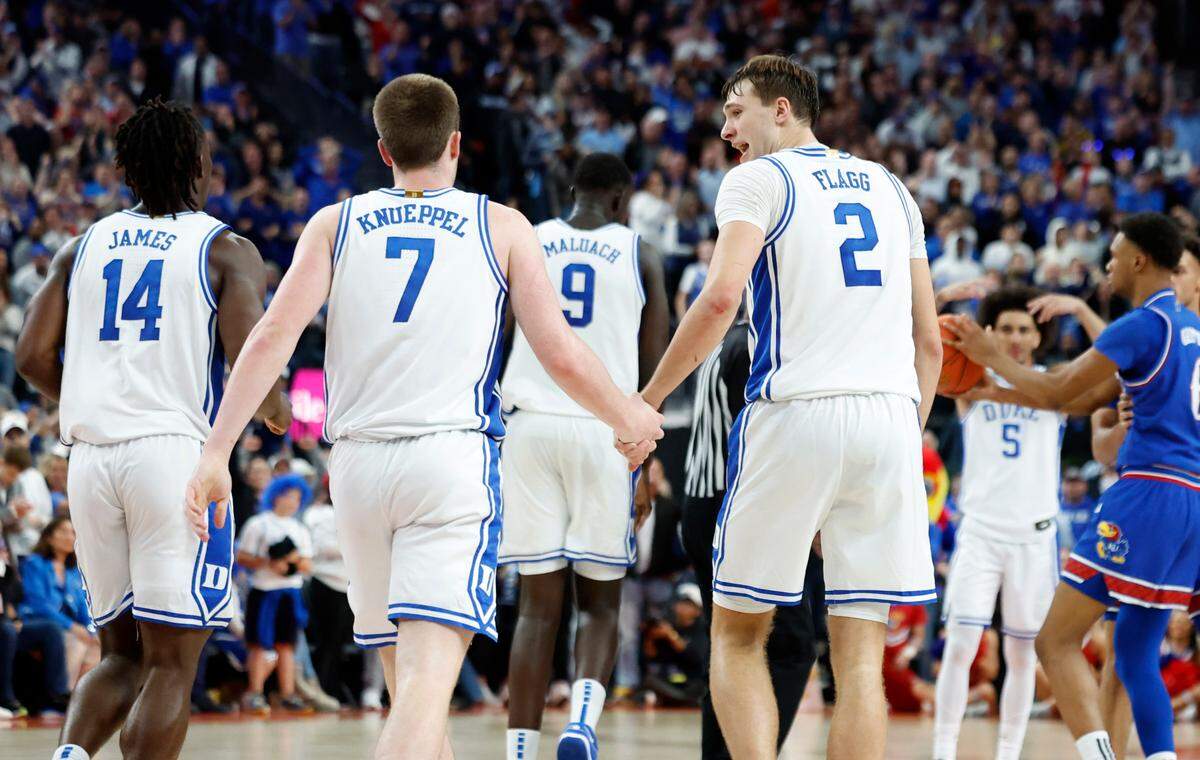
Knueppel had the key turnover with three seconds left and Duke down a point against Kansas. He then missed a buzzer 3-pointer, making him 0 for 8 from behind the arc on the night against the Jayhawks.
“You discover what it takes to win tough games and big games,” Knueppel said, “valuing every possession, making timely plays and having poise, especially near the end.”
Tyrese Proctor, Duke’s 6-5 junior guard, has started the past two seasons for the Blue Devils. He helped them win the ACC title as a freshman and make the NCAA Tournament Elite Eight, including a Sweet 16 round win over Houston, last March.
He’s had the experiences Flagg and Knueppel haven’t. He’s stressing that plays throughout the game are the issue, not what’s happened late against Kentucky and Kansas.
“Everyone keeps talking about the turnovers and Cooper turning it over,” Proctor said. “I mean, it’s a sum of the whole game. We’re missing rebounds. We’re not getting back in D transition. That leads to turnovers that result in points. But, end of the game, we trust them to have the ball in their hands. We know they can make a play.”
This story was originally published December 3, 2024 at 6:00 AM.