
As Duke basketball takes a holiday, what we know — and need to see — from No. 5 Blue Devils
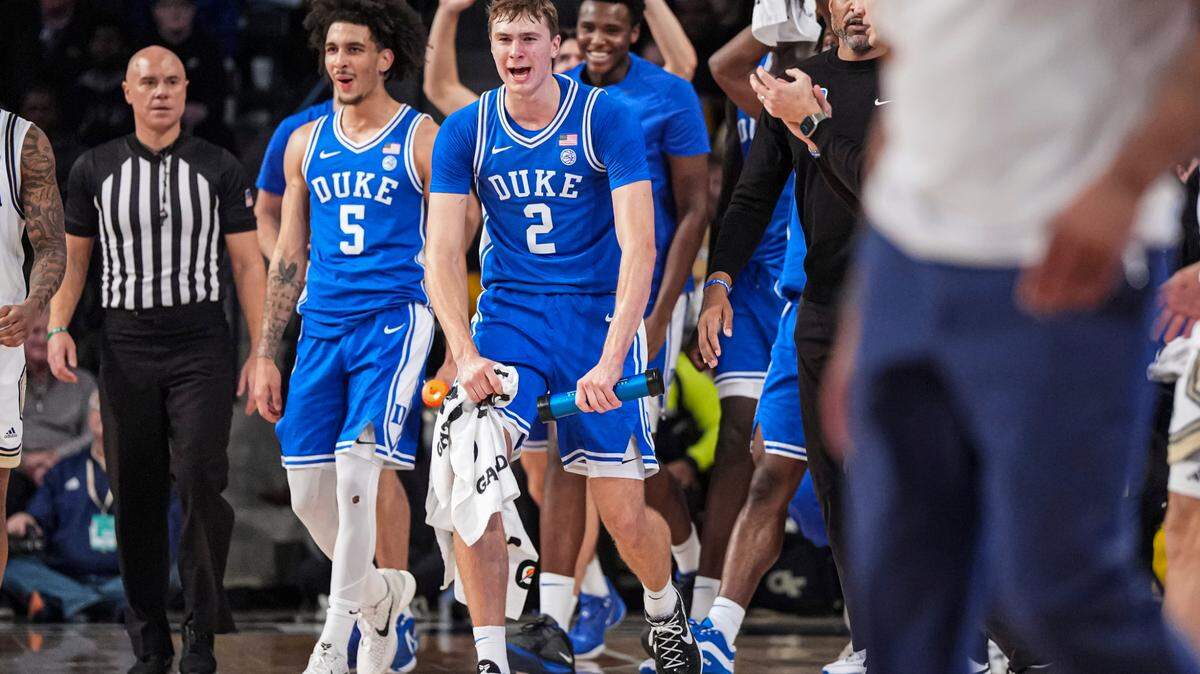
With the holidays here and the schedule turning mostly to ACC play the rest of the way, Duke usually has to gird itself for tougher opponents.
That’s not the case this season, what with the ACC taking pummeling at alarming rates in nonconference play during November and December.
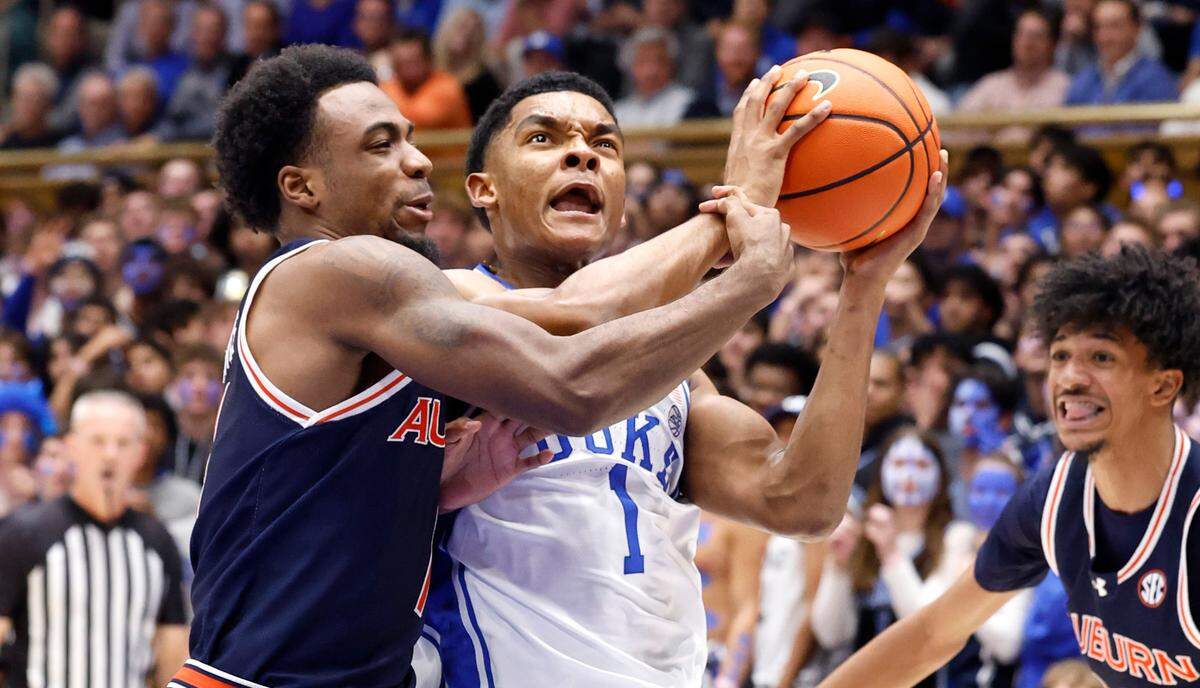
While rolling to a start that places it as the ACC’s top team, No. 5 Duke (10-2, 2-0 ACC) collected impressive wins at Arizona (69-55), and at home against Auburn (84-78).
So, when the Blue Devils took apart Georgia Tech, 82-56, on Saturday, that resembled what they are set up to do for the next two months against league teams who, for the most part, resemble the struggling Yellow Jackets (5-7, 0-2 ACC).
Duke spent its first 12 games perfecting a defense that’s proven lethal and working out the kinks of an offense that’s showing signs of being strong, as well.
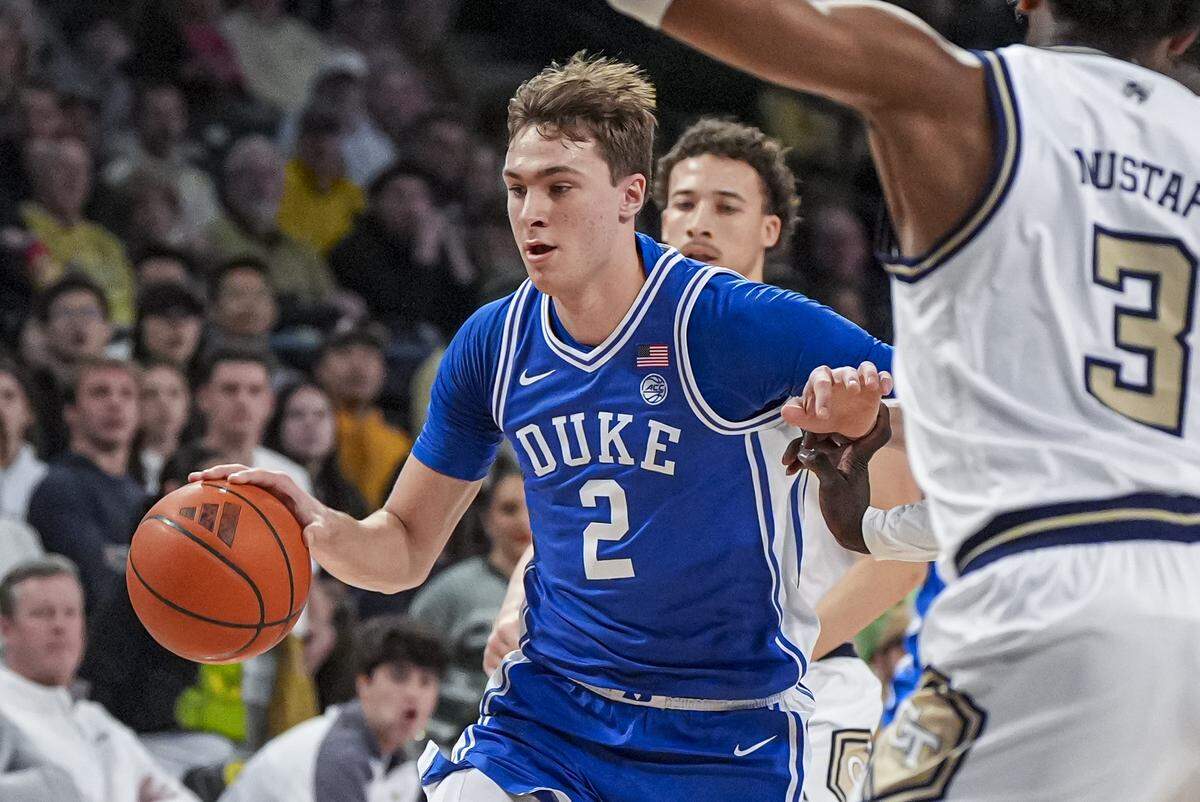
“This has everything to do with the decisions you make and how you grow as a team and the off season work that you do,” Duke coach Jon Scheyer said after the Georgia Tech game.
It was Duke’s second game in Atlanta this season, with the Blue Devils having lost 77-72 to Kentucky downtown at State Farm Arena on Nov. 12. But Scheyer is thrilled with how far his team has come in those 39 days.
“I think we’re a completely different team than that time,” Scheyer said. “I think we’ve grown so much, just the togetherness, the toughness.”
Now, with an extended holiday break before resuming ACC play on Dec. 31 at home with middling Virginia Tech (5-7, 0-1 ACC), here’s a look at what Duke has shown thus far, and what it needs to show between now and March to solidify itself as a national championship contender.
.JPG "DUKE (1).JPG")
Defense will carry Duke far
The offseason plan to build a sturdy defensive team proved successful for Jon Scheyer.
Not only are the Blue Devils the nation’s tallest team, but they are among the toughest to score against.
“That’s going to be what drives us the whole year,” Scheyer said, “and this team has embraced it.”
With 7-2 Khaman Maluach and 6-9 Cooper Flagg in the starting lineup, Duke protects the rim well. On the perimeter, guards Tyrese Proctor and Kon Knueppel are strong on-ball defenders. Then, reigning ACC steals champion Maliq Brown comes off the bench, deflecting passes left and right.
Georgia Tech scored only 20 points in the second half of its loss to Duke on Saturday. Get used to seeing that in ACC play.
Duke has allowed only 58.5 points per game, with opponents making just 35.5% of their shots overall, including 28.6% on 3-pointers.
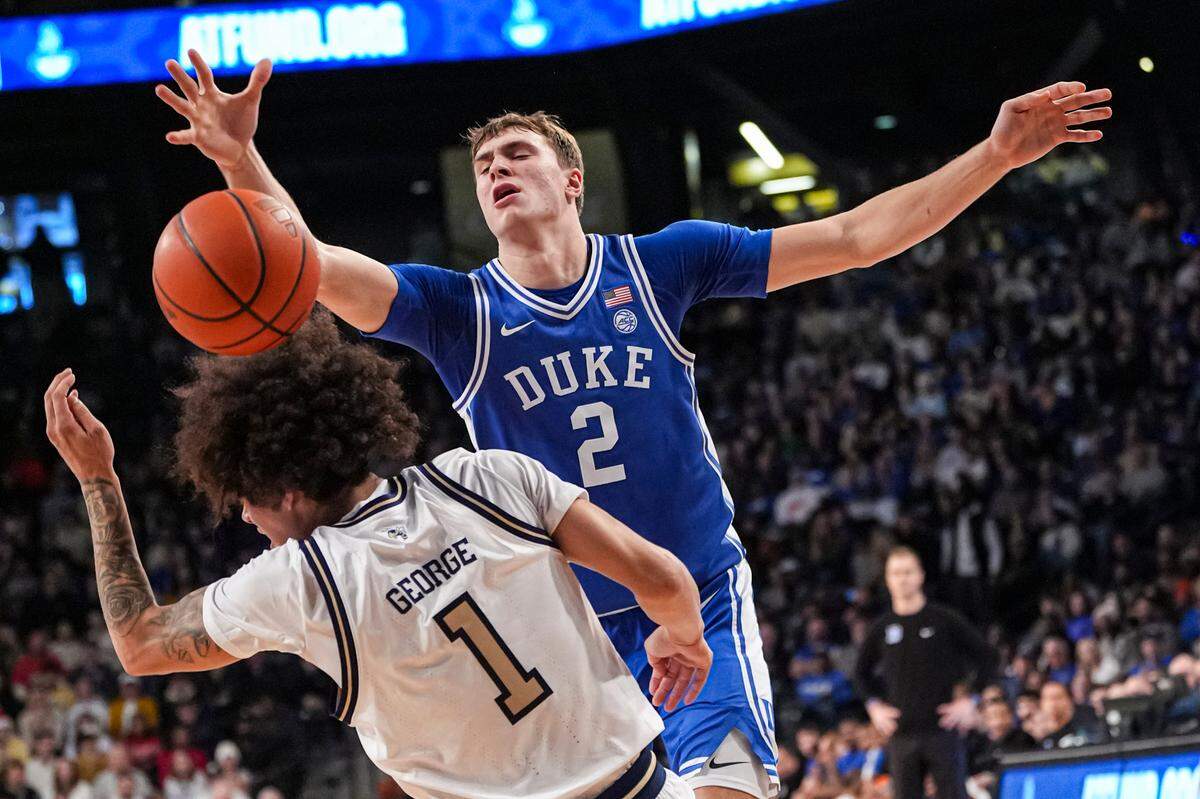
It will be difficult to outrebound Duke
It’s not only the tall and long-armed Flagg (8.6 rebounds per game) and Maluach (5.3) who grab missed shots with ease. Brown averages 5.5 rebounds as a reserve.
But Duke also gets contributions from its wings and guards, like the 6-6 Sion James (4.0), the 6-7 Knueppel (3.7) and the 6-5 Proctor (3.6).
The Blue Devils are adept at grabbing offensive rebounds, collecting 34.4% of their missed shots. The national average is 30%. Duke is also above average in preventing offensive rebounds at the other end. Opponents only rebound 27% of their missed shots.
Only three teams — Kansas, Auburn and George Mason — have won the rebounding battle against Duke this season.
Duke is class of ACC
Based on results thus far, it’s not even particularly close when determining how much better the Blue Devils are than the rest of the conference.
Duke is No. 2 nationally in overall efficiency according to KenPom.com. No other ACC team is in the top 20. The closest team to the Blue Devils? No. 24 Pittsburgh, followed by No. 29 North Carolina, No. 30 Clemson and No. 39 SMU.
Louisville at No. 49, is the only other ACC team among the top 50, a staggering statement for a league that just five years ago placed three No. 1 seeds in the 2019 NCAA Tournament.
That means the Blue Devils have to win and win big in ACC play. Any league loss, because of how poorly ACC teams are rated, would bring consequences with little to no chances to make up for it.

Who will emerge as second and third scorers?
Flagg is doing what was expected, leading Duke in scoring (16.3 points), rebounding (8.6) and blocked shots (1.2) while playing a team-best 30 minutes per game.
He’ll be enough to win the majority of Duke’s ACC games.
But the Blue Devils need other options against the nation’s other top teams. Knueppel could be that guy. His 3-point shooting issues for most of November and December left some doubt. But his 18 points, with 4 3-pointers, against Georgia Tech was a welcomed recovery.
Proctor, averaging 11.3 points and hitting 41.7% of his 3-pointers, is having the best offensive season in his three years with Duke thus far. His ability to score 12 or 15 points a night, with an occasional outburst to 20, would keep Duke among the nation’s elite.
Is the offense getting better?
Scheyer believes that is a true statement. Duke’s lopsided win at Georgia Tech was its best shooting performance of the season (56.4%). But it was only the second time the Blue Devils shot 50% or more this season.
Running the offense with precision allowed for more times the ball wound up inside for easy shots or dunks. Alignments that allow Maluach to get free for lob-pass dunks will be crucial in March.
Duke ran those plays frequently at Georgia Tech. That’s a good sign for the Blue Devils.
“We’re finding each other’s strengths and understanding just how to play together,” Scheyer said Saturday at Georgia Tech. “Sometimes it takes a little bit of time, and we’ve done a much better job. I thought we really executed today in the half court. We got what we wanted.”
Duke takes care of the ball, committing turnovers on just 15.5% of its possessions. That’s better than the national average (17.8%) and No. 61 nationally, putting Duke in the 88th percentile.
How will rotation play out?
Scheyer is still figuring this out, as evidenced by Caleb Foster’s removal from the starting five in favor of Sion James this month.
Three-point shooting ace Isaiah Evans, who has hit 51.6% of his shots behind the arc, has started taking bench minutes from Mason Gillis and Foster, as his defense has improved enough for him to get more chances to hit 3-pointers.
The starting five of Flagg, Maluach, Proctor, James and Knueppel looks solid. Brown and Evans are now the first two off the bench, with Foster and Gillis joining to give the Blue Devils a nine-man rotation.
The 6-11 freshman center Patrick Ngongba, playing his way into shape after foot injuries the past two years, is there in case Duke gets in serious foul trouble. But this is a learning and adjusting year for him. His best days for the Blue Devils will come in subsequent seasons.
Foster has the potential to play his way back up the rotation list. His 30.8% 3-point accuracy shows potential but is down from his 40.6% last season. He needs to find the groove he had last season.
This story was originally published December 22, 2024 at 5:00 AM.