Why Duke’s Manny Diaz is as much a program CEO as football coach
AI-generated summary reviewed by our newsroom.
- Manny Diaz embraces a CEO mindset to manage coaching, transfers and NIL demands.
- Diaz led Duke to a 9-3 season and Gator Bowl bid in his first year as head coach.
- Duke's $4M NIL deal for QB Darian Mensah signals deep investment in team success.
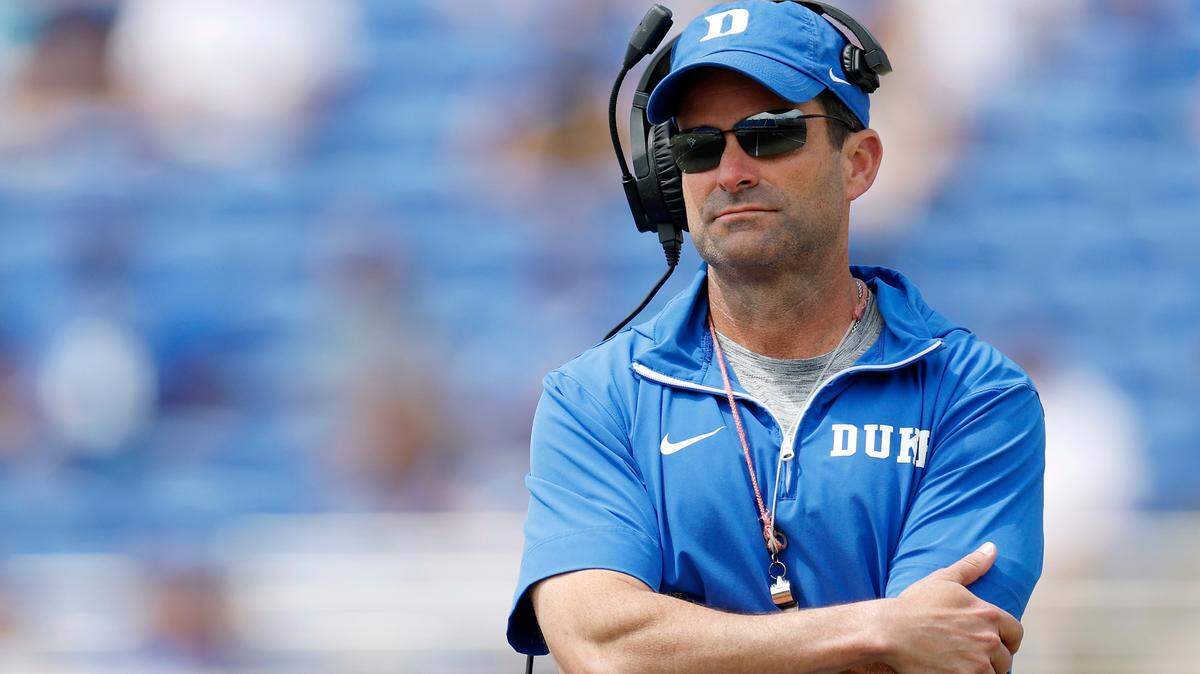
If you spot Manny Diaz away from the football field in a coat and tie, you might confuse him for a Charles Schwab Wall Streeter.
Diaz has the well-coiffed black hair, neatly styled. He has the stubble beard so common among business professionals. He’s 51 and still looks 41. He’s fit. He has a quiet intensity about him.
In many ways, Duke has a thoroughly modern football coach, one who has embraced the new look of college sports and accepted the increasing demands that have come with its reshaping – transfers, NIL, roster retention and now revenue sharing with the athletes.
“The revenue sharing era is here,” Diaz said at the ACC Kickoff in Charlotte. “And guys are getting what they’ve been long overdue.
“By the way, it’s not like you have to invent this. It’s the same way in any organization, the way that everybody works. There’s a way that people are compensated for their work. I don’t know why it would be any different.”
Sounds like a corporate chief executive officer, doesn’t it? Diaz, beginning his second season at Duke, also fits the part, said defensive end Wesley Williams.
“He’s a super cerebral guy,” Williams said. “He looks at football, and just life, with a totally different perspective. He takes a super comprehensive approach to the game.
“He’s like a CEO of a team, rather than just a coach.”
Diaz, for his part, doesn’t disagree with the CEO comparison.
“I don’t think there’s any other way,” he said. “From the time I was in Miami to Duke now, the way this landscape has changed, you have to be.
“You’re still the head coach, but there’s so many things that distract your attention, so for sure you are a CEO.”
The silent killer
Duke’s new quarterback, transfer Darian Mensah, has another description of the head coach.
“He’s like a silent killer,” Mensah said in an interview.
Silent killer?
“He doesn’t talk very often but when he talks, you listen,” Mensah said, smiling. “He always has positive input. I’ve always had open ears whenever he’s talking.”
Diaz does have an unusual background. He did not play college football. Graduating from Florida State, where he was sports editor of the student newspaper, he initially worked with ESPN as a production assistant.
Eager to get into coaching, Diaz was a volunteer coach at FSU before his first opportunity as a full-time assistant in 2002 -- at N.C. State on Chuck Amato’s coaching staff.
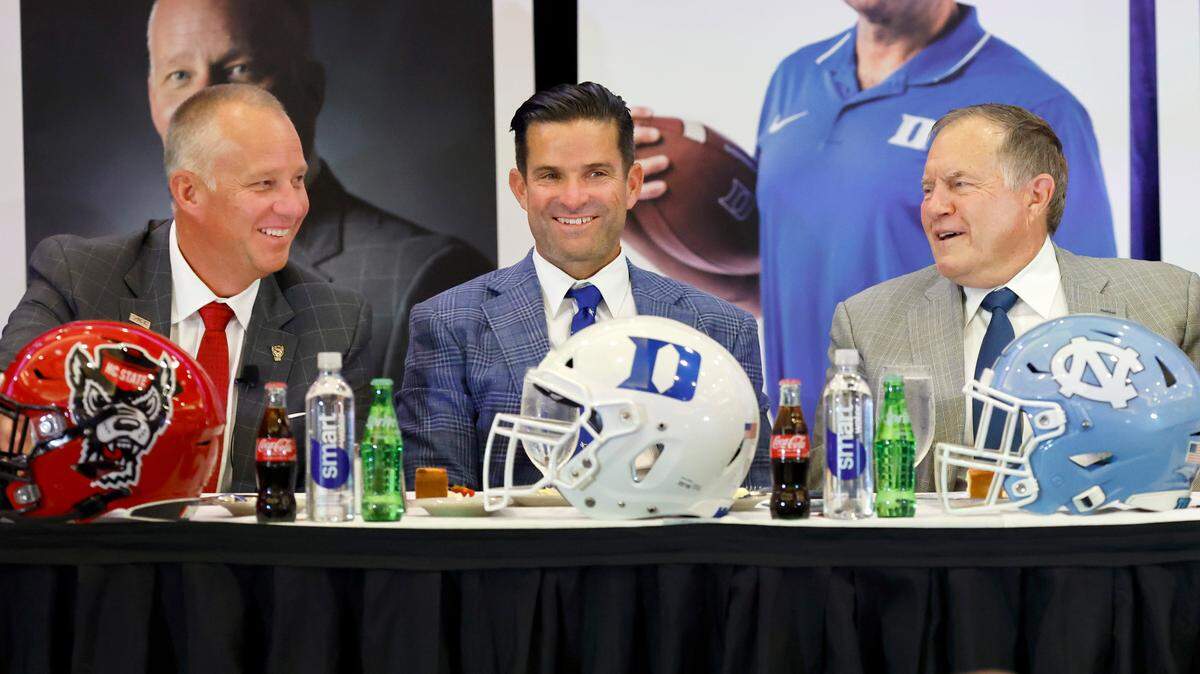
Diaz got his first head coaching chance with Temple in December 2018. But two weeks after being named the Owls coach, he was offered the job as head coach of the Miami Hurricanes. He made his apologies to the folks at Temple, and left.
For Diaz, a native of Miami and the son of a former Miami mayor, it seemed the right spot, right time and team. He had been the Hurricanes’ defensive coordinator under former coach Mark Richt, and now was coming back to run the program.
After three years and a 21-15 record, Diaz was fired after the 2021 season. But he was only unemployed a few days. He quickly accepted an offer to be defensive coordinator at Penn State under James Franklin, then was Duke’s choice to replace the departed Mike Elko, who left for Texas A&M.
Sticking to the standards
It was quite a change. Elko was the big, burly, more quintessential football coach. In comes Diaz, bringing a different kind of voice to the room but quickly winning the trust and respect of his team.
Duke won. Immediately. The Blue Devils were 4-0 when they faced North Carolina at Wallace Wade Stadium, matching Diaz against Hall of Fame coach Mack Brown, once Diaz’s boss at Texas.
The Tar Heels led 20-0 at the half. The question among the Duke players: how would Diaz react at this football flash point and what would be learned about their new coach?
“We preach our standards,” offensive lineman Justin Pickett, a graduate and team captain in 2024, said this week. “When stuff hits the fan and nothing is going our way and we’re down like we were against UNC, down 20 at the half, Coach Diaz comes in and says, ‘Nothing changed. Our standards are our standards and they’re going to lead us where we need to go.’ That’s our philosophy.”
Diaz said a few other things, of course. He later said he stressed to the team about “hitting singles” in the second half and not attempting to catch up with one big swing or play. “Body blows,” he said. Deliver them over and over, Diaz said.
Duke, trailing the Tar Heels 20-7 after three quarters, came back to win, 21-20. The Blue Devils would finish the regular season 9-3, with a 5-3 ACC record, and go to the Gator Bowl.
ACC football analyst Tom Luginbill, who played at Georgia Tech, said Diaz is viewed nationally as a “program builder and program stabilizer” much like former Duke coach David Cutcliffe.
“I think the respect of being able to continually be competitive and be consistent is there among his peers,” Luginbill said. “David Cutcliffe restored some respectability and competitiveness for a consistent period of time and I think that’s what they’re looking to do now.
“This is the hardest time ever to coach in college football, to sustain that high level of success. And especially if you’re at an academic institution, because you may not have the advantages some others have when it comes to locating guys in the portal and getting them into school.”
Mensah started as a redshirt freshman at Tulane last season, completing 66% of his passes and notching a season high 342 yards against Kansas State. His football ability made him one of the top portal players available after last season, but he also had a 3.5 GPA in high school and fulfilled the academic requirements.
Granted, it’s hard to overlook the fact Mensah will be paid $4 million each of the next two seasons through his NIL package, according to several media outlets. But that’s also a reflection of the financial commitment and support being shown to Diaz and his football program.
Getting the best talent can be costly. Any good CEO would know that.
This story was originally published August 1, 2025 at 10:05 AM.