Duke and UNC football battle for Victory Bell, a trophy with contentious history
AI-generated summary reviewed by our newsroom.
- Duke and UNC renew rivalry for the Victory Bell, a trophy awarded since 1948.
- The Bell provoked paint damage, arrests and late‑night pranks across decades.
- Coaches, staff and tow drivers preserve rituals and display the Bell to teach players.
The story has been told and retold about the origins of the Victory Bell, the football trophy given each year since 1948 to the winner of the Duke-Carolina game.
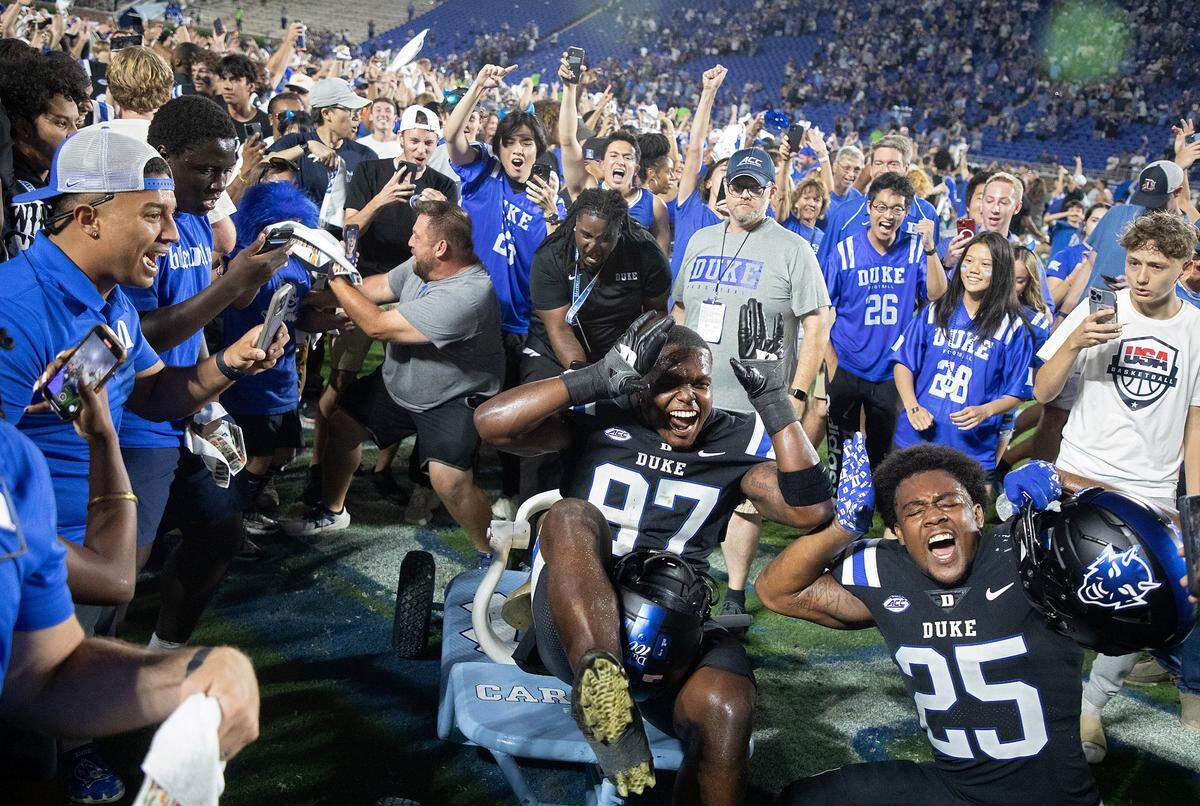
Duke won the Victory Bell last year with a 21-20 victory in Durham. Blue Devils coach Manny Diaz said Monday the Bell has “gone missing,” his way of saying it’s up for grabs this week when the Devils and Tar Heels go at it at Kenan Stadium to decide who is the “bully in the neighborhood.”
“This is our trophy game. Therefore, it’s a big deal,” Diaz said. “It’s way more fun when you have it than when you don’t have it. It’s a constant reminder every day when you walk by it and see it’s there.”
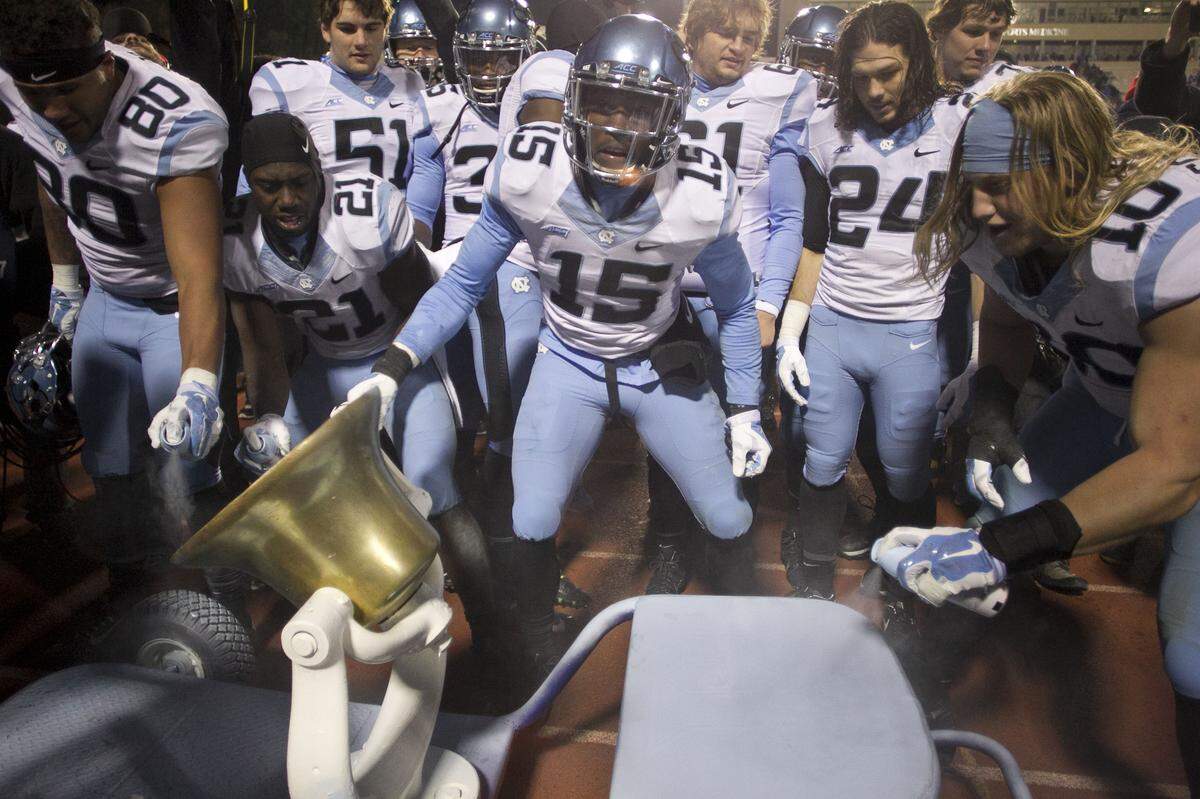
The Bell has caused some controversy through the years. The winner has had the chance to paint the rolling trophy the school’s colors, and the Tar Heel overdid it after the 2014 game at Duke.
The Heels pulled out the spray paint and let it fly. When they were done and the Bell was sufficiently painted light blue and white, more than $27,000 in damages had been done to Duke’s practice facility turf and the visitors’ locker room at Wallace Wade Stadium.
UNC athletic director Bubba Cunningham sent an apology letter to Kevin White, then Duke’s athletic director, although adding he was disappointed his coach at the time, Larry Fedora, had tried to make an apology call to then-Duke coach David Cutcliffe and the call was not returned.
Sniff, sniff. Cunningham and Fedora later sent matching checks to Duke.
“That’s the good and the bad of rivalries, right?” said Art Chase, the former Duke football administrator and current athletics director at The Citadel. “Because if it didn’t matter, then none of that happens. But if, also, if it didn’t matter, we wouldn’t have all these great memories for these young people.”
Origins of the Victory Bell
Who started all this?
The Victory Bell came about when the head cheerleaders at UNC and Duke decided some kind of trophy should be handed out in the rivalry series. UNC’s Norman Sper Jr., secured the Bell off an old steam train, Duke’s Loring Jones designed the model and Duke’s business manager funded the trophy.
Sper was an interesting, colorful character. He came from Hollywood, California, where his father was a nationally syndicated sports columnist and his godfather Will Rogers was a nationally known entertainer and American humorist.
A world-class springboard and platform diver in the 1940s, Sper had served in the Army in World War II. He helped raise millions of dollars in war bonds performing in traveling exhibitions with former Olympic champion Johnny Weissmuller and Esther Williams.
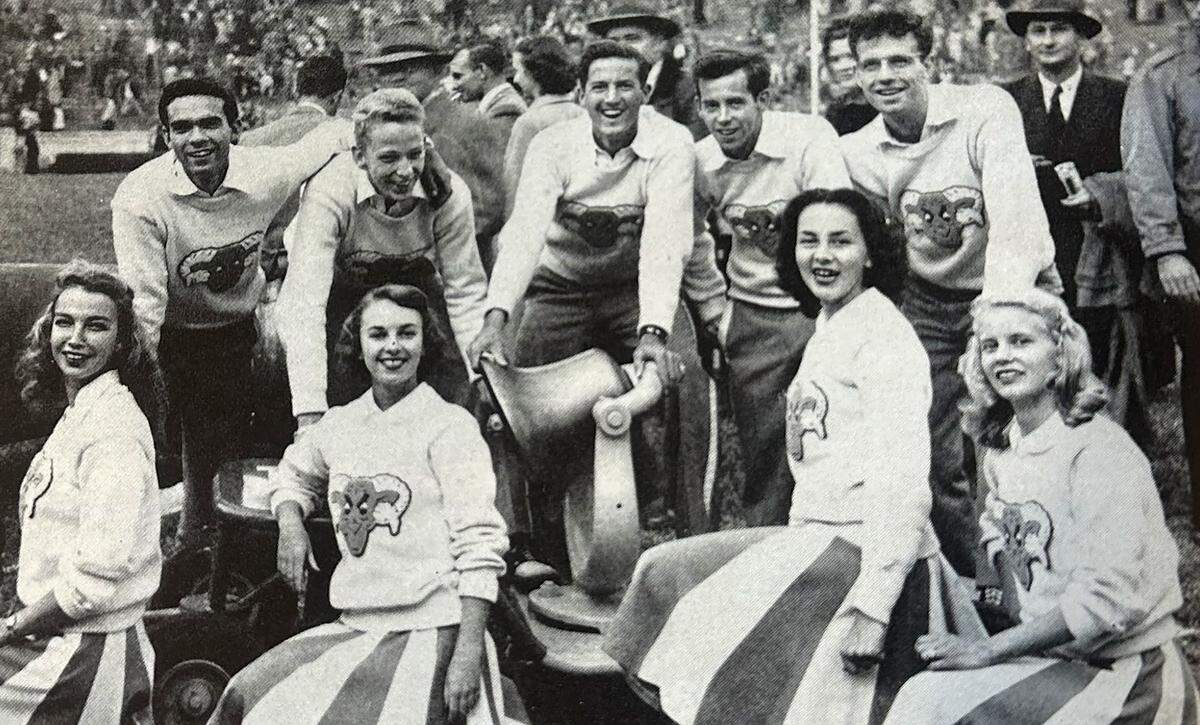
After the war, Sper headed to UNC, where he was a four-time first-team All-American in swimming and diving for the Heels. And the head cheerleader, one with an idea about a football trophy.
The Tar Heels were the first to claim the Bell after a 20-0 victory in the 1948 game at Chapel Hill. A good time was had by all at UNC.
The first ‘big’ fracas
But after the 1949 game at Duke Stadium …
Carolina retained the Bell, but only after a 21-20 win that had Charlie “Choo Choo” Justice account for three touchdowns and the Tar Heels’ Art Weiner block a Duke field goal attempt by Mike Souchak to clinch it. It was an exciting game played before a crowd of 57,500 in Durham — temporary bleachers were borrowed from N.C. State and Wake Forest — that had Duke get a 93-yard TD run from Tom Powers and a 75-yarder from Billy Cox.
The game had a strange ending. Duke was lining up for the field goal with three seconds left when a referee signaled that the game was over. UNC fans swarmed the field. But the ref had erred. An incomplete pass had stopped the clock.
The field had to be cleared. Souchak’s 20-yard kick was blocked.
UNC fans again rushed the field, Sper was involved in a fight, a policeman suffered two fractured ribs and Sper landed in jail after being arrested.
Not for long. According to news accounts, Sper was bailed out by a member of the UNC Board of Trustees.
It was reported that Sper fought with James Stallings of Franklinton and that Sper said it started when Stallings grabbed a crepe-paper baton away from a UNC female cheerleader. Police tried to break it up in the midst of a crowd, although UNC students tried to sweep Sper away.
But both Sper and Stallings were arrested. Said Stallings at the time: “That skinny Carolina boy with the blue and white sweater jumped on my back. I didn’t realize the thing had sentimental value.” Stallings was talking about the baton. He could have been talking about the Victory Bell, then still new and now so coveted.
‘Some guys don’t know the history’
Maybe the mischief was the point.
The Rocky Mount Telegram wrote in 1953 that the week of the Duke-Carolina game wasn’t complete without late-night raids: Duke students kidnapping Rameses, UNC students trying to abscond with the Bell.
In one of the rivalry’s more legendary pranks, according to Telegram Sports Editor Bob Williams, a UNC cheerleader convinced a Duke freshman in 1950 to lend him the Bell to “serenade the coeds” on East Campus. The freshman tied it to the back of the Tar Heel’s car. Moments later, it was bouncing down the road toward Chapel Hill.
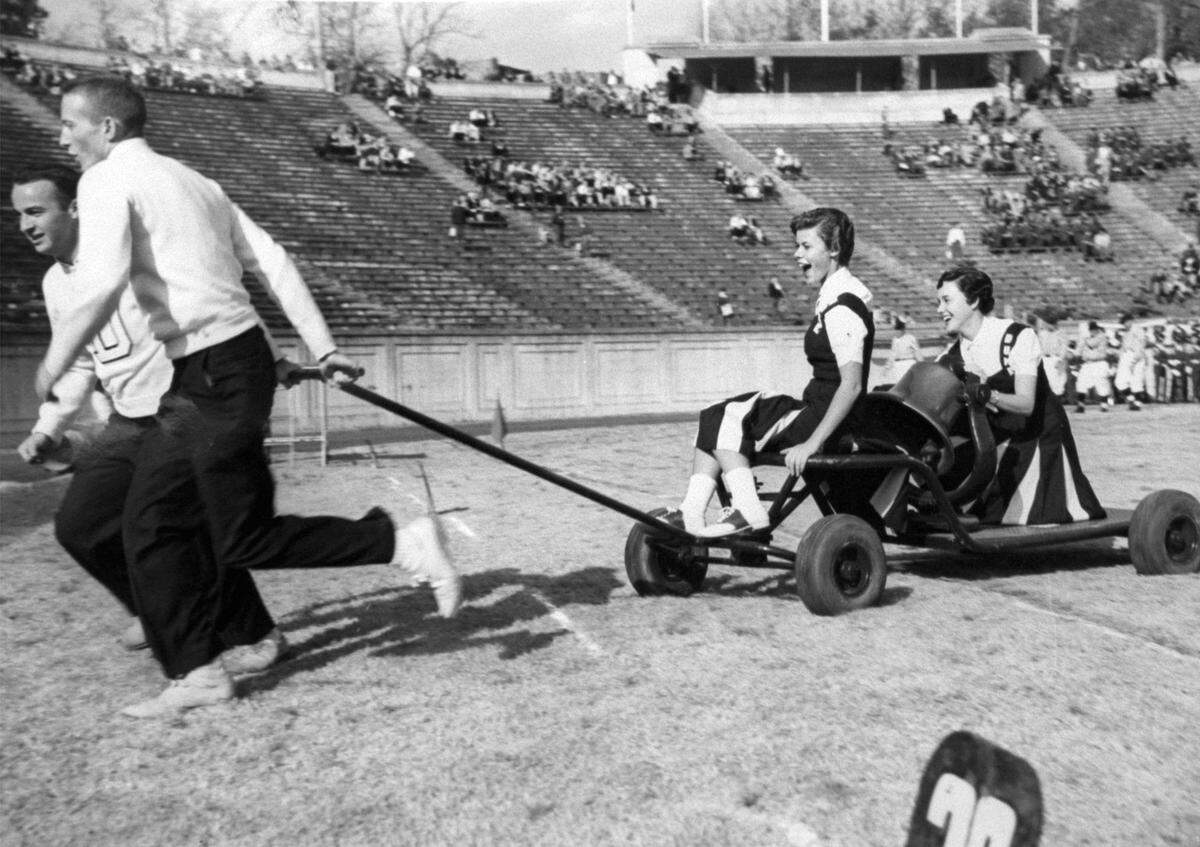
These stories lived on for decades. But, like many traditions, memory sometimes faded faster than the color on the trophy.
By 1998 — the Bell’s 50th birthday — it was gathering dust in the corner of UNC’s locker room. Then-coach Carl Torbush made a point of hauling the Bell out and ringing it during practice ahead of the Duke game. He gathered his players around to explain what the artifact meant.
“It’s kind of like Mickey Mantle and Willie Mays — some of these guys have never heard of them,” Torbush said at the time, shaking his head at the notion. “If you don’t express and understand what the Victory Bell means, then some of them will think it’s ours and it’s been ours. They don’t understand that it goes to the victor of this game and stays with you for a full calendar year.”
Torbush was right. A redshirt freshman on his team that year, Errol Hood, was quoted as saying he’d been ringing the Bell “for fun,” without knowing what it symbolized. His teammate, cornerback Tyrell Godwin, was also sketchy on the details. But he knew this much: if Duke won, they’d regain the Bell.
“And I don’t want them to get it,” Godwin said.
Does it still matter?
Before he became the director of Kenan Stadium in 2006, James Spurling owned a towing business in the area. At some point during Mack Brown’s first stint at UNC, Spurling got a call from one of Brown’s assistant coaches asking for help transporting the Victory Bell between Chapel Hill and Durham. Spurling offered to tow it with his flatbed truck, and thus began Spurling’s career with the Victory Bell.
Of course, plenty of memories have followed. Spurling recalls one year, in particular, when was bringing the Bell back to Chapel Hill after a win at Duke in 2004. As he remembers it, several Tar Heels jumped off the team bus to hop on the back of his tow truck.
“They were ringin’ the Bell all the way down Franklin Street,” Spurling said. “People were running out of the stores.”
Moments like that help explain why Spurling talks about UNC’s players as “family.” But the college athletics landscape has changed dramatically since Spurling first became involved with the program. The transfer portal sometimes cycles players in and out of programs faster than old rivalry stories can be retold.
And Spurling, who has spent decades towing the Bell back and forth and coordinating its painting and repainting, worries some of today’s players might not feel the same weight of tradition.
“They don’t realize the history of it,” Spurling said.
Spurling said it’s part of the reason that Brown, during his second stint in Chapel Hill, had a display of Victory Bell photos installed in the first floor hallways in the Kenan Football Center.
Bill Belichick, for his part, said Wednesday he would discuss the Victory Bell’s history with his players as “part of the buildup for the week.”
“We’d like to change the color,” he added with a smile.
UNC senior defensive back Will Hardy needed no history lesson. He already knew. For his first two years in Chapel Hill, the Victory Bell sat right by the tunnel painted Carolina blue — something every player passed on the way in and out from the field.
That changed last September, when the Tar Heels lost to Duke.
“There’s another motivator — to get that back and have it here in Carolina,” Hardy said, later adding, “We want to get that back and keep it here, and give it back to the guys coming next year, the recruits — just people in Carolina. It looks better in this facility.”
This story was originally published November 20, 2025 at 12:08 PM.