How inflection points are a big part of Duke basketball’s success this season
AI-generated summary reviewed by our newsroom.
- Duke coach Jon Scheyer emphasizes inflection points as decisive game moments
- Team trains response to momentum swings after December loss to Texas Tech
- Defense, rebounds and turnovers fuel Duke runs that convert leads to blowouts
In talking basketball strategy, Duke coach Jon Scheyer often refers to “inflection points” as a key in deciding games.
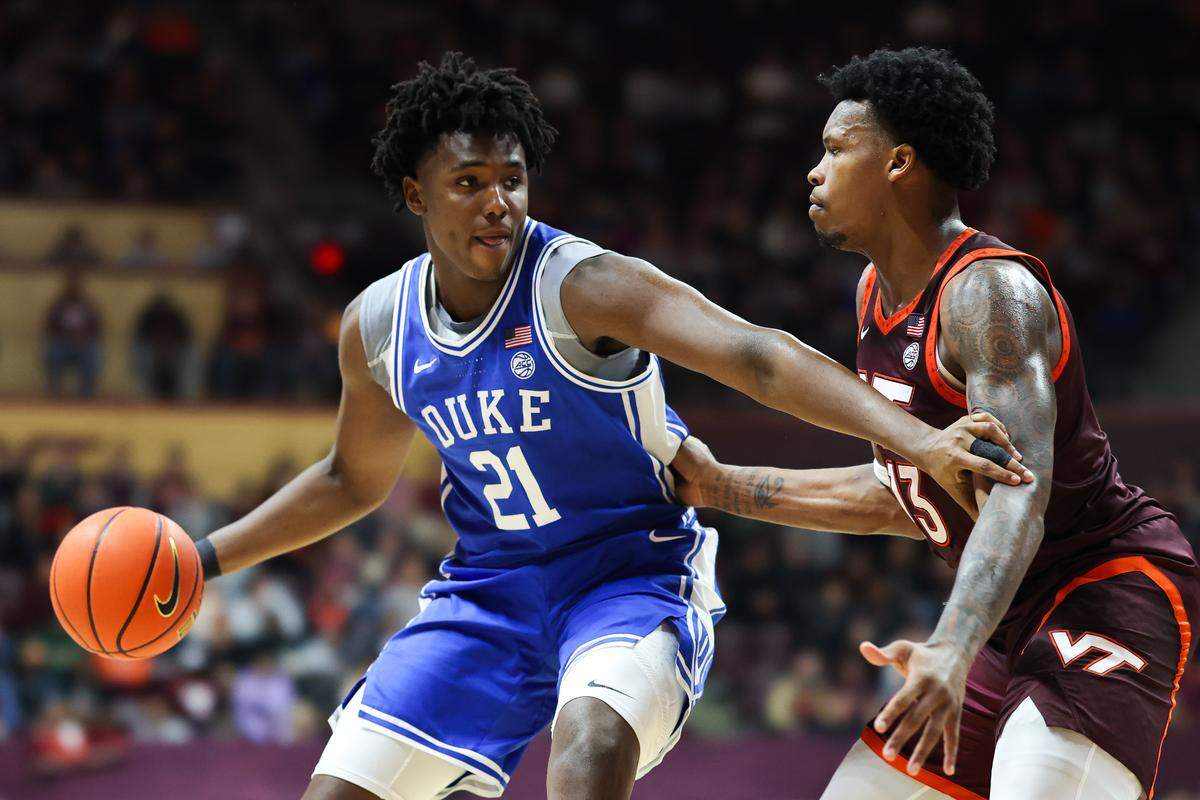
Freshman guard Cayden Boozer has heard it often in his first year in the program.
“Inflection points have been whether we go on a run or they go on a run, you’ve got to stay the same. Not to get too high or too low,” Boozer said. “Let’s say we get the lead to 10. Sometimes, early in the season we’d let up and it would become a closer game. We can’t let up.
“Those are the things we keep working on.”
The No. 4 Blue Devils learned the hard way in their December game against Texas Tech at New York’s Madison Square Garden. Duke had a 17-point lead in the second half`and an 11-point lead with about six minutes left after a Cameron Boozer basket. Then, the inflection point.
Texas Tech’s Christian Anderson hit a long 3-pointer. Duke’s Cameron Boozer came up with a steal but Maliq Brown missed a fast-break layup. Anderson hit another 3. Duke’s Nik Khamenia missed a 3. Anderson then missed one, but Tech’s JT Toppin was there for the putback.
Make it an 8-0 run by the Red Raiders. The Duke lead continued to melt. Texas Tech took an 82-81 victory, Duke’s only loss of the season.
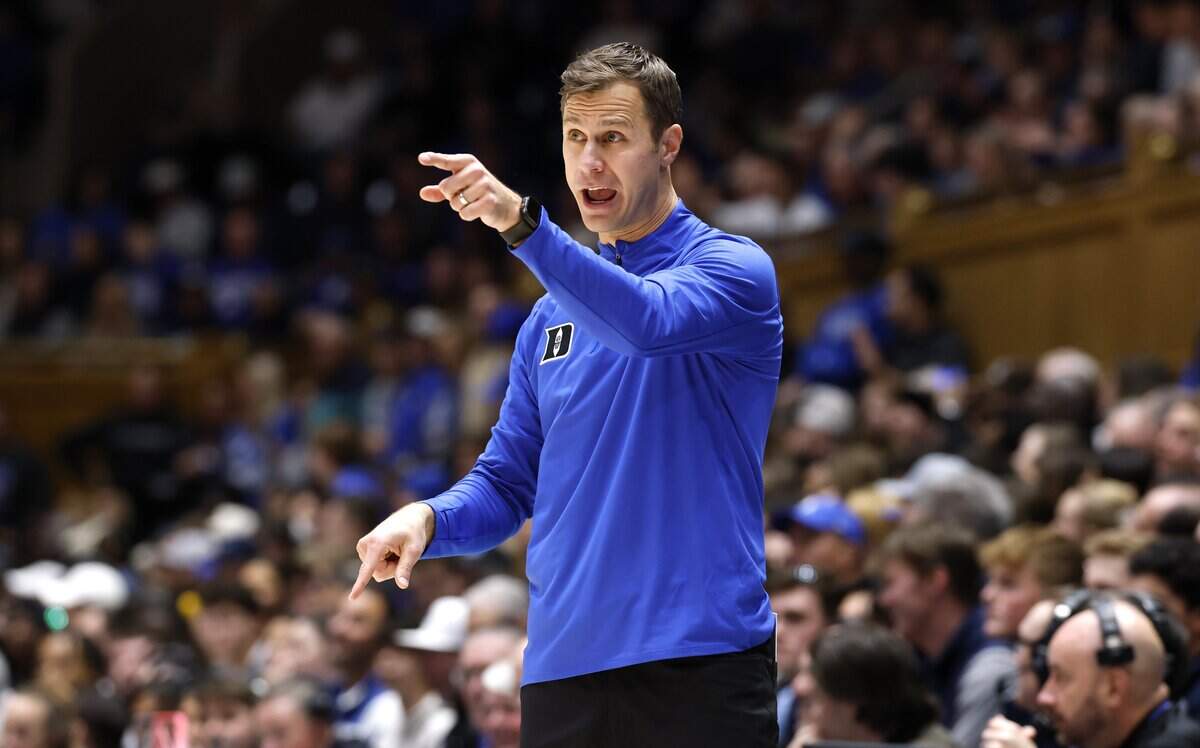
It also became a teaching point for Scheyer and his staff with a team that has several new faces this season. “Every possession in a game is important,” Scheyer said. “There’s no denying that. Every possession is important, and you want to get full effort.
“But what we try to get our guys to understand and have to acknowledge is the fact that human nature plays a part of this. Naturally, you go on a run and the other team calls a timeout. How many times do you see that team (leading) relax just a little bit … and then the other team ramps up their level of desperation or energy
“We try to acknowledge it and put it out there on the table and then flip it. Like, how can we flip it? How can we feel like we’re the ones who called the timeout?”
Duke puts lessons into action
In the game a week ago against Wake Forest at Cameron Indoor Stadium, the Demon Deacons had a strong start, played with poise and held a lead with about five minutes left in the first half. Duke seemed content to take 3’s and the Deacs were holding their own even as leading scorer Juke Harris was being limited to three points in the half.
Then, Brown made a 3 for Duke. Isaiah Evans had a steal and Cameron Boozer a layup. It was the beginning of a 13-0 surge by the Blue Devils that the Deacs could not stymie.
“We got our shots, got our shots to fall, got stops and got on a run,” Cameron Boozer said.
Duke took a 37-25 lead, led by 11 at halftime and would win, 90-69.
“We were running a good offense, we were moving the ball, we weren’t getting hurt on the glass, we weren’t turning it over, so we had a pretty close game,” Wake Forest coach Steve Forbes said. “And then the game flipped.
“And It flipped why? Because of offensive rebounds. They got four in one possession or a couple of possessions, forced turnovers into atomic bombs and hurried shots on our part. And then it’s a double-digit lead.”
For Forbes, an “atomic bomb” is giving up the ball for an easy transition basket or dunk that gets the crowd into it and the noise level on the rise. Do it at Cameron …
Thriving when the `danger zone’ arrives
Forbes called a timeout after an Evans 3-pointer ended the Duke run. In the second half, the Devils took the lead from nine points to 17 in the first 90 seconds.
“That’s the danger zone, right?” Scheyer said. “That’s when it can go from 10 to 4 or 10 to 16, and you can push it from there.”
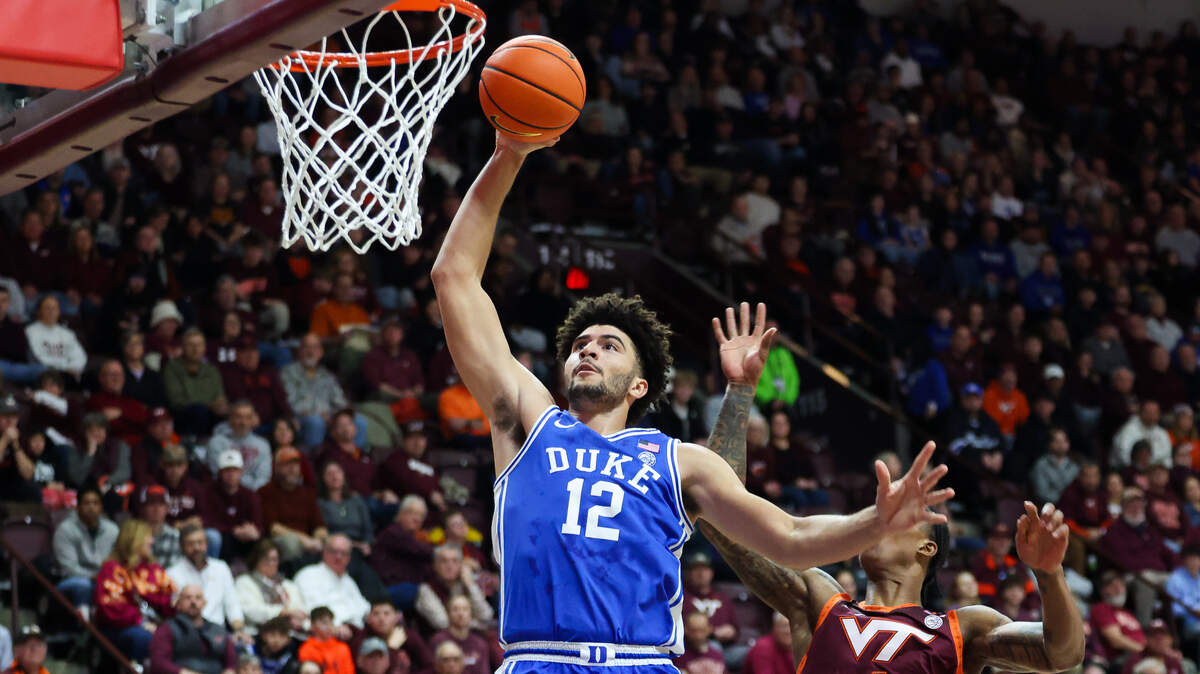
For the Blue Devils (20-1 overall, 9-0 ACC), the danger zone Saturday at Virginia Tech came in the second half. The Hokies fell behind by 13 points in the half but made a push to pull within 62-56 with six minutes to play.
But Duke turned to its defense. The Devils forced a turnover. Patrick Ngongba blocked a shot. The Hokies had another turnover, then a missed another shot
Cameron Boozer, who had game-high 24 points, hit a pair of free throws, a layup and then a 3-pointer during the stretch to make it a 69-56 lead with 1:30 left. Ball game.
After Duke’s 83-52 dismantling of Louisville on Monday at Cameron, Scheyer was told several players brought up inflection points in postgame interviews. Scheyer smiled, saying, “I’m glad to hear that. They’re listening.”
The Devils, slow starters in many games this season, got a 3-pointer from Cameron Boozer on the first possession and jumped out to an early 15-7 lead. Duke never trailed as Louisville coach Pat Kelsey bluntly said, “We got our butts kicked.”
Not completely. The Cardinals had a 25-24 lead late in the first half. But a 3-point play by Ngongba started a 14-3 closing burst, and Ngongba continued his personal binge early in the second half as the lead quickly grew to 16 points.
“The start of the second half and really all the way through the second half, when they scored and made a couple of plays our guys kept talking about inflection points and then they responded on the floor,” Scheyer said.
“It’s about understanding the areas (where) you have to grow and get better. I think you saw in those critical moments when they made shots or made a run.”
“I thought the focus was there. Against Louisville, you can never rest because they’re always moving.” Louisville’s Kelsey said the Blue Devils looked “locked in” during the game.
“We had a reality check out there,” he said.
This story was originally published February 1, 2026 at 6:05 AM.