How injuries and roster turnover have altered NC State’s season
When it rains it pours for N.C. State.
For the moment, put aside the Wolfpack’s pair of losses to Georgia Tech and North Carolina in a three-day span.
Arguably, the high point of the season so far for the Wolfpack (14-7, 5-5 ACC), and third-year coach Kevin Keatts, is a 69-54 home win over Wisconsin on Dec. 4.
After losing in Raleigh, the Badgers subsequently went on a heater and beat Indiana, Tennessee, Penn State, Maryland and Ohio State to climb into the top 30 in the NET rankings.
The NET ranking matters because that could potentially count as a “Quadrant 1” win for the Wolfpack on Selection Sunday. The lack of quality wins was the main the reason, the chair of the selection committee said last March, that N.C. State missed the NCAA tournament last year.
So, while N.C. State has struggled since leaving Virginia on Jan. 20 with its first road win in Charlottesville in 15 years, the Badgers have also started to unravel.
Junior guard Brad Davison, whose flopping antics were instrumental in Wisconsin’s home win over N.C. State last year, was suspended for one game by the Big Ten on Monday for punching an Iowa player in the groin.
Sophomore guard Kobe King, second on the team in scoring, left the program on Wednesday and decided to transfer.
Oh, and the Badgers have lost three of their past four games to fall to No. 32 in the NET. The Badgers are turning into a case of “even when N.C. State wins, it loses.”
N.C. State still has two “Q1” wins (one more in the regular season than last year) — a halfcourt buzzer-beater at UNC-Greensboro (No. 67) on Dec. 15 and the streak-busting win at Virginia (No. 54).
Throw in a nonconference strength of schedule rank of No. 50 (up 303 spots from last year) and — even though it doesn’t feel like it after Monday’s 10-point home loss to UNC — the Wolfpack is actually in much better shape to make the NCAA tournament than it was last year at the midway point of the ACC schedule.
N.C. State makes the nominal turn in league play at 5-5. A look at some of the issues and how the Wolfpack got into this position:
Whither C.J. Bryce?
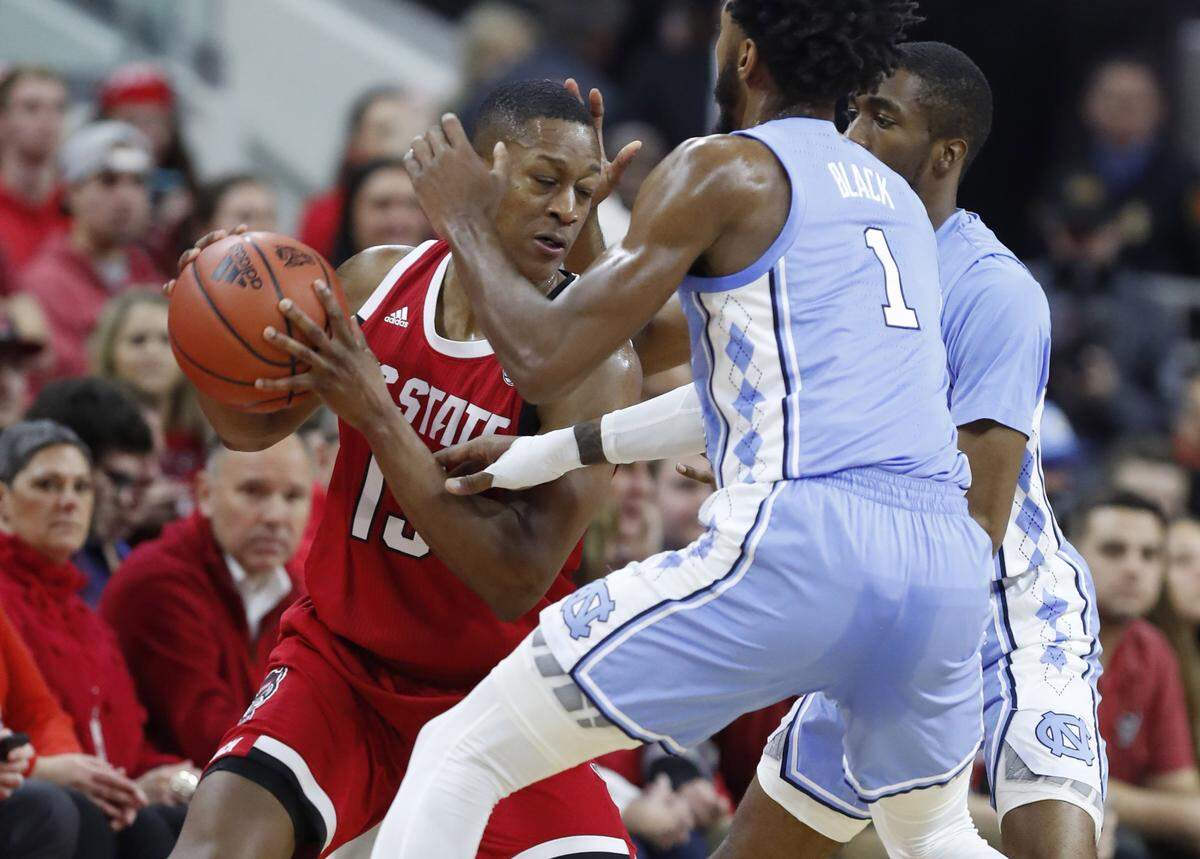
After Monday’s loss to UNC, Keatts correctly pointed out there’s still “a lot of basketball to be played” for this team.
He talked about the Q1 opportunities in the second half of the ACC schedule, starting with Saturday’s home game with Louisville (No. 10 in the NET). Florida State (No. 18) and Duke (No. 6) also come to Raleigh in February.
The Wolfpack will get Duke and Syracuse (No. 60) on the road. That’s five Q1 opportunities. N.C. State was 0-8 in Q1 ACC regular-season games last year.
That also means that the difficult part of the schedule is coming up and N.C. State was only able to go 5-5 against the more manageable part.
With forward Manny Bates returning to the lineup against UNC and forward Pat Andree likely available for Saturday’s game, Keatts will probably have a full lineup. That’s a start.
Getting senior guard C.J. Bryce back in a groove is the first priority in recovering from the recent losses. Bryce was N.C. State’s most important player for the first two months of the season. Then he suffered a concussion, in a pre-game practice on Dec. 29, and missed four games.
His scoring and leadership were missed during ACC road losses to Clemson and Virginia Tech. Bryce came back before an 80-63 win over Miami on Jan. 15 and then made some key shots in wins over Clemson and Virginia. But he was scoreless in the loss at Georgia Tech and the home loss to UNC. He was a combined 0 for 12 from the floor. He was leading the team in scoring (16.1 points per game) before the two-game dip.
“We’ve got to figure it out because C.J. is a big part of who we are,” Keatts said. “We’ve become so reliant on him. Obviously, when you take away his 15 to 16 points, we’re a totally different team.”
Getting healthy
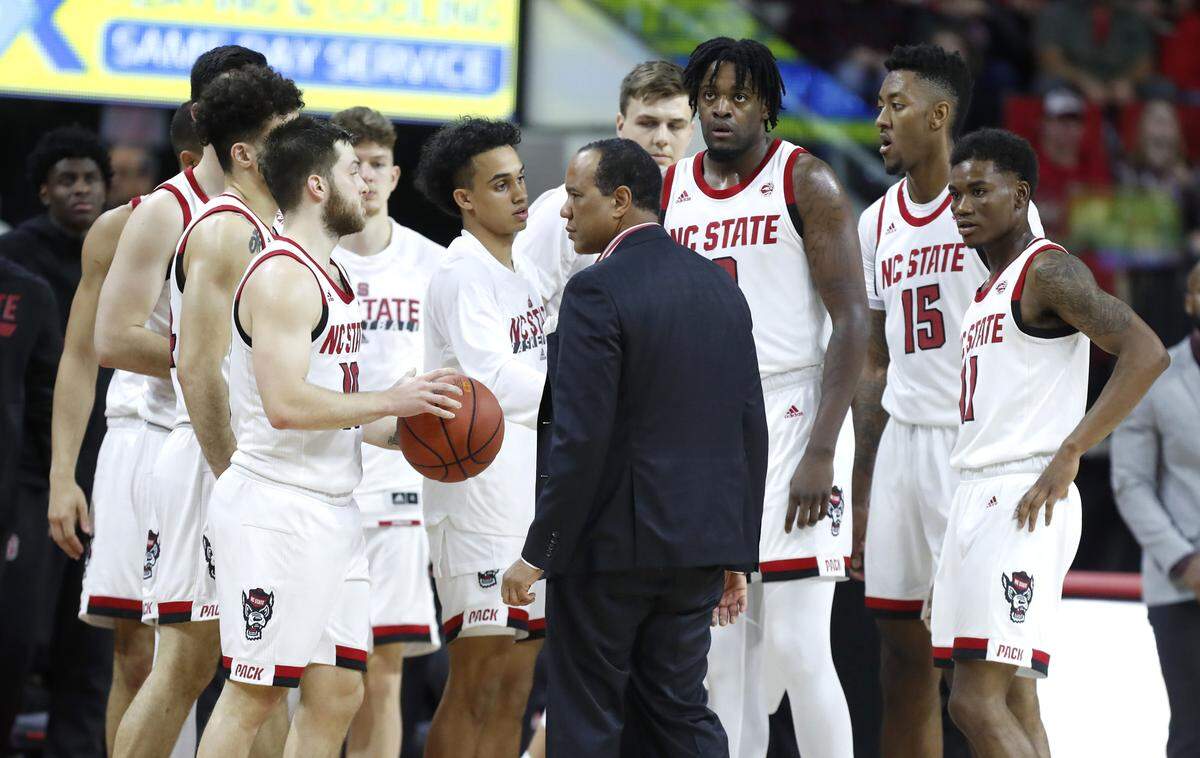
“I just want to have a healthy team,” Keatts said on his radio show earlier this week.
Keatts is not the only ACC coach with this wish. UNC, Wake Forest, Boston College, Georgia Tech and Miami have struggled with injury problems this season. For the Wolfpack, the injuries have come in spurts rather to just one important player.
▪ Senior guard Markell Johnson missed the opener (a home loss to Georgia Tech) with an ankle injury.
▪ Bryce missed three ACC games with a concussion.
▪ Bates missed two ACC games with a concussion, including the 64-58 loss at Georgia Tech on Jan. 25.
▪ Andree has missed the past three ACC games with an ankle injury.
▪ Sophomore guard A.J. Taylor played 3 minutes in the opener but is out for the season after he aggravated a pre-existing knee injury.
Add in a two-game suspension for junior forward D.J. Funderburk to start the season and that freshman guard Dereon Seabron failed to qualify academically and Keatts hasn’t had the roster or rotation he had planned for in the offseason.
With a shorter bench and then limited availability on a game-to-game basis, Keatts hasn’t been able to play his preferred pressing style.
As it is, in 10 ACC games, Keatts has had his nine healthy, eligible scholarship players only three times. Obviously that’s less than ideal.
“We’re not clicking on all cylinders and you would hope that you would be almost getting into February but our issue is our issue,” Keatts said after the UNC loss on Monday. “We’ve had some guys who have been out. It’s part of the game, I understand that. These are not excuses but in order for us to get better, I’ve got to get everybody back on the same page and everybody playing good basketball.”
Roster turnover
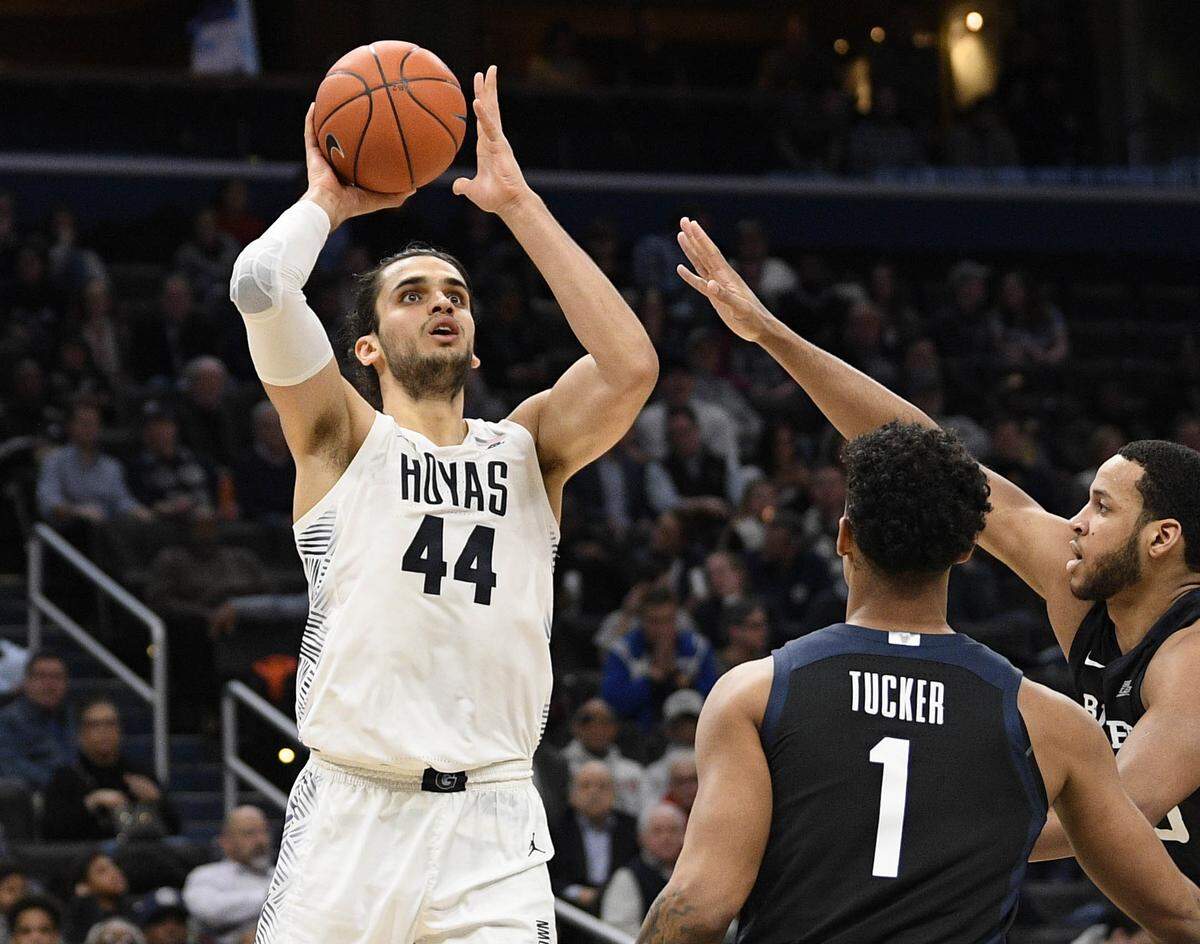
But injuries aren’t the only reason Keatts has been caught short-handed at times this season. Transfers and the absence of two recruits who never got to campus have hurt Keatts in Year 3.
Forward Omer Yurtseven left after his sophomore season and after he had helped Keatts reach the NCAA tournament in 2018. The 7-footer from Turkey transferred to Georgetown and sat out last season.
He has excelled for the Hoyas this season with 16.9 points and 9.7 rebounds per game. There were some third-party influences, a relative in the D.C. area with connections to grassroots basketball, behind Yurtseven’s decision to play for Georgetown.
Lavar Batts was the first player Keatts signed when he was hired in 2017. The 6-3 guard from Concord was behind Johnson and Braxton Beverly in the guard rotation during the 2017-18 season.
After Keatts had added Missouri transfer Blake Harris, in Jan. 2018, there was more of a potential minutes crunch at guard and Batts decided to transfer.
Batts ended up at UNC-Asheville and he averages 12.8 points and 2.2 assists per game this season. After shooting 32.1 percent overall and 18.8 percent from the 3-point line at N.C. State, Batts has pumped up those numbers to 50.8 and 33.3 percent for the Bulldogs.
Shooting from 3-point line has been a particular issue for this Wolfpack team. Take out a 9 of 20 effort in the Miami win and N.C. State has shot 24 percent (38 of 158) in the past seven ACC games.
Keatts likes to press and shoot 3s. He hasn’t really been able to do either consistently with this team.
Two that got away
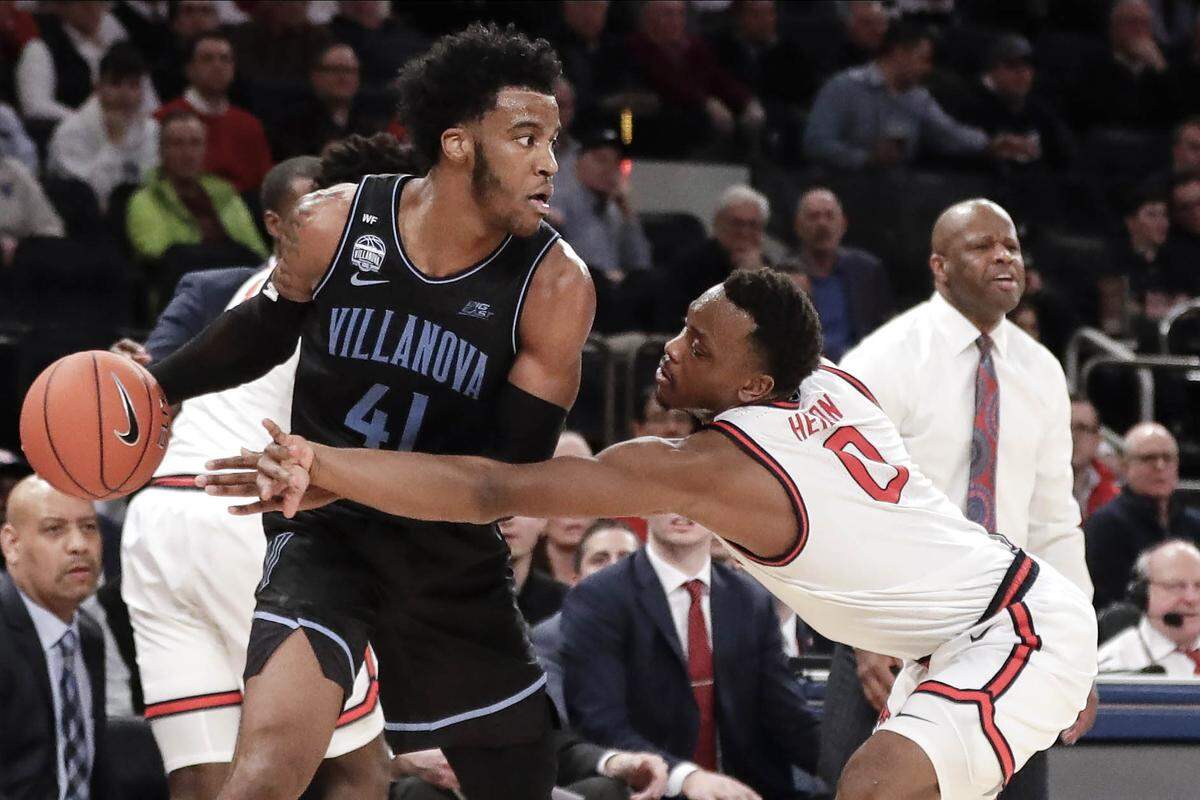
At least Keatts had a chance to coach Yurtseven and Batts for one season. The same can’t be said for forward Saddiq Bey or guard Jalen Lecque.
Bey was a diamond-in-the-rough type, a top-150 recruit out of Washington. He committed to N.C. State in the fall of 2017 in the same freshmen class as Jericole Hellems, Manny Bates and Ian Steere.
After N.C. State became involved in the Adidas/FBI case in early 2018, Bey had expressed concerns about the uncertainty of the case and how the NCAA would handle it. N.C. State received a Notice of Allegations, with four potential violations involving former player Dennis Smith Jr., in July and has responded to the NCAA. A hearing with the NCAA’s Committee on Infractions could be set for as early as February.
In a case of bad timing, in the spring Villanova was coming off of its second national title in three years and had some players leave early for the NBA. With a chance to play a big role right away for the Wildcats, Bey asked for a release from his commitment in May 2018.
Bey has turned into the latest gem for Villanova coach Jay Wright. He started as a freshman last season and now leads the perennial national power (17-3 overall, No. 12 in the NET) in scoring (15.3 points per game).
It’s not difficult to see Bey and think “What could have been?” It’s easy to extrapolate his value for a program like N.C. State’s, which is trying to catch up to the likes of Villanova, as a junior or senior with a younger group of talented players, which Keatts has coming in with the 2020 recruiting class. It’s also easy to see how the rich often get richer in college basketball.
Steere’s tenure was notable for its brevity. The big man from Sanford transferred after playing in one game in the 2018-19 season. He landed at St. John’s, where he appeared in five games in a reserve role this season.
The other two players from that recruiting class, Bates and Hellems, have been regular starters for Keatts this season.
Lecque is N.C. State’s unique “none-and-done” player. As a fifth-year prep player, Lecque was eligible to enter the NBA draft out of high school. A top-50 recruit out of New Jersey, Lecque ended up signing a free-agent deal with the Phoenix Suns.
He has played in one game with the Suns while spending the rest of his time in the G League, where he averages 13.2 points per game.
Transfer roulette
You can chalk up Yurtseven’s exit to following the advice of a distant relative and Bey’s non-arrival as a byproduct of the Adidas scandal and the chance to play for a national power. No one can blame Keatts for Lecque’s decision to chase his NBA dream.
But the decision to add Harris, a nomad in high school with a penchant for transferring, and forward Sacha Killeya-Jones, who had some academic concerns at Kentucky, did more harm than good.
Keatts, who was used to turning over his roster on an annual basis at Hargrave, has ended up doing the same at N.C. State. He won the transfer roulette his first year. Al Freeman, a grad transfer from Baylor, led the team in scoring and helped the Wolfpack knock off Arizona, Duke and UNC en route to an NCAA tournament bid.
Guard Sam Hunt, a grad transfer from North Carolina A&T, was a solid 3-point shooter and a positive veteran influence in the locker room for Keatts’ first season.
The addition of Harris, who averaged 3.1 points last season before he decided to finished his career at N.C. A&T, and Killeya-Jones, who left last February and ended up with a pro team in the Czech Republic, was a gamble that Keatts lost. They took up roster spots that could have otherwise been used to develop younger players to contribute this season.
The 2019 transfer additions have yet to pan out. Injuries have been a problem for Andree and Dixon, the two grad transfers added for immediate help.
Andree’s not contributing (6.2 ppg) at the same clip as he did at Lehigh (12.9 ppg) and Dixon (1.1 ppg) was out-matched in Monday’s loss to UNC. Taylor, an unheralded juco transfer, had minor knee surgery before the season started and then was only able to play 3 minutes before the injury cropped back up.
Help is on the way, with a recruiting class made up of all high school seniors (five of them) and ranked No. 7 in the country. But, as Keatts pointed out after the UNC loss, N.C. State still has a chance with this group this season before it needs to play the “wait til next year” card again.
What could have been
It’s probably not realistic to think that all of the transfer moves and recruiting hits would have worked out for Kevin Keatts but here’s one version of what N.C. State’s starting lineup could have been this season:
G Markell Johnson (6-1, 175 pounds, sr.): 13.2 ppg, 6.5 apg with N.C. State
G Lavar Batts (6-3, 185 pounds, jr.): 12.8 ppg, 2.5 rpg with UNC-Asheville
G C.J. Bryce (6-5, 210 pounds, sr.): 13.1 ppg, 6.2 rpg with N.C. State
F Saddiq Bey (6-8, 216 pounds, so.): 15.3 ppg, 5.3 rpg with Villanova
F Omer Yurtseven (7-0, 264 pounds, sr.): 16.3 ppg, 9.7 rpg with Georgetown
This story was originally published January 31, 2020 at 9:13 AM.