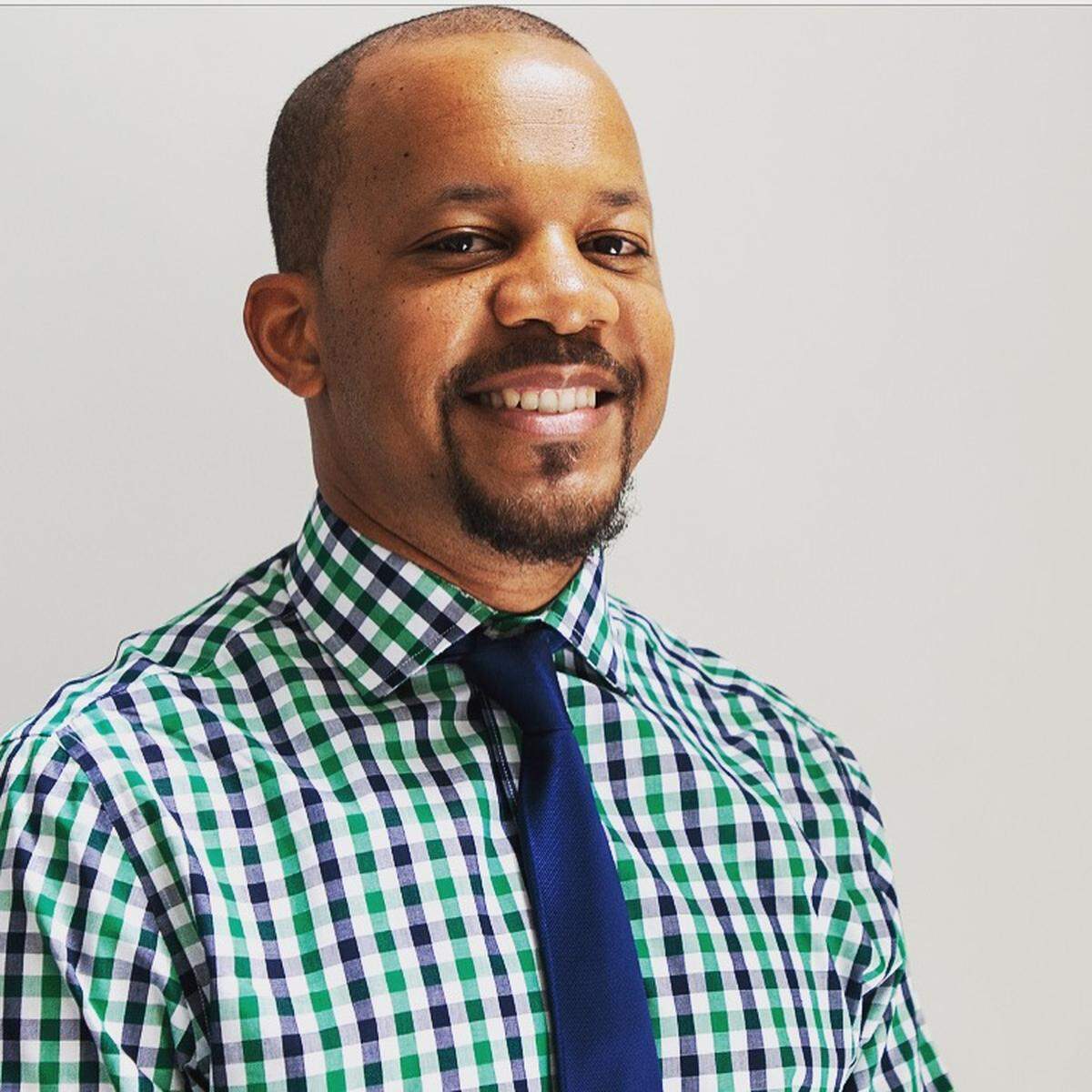
NC State’s Isaiah Moore’s leadership carried over from football field to campus marches
Playing in front of thousands in a football stadium — that’s Isaiah Moore’s comfort zone.
Making tackles, chasing down ball carriers and disrupting offenses is second nature. Standing on a ledge speaking in front of one hundred or so of his peers, no helmet, no way to cover his face — that was new.
Somehow, this summer, that’s where Moore found himself. In early June on N.C. State’s campus, Moore stood alone on a brick wall, all eyes on him.
Moore, the Wolfpack junior from Chester, Virginia, blossomed into a leader on the football field in 2019, his second season as a starter. The middle linebacker calls the shots, making sure his teammates get the play and line up correctly. He is in control in the huddle, all eyes locked on Moore as he speaks over a raucous crowd.
But on this June day there was no background noise, besides the occasional shouts of agreement. Events like the murder of George Floyd in Minnesota and the protests across the country that followed had stirred something inside Moore. He could no longer settle for sitting back and watching while men and women who looked like him were treated unfairly. Moore wanted to speak up. He wanted to do more than just create a hashtag on Twitter or re-post pictures on Instagram.
He wanted to march. He wanted to protest. But he didn’t want to follow. So he did what has come natural to him since he was in preschool.
He led.
Seeds planted early
For most of his life Moore, now 6-2 and 242 pounds, was always the biggest kid in class. Aside from his size, Moore also had a dynamic personality.
“People were just attracted to him,” Moore’s mother LeVonda Whitfield said. “Everyone just loves Isaiah.”
It was around preschool that his parents planted the seeds for Moore to become a leader. At an early age, Whitfield started teaching her son about his proud family history.
Whitfield’s maternal grandparents were both business owners; her grandmother was a hair stylist, setting up shop in the back of her home. Whitfield’s grandfather was a barber.
“He comes from a family of hard-working folks,” Whitfield said. “And we just try to instill in him that he needs to continue the legacy of our family … we were good folks.”
Because Moore was so young, Whitfield didn’t know if her history lessons were sticking It turns out he took in more than she realized.
N.C. State Athletics regularly posts a video on its website called “Leaders of the Pack.” The most recent version featured Moore, who talked at length about those history lessons instilled in him as a child. Whitfield saw the video and was shocked that Moore remembered.
Moore grew up in Newport News, Virginia., a 40-minute ride from Jamestown, Virginia, where the first recorded slaves from African arrived in 1619. That was one of the lessons Moore remembers hearing growing up. He also found out he had relatives who marched with Martin Luther King Jr.
“They (my parents) laid the foundation for me,” Moore said. “And helped to understand there was a foundation laid for me. They just helped me understand what’s been going on in this country for a long time.”
Now that he’s older, Moore said he can better comprehend the totality of everything and, more importantly, step out and be vocal. So when the video surfaced of officer Derek Chauvin with his knee on Floyd’s neck for more than eight minutes, killing him in the streets of Minneapolis, Moore was ready to speak out.
“I felt like enough is enough,” Moore said. “I felt like as a student-athlete I have a tremendous platform to be an advocate for change.”
Moore’s initial message was for football fans. He encouraged the men and women that support he and his teammates in Carter-Finley Stadium to support them just as vigorously off the field. On the N.C. State “Leaders of the Pack” video, Moore held a sign that said “Support the Athlete, Support the Person.”
“We’re going to be athletes for just a short time period in our lives, but we are all people and we all have different issues that we go through every day,” Moore said. “I just feel like the fans who support us on the field should also support us in what we try to do as well as far as the issues we try to deal with on a daily basis.”
Part of the Student-Athlete Advisory Council, Moore got together with other members this summer and organized a march on N.C. State’s campus. Before the march, Moore spoke with Whitfield, who supported her son 100 percent. Figuring there might be some blow back, Moore also talked with his coaches, including Wolfpack head coach Dave Doeren. Moore fully understood that being a high-profile athlete is one thing, but speaking out on social injustices publicly might ruffle some feathers. He moved forward with the backing of his peers, family and Doeren.
“I am proud of Isaiah for standing up and using his platform for what is right and just,” Doeren said in an email. “It is more than just being fed up, frustrated, hurt, disappointed, confused, scared and angry. It’s his way to create and support change by educating, bringing awareness, and change opportunities for those around him on our campus and in our community.”
Even though he wasn’t in a helmet and pads, Moore still put on a show that day. After he spoke, he led students on a march through campus. For a person who had to grow into a leadership role, Moore said he wasn’t nervous being the center of attention. In his mind, he went back to the reason he was there in the first place. He spoke from the heart and didn’t care what others thought.
Regardless of if people agreed, Moore felt he was obligated to use his platform.
“Sports are taken so seriously and held to such a high standard in this country that everyone has eyes on you all the time and honestly we hold a lot of power because we have a lot of eyes on us,” Moore said. “So what we say, whether they agree with us or not, they are going to listen and form their own opinions on it.”
A special child
When did Whitfield first notice that her oldest son would be different, a leader?
She wasn’t sure what role would be carved out for him in the future, but she felt it would be great. When she was pregnant, Whitfield struggled to find a name she liked. Six months into her pregnancy, scriptures from the book of Isaiah kept popping up. Whitfield could be watching television or at church. She took that as a sign and finally had a name.
Shortly after, Whitfield was at a church conference when a woman she’d never met walked up and placed a hand on Whitfield’s stomach. According to Whitfield, the woman started “speaking in tongues,” which is a spiritual term when a person starts speaking in a language that they’ve never read, heard or been exposed to.
Whitfield felt like the woman blessed Moore while he was in the womb.
“I talked to my mom, who is a minister, and I said, ‘Mom, my child is going to be great,’ ” Whitfield said. “I don’t know what he’s going to do, but he is going to be great.”
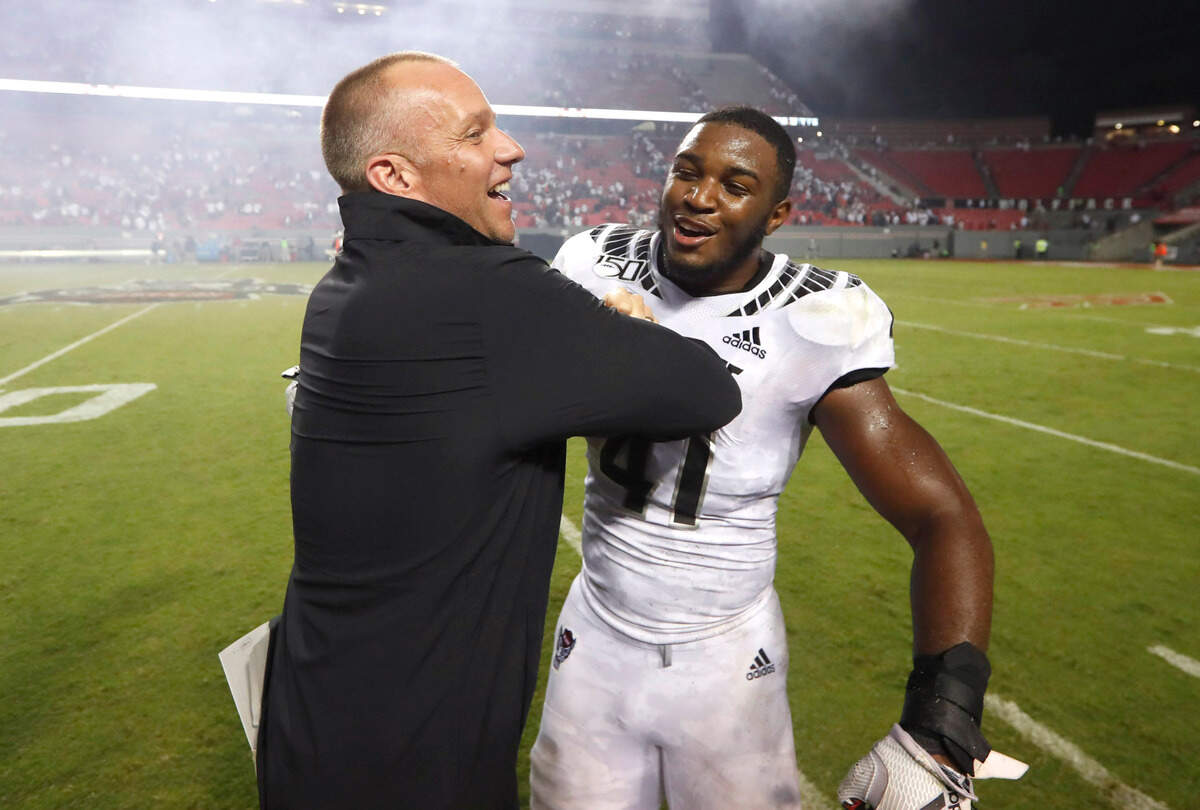
Moore has been great on the football field since taking over as a starter in 2018. He has 122 tackles in two seasons and will be looked upon as one of the leaders of a young team in 2020, or whenever the team plays again.
When you see Moore around the team in the weight room or on the practice field, Doeren said there’s no doubt who is in charge and the unquestioned leader.
Whitfield is proud of Moore when she watches him tackle ball carriers on Saturday, but nothing compared to seeing clips of him speaking out on social injustices to his peers. She joked that she thought she was watching the “next Martin Luther King Jr.”, holding the attention of hundreds and expanding his role, from football player to protest leader.
“He emerged as one of the vocal leaders on our team,” Doeren said. “It turned from athletic and team leadership to social and community leadership after George Floyd’s death.”
This story was originally published August 15, 2020 at 1:18 PM.