College football coaches offer solutions to ‘roster management,’ transfer portal, NIL woes
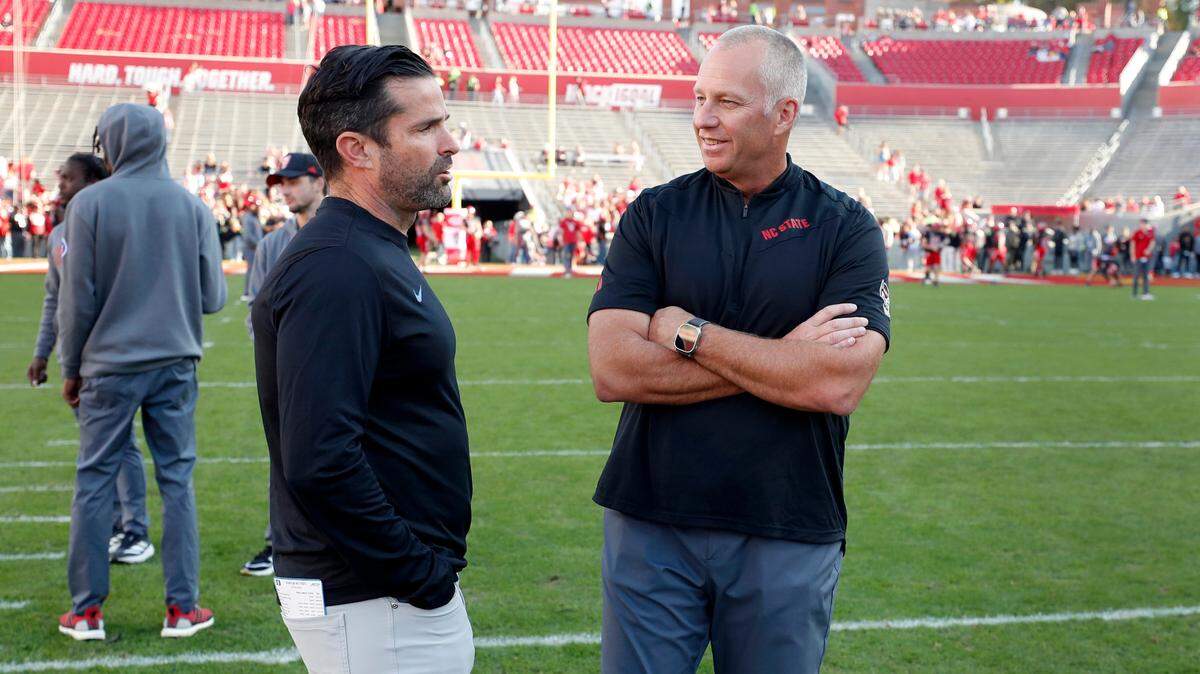
College football coaches on all levels — from postgraduate transitional programs all the way to FBS — say the biggest challenge and concern facing the sport is roster management.
Everyone feels the pressure, chaos and uncertainty, and they’d like to see changes for the betterment of their programs and players.
“It’s really not roster management. It’s roster mismanagement is what’s happening,” N.C. State head coach Dave Doeren said in November. “And it’s not a coach’s fault. The rules that have been levied do not make sense. I say it all the time, you wish that common sense was more common.”
Dave Brown and Chris Morant concurred. Brown is the head coach of the NAIA Central Methodist program in Fayette, Missouri. Morant coaches in Daytona, Florida, at Roseville Athletic Academy, a gap-year school focused on developing players athletically and academically before transferring to a Division I or Division II institution.
Lower levels of college football already experience higher numbers of attrition due to players seeking opportunities at bigger schools, but it’s come to a point where recruiting and player evaluation never ends, Brown said Tuesday at the American Football Coaches Association convention.
“You keep going year round, year round, year round. (We) used to have some nice windows where, ‘Hey, we’re recruiting, working on our roster, working with our players, then back to recruiting,’” said Brown, in his 24th year of coaching. “Now, it’s all the time because you don’t know who’s going to come back for you.”
Why is college football this way? Coaches say there are three major factors: the transfer portal and recruiting calendars; name, image and likeness (NIL) rules; and uncertainties surrounding roster sizes.
Evolution of the transfer portal
The NCAA originally launched the portal in 2018 as a compliance tool to provide transparency and efficiency in the transfer process.
It also was designed to help athletes pursue opportunities at other programs. The portal also introduced a “notification of transfer” rule, which instructs institutions to submit a player’s name and information into the portal within two business days of their request.
Previously, players had to request a release from their school before being eligible to transfer. At their new school, they had to sit out a year prior to competition, which sometimes led to losing a year of eligibility since players have a five-year window to play their four years.
In 2021, the portal launched more broadly and allowed players to transfer one time without having to sit out a year. This was supposed to create uniform transfer and eligibility rules between the different divisions. If they transferred multiple times, a player would be required to sit out. If they wanted immediate eligibility, they would need to apply for a waiver.
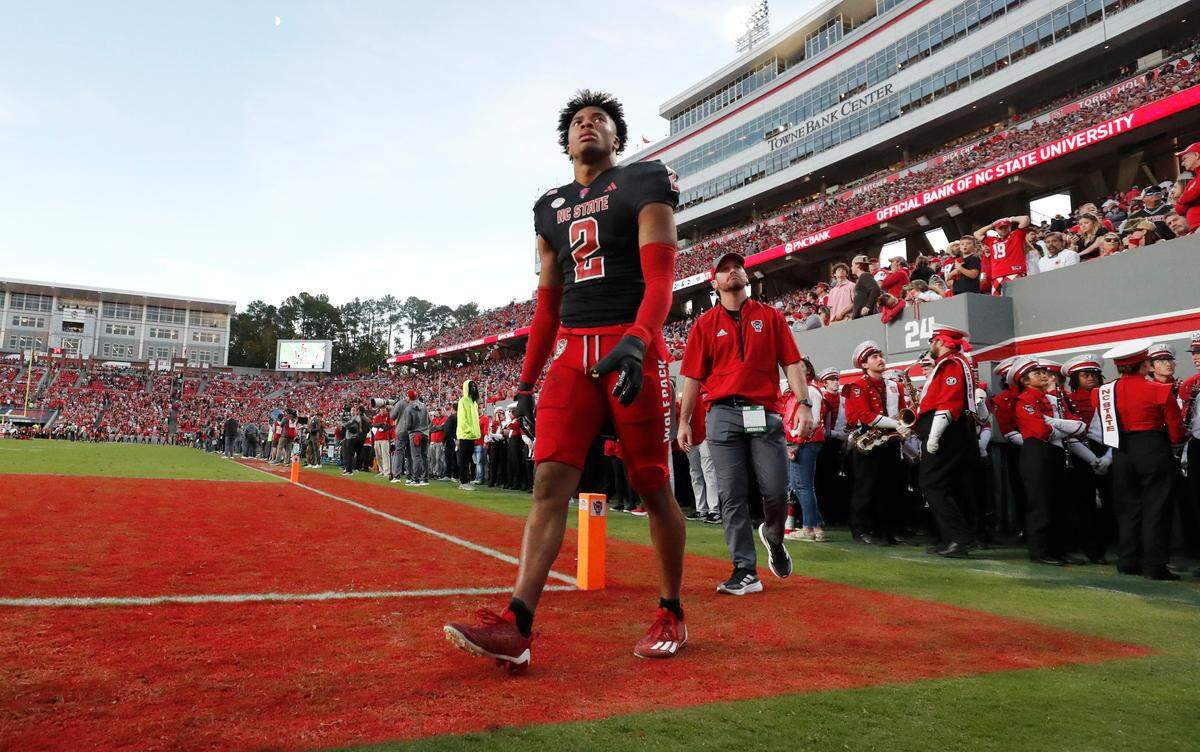
Then, last spring, the NCAA decided that all student-athletes could transfer at any time without sitting out if they meet academic eligibility requirements and leave the program in good standing. In order to play immediately at their new school, student-athletes must meet “progress toward degree completion.” This means, student-athletes are only locked into a school for one year at a time.
The new rules have led to a free-for-all with little regulation that makes roster management difficult, which is opposite of the portal’s intended purpose. More than 6,000 players entered the portal this cycle.
Even if players have committed to return via their school’s NIL collective — like the Wolfpack’s Brandon Cisse and Devan Boykin — that does not provide guarantees.
“I never sign a kid with the expectation he’s going to leave. I sign him with the expectation that I’m going to graduate this player, I’m going to develop this player. I’m going to see this player reach his goals as a student athlete,” Doeren said. “In some cases, that’s what happens. In some cases, it doesn’t. I wish they could stay longer than a year. You know, I feel like the way that this thing’s set up now, it really lends itself to not facing adversity.”
Lack of alignment in recruiting, portal calendars
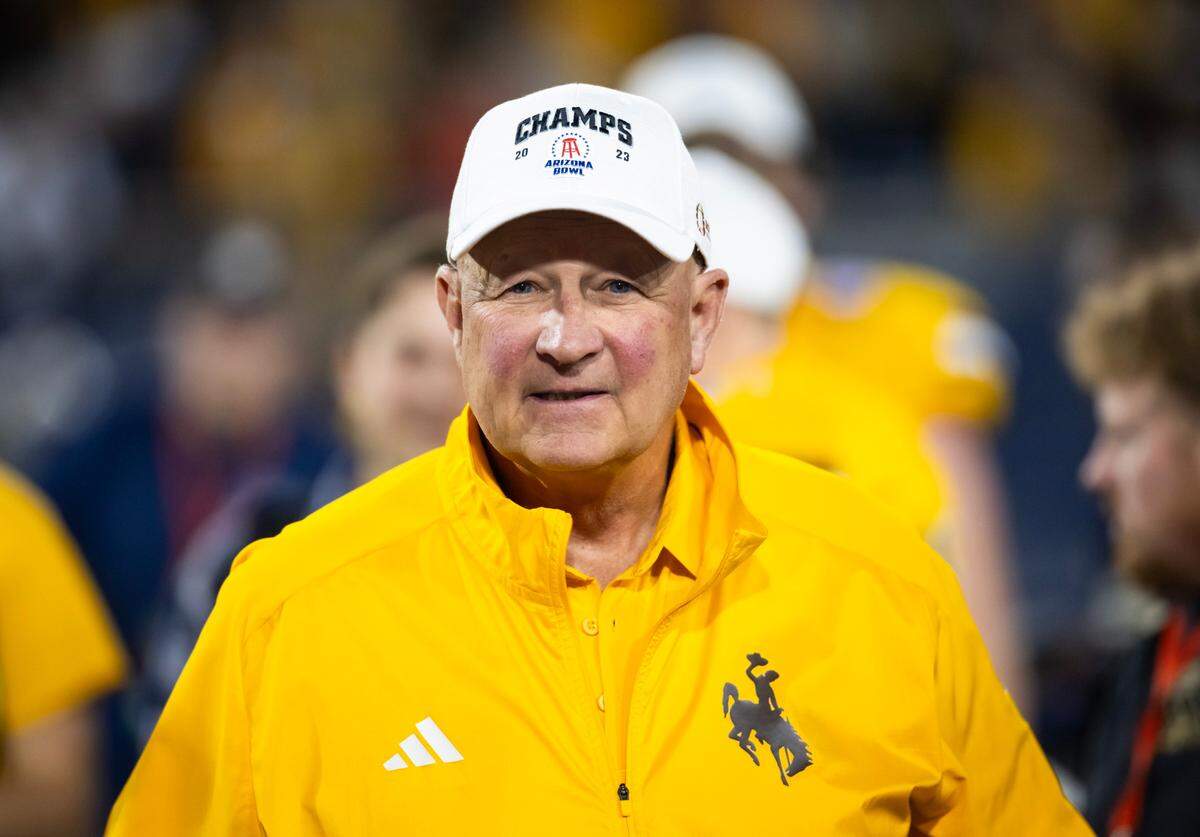
With the introduction of the transfer portal came rules and timelines about recruiting players planning to leave their current institutions. Though well-intended, AFCA Executive Director Craig Bohl said there were unexpected consequences the current rules created.
Under current rules, the FBS level features two major signing periods for high school and junior college transfers. Both of these signing periods, however, take place before the two transfer portal opening dates, meaning programs offer scholarships and sign incoming players before fully knowing which current players want to transfer.
In 2024, teams signed high school recruits and JUCO transfers on Dec. 4-6. The primary transfer portal window opened on Dec. 9 and closed on Dec. 28. There are exceptions for when players can enter the portal, such as a coaching change.
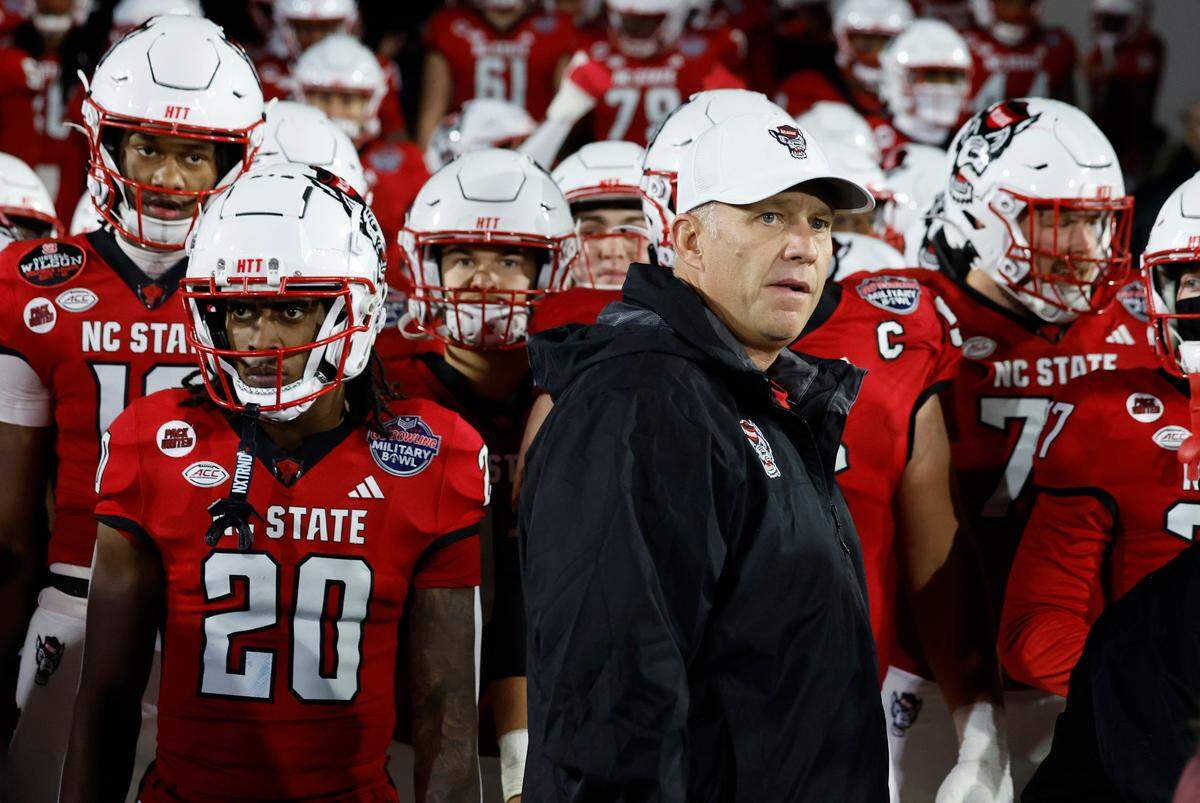
“I think you hit December, and you get right into the roster management retention piece, and then you have your signing day, so you’re recruiting your high school guys to sign,” Doeren said in December. “Then signing day ends, and now you’re (saying) okay, ‘Here’s the guys that are coming back, here’s the guys that are going in the portal.’ Now, you start recruiting the portal. You’re going through that piece and 6,300 guys to look at, it’s a lot of film.”
While the portal was open, coaches were allowed to host potential transfers on campus for two weeks. A recruiting dead period took place from Dec. 23-Jan. 5, before recruiting activities began again. All of this takes place while teams prepare for final exams, the College Football Playoff and other bowl games, and juggle the holidays.
An additional signing period takes place from Feb. 5-April 1 for remaining recruits. Then, a second transfer portal opening occurs from April 16-25.
Those in attendance at the AFCA FBS coaches’ meeting Tuesday voted unanimously to recommend that the NCAA create a single transfer portal window from Jan. 2-12, starting in the 2025-26 academic year. The proposal also includes a recruiting dead period ahead of most bowl games.
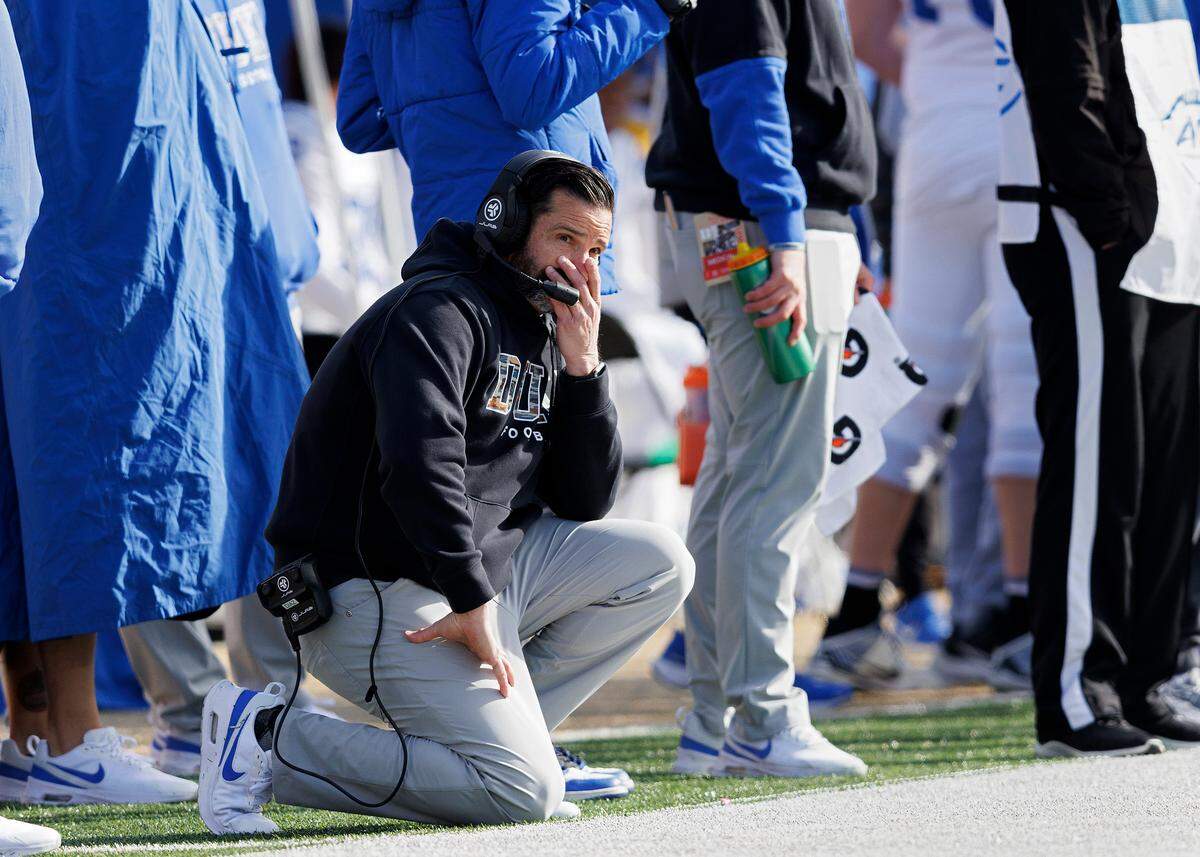
The ACC’s Manny Diaz (Duke), Brent Key (Georgia Tech), Rhett Lashlee (SMU) and Dabo Swinney (Clemson) were among the dozens of coaches who made the trip to Charlotte.
This is not finalized and must go to the NCAA Football Oversight Committee, which can approve, deny or make changes to the proposal. The committee has multiple meetings later this year.
“We’ve had to adapt like everybody else, and I think we’ve done a good job on with doing that,” Diaz said after the AFCA meeting. “I think that’s why, as an organization, we’re trying to find out what’s best for the sport. We’ve had good conversations to that point.”
Why the transfer calendar matters
The current transfer portal calendar hurts programs and student-athletes, coaches say.
For players who entered the portal in December, most did not participate in their current program’s bowl game. Instead, they used what would’ve been game preparation to speak with coaches, take visits to various campuses, and market themselves in hopes of finding a new program in time to enroll for the spring semester. The national championship game hasn’t taken place and universities have already begun their spring semesters, Brown pointed out. That puts many players in an “either or” situation.
Former N.C. State wide receiver KC Concepcion did not participate in the Military Bowl after entering the portal. He made visits to Alabama, Colorado, Florida State and Texas A&M, ultimately landing with the Aggies and former Duke head coach Mike Elko.
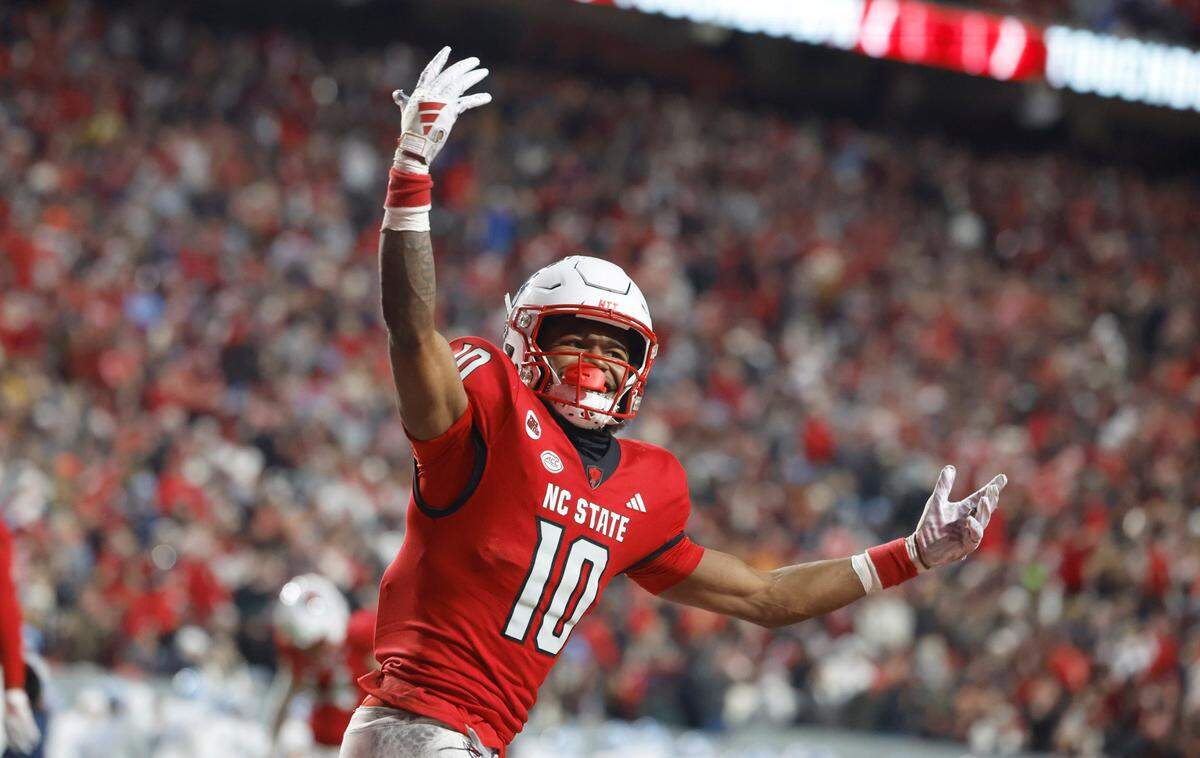
UNC quarterback Conner Harrell did not participate in the Tar Heels’ Fenway Bowl loss to UConn but defensive lineman Travis Shaw did. Harrell is headed to Charlotte, while Shaw landed at Texas.
“I think the biggest issue — and it’s been well said by a lot of coaches — is the timing of this with the bowl games and how it’s impacting teams’ abilities to field a team in some cases, but to have a two-deep in other cases,” Doeren said. “It’s really challenging.”
Marshall opted out of its bowl game after the program lost 36 players to the transfer portal, following coach Charles Huff’s departure for Southern Miss one day after the Sun Belt Championship. Huff and school officials were unable to reach an agreement on a new contract. The Herd hired former Wolfpack defensive coordinator Tony Gibson.
“The word finish means something in athletics and it means something in business,” Doeren said. “Our calendar is set up to prevent that, in some cases, for the athletes, for the teams. Hopefully, we can get some really good people together after the season and come up with a better way to serve everybody involved in this thing, because it needs to happen.”
NIL adds to the complications
Student-athletes became eligible in 2021 to receive compensation for their name, image and likeness. The intent was to allow players to earn money from appearances, commercials and autographs. They also wouldn’t be penalized for using their platform to do charity work.
Despite NIL not legally being pay-for-play — agreements cannot be based on academic or athletic performance — it has turned into an auction with players going to the highest bidder.
One Pack NIL, N.C. State’s collective, had agreements with roughly two dozen players to return next season. Cisse, Boykin, Bishop Fitzgerald and Tamarcus Cooley were among those players but entered the portal this month. They’ve all found new, bigger programs instead.
It’s bad enough among the FBS ranks, but it’s even more difficult for programs on the lower levels to keep up. At NAIA Central Methodist, Brown said his program doesn’t have nearly the same funding, operating budgets, amenities or even full scholarships to compete with major schools.
“With the financial incentive, with that high level, you can’t really fault a kid if he’s here at one place — say he’s making $100,000 — and these guys over here are gonna pay him $250,000. And I know the numbers are even higher than that at a lot of those places,” Brown said, noting how the transfer portal rules make jumping around easy. “How do you tell a 20-year-old kid whose parents may be not even making that, ‘Oh, yeah, no, you shouldn’t go do that.’?”
Roseville Athletics Academy’s Morant also understands why players would seek financial incentives, but seeing guys jump from program to program is concerning. He said many are playing more for that than their love of the game.
“We’re giving them all this money, and they haven’t performed to the level of what they need. If that was the case, teams would be winning national championships,” Morant said. “Why should I give you money and you haven’t performed to the level as an NFL player or helped our school to get to the national championship? Because at the end of the day, that is what it’s all about.”
Roster sizes remain in flux
As part of the House vs. NCAA settlement, the governing body implemented new roster size limits for every sports team, not just football, for institutions participating in the upcoming revenue sharing model.
Football, however, will experience the most drastic change in roster size. The majority of FBS programs operate with roughly 125 to 130 players. Of those, 85 are scholarship players. The settlement reduces the total roster size to 105.
Except it’s not a completely done deal. Doeren said the roster is not official until it’s “rubber stamped” on the legislative level, which means teams need to have multiple plans in place prior to the anticipated settlement in April.
“Sometimes these decisions at the last minute get tabled,” Doeren said. “The last thing you want to do is run off your walk-ons, cut them all, and then find out you’re going to be able to be at 125 again, and (officials) are going to wait a year.”
Doeren said the Wolfpack is operating as if it’ll be a 125-man roster, with everyone participating in winter conditioning and spring ball. When the final number is officially announced, the program will handle that accordingly. He compared it to the NFL; walk-ons will compete for the final roster spots.
“We look forward to knowing, as head coaches, what our roster size is,” Doeren said. “I think that’s going to be great to actually know officially and exactly when we can add those guys, so we can make better plans.”
Possible solutions
How can college football settle things down?
While having a final roster number will help, coaches say better regulations paired with logical recruiting and transfer windows would make the biggest differences.
Bohl said the coaches hope to see the new transfer portal window and recruiting dead period approved by the NCAA.
“These recommendations are intended to allow a student-athlete and coaches more opportunity to focus on their season while preserving the opportunities for students who choose to transfer to still be able to do so for a traditional spring semester,” Bohl said.
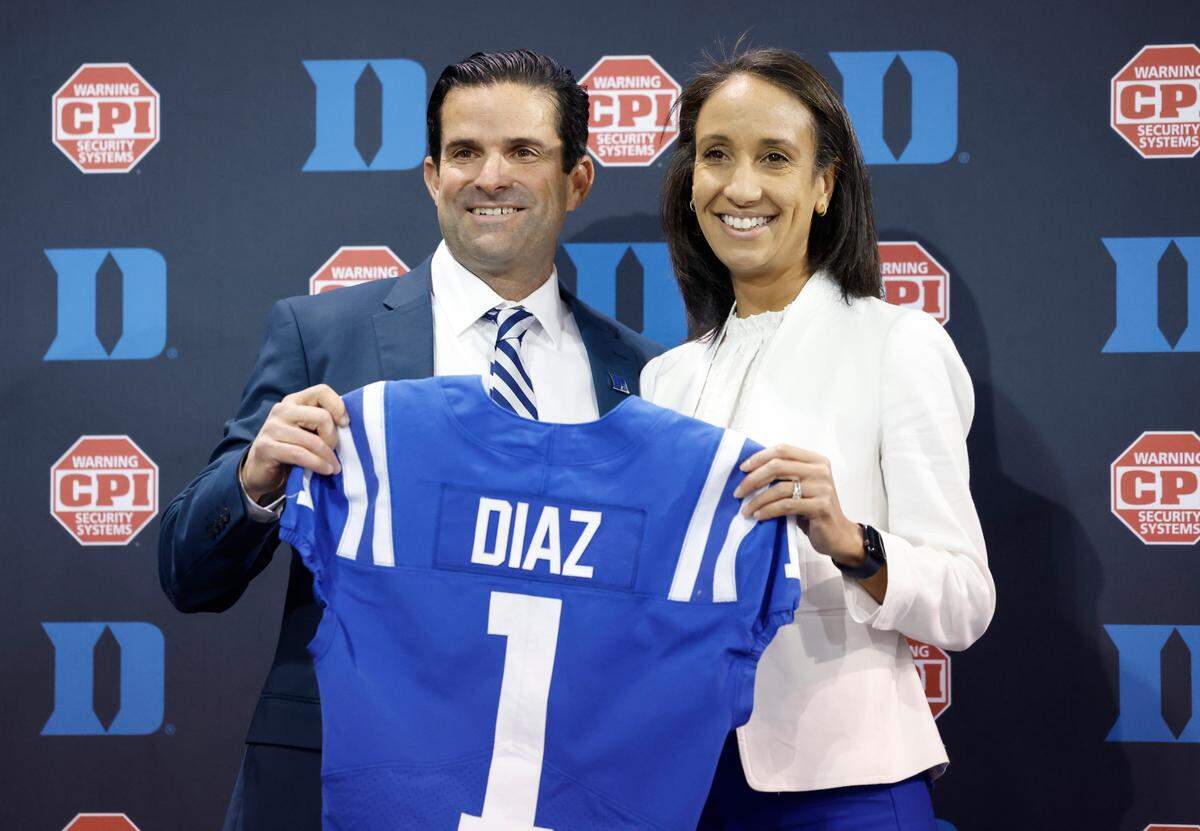
Duke athletic director Nina King suggested having the season start slightly earlier so it finishes earlier. The players are already on campus for summer workouts. That would also provide breathing room in December for players seeking new schools.
Other options include re-instituting the one free transfer rule, meaning players couldn’t leave programs every season. Morant advocates for that and seeing stipends to return to college scholarships. Give players money to get gas, pay rent and buy clothes, but he doesn’t think they need to be receiving the large sums now associated with college football.
Similarly, Brown said creating legally binding contracts like coaches have could help, too. If players sign scholarship contracts that include other benefits, they would be bound to that. Departing would mean they have a penalty.
“Right now, with no penalties, with no anything, everybody’s just in and out,” Brown said. “That makes it the hardest, because you can’t plan.”
Chris Vurnakes, the One Pack NIL director, wants to see collective bargaining to streamline and stabilize the current process across the college athletics landscape.
“Allowing for collective bargaining, or any level of mutual agreement among the parties, would help mitigate some of the chaos in collegiate sports,” Vurnakes said. “The current rules, or lack thereof, from the NCAA do not protect the school, collective or student athletes and have created the ‘Wild West’ people often refer to today.”
Mixed feelings about the portal, CFB
There’s plenty of bad that’s come from introducing the new transfer portal and NIL rules. However, there’s also a lot of good.
Every coach who spoke to the N&O said there are times when it’s good for players to leave programs.
Brown said he’s experienced both sides. He’s had players leave, because they need additional financial support to finish their degrees. Others dropped down to the NAIA level to have one more shot to play. He knows that’s meaningful.
Doeren said he likes helping players find new spots if they haven’t been able to work their way onto the field at Carter-Finley Stadium, especially if they’ve been with the program three or four years. Anthony Smith was a four-year player with the Wolfpack. He played a very limited role before transferring to East Carolina. Smith became the Pirates’ leading receiver in 2024.
“We all want these guys to play. That’s why you recruited them,” Doeren said. “We want them to turn around at the end of their career with the college degree, and feel like they’ve got everything they could out of it. If playing time’s not part of that equation at your school after that period, I’m 100% behind them going to find a place where they can be starters.”
The coaches’ overall sentiment was that college football isn’t healthy, though, and it’s going to take self-reflection, honesty and compromise to get things in place that benefits everyone involved.
For now, they’re still waiting.
This story was originally published January 18, 2025 at 8:00 AM.