NC State football’s Corey Coley sues NCAA for fifth year of eligibility. What we know
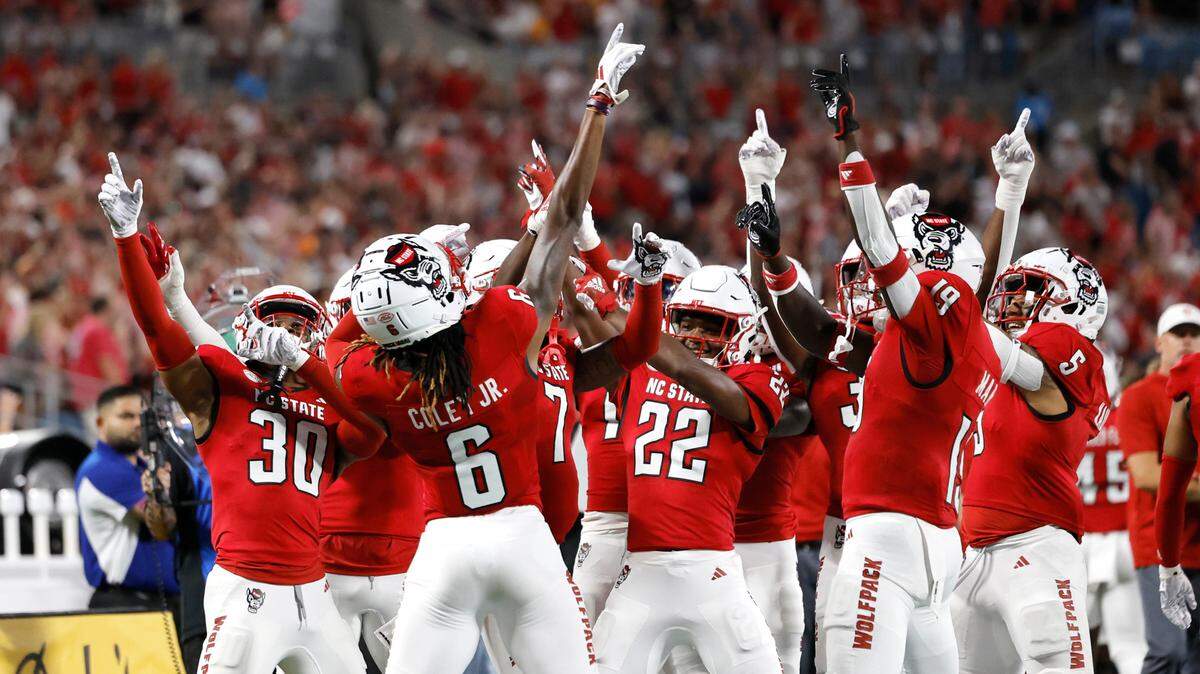
N.C. State defensive back Corey Coley is suing the NCAA after the governing body denied his application for a hardship waiver on Feb. 5.
Coley, with the assistance of the N.C. State football program, applied for a waiver in December. The application stated Coley experienced significant hardships — through injuries, personal loss and mental health challenges — through his entire college career.
The complaint, filed Friday in a federal court in North Carolina and obtained by the News & Observer, challenges the NCAA’s rules that limit a player’s eligibility for four seasons in a five-year window. It also challenges the four-game rule, which states student-athletes can appear in four games before their participation counts as a season of eligibility. If they play in four or fewer games, the players retain their redshirt.
Coley, from Florida, transferred to N.C. State for the 2024-25 season after spending three years at Maryland to be closer to his family.
He missed nine games in his career, including seven at N.C. State. Coley’s season with the Wolfpack ended on Oct. 5 during N.C. State’s game against Wake Forest.
Additionally, he played through a nagging injury at Maryland during his sophomore season and the death of his uncle during his junior season with the Terrapins.
Prior to his season-ending injury against Wake Forest, Coley played through an ankle injury sustained during the team’s fourth game, despite not being fully healthy, due to his N.C. State teammates’ more severe injuries. His mother, a single parent, did not get to see him at N.C. State due to financial hardship.
Coley’s complaint also includes documentation of mental health challenges, including anxiety, he experienced during his college career due to external factors.
The waiver request states that while Coley participated in more than 30% of N.C. State’s competitions last season, circumstances outside of his control limited his ability to have a “meaningful and impactful opportunity” for the Wolfpack. The waiver request included information from N.C. State’s sports psychologist outlining the mental health challenges with which Coley struggled and the treatment he underwent.
In the original denial, the NCAA stated N.C. State’s athletic trainer cleared him for activities following his Oct. 5 injury. The original waiver request included a statement from the Wolfpack’s head athletic trainer saying Coley had not been cleared to return and was not eligible to complete the season. The NCAA submitted an amended denial on Feb. 18.
“The NCAA arbitrarily determines what constitutes a “season” … without regard to whether an injury prevented a “student-athlete” from completing an entire season,” the complaint states.
The lawsuit argues the rules lack fairness, diminishes competition and negatively impacts a student-athlete’s ability to earn NIL compensation. Other cases, including the one that allowed NIL to become the norm in college athletics, state the NCAA’s rules were anti-competitive and did not provide pro-competition justification.
FBS teams compete in 12 regular season games and can compete in as many as 17 games if they advance through the College Football Playoff bracket.
The rules, however, state players who do not play in more than four regular season games are allowed to play in all postseason games. Student-athletes could compete in as many as five postseason contests, when accounting for their respective conference championships and playoff games. This means redshirts can compete in up to nine games.
The lawsuit also states waivers given to student-athletes during the COVID-19 pandemic — which gave student-athletes an additional season of eligibility — “pretends that the 2020-21 college football season never happened.”
According to the NCAA, the original purpose of the COVID waiver was to ensure student-athletes did not lose eligibility if their seasons were canceled due to the pandemic.
Coley’s lawsuit states he should be granted a waiver, because had his injury occurred in the fourth game, it would not have counted as “a season of completion.” Additionally, the complaint says if he played in 24 fewer snaps (18 in the fifth game and six in the sixth game), his season would not have been considered complete.
“To further amplify the arbitrary nature of what constitutes a ‘season’ under the NCAA’s rules, the number of games (9) Coley missed due to injury would be the equivalent of two seasons,” the lawsuit states. The number of games he missed due to injury do not fit the stated criteria for a hardship waiver, it says.
Coley’s complaint states he should be granted an additional season of eligibility because he experienced severe hardship during his career, N.C. State wants him to return, the rules violate the anti-trust case that allows for NIL opportunities and he remains academically eligible and meeting graduation progress requirements.
If his waiver is not granted, N.C. State will be forced to seek an alternate player. Coley’s only other option to pursue football and financial compensation from the sport is to enter the NFL Draft, which is scheduled for April.
“NCSU wants Coley to return to NCSU,” the complaint states, “and play football during the 2025-26 college football season, and Coley wants to return to NCSU where he not only has the opportunity to play football and earn additional NIL compensation through NCSU’s collective, 1PACK (sic), but also continue his academic endeavors.”
This story was originally published February 22, 2025 at 12:19 PM.