Karen Shelton drove the vans and buses at UNC. Then she built a field hockey dynasty.
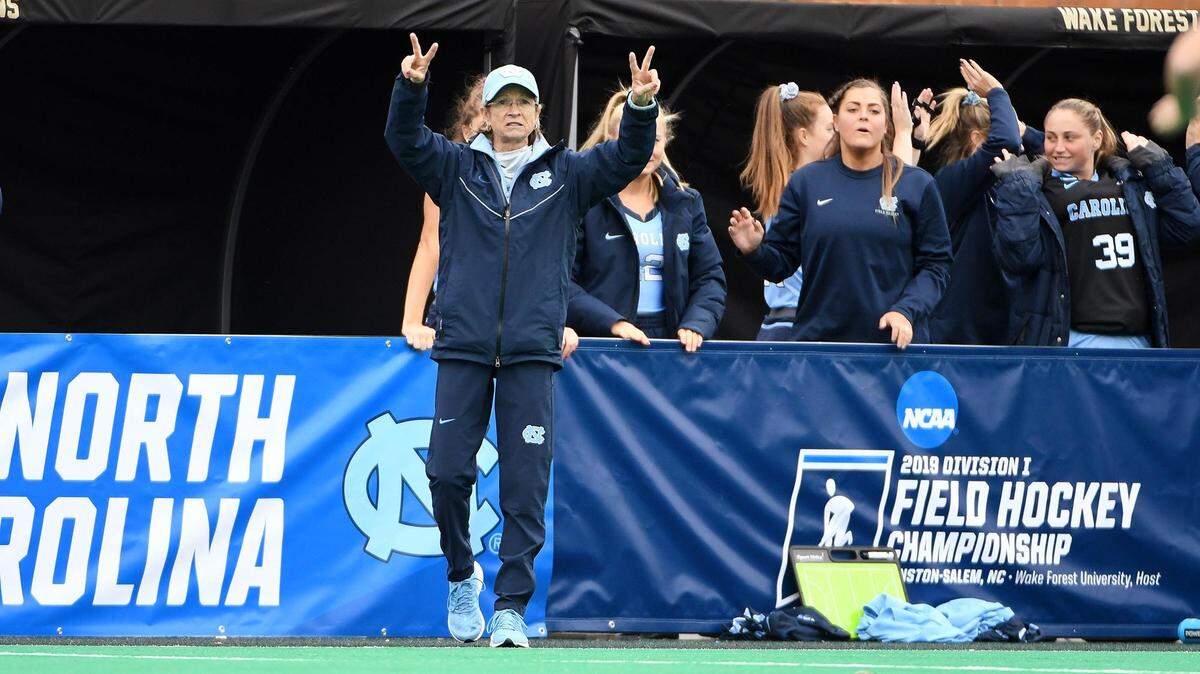
In 1981, when Karen Shelton became the field hockey coach at North Carolina, she received an annual salary of $7,700. She was a part-time employee without benefits. And, for road games, she’d climb behind the wheel of a 15-passenger van and drive the Tar Heels to their destination.
Gradually, the team’s travel arrangements became less spartan. There was the mini-bus, which Shelton also drove, before the budget allowed for chartered buses. In the beginning of her tenure, though, there were those vans.
“Two vans, and I would drive, and my assistant coach would drive,” Shelton said. “We drove to Connecticut and back. And so the budgets were small, and we just slowly worked our way up.”
Shelton, 62, remembers well the humble origin story of what she has built at UNC. Last weekend, she led the Tar Heels to their eighth national championship in field hockey and their second in a row. Her team has gone undefeated in each of the past two seasons, and has won 46 consecutive games.
In at least one way, the Tar Heels’ 2019 season began the same way that many other seasons have started during Shelton’s 39-season tenure.
“At the beginning of every season, she loves to tell us this group has incredible potential,” Marissa Creatore, a fifth-year senior forward, said. “... She says, ‘This group has incredible potential,’ and she always says, ‘What does potential mean?’
“And you see all the freshmen look around — ‘I don’t know.’ And she goes, it means you’re not worth (expletive) yet.”
In the unedited version, Shelton’s messaging comes through clearly — a tough-love reminder that every season and every day brings new opportunities to prove something. Creatore laughed as she told the story. It’s one of her favorite Shelton sayings, along with another the coach has repeated throughout each of the Tar Heels’ past two championship seasons: “There are no supposed-tos.”
“There’s nothing that’s supposed to happen,” Creatore said. “We have to earn it.”
Shelton’s program has come to embody that mantra during the past 39 years, though high-level national success came relatively early. The Tar Heels won the first of their eight national championships in her eighth season, 1989. It was only then that John Swofford, then the UNC athletic director and now the commissioner of the ACC, changed Shelton’s employment status.
Before that championship, Shelton had been a part-time coach. The arrangement worked for her during the first few years, given that Shelton also continued her playing career with the U.S. national field hockey team. In the 1984 Olympics in Los Angeles, Shelton was a part of the U.S. team that won the bronze medal. There, she shared a dorm in Olympic Village with two other Olympians with strong UNC ties: Michael Jordan and Sam Perkins.
“I think we might have been on the same floor. I’m not sure they knew who I was,” Shelton said with a laugh.
Shelton met Jordan and Perkins one day at the Olympics, and they posed for a picture, Shelton in the middle; she later called it a “pretty special” moment.
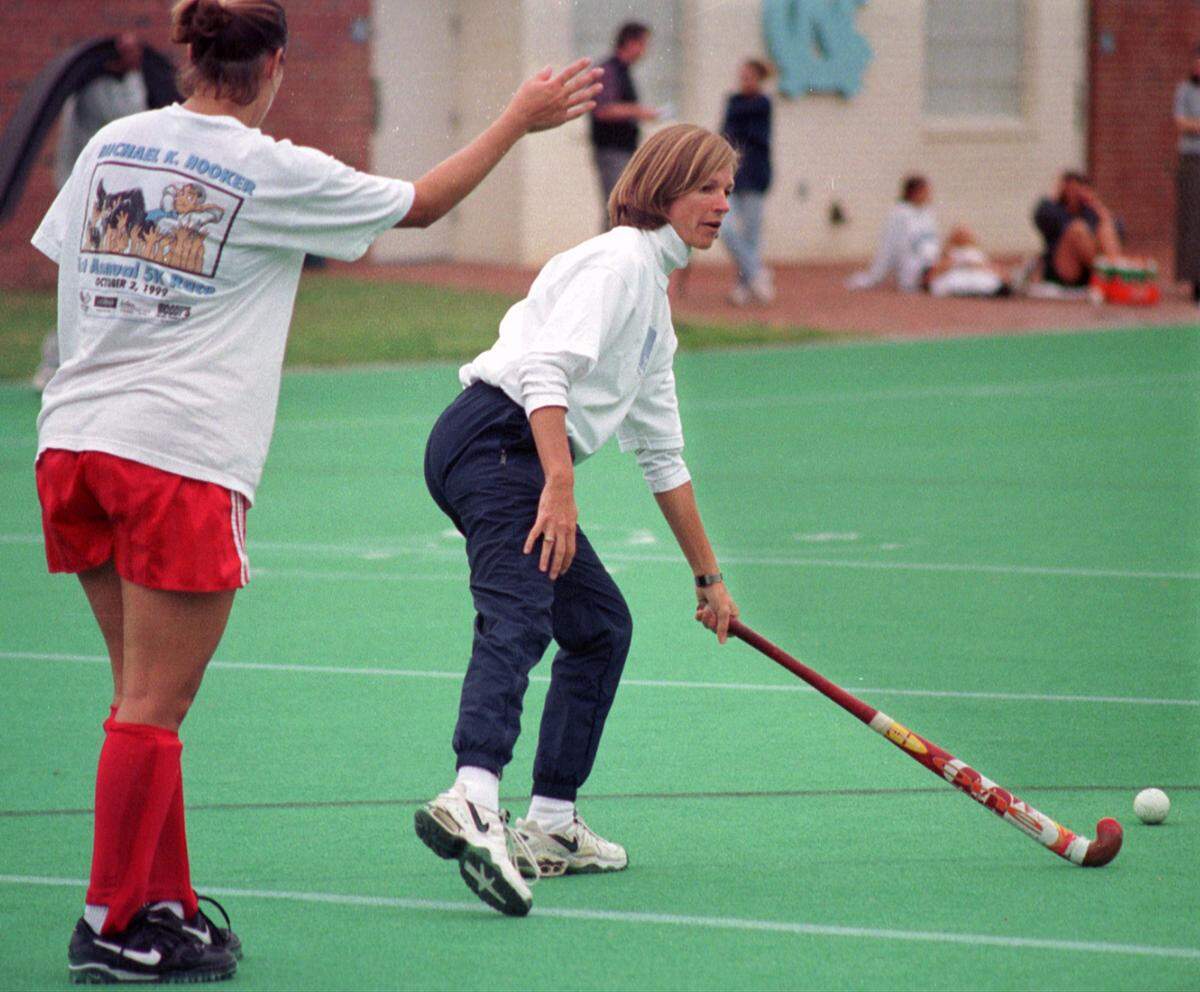
Back in Chapel Hill, Shelton continued to work in the literal and figurative shadows of the athletic department. Her office in those early days was in what she described as “Women’s Gym” — a separate space from the main campus gym.
“The main gym, the male gym, was Woolen,” Shelton said. “And it was a small little gym that was called Women’s Gym. And so I was there. And that was fine. But I moved all around.
“It was different back in the day, I can tell you that.”
Shelton’s starting $7,700 salary was “barely” enough to support herself. A couple of years passed from her hiring date before she felt comfortable enough to ask Swofford for benefits, and it wasn’t until after that first national championship in 1989 that Shelton became a full-time employee at UNC.
Shelton built her program amid the backdrop of the larger fight, still ongoing in some ways, for gender equality in college athletics. When she first became UNC’s head coach, the national scholarship limit for field hockey was nine. Even so, the university made only three scholarships available for the sport.
It wasn’t until the late 1980s that UNC matched the full allotment, which is now 12. By then, her program was well on its way to becoming one of the most successful in the history of the sport. After the first national championship in 1989, the Tar Heels won titles again in 1995, 1996, 1997, 2007 and 2009.
And then came the past two seasons. The 2018 championship was not necessarily unexpected. The Tar Heels understood their might. They entered the 2019, though, with unfamiliar uncertainty. They’d lost five players to graduation. Others were injured. A preseason defeat at Liberty felt like a bad omen.
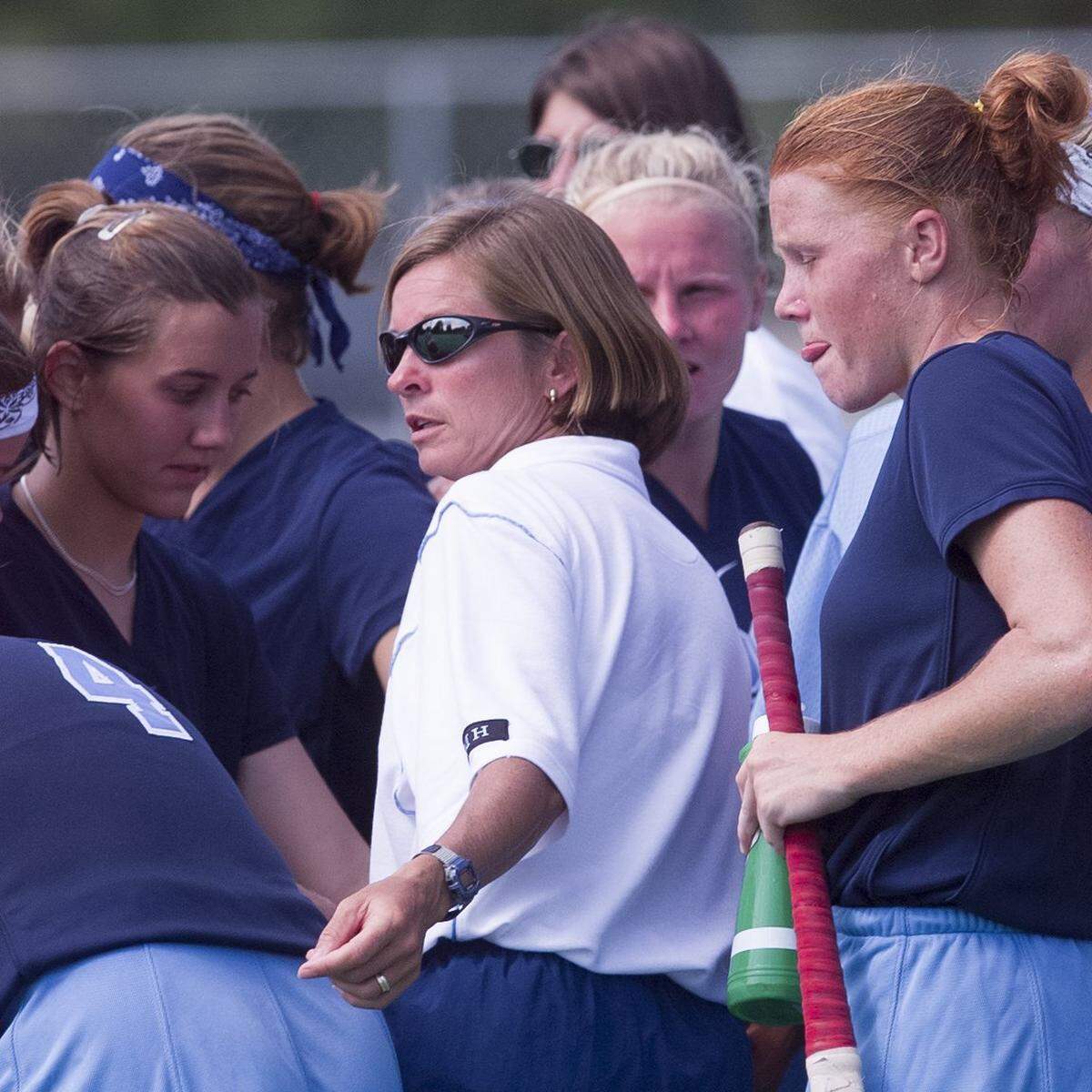
“There definitely was doubt,” Catherine Hayden, a senior forward, said. “I think, even before the Liberty game, there was doubt. So that was just based on what we had lost. And then losing to Liberty in the preseason … to us we’re just comparing it year to year and we’re saying, OK, well, we can’t even beat Liberty in a preseason scrimmage?”
The Tar Heels forged their resilience in early-season, come-from-behind victories against Iowa and Michigan and then with a dramatic victory against Princeton. UNC later defeated Princeton again in the national championship game. The first time the teams played, the Tar Heels trailed by two goals before scoring three in the final five minutes.
Little by little, they began to believe.
UNC has now played two full seasons in its still-new field hockey stadium. It’s named after Shelton, and when it was dedicated, she became the second UNC coach, after Dean Smith, to work in a facility bearing the name of an active coach. Karen Shelton Stadium, with capacity for 1,000, includes a large video scoreboard, a three-level press box, offices and locker rooms.
“My brother, he plays ice hockey in the NHL — he was baffled by it,” Hayden said of the facility. “So he’s seen some nice locker rooms, for sure, and for him to be taken aback by ours — all of that is named after the woman who has given her life to this program.”
When UNC’s new soccer and lacrosse stadium opened before last season, Anson Dorrance, the longtime women’s soccer coach, became the third Tar Heel coach to work in a facility named after them. Shelton learned from Smith and Dorrance.
Smith, she said, “set the tone for the department,” and also “always knew what was going on within my program.” And Dorrance, Shelton said, “set the bar early for women’s athletics in the department.” From her meager beginnings, though, filled with days driving vans and scraping by on a small salary, Shelton has built something strong enough to stand on its own.
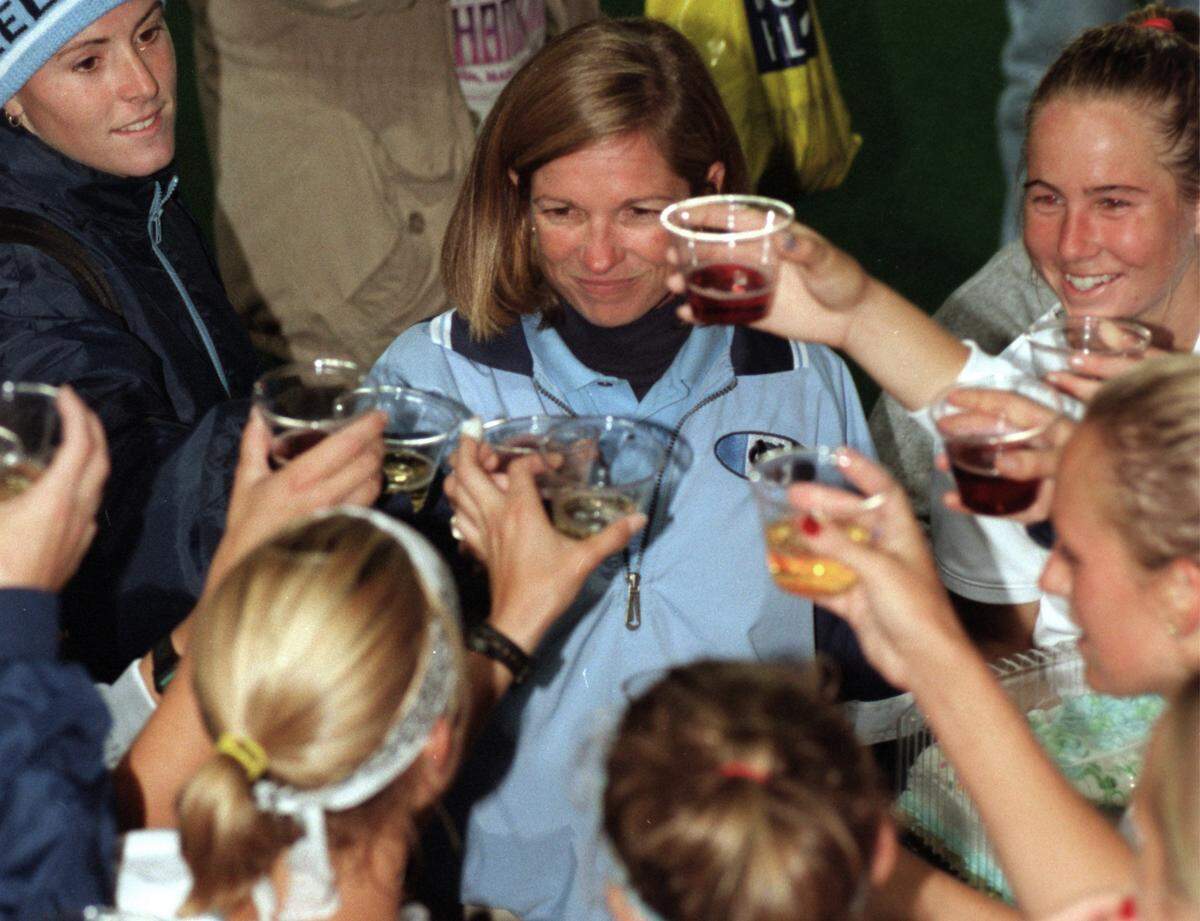
She arrived at UNC as a 23-year-old with no previous head coaching experience. She’ll leave, whenever she does, as one of the most successful coaches in school history, in any sport. If Shelton coaches next season, it’ll be her 40th. She said that she was “going to take a little time” to decide her future and acknowledged that retiring after two national championships and 46 consecutive victories had crossed her mind. The Tar Heels still have yet to lose in her stadium.
“To have my name on one of the facilities is just — it’s incredible,” she said. “It’s mind-boggling. But the fact that it is one of the few buildings on campus that’s named for a woman is also something that I’m very, very proud of.”
In at least one way, the Tar Heels’ national championship game against Princeton last weekend began the same way that many other games have started during Shelton’s 39-season tenure. She gathered her players before they went onto the field and repeated a phrase that she wants them to remember.
This one is not about potential or supposed-tos. It is not necessarily about field hockey at all.
“She tells us before every game,” Creatore said, “that we are strong, beautiful, powerful women. Before every single game. And at first you’re just kind of like, I don’t even know what that means, exactly.
“But here I am going into job interviews and that echoes in my mind, to this day. And I know that’s something that will just stick with me forever. So it’s not just building that confidence in field hockey, it’s building that confidence in our minds, in who we are as people.”
It is the same thing before every game: You are strong, beautiful, powerful women.
“And then we go out,” Creatore said, “and do what we have to do.”
This story was originally published November 29, 2019 at 1:26 PM.