
Growth of UNC guards Caleb Love, RJ Davis part of Final Four formula for Tar Heels
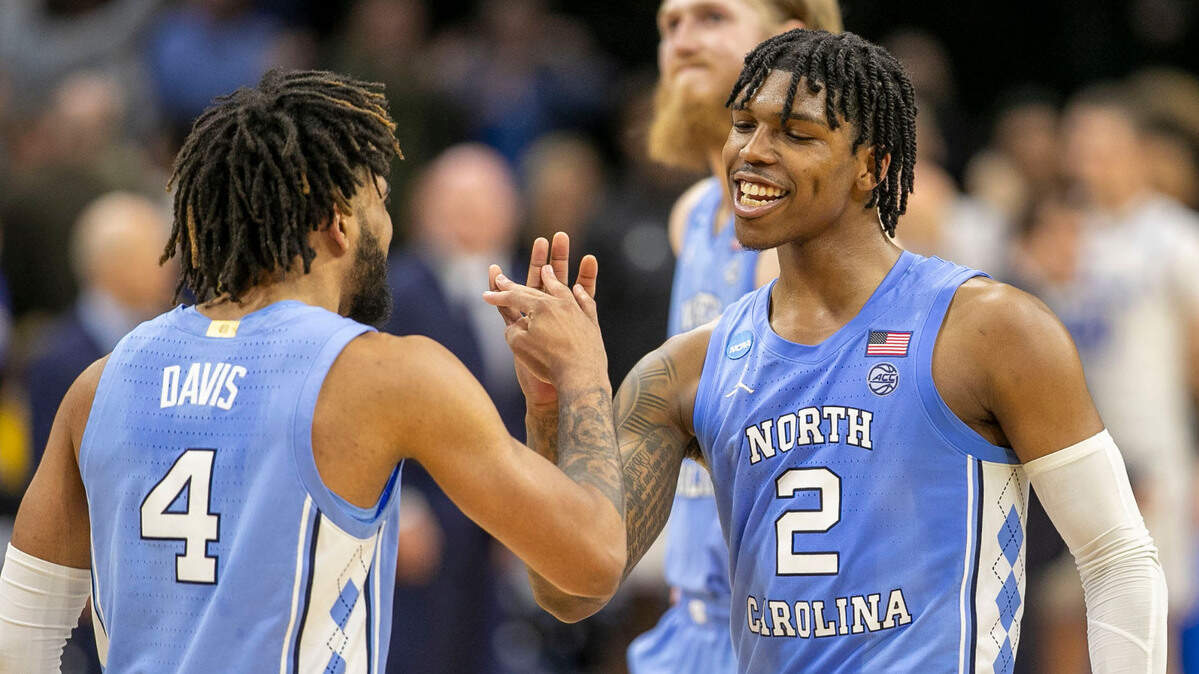
North Carolina guards Caleb Love and R.J. Davis possessed the worst turnover rate of all the starting backcourts in the ACC last season as freshmen. And the turnovers weren’t the only cause for concern.
There’s no metric for shot selection and ball judgment, but those were also areas where, as freshmen, they played like freshmen. A lot of their growing pains could be attributed to the fact that COVID-19 kept freshmen around the country from arriving on campus during the summer months to get acclimated to college basketball.
Love and Davis experienced growing pains in real time, for everyone to see. But now, observers are witnessing their maturation.
“I felt bad for them because as freshmen, they didn’t have the luxury of having an upperclassman at their position that can show them the way of how to prepare, how to practice and how hard you have to play just to give yourself a chance to be successful,” UNC coach Hubert Davis said. “As freshmen they were given the keys and said, ‘Here’s North Carolina, run the show.’ At times, it was up and down for them.”
UNC’s two-guard system
Carolina’s late-season improvements and its run to the Final Four have been powered in a large part by the development of Davis and Love. Chances are, if the Tar Heels defeat Duke on Saturday to advance to Monday’s national title game, their backcourt will play a big part.
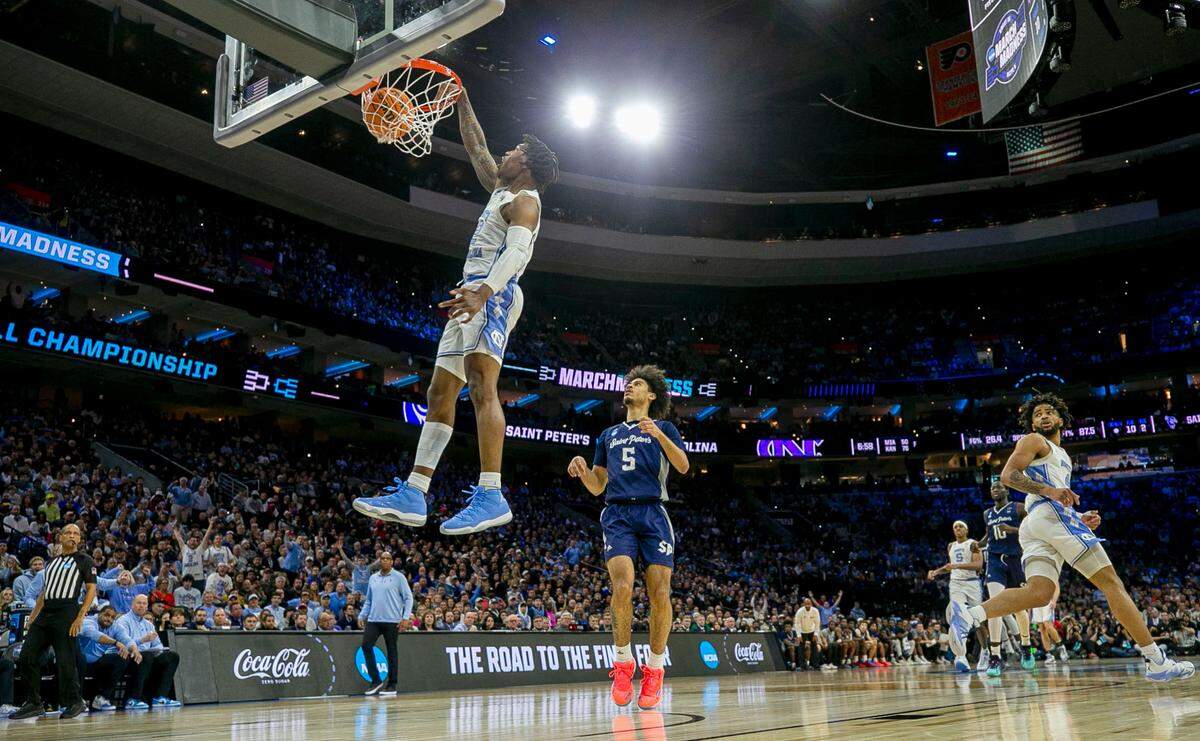
Love and Davis are tied for the team lead with 136 assists, which averages out to 3.6 per game. Love is averaging 15.7 points and Davis is at 13.4 per game.
“That’s something that we worked together this during this offseason, was just playing with each other, getting a better feel with how it feels to be on the court at the same time,” R.J. Davis said. “It didn’t really matter who had the ball, who initiated the offense, it was more about just winning and do what we have to do to get a win.”
Hubert Davis admitted he never thought about using two point guards in a lineup until former coach Roy Williams used Joel Berry II and Marcus Paige together. Their ability to play alongside each other opened up Carolina’s transition game, in that either could lead the fast break. And it helped them in halfcourt sets, too, because either player could initiate the offense. They were a big reason why the Heels made it to the 2016 national championship game.
Berry, now an analyst on the ACC Network, also blamed the pandemic summer of 2020 for delaying the growth of Love and Davis.
“Me and Marcus were able to gel a little bit better on a quicker level and be able to work together,” Berry said. “But now we’re seeing R.J. and in Caleb do that and they’re doing it at the highest level. And they’re doing it really good right now. What’s so great about it is that these guys can both go for 20 points. But you can see the connection.”
Love and Davis have learned how to co-exist despite have similar skills sets as scoring point guards. Part of their challenge in becoming a cohesive backcourt was figuring out how to complement one other.
“We just play off of each other, I find him, he finds me,” Love said. “I know where he likes the ball on the court, and I’m always looking for him when we’re in transition. In the half court I always know where he’s at because he can come off the ball, and when he’s got a mismatch he always hears me saying go at him. So if he’s got a big on him, it’s your world. I’m just playing off him, he’s playing off me, and we play together.”
The Heels had never in their history had two different players score 30 points in consecutive NCAA tournament games — until Davis dropped a career-high 30 on Baylor and Love did the same to UCLA.
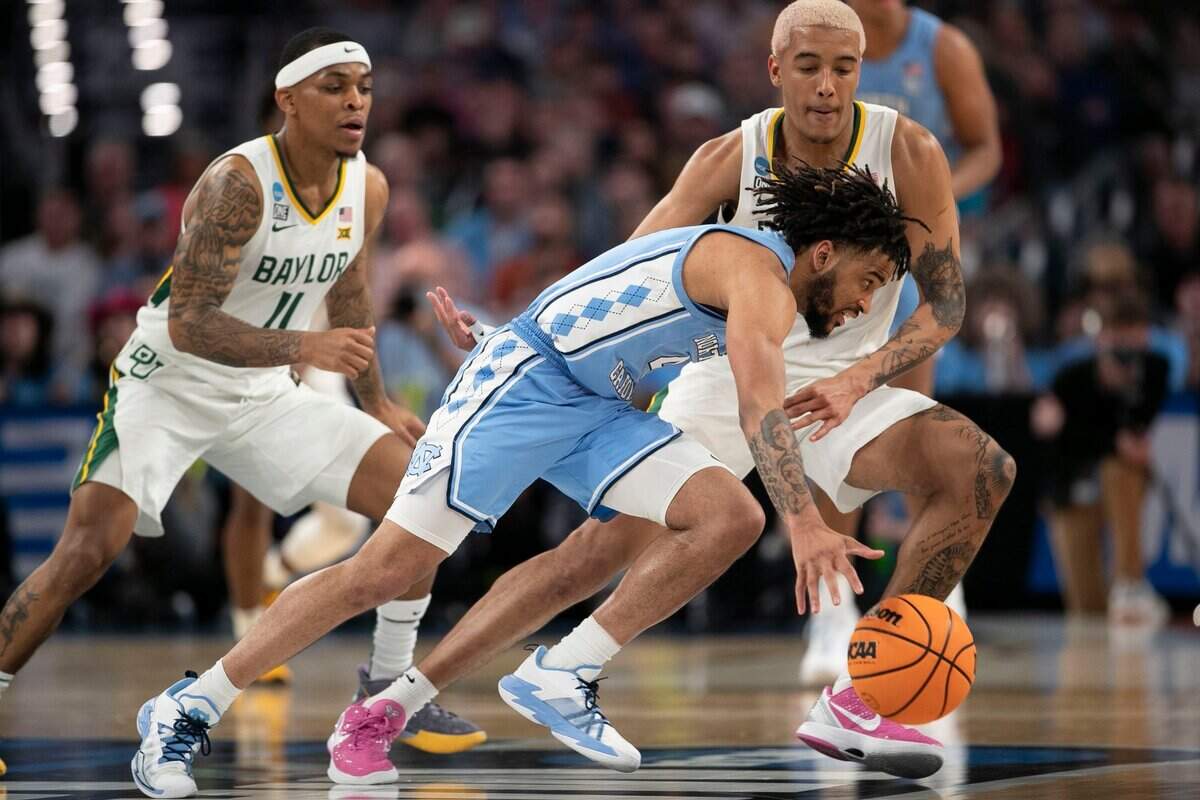
“Both of us can score the ball at a high level and what I like about his game is he doesn’t fear anyone,” R.J. Davis said. “He’ll take it at you. He’s very confident. I know when he’s in that mode and I tell him keep going. I think that’s something that we both have in common. We both have confidence in each other which is why we can gel so well together on the court.”
More than scoring
It’s not just about scoring.
Davis’ assist rate picked up as he took on more of the primary ball handling duties down the stretch. Davis was at 15.3 last season, but is now at 19.8, according to Ken Pomeroy. The highlight of his season was a career-high 12 assists in their win over Marquette to start the NCAA tournament.
Love’s assists rate decreased from 23.0 to 20.0, but Carolina is 14-0 this season when he has five or more assists in a game. That included the Heels win at Duke in the regular-season finale, when he had five, and in a must-win game at Virginia Tech, when he tied his career high with seven.
Love and Davis have also learned how to value possessions more. Love’s turnover rate decreased from 24.6 as a freshman to 17.8 this season, according to Ken Pomeroy. Davis’ turnover rate dropped from 22.1 as a freshman to just 15.9 this season.
“We can see the connection happening, it has taken some time, as I said, because they didn’t have that time over the summer like me and Marcus did,” Berry said. “But now you’re seeing what happens when you can have two really good point guards that can score the ball.”
This story was originally published March 31, 2022 at 9:10 AM.