
A Duke to UNC transfer. A stroke. A stirring comeback. This is Olivia Migli’s soccer story
.jpg "Olivia Migli plays for North Carolina women’s soccer during a game against Duke at Koskinen Stadium in Durham on Sept. 5, 2024. Migli transferred from Duke to UNC over the summer.")
When North Carolina soccer defender Olivia Migli stepped off the field for the final time — 30 minutes into the Tar Heels’ ACC regular-season game against Virginia on Sept. 27 — there was no big announcement, no tear-filled farewell.
It wasn’t dramatic. She simply knew.
Migli’s body had spoken, and this time, it wasn’t a signal she could ignore.
“I was trying to reverse psychology myself into feeling OK,” Migli said. “So I didn’t really talk about it with anyone, or I made jokes, but I had been thinking about it to myself for, probably, a month.”
This wasn’t a simple knee or ankle issue — the usual soreness she’d played through plenty of times in the past. There was a shakiness in her limbs now, a fatigue that felt unconquerable. These were the physical tolls Migli had been fighting for months.
After tough practices or games, like this one, she felt off-balance, as if her body wasn’t responding to her demands. The migraines, the shakes, the sheer weight of fatigue — the exhaustion followed her everywhere. They all made her wonder how much longer she could keep going.
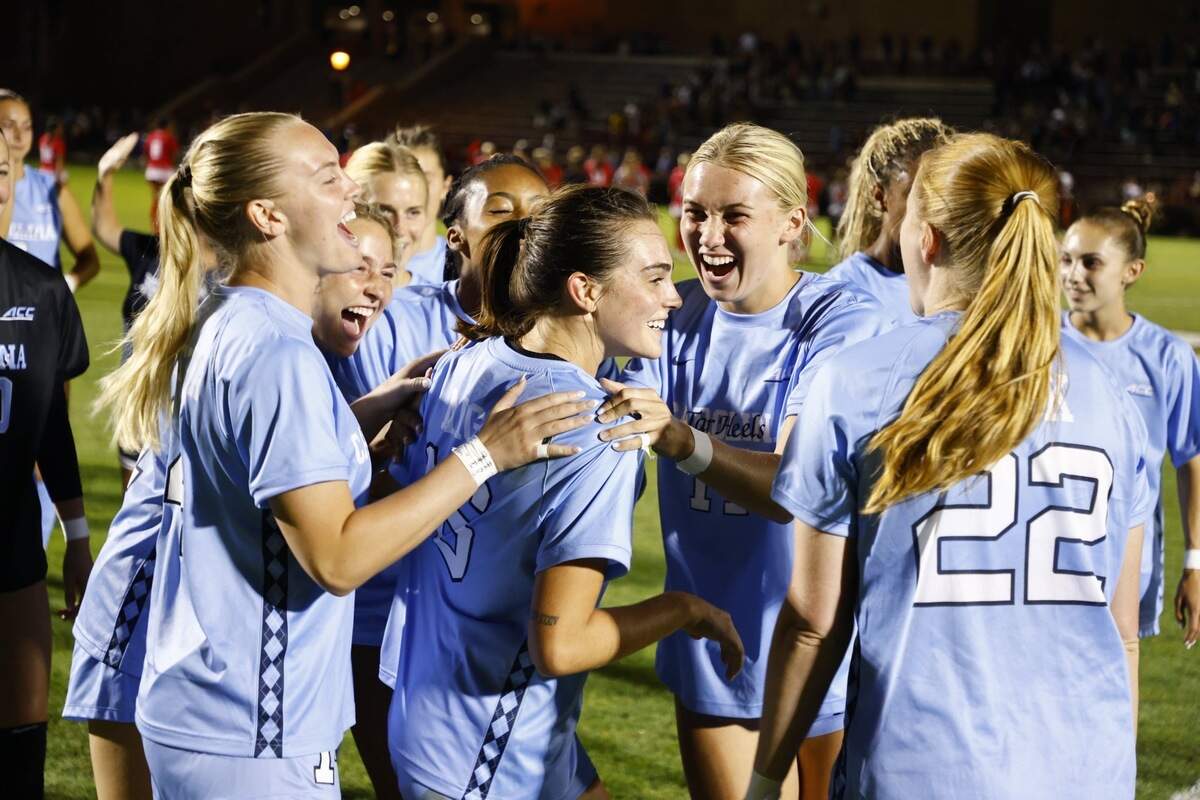
UNC’s soccer staff had been eager for Migli to join the team after she expressed interest in transferring from Duke following the 2023 season. The Tar Heels needed defensive reinforcements. Migli’s grit, athleticism and four years of ACC experience were a perfect fit.
But as she sat on the bench that September day, watching her team mount a 3-2 comeback victory, Migli was motionless. She didn’t move: Not to play. Not to cheer. Nothing.
Watching from the sidelines, her father, Scott knew something was wrong
“Have you seen Liv?” he asked her boyfriend, AJ Delgado. “Have you seen her?”
The game raged on, but Migli’s mind had already left the field. And in that stillness, it hit her.
“I felt like I was not going to be able to run a single moment more,” she said. “I just remember thinking to myself, ‘I think this might be my last game.’”
‘Never felt this way before’
Migli likes to joke that a hot dog saved her life.
Humor is part of how Migli copes with her experience. But the reality of what she endured? That’s anything but funny.
In June, Migli was visiting Delgado in New York City when she began to experience what she could best describe as food poisoning symptoms. After eating a hot dog at Yankee Stadium, she became dehydrated and nauseous.
Delgado’s mother Linda, who lives in nearby Connecticut, drove to pick up Migli and Delgado and take them to her house. They figured she could use a home-cooked meal, maybe rest up away from the bustle of the city. But then Migli lost color in her face. Her hands began to cramp and seize.
“She was just describing that she had never felt this way before,” Delgado said. “So my mom and I decided, just to be safe — even if she is just super dehydrated and [needs] some fluids — we would take her to Greenwich Hospital.”
The hospital’s emergency department wasn’t crowded and Migli was seen quickly that morning. Medical staff hooked her up to an IV bag and, after a short while, she appeared to be doing much better. Relieved, Delgado stepped out of the room to grab a bite to eat.
When he returned, she wasn’t there.
What Delgado didn’t know was that, just moments earlier, doctors had discovered something alarming. They’d found a potentially life-threatening blockage in Migli’s middle cerebral artery — a crucial blood vessel that supplies oxygen to the brain.
This wasn’t food poisoning; It was a stroke.
‘Not a chill week’
While looking for Migli, Delgado ran into a nurse who explained what had happened while he was gone.
Migli’s speech had slurred. She was having trouble supporting her weight. The left side of her face drooped. When she stood, she stumbled — classic stroke symptoms.
“I just remember not thinking I was having one,” Migli said. “Because I don’t remember being in pain or anything like that.”
Even when Migli was administered a CT scan, she was skeptical — doubting the doctors would find anything.
Instead, the scan revealed the blockage. Within 30 minutes of her symptom onset, the Greenwich Hospital’s Stroke Center team — which rushed from an off-site clinic to assist — administered tenecteplase, a clot-dissolving drug, which alleviated her symptoms.
A neurologist later called Migli a medical miracle, and said she defied death and reason, her father recalled. But when Delgado finally saw Migli, the first words out of her mouth weren’t about her ordeal.
Instead, he remembers her asking: “Am I going to be able to play soccer again?”
Teammate Alexa Wojnovich found out about Migli’s stroke via text.
“I had food poisoning and a few days later I had a stroke,” Migli messaged her housemate and friend, later adding, “All good now, just not a chill week.”
The text was humorously nonchalant, but on the inside, Migli was nervous. She had been worried even before the stroke, wondering if she’d play or earn a starting role as an incoming transfer. And afterward? She was “a whole mess of nerves.”
‘Tough and brave’
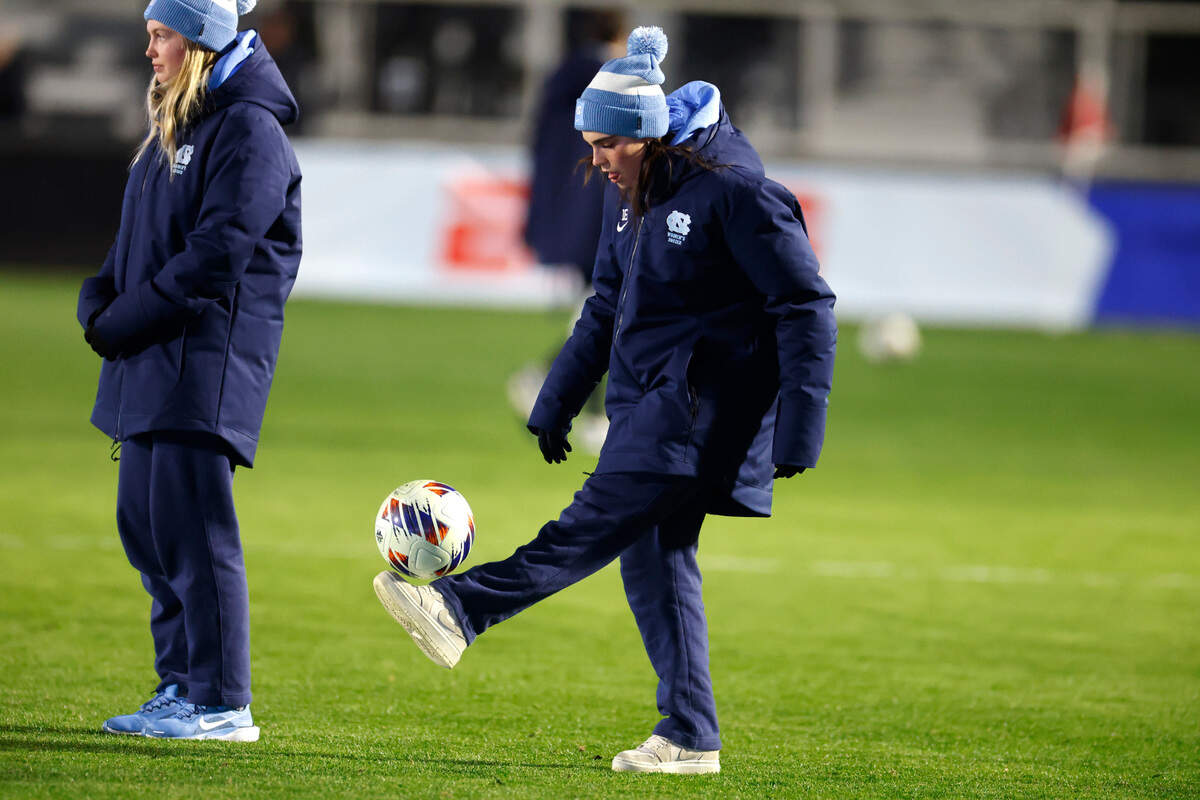
Migli couldn’t play contact due to her blood thinners, but otherwise resumed activities as normal, per her doctors’ advice. Five days after her stroke, she was running again. A few days after that, she visited a nearby field and kicked the ball around with her father. From there, she eased further into training.
Once at UNC in the fall, the team followed a strict protocol to ensure Migli protected her health. When it came time for the dreaded beep test — a shuttle run drill used to measure a soccer player’s aerobic fitness — the North Carolina coaching staff reassured Migli. Just do what you can, they told her.
“Probably the least pressure that I’ve felt before a beep test honestly,” Migli said. “But [I was] still pretty nervous because I hadn’t been able to really run and train.”
But, roughly six weeks after her stroke, Migli passed the beep test.
“I’ve had a lot of players in the past try to duck their fitness test for a lot more benign reasons,” former UNC head coach Anson Dorrance, who retired in August, said, “and here she is — she climbed out of a stroke and she didn’t duck it. So right out of the gate, my impression of her was, ‘Holy cow is this kid tough and brave.’”
After recording limited minutes in the preseason, Migli earned a role as a starter in August and was averaging roughly 60 minutes a game. It seemed everything would work out.
Migli had overcome both an ankle and knee injury at Duke. She could do this too, right?
“It was like, just try and push through,” Migli said. “But I think when it’s a brain injury, it’s a lot different, and I don’t think I realized that until it was slapping me in the face.”
‘So not like me’
Terry Foley, Migli’s youth coach, met the budding soccer star when she was 11. He said, even then, there was never a tackle she didn’t want to make.
“That can be good and that can be bad,” Foley said. “She is such a fierce competitor that sometimes she’ll go into a tackle when she probably shouldn’t have. That’s what makes her special.”
A big part of Migli’s identity — as a person and player — was built around her grit. She prided herself on being tough. Migli had played an entire season at Duke on a hurt knee with virtually no cartilage. Later in her career, she played through two torn ankle ligaments.
But as her symptoms started to impact her off the field, Migli began to think more seriously about her future.
“I had started having a hard time living a normal life outside of soccer,” Migli said. “Things like, after practice, not wanting to get up out of bed to brush my teeth and wash my face, which is so not like me.”
On the road at Syracuse on Sept. 22 — coming off a 71-minute performance at Pitt days earlier — Migli found herself unable to sprint. She distinctly remembers one point in the game when an Orange player streaked past her. Despite Migli’s best efforts, she couldn’t catch up. She had chills and shakes. Something just wasn’t right.
“I was like, ‘Wow, I can’t get myself to do things that I’m trying so hard to do,’” Migli said with a laugh. “Like I couldn’t hit a sprint.”
Then came the UVA game five days later. After the contest, Migli found her parents along the fence and admitted, “Guys, I don’t think I can do this.”
They agreed to talk more at dinner, but Migli had already made up her mind.
She informed interim head coach Damon Nahas of her decision the next morning, and he reassured her. He told her how much she meant to the team. He highlighted the influence she could continue to have from the bench — if she wanted.
Migli doesn’t cry often, but she did that weekend. She was disappointed, upset, frustrated — but also relieved.
“I think this has been a big lesson in knowing when to push and when to take a step back,” Migli said. “Doctors and trainers and family and friends can have their own opinions but only you know what your body needs — whether that’s to keep pushing or to take a step back.”
‘A big lesson’
Friday, when No. 1 seed Duke and No. 2 seed UNC squared off in the College Cup semifinal in Cary — pitting Migli’s former team against her current one — the defender was watching from the sideline.
And when the Tar Heels upended the Blue Devils, 3-0, to reach the NCAA championship match, Migli’s season continued.
You see, Migli hasn’t completely stepped away from the action. She’s been working closely with sports performance coach Elena Cantu to produce analytics and track player load management.
Even though her role has changed, Migli continues to lead by example.
She and Wojnovich still drive to practice every day. She still sits through film sessions. She still cheers as loud, if not louder, than her teammates and helps warm up goalies before games. In the lulls of matches, she pulls aside younger players to offer pointers.
“She built a platform and an expectation for this team in terms of grit and resilience,” Wojnovich said, her voice breaking with emotion. “I [told her], ‘It’s OK to tap out.’ Because you’re not tapping out mentally — you’re just tapping out physically.”
But Migli hasn’t fully tapped out. Sources confirmed, with a hint of sheepishness, that Migli joined a Saturday training session just last week.
“She just hopped right in,” Wojnovich said. “It was like nothing had changed.”
But of course, everything has.
Migli always dreamed of playing professional soccer. Now, as she adjusts to her new reality, she’s exploring other paths forward. Migli said she’s intrigued by the business side of sports, and Wojnovich, along with others, believes she has the qualities to excel as a coach one day.
For now, though, Migli is focused on enjoying the final moments of her college soccer career — even as she embraces a new perspective.
“I’m a lot more grateful for each and every day,” Migli said. “I try to call my grandparents more and call those friends I haven’t seen in a while. Before this, I’d always been someone who was like, you can push through whatever physical thing it was. I think this has been a big lesson.”
Stepping back isn’t a sign of weakness, Migli has learned. It’s a different kind of strength.
This story was originally published December 6, 2024 at 5:00 AM.