As House settlement spells end for UNC JV basketball, alumni express regret
AI-generated summary reviewed by our newsroom.
- UNC ends 52-year JV basketball tradition due to NCAA roster cap from House case
- Settlement mandates 15-player limit, eliminating JV alongside varsity rosters
- Former coaches, alumni mourn JV loss as casualty of evolving college athletics
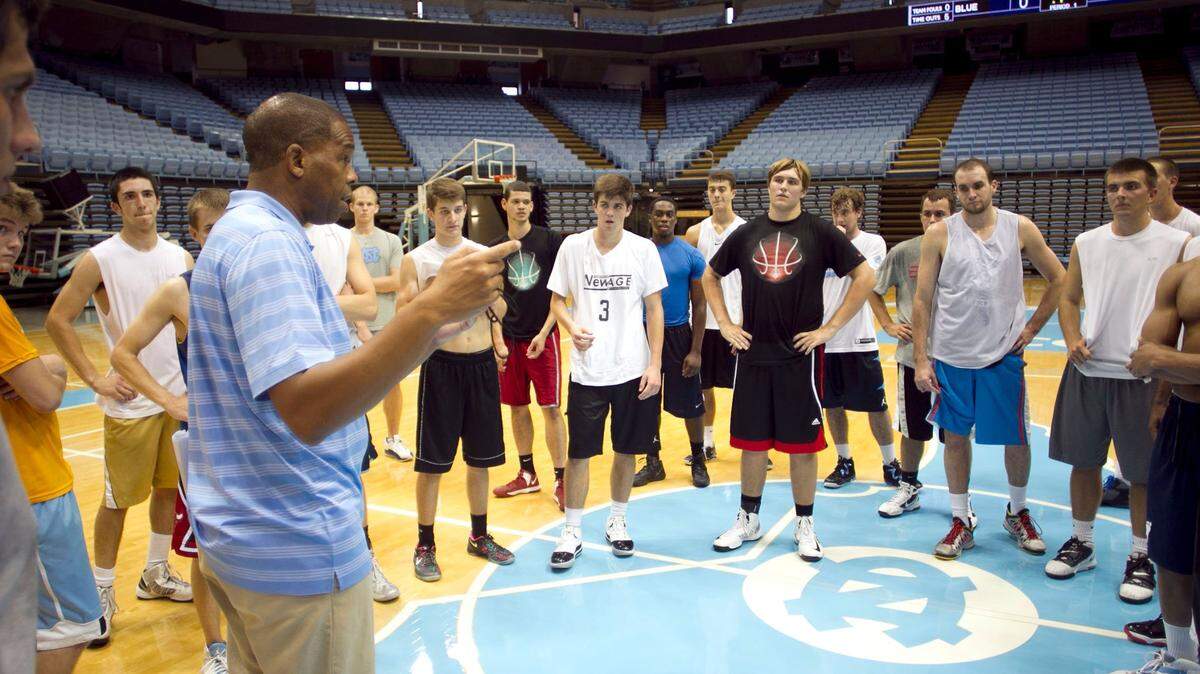
It’s the time of year, at the end of every summer for 52 years, when the call would go out — in dorms, at Woollen Gym, and in more recent decades on North Carolina’s website.
Interested in playing junior varsity basketball?
Any full-time male student could try out and become a part of the basketball program, albeit a tiny one, and the luminary careers of many future celebrity North Carolina walk-ons started that way.
When classes start Monday, there will be no word to spread. When September rolls around, there will be no meeting to attend. When basketball season arrives, there will be no tryouts, because for the first time in five decades, there will be no junior varsity team.
The roster limits in the House settlement with the NCAA, the earthshaking conclusion of the landmark lawsuit that opened the door to pay players directly, inadvertently killed it.
“It sounds like this is the end of it,” said Roy Williams, who coached the JV team under Dean Smith long before he became head coach at Kansas and then UNC. “It’s a sad, sad day for me.”
When freshmen became eligible in the fall of 1972, spelling the end of freshmen teams — a year earlier, North Carolina’s freshmen beat David Thompson and N.C. State in front of a sell-out crowd — Smith chose to keep the idea alive as a junior-varsity program, with freshmen and sophomores forming a competitive, self-replenishing pool of future varsity walk-ons. Later, players could extend their JV careers as juniors and seniors ... but they still had to try out every fall.
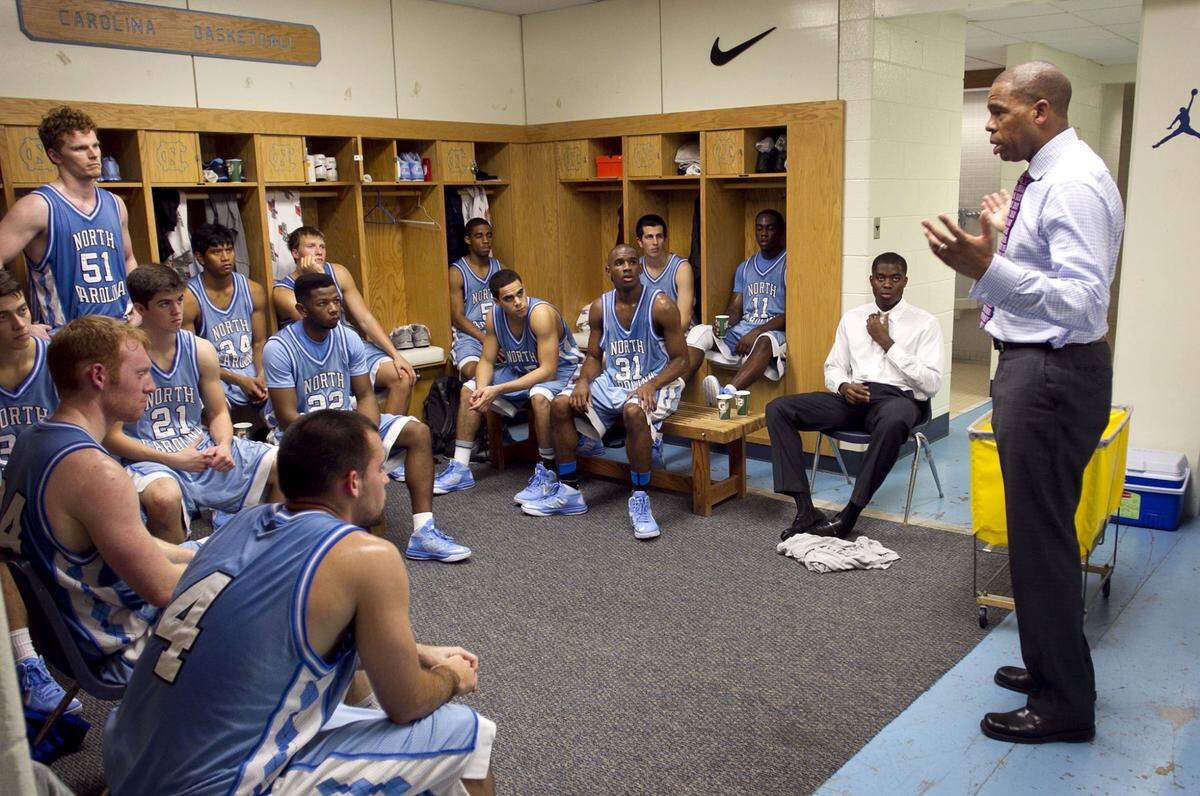
The JV program Smith started two generations ago, an enduring quirk of North Carolina basketball, played its last game on February 22 at the Smith Center. The players knew it at the time. They doused head coach Marcus Paige with water in the locker room afterward, the final wreath-laying as one of the traditions that made UNC basketball UNC basketball died a quiet death.
“It wasn’t really any type of sadness or anything super-sentimental like that,” said Isaiah Joyner, a sophomore on the final team. “We were really just enjoying it, our last time playing together, our last time at the end of a fantastic season. It was more we were just having a lot of fun. It was the last time all of us would play together or play for Marcus, but it was more like a celebration.”
The university says the terms of the House settlement preclude the continuation of the JV program, because the mandated men’s basketball roster limit of 15 applies to all programs, varsity or junior varsity or otherwise. The concern, not stated publicly by the NCAA, is that other schools could start JV programs specifically to hide players and circumvent the roster cap.
It is of no consideration that North Carolina’s JV team is a beloved anachronism, lingering from the program’s most glorious and memorable period into a very different era of college athletics.
“The House settlement, whoever put the numbers together, basketball is 15 and that’s it,” UNC basketball spokesman Steve Kirschner said. “It does not account for some on varsity and some on JV. You have a cap of 15, period.”
A program that once created a path by which any would-be men’s basketball player on campus could one day play for North Carolina, for real, however slim the chance may be, has become the victim of unintended consequences.
UNC JV a source of ‘great pride’
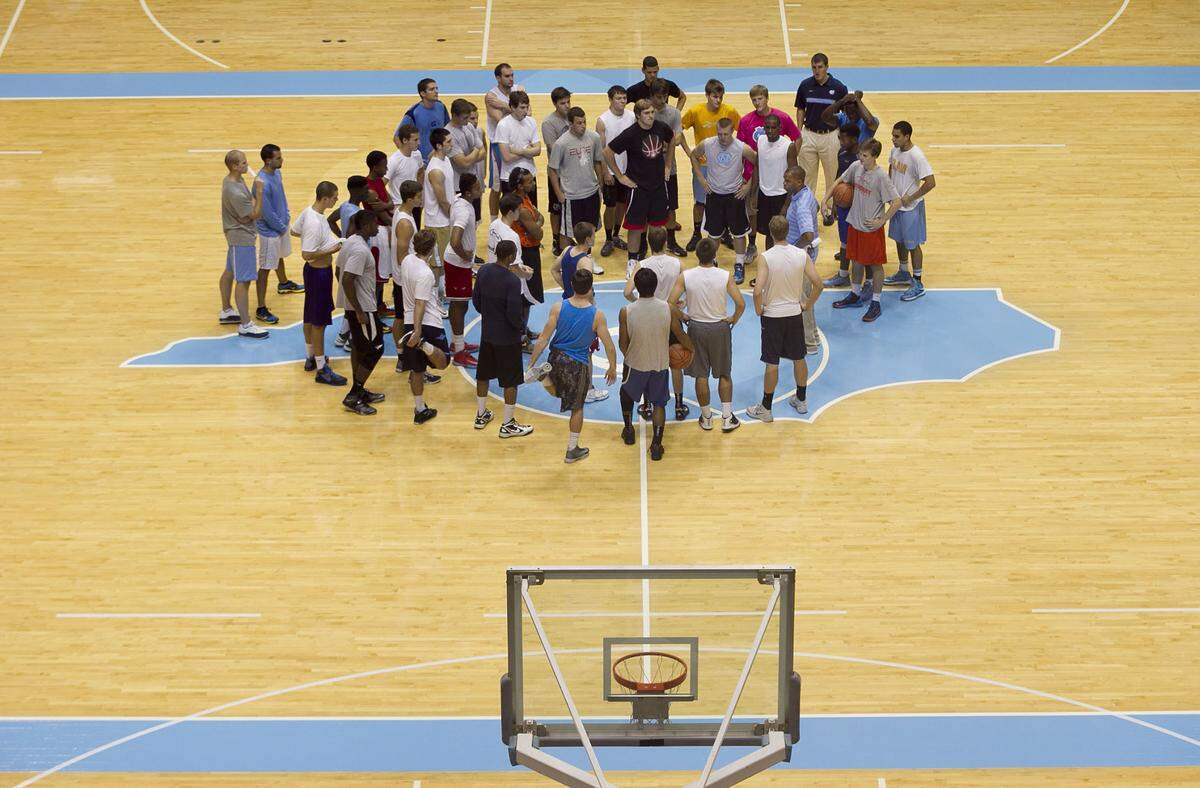
Over the years, the JV program launched hundreds of careers, in basketball and otherwise, by allowing players who loved the sport but weren’t ACC-caliber talents to immerse themselves in one of college basketball’s most famous programs, to occupy the distant orbit of some of the sport’s legendary coaches.
Fletcher Gregory grew up in tiny Weldon, in Halifax County, dreaming of playing for Smith. His high-school coach encouraged him to play Division III basketball, but he insisted on going to Chapel Hill. Gregory made the JV team as a sophomore in 1975, then spent his final two years in college as a statistician for Smith. Along the way, he changed his major from economics to education and landed a job as a high-school head coach immediately after graduation, at Virginia Episcopal in Lynchburg.
Later, he was a graduate assistant at Penn State, the longtime coach at Forsyth Country Day and an assistant coach at Wofford before Dick Harter, his head coach at Penn State, made him a part of his first Charlotte Hornets staff in 1988. What became a 15-year coaching journey started on North Carolina’s JV team, playing for Eddie Fogler.
“Dean Smith was a role model for me the way he handled himself, and to be a part of the Dean Smith Carolina program was the best place a young basketball mind and basketball player could be,” Gregory said. “I just wanted to learn as much basketball as I could and I was fortunate enough to be able to play at the JV level. I had no shot, zero shot, at playing at the varsity level.
“For me it was just the experience of being in the middle of one of the best college basketball programs that existed at the time, soaking it all up, just trying to be a sponge. I started working the camps, summers, all that stuff. It was just a dream come true. People that know me know I played JV. They ask me about it sometimes. It’s something I hold with great pride.”
For the love of the game ... and Dean Smith
Gregory was far from alone. While North Carolina basketball at large served as a springboard to the NBA, playing in the ACC on national television, the junior-varsity program played a hodgepodge of junior colleges and Division II and Division III schools while serving a springboard for doctors, lawyers, politicians, financiers, high-school coaches, CEOs — and even a Hollywood stunt man.
“JV was an education. It was hope,” that stunt man, Sean Kelly, said. He just published a book about his experiences in the movies, “A Different Take,” and played on the JV team in 1976 and 1977 as a self-described “5-9 power forward.”
“You were still part of playing organized basketball. You were representing North Carolina, and anyone that played JV basketball just loved the school. That was the priority. We all loved Dean. We all just wanted to contribute.”
United by their love of the game and love of the team, they were able to see themselves contributing to the success of the larger program, whether they eventually made the varsity team as a walk-on or not — and some of the walk-ons, especially late in the Williams era, became famous in their own right (Blue Steel! Biscuit Boys!) as they were often the ones pushing the score into triple digits to secure free food for the students.
The JV alums at the end of the bench often became instant celebrities during the postseason. Dewey Burke advanced from the JV team to become one of Williams’ beloved “tough little nuts” in 2007. Jackson Watkins, who appeared in seven games for the varsity team in 2022 and 2023 after rising from the JV squad, is even writing a book about his experience: “Dream On.”
Just as with the varsity players, the connections between generations remain strong. Joyner’s academic advisor with Honors Carolina is former UNC basketball player Michael Norwood, who started his career on the JV team.
“The only JV player that ever contributed playing-wise, meaningfully, to the varsity was Pearce Landry,” said Brendan Kelleher, a JV player in 1989 and 1990 who is now a financial planner in Charlotte. (Landry became a regular part of the UNC rotation as a senior in 1995.) “I don’t really think that’s where the real benefit is. The program has a culture that was developed essentially by Dean Smith, and that culture is: We build organically. We build from within. We’re a family. Coaches have lineage and connection to the university. Now, we’re kind of at a crossroads.”
Building players, and coaches
The JV program proved just as valuable for aspiring coaches: Hubert Davis coached the JV team, just as Williams and Fogler and Bill Guthridge and so many Smith assistants did before him, and Williams’ assistants did under him. In recent years, C.B. McGrath and Jerod Haase became head coaches of their own programs. Paige, who went 12-1 in his only season as the final JV coach, may someday as well.
Williams has been through this before. When he arrived at Kansas in 1988, one of his first actions to put his stamp on the program in Lawrence was to start a JV program like Carolina’s — only to have it wind up two years later when the university decided it created a Title IX issue.
Coaching the JV team in Chapel Hill was essential to his growth as a coach, but Williams also believes it created a bond between the basketball team and the campus at large that doesn’t exist elsewhere.
“For me, it was a wonderful experience,” Williams said. “I still have the idea that everybody that comes to school at North Carolina should have a chance to try out for the basketball team. It gave Roy Williams the young coach another chance at some experiences I would not have had.”
Joyner, who grew up in Asheville and had scholarship offers from smaller schools, found out about the JV team while working at North Carolina’s basketball camp between his junior and senior years of high school. He got an academic scholarship to UNC’s Kenan-Flagler business school and decided he wasn’t done playing basketball.
He intended to keep playing this year, but the team slowly found out in trickles and drips over the course of last season that they would be the last JV team. No one had officially said anything to the players yet when Joyner heard it mentioned during an ESPN broadcast. But by the time February rolled around, they all knew.
“It’s going to be a big adjustment for me,” Joyner said. “I was so used to managing my time around being in the gym for 2-3 hours a day. Now I just have all of this time. I guess I can focus on other things.”
Is the House settlement a pretext?
Some JV alums remain convinced that the House settlement is just a pretext for the athletic department to terminate a program that costs money but doesn’t generate any. Other anomalies elsewhere in college sports, meanwhile, were given accommodations in the settlement agreement.
Schools like Johns Hopkins and Colorado College that play two Division I sports while the rest of their teams are in Division III opted into the House settlement, but it only applies to their Division I teams. There’s even a specific carve-out in the NCAA’s new post-House bylaws for the male practice players on women’s teams.
Ben Siegel, a lawyer for Hagens Berman, the lead law firm representing the House plaintiffs, told The News & Observer that the roster limits in the settlement “apply to NCAA Division I sports,” but acknowledged he didn’t know enough about UNC’s JV program to address how that language applies to it specifically.
An NCAA spokesperson said that “the legislated roster limits apply to NCAA teams that will compete for an NCAA championship and only at schools that have opted in to the House injunction” but did not immediately respond to a request for clarification whether that applies to all players in a single sport — including a junior varsity team like UNC’s — or only varsity athletes in that sport.
At any rate, the university considers the matter settled, so none of that changes the reality that junior-varsity basketball at North Carolina passed quietly into the past on a Saturday in February with one last win at the Smith Center, hours before the varsity team beat Virginia on the same court.
Few fans ever actually saw the JV team play, but it was something unique to North Carolina, a decades-long homegrown brain trust inculcated in the lore of the program, an entire cadet branch of the Carolina Family. Its passing, for whatever reason, accelerates the overall homogenization of college athletics, the slow transition into professional teams that wear a college logo but otherwise have scant ties to the universities they purport to represent.
Some of that was inevitable, the product of a system overflowing with money that was eventually going to rebound to the players who generate it, exacerbated by the NCAA’s unwillingness to acknowledge that reality until it was forced upon it by courts and legislatures. Still, there’s so little left in college sports that remains pure and true and honest that losing any piece of it feels like a tragedy.
“I would never have been good enough to get a scholarship to play Carolina basketball,” Joyner said. “The fact I could be involved in the program was so special, so unique to Carolina. If you would have told me in 2016, watching basketball, that Marcus Paige would be my coach someday? Insane. None of us are going to be NBA players. We’re future doctors and businessmen, but we had the ability to have a similar college experience.”
Progress carves a wide swath, but this feels like an unforced error. The loss of the JV program may leave a void few will notice, but it will alter the foundation, and direction, of North Carolina basketball forever.
Never miss a Luke DeCock column. Sign up at www.newsobserver.com/newsletters to have them delivered directly to your email inbox as soon as they post.
This story was originally published August 15, 2025 at 5:30 AM.