
UNC’s big gamble: Will Belichick’s TCU debut live up to the investment?
AI-generated summary reviewed by our newsroom.
- UNC committed $50M to hire Bill Belichick, signaling an all-in football gamble.
- Football investments drove record ticket sales and $18.1M in fundraising gains.
- Faculty raised concerns over athletic spending amid $70M academic budget cuts.
Rick Steinbacher still gets goosebumps thinking about it, even decades later.
In October 1992, the former UNC linebacker watched fans storm Kenan Stadium after the Tar Heels upset No. 19 Georgia Tech — the second of two straight top-25 wins.
“I just remember standing on the field watching the students tear down the goal post [and] thinking, ‘All right, this is good,’” Steinbacher said. “We’re getting there.”
As a state trooper led UNC coach Mack Brown through the raging crowd on that day, he quipped, as The Daily Tar Heel reported at the time: “Big-time college football is back in Chapel Hill. [Athletic director] John Swofford said we can afford new goal posts.”
Steinbacher, now UNC’s senior administrator over football, has been part of the university’s decades-long effort to enhance the sport — to bring “big-time college football” back to Chapel Hill for good.
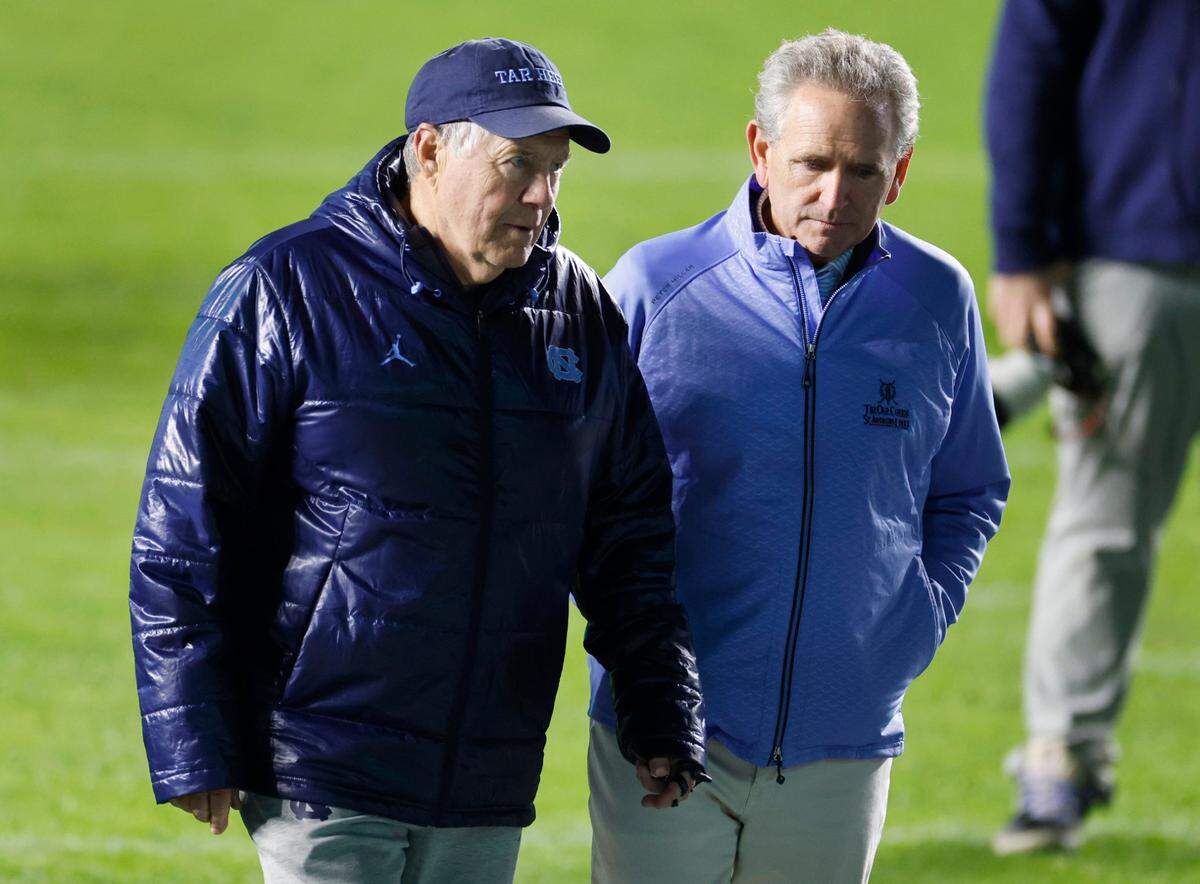
This season, with Bill Belichick as the head coach, the chase looks different. Because after years of sustained football mediocrity, the university is going all-in, throwing a $10 million annual salary at the six-time Super Bowl champion and hoping, maybe praying, the 73-year-old can change things. It’s a massive gamble. Even athletic director Bubba Cunningham has called it a risk. But in an era where football drives conference realignment and money flows directly to players, UNC couldn’t afford to stand pat.
North Carolina’s season-opener against TCU on Monday is more than just a fresh start for Belichick. It’s an inflection point — not just for the team, but the athletic department, the university and even Chapel Hill itself.
Monday marks UNC’s new mortgage on its future. The risk? That even the greatest pro coach alive may not be able to cash in.
Under a bad star
Freddie Kiger has to think, really think, to remember a time North Carolina football had this much national buzz. Sitting at Top of the Hill Restaurant & Brewery, the 1974 UNC grad and local historian sips his Old Well White, letting his memory drift.
Past the mid-90s under Brown. Past the early 80s under Dick Crum. Past any other, less memorable, blips and eras of presumed “greatness.” All the way back to the 1940s.
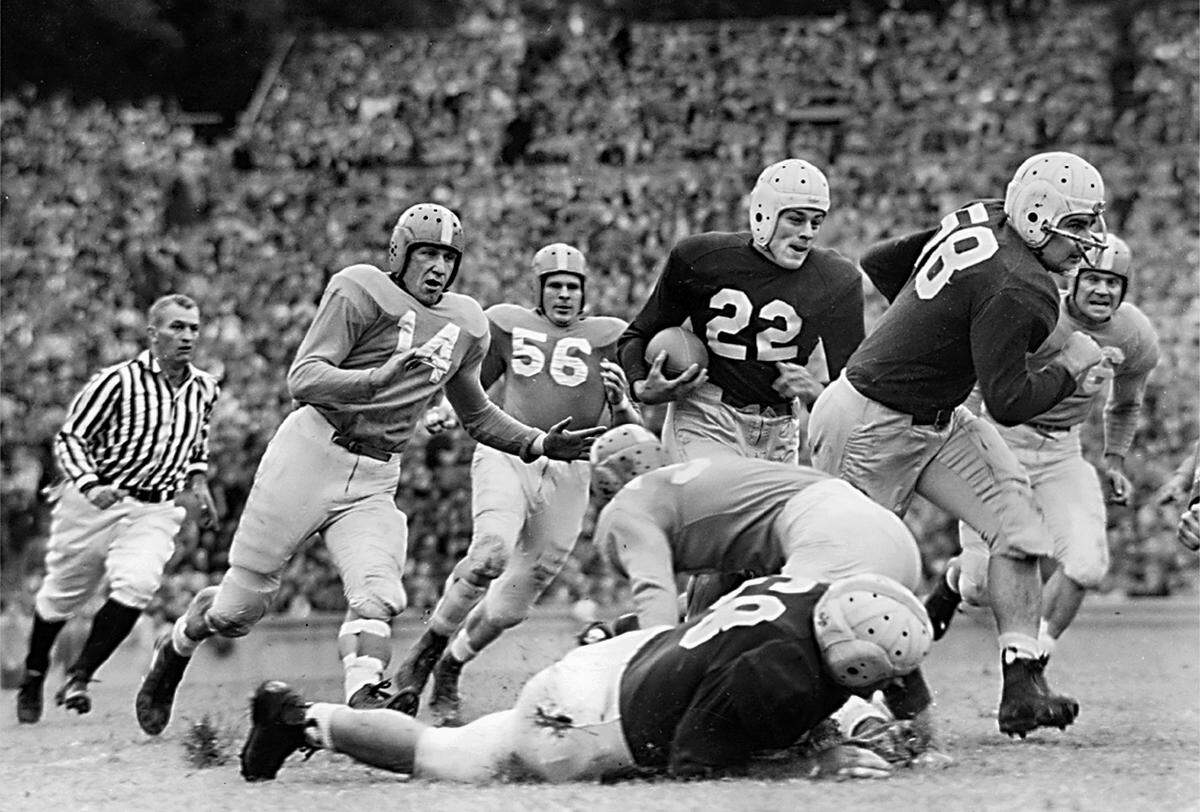
Maybe it hasn’t been this way, Kiger said, since the Charlie “Choo Choo” Justice era. Justice led UNC to three straight top-10 finishes and became a local legend, with The DTH’s Billy Carmichael III writing in 1949 that the university had never “produced a greater hero or champion.”
Or maybe there was a similar buzz when Maryland coach Jim Tatum returned to his alma mater in 1956, guiding the Tar Heels for three seasons before his untimely death in 1959.
“The poor man, as he’s getting the program established, dies of Rocky Mountain spotted fever,” Kiger lamented, “You know, sometimes you think it’s like we’re under a bad sign, or a bad star or something.”
Even with those flashes of glory, Kiger stresses — and most would agree — there’s never “been any kind of national craze about a new coach.” Not like this. And it’s not for a lack of trying.
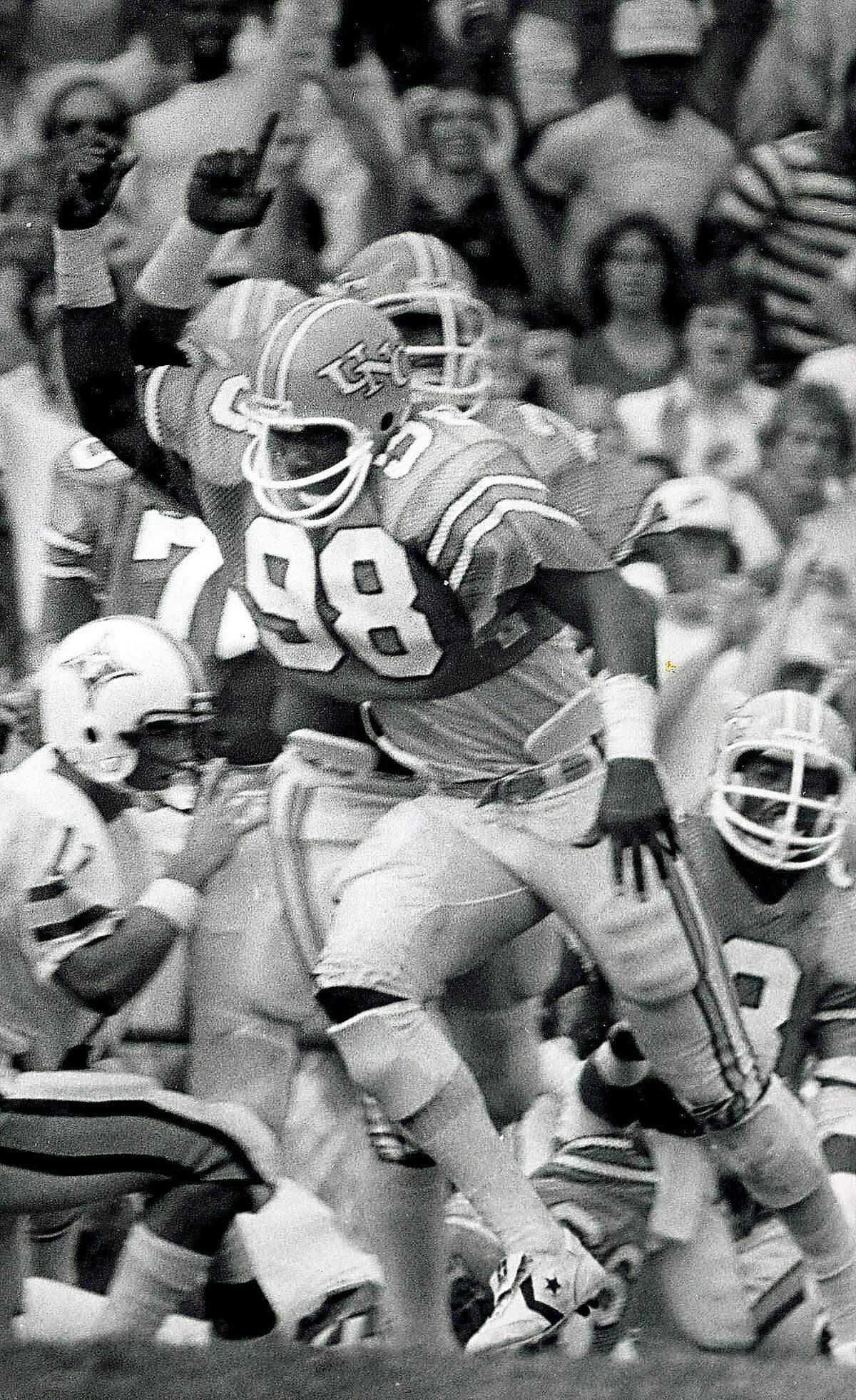
Since the Tar Heels’ last ACC championship in 1980 — when Lawrence Taylor anchored the defense — North Carolina has tried repeatedly to awaken the so-called sleeping giant, only to cycle through eras of hope and disappointment.
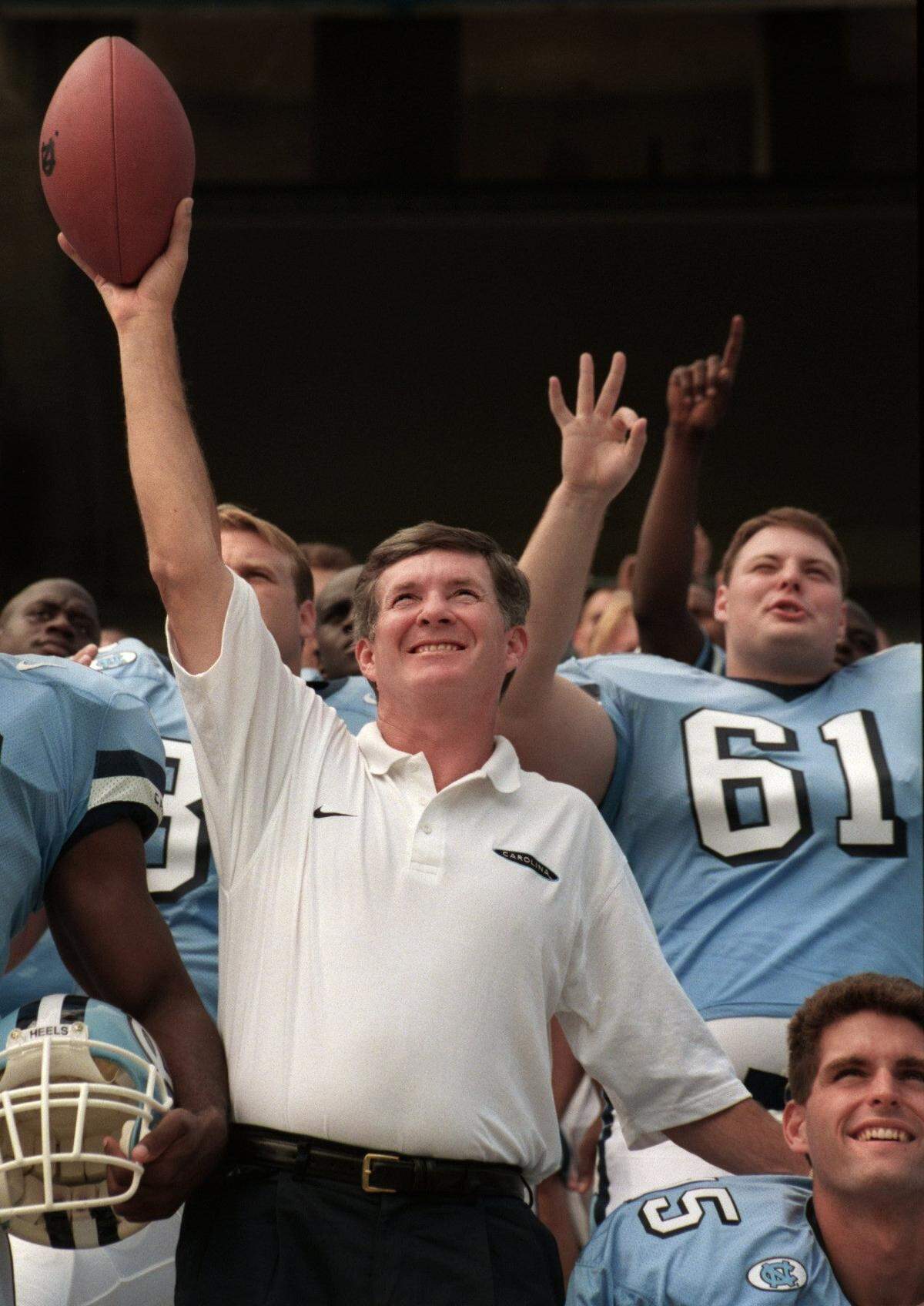
Brown’s first tenure restored some relevance. He lifted the Tar Heels to their highest AP finish of the modern era — sixth nationally in 1997 — before leaving for Texas, where he won a national title in 2005.
Butch Davis’ arrival in 2007 ignited hopes of a breakthrough, only to collapse in the academic-athletic scandal that triggered years of NCAA scrutiny.
North Carolina fired Larry Fedora — who battled the sanctions hangover from Davis’ years — after two straight nine-loss seasons in 2017 and 2018. And most recently, Brown returned to Chapel Hill in 2019 and brought recruiting acumen and stability but not sustained contention — certainly not “big-time college football.”
Those hires, as with Belichick, came alongside university investment. UNC began construction on the Frank Kenan Football Center in 1996, reaching a capacity of 58,000 in 1997 and 60,000 in 1998.
In 2011, UNC opened the Loudermilk Center for Excellence, as well as new premium seating — AKA the “Blue Zone.” The Tar Heels began practicing in their newly-built indoor practice facility in 2018, which was named after Bill Koman following the Koman family’s record-breaking $15 million gift to the Rams Club and UNC athletics in 2020.
More recent updates include a $15 million expansion of the football center in 2022-2023. There are still numerous naming opportunities available on the Rams’ Club website, ranging from $100,000 for a cryotherapy room to $1 million for the sports medicine area.
So, with all this money being thrown around, what’s different this time?
“There’s absolute alignment on the campus right now,” Steinbacher said. “We want football to be successful ... the alignment we have right now from the chancellor’s office to athletics to the Rams Club to the university community — I’ve never seen better alignment of everybody knowing what it is we’re trying to build here and how important it is for it to be successful.”
Going all-in
When North Carolina lured Belichick to Chapel Hill in December, it inked a $50 million, five-year contract with the coach. Belichick’s yearly salary is part of a football budget projected to cost UNC roughly $40 million this year, when factoring in assistants, support staff, strength coaches and potential bonuses.
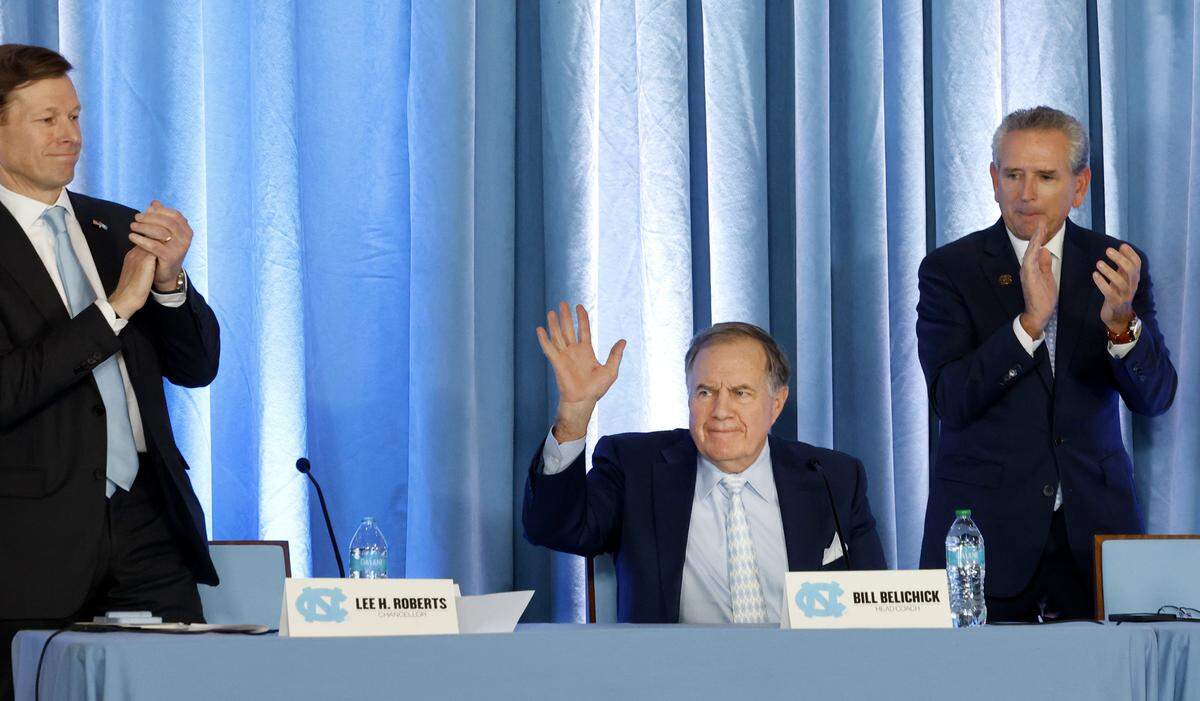
The investments extend far beyond salaries. Email correspondence from April 1 obtained by The N&O between Steinbacher and Cunningham indicate that more than $2.6 million has been spent on football facilities since Belichick’s hiring — including $1.9 million to convert the field from turf to natural grass, $358,902 for a camera system and a control room at the practice complex and roughly $150,000 for a virtual reality quarterback training system. That same email references $900,000 in dorm renovations for football and women’s basketball suites.
Steinbacher said these projects were all funded by the Ram’s Club, and credited Belichick as a driving force behind many of these changes.
“He’s really challenged us to improve players’ dorm rooms,” Steinbacher said. “He’s challenged us to feed them better and feed them more healthfully. We’ve purchased new technologies we’ve never had before. … It’s just really neat for me to watch Coach Belichick, because he has this awesome vision for what it takes for players to be successful.”
This scale of spending is new for UNC. The school has long prided itself on avoiding the big-money arms race in college football.
But not anymore.
The university contributed $14 million to athletics in direct institutional support for the 2023-24 fiscal year and $5 million the previous year, according to its annual financial report to the NCAA. Prior to that, the university had not contributed direct payments to the athletic department, a school spokesperson confirmed.
Cunningham said “the transfers helped us create a surplus that allowed us to prepare for future investment.” The AD, as well as Chancellor Lee Roberts, framed this strategy as necessary. Lawsuits requiring schools to share revenue with athletes, among other changes, has made UNC’s more reserved approach of years past unsustainable.
“If we’re going to be elite in college athletics in a new era, we have to do things differently,” Cunningham said.
To cover impending costs, UNC has also had to shift its mindset on revenue generation. Higher ticket prices, expanded alcohol sales and hosting international soccer matches and concerts only go so far. With media rights already locked in through the ACC, donations and corporate sponsorship are central to North Carolina’s financial future.
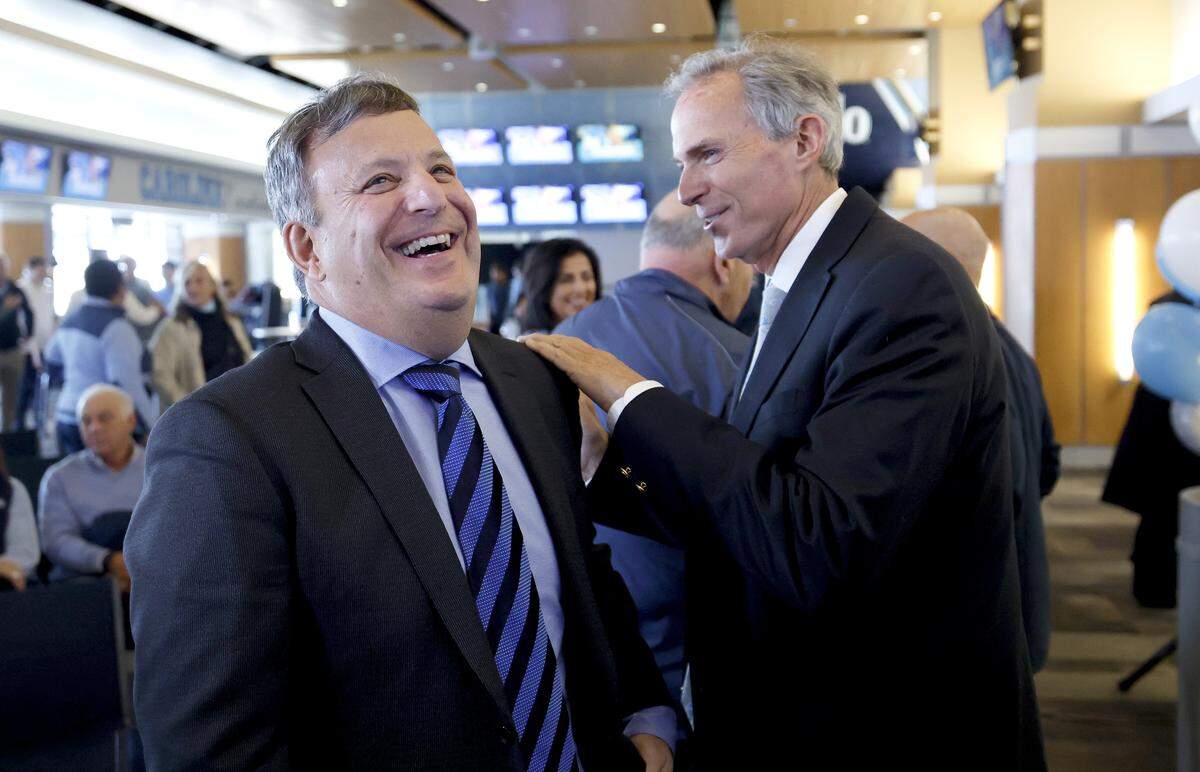
A string of recent hires — general managers Michael Lombardi and Jim Tanner, future AD Steve Newmark and UNC’s first chief revenue officer Rick Barakat — signals the athletic department’s pivot toward a more corporate, professionalized approach.
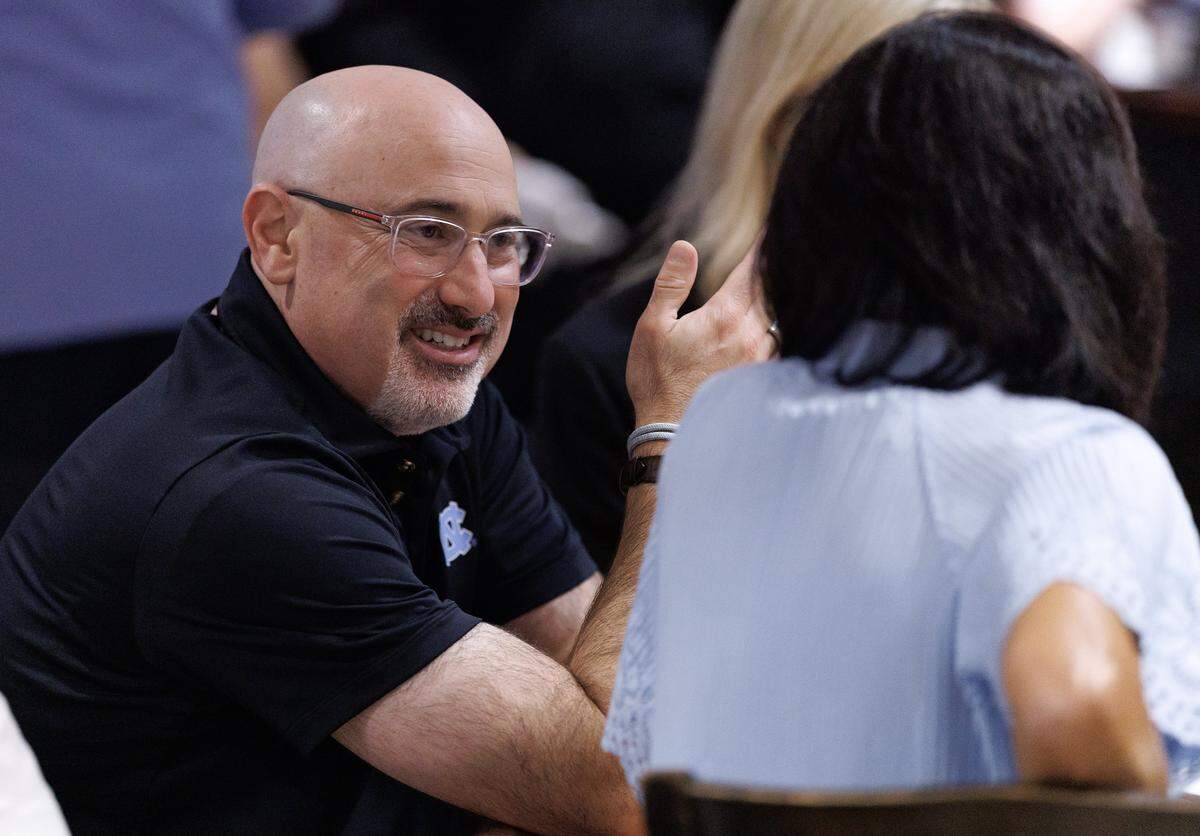
Barakat, too, sees his new role as indicative of the changing times. New initiatives such as Chapel Thrill, an attempt to reinvigorate UNC’s campus-wide gameday culture, are early examples of the CRO’s vision.
Chase Rice, a former North Carolina football player and country music artist, will headline the first of several pregame concerts. An expanded Modelo Kickoff Club — an example of partnering corporate sponsorship with integrated experiences — will feature dedicated student tailgate areas, food trucks and large LED screens around Polk Place.
“This really kind of goes for the whole ecosystem,” Barakat said. “Just renewed pressure, emphasis on maximizing the current revenue streams that are part and parcel to athletics.”
‘Not a minor league’
Crum, the last coach to win an ACC title at North Carolina, used to say the school wanted to be “Harvard from Monday to Friday and Oklahoma on Saturday.”
Holden Thorp always hated that expression. The former UNC chancellor (2008-2013) said he heard it a lot from boosters.
“It’s basically just a rationalization that says, ‘I want to be competitive at sports, but I don’t want to give up my claim on my Ivy-ish identity,’” Thorp said. “And guess what? You have to be the dadgum University of North Carolina seven days a week.”
But that line from Crum, half quip and half lament, still resonates.
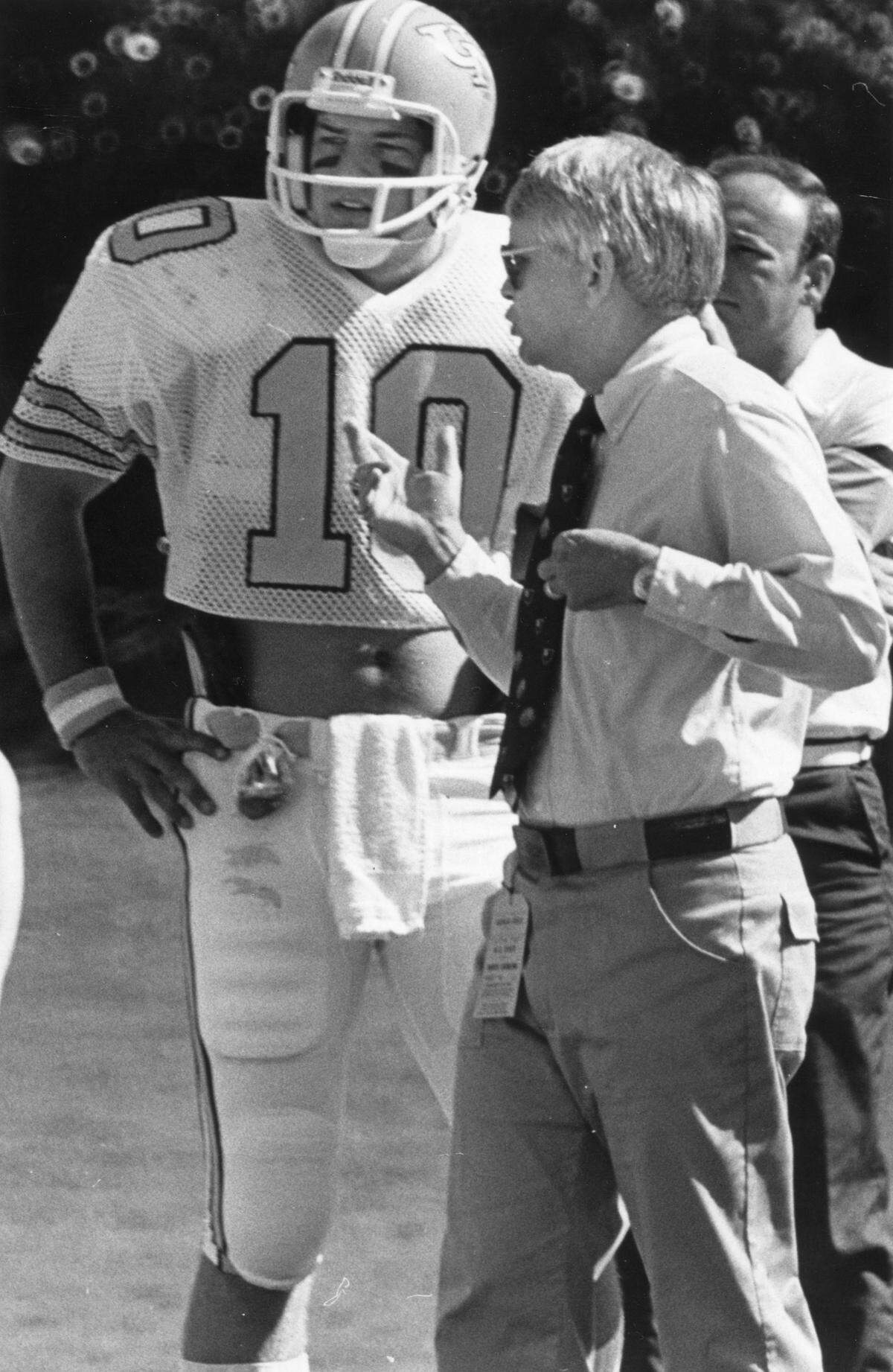
This offseason has seen UNC — a school long defined by academic prestige and basketball tradition — pour unprecedented sums of money into football at a time when higher education budgets are already strained.
It’s “an unfortunate coincidence and timing,” said Aimee McHale, the 2024-25 chair of UNC’s faculty athletics committee.
At a UNC Board of Trustees meeting July 30, campus leaders announced $70 million in proposed cuts — about 2% of the university’s operating budget — amid federal funding reductions and the state’s recent failure to pass a full budget bill.
McHale said professors have two main concerns in this moment. First, they want assurance that athletes — especially those in high-profile, revenue-generating sports — can still prioritize education. Second, they want the university’s image to emphasize that it is, first and foremost, an academic institution.
“Not a minor league for some professional sports league,” McHale said.
Emails obtained by The N&O between UNC professors and school leaders reflect McHale’s assessment.
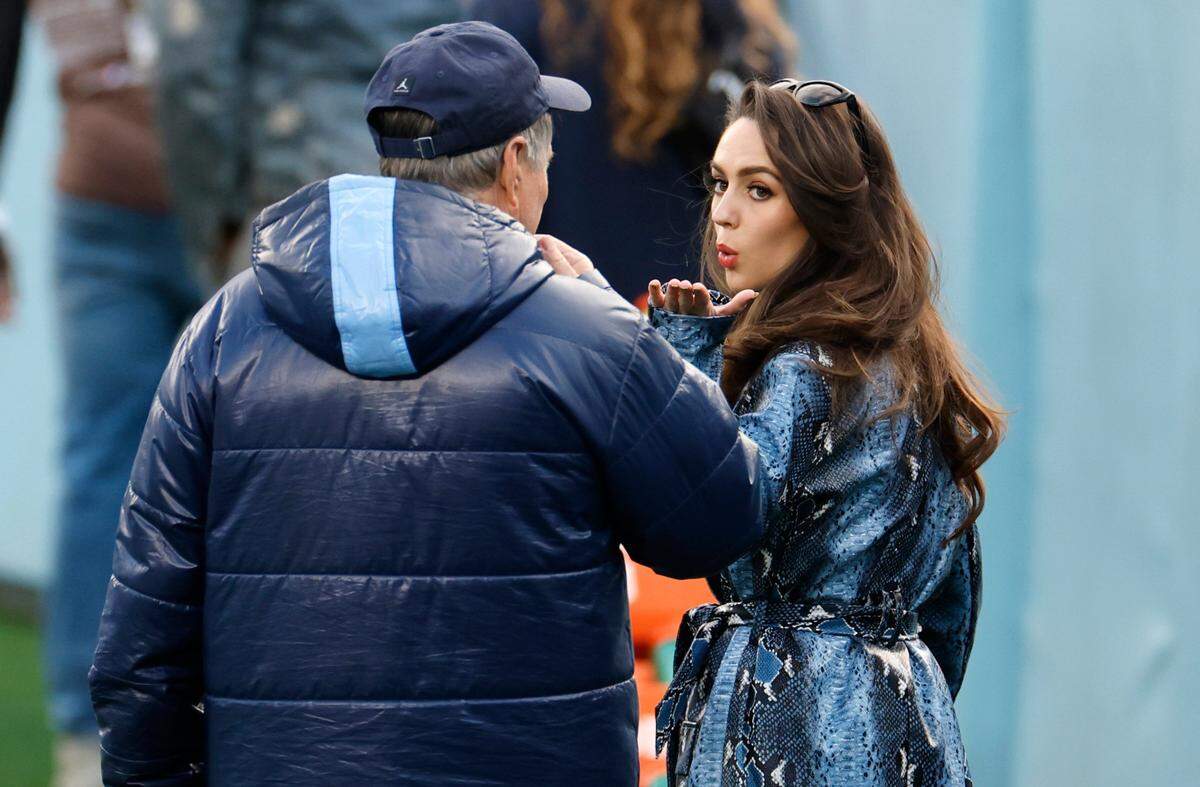
In April, economics professor Peter Norman asked, in an email to McHale and Roberts, “how UNC is suddenly so flush with money?” Meanwhile, law professor Christopher McLaughlin criticized the university’s handling of Jordon Hudson, Belichick’s 24-year-old girlfriend.
As for McHale, her sentiments are “a bit bifurcated.”
She hopes UNC will continue to provide a quality academic experience amid this shift. The policy scholar in her also knows “money is the tail that will wag the dog.” To McHale, high-dollar hires like Belichick are not the thing that has changed — it’s a “symptom of the change.”
“People just continue to sit around and wring their hands and be sad about what college sports used to be, but it’s never going to be that again,” McHale said. “And so either buy your season tickets, pay for the jerseys you want and do all that, or stop watching college sports.”
Thorp agrees. He said nobody tried harder to think about “whether there was a way to do this” than he did as chancellor. In other words, apply the old-school, Bill Friday-esque “Carolina Way” mentality and still win big in today’s landscape.
Amid Thorp’s search for the soul of college athletics he discovered there’s “no free lunch.”
“Every school alumni gets all misty-eyed about how they’re special, but that’s a very dangerous way of thinking about it,” he said. “And, you know, intercollegiate athletics is a tough business. That’s what it is. It’s not a magical thing about your school. It’s people working as hard as they can to do something extremely difficult that everybody wants to do.
And it’s a cutthroat, hard-nosed business.”
‘We’ve been waiting’
Clay Pinney, 34, is a third-generation owner of Sutton’s Drug Store — a Franklin Street staple for over a century. The diner walls are plastered with jerseys and photos of Tar Heels past, snapshots of a sports-crazy community stitched together by hot dogs, banter and quality lunch specials.
But even Sutton’s isn’t immune to hardship. It fought for survival during COVID. Like many Franklin Street businesses, it faces expensive real estate rates and slow summers. Over the years, local mom-and-pop shops such as Sutton’s have given way to chains like Target and Zaxby’s.
“We depend on the sports,” Pinney said. “All of us really want everything to work out.”
Pinney sighed before continuing: “God, we’ve been waiting for our winning football program, like a true winning program.”
Across the street at Carolina Coffee Shop, general manager Kyle Shea, 47, was busy preparing for Monday. Shea has refreshed the menu with new fall cocktails and said the restaurant recently renovated its bathrooms ahead of the season-opener. They’re also adding a beer garden in the side alley for fans to “pound a few drinks” before they head to the game.
Shea, like Pinney, grew up in Chapel Hill. He knows business goes as UNC athletics goes. And while Carolina Coffee Shop has remained financially stable, he believes Belichick can provide a boost for his fellow local business owners.
“Rent on this street is through the roof,” Shea said. “So either you’re crushing it or you’re on your way out. There’s not much middle ground. It’s hard to just sort of stay afloat. But, yeah, I’m hopeful. Hopefully [football season] will be a nice injection for all the local businesses.”
Franklin Street is holding out, but it’s already clear Belichick’s arrival has jolted UNC football’s bottom line.
North Carolina quickly sold out all single-game and season tickets, with a projected jump of $7 million in ticket revenue compared to last year. And that’s before factoring in leases tied to premium seating areas such as the Blue Zone, Touchdown Club and a new section added this year: the Kenan Skybox.
Combined merchandise and concessions sales are projected to add another $750,000. Donor momentum is surging, too. Big-time athletics supporter and Rams Club vice chair Vaughn Moore said Belichick has united the school’s booster base like never before.
Since his hiring, Belichick has attended Rams Club events locally (Raleigh, Charlotte for examples) as well as nationally (Atlanta, New York, Chicago and, of course, Nantucket). Moore said the coach has even traveled to meet donors individually in places like Wilmington. Belichick said he plans to use road trips, like UNC’s visit to Cal in October, to continue to connect with more donors.
So far, the Rams Club has swelled to a record 22,500 members since Belichick’s hiring. They’ve also raised an all-time high $18.1 million in the 2024-25 fiscal year — a 37% jump.
“It’s exceeded what we expected,” Moore said of the attention on UNC football. “This was part of the ‘chips-all-in’ on Bill Belichick. I mean, you get the, arguably, best coach in history. You’re making a big, bold move... all eyeballs are on us and we need to deliver.”
So now it all swings back to Monday. To TCU. The first indicator of whether the millions poured into football and the Belichick experiment can translate to something more than headlines and merchandise sales.
The questions are obvious: Can Belichick and Lombardi make sense of the college game after a total roster overhaul? Can the coaching staff take 70 new players and teach them the fundamentals and schemes in a time frame that even Belichick has admitted is short?
When asked on Wednesday what fans could expect in terms of UNC’s new pregame atmosphere, a sly grin spread across Belichick’s face.
“Well, I want to see us score points and [the defense] turn the ball over, block kicks,” he said. “So we’ll see if we can get that into the gameday manual.”
Unfortunately for UNC, no amount of money can assure that.
Back at Sutton’s, Pinney — like all North Carolina fans — has seen decades of Tar Heel highs and lows. But this moment, with Belichick, feels different. He hopes it is.
“So much is relying on this guy,” Pinney said. “But he has the potential to do it.”
And so Pinney shared a joke of his own, one he and his buddies have been passing around lately. His laugh was lighthearted, yet, carried the weight of the moment.
“It’s either he’s gon’ be Beli-check or Beli-choke.”
This story was originally published August 31, 2025 at 5:30 AM.