
‘I’m running out of time’: UNC football team chaplain’s health fight inspires
AI-generated summary reviewed by our newsroom.
- Mitch Mason, UNC football chaplain, battles multiple rare, degenerative illnesses.
- Mason’s presence spans roles—mentor, counselor and spiritual anchor for players.
- Despite pain and decline, Mason’s resolve and influence remain deeply impactful.
Mitch Mason dragged himself out of bed, with his wife’s assistance, at 7 a.m. on Sept. 18 and began the same routine that now governs the days of UNC football’s revered, and gravely ill, team chaplain.
Just two years ago, the ritual meant swallowing about eight pills as soon as he got out of bed. Now it means grinding each medication into powder, mixing it with water, and pushing the slurry through a syringe into the feeding tube that goes straight to his small intestine, bypassing his stomach.
The ordeal takes 10 minutes if everything goes smoothly. That Thursday morning, it didn’t. The meds triggered another flare-up — episodes that’ve become more and more common for Mason recently — with waves of pain and a severe migraine. Chondra, Mason’s wife, suggested postponing the visit. Mason refused.
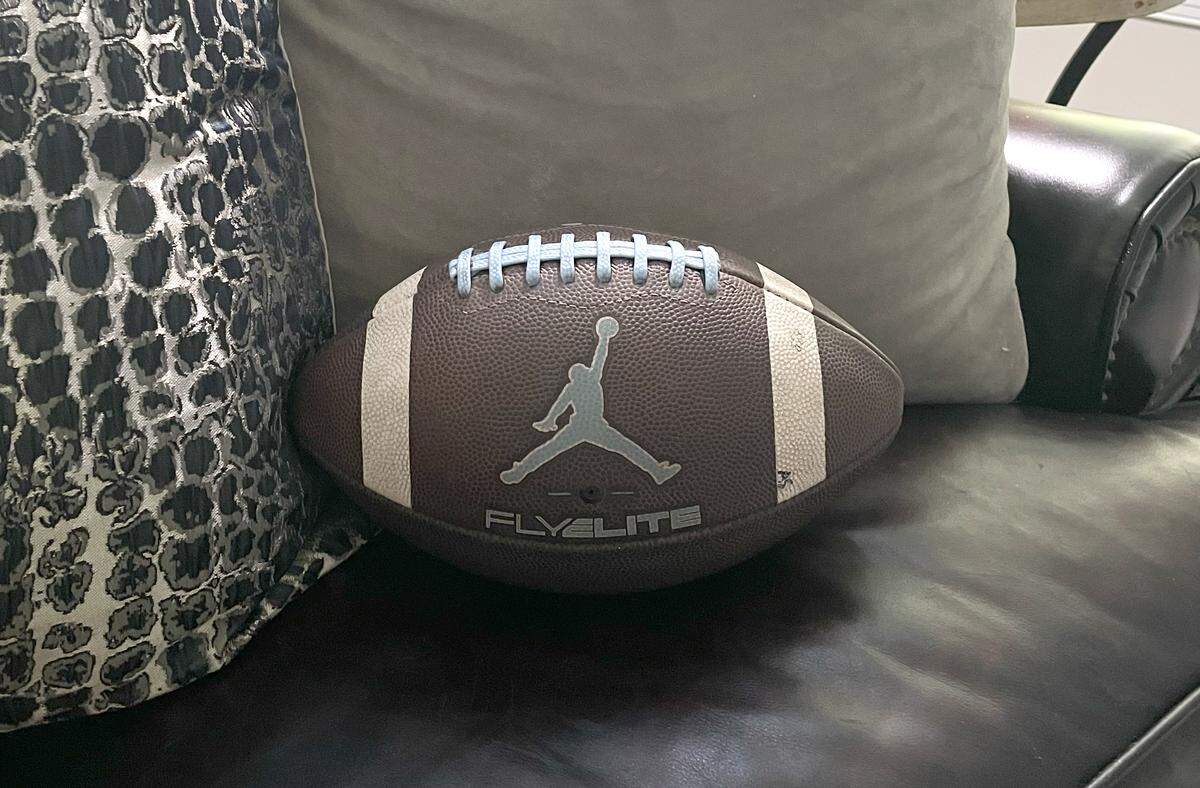
That morning, a small group of players — Jordan Shipp, Austin Alexander, Will Hardy and Kobe Paysour — were scheduled to visit at 8:30 a.m. and deliver the Richmond game ball.
And so there Chondra was, helping her 50-year-old husband from the bedroom to the living room and propping him up in a chair. She warned UNC football staffers Amber Rinestine-Ressa and Kathy Zambrana: “You may have, like, 30 seconds this morning, unfortunately, because he’s just not doing well.”
Chondra worried the players may hurt Mason by simply hugging him. And she worried, on this morning in particular, what the players would think when they saw Mason in his current state.
“I think that’s one of the hardest things,” Chondra said. “I’m used to seeing it, and it’s hard for me to see, but just seeing those young men see him like that — because he used to be so full of energy and the most active person on the sidelines. And now here he is, barely able to even sit up in that chair.”
These days, Mason’s every waking moment is encased in pain.
Idiopathic small fiber neuropathy. Severe dysautonomia. Gastroparesis. Colonic inertia. Doctors have stacked up diagnoses, placing one atop another like a cruel game of Jenga. Mason has learned they all translate to one blunt idea: His body is shutting down. Toppling over, even.
“This will be the first time I’m publicly sharing what’s really going on,” Mason told the N&O recently. “A lot of players don’t even know. I’ll tell you: I’m running out of time.”
‘Ain’t nothing wrong with your legs’
Mention Mason’s severed finger and he can’t help but laugh — a deep, rolling belly chuckle followed by an “Ohhh man,” even in his ever-worsening state. His daughter has heard the story too many times. She groans that “she can’t stand it,” but everyone knows that’s a joke. His son can recite the anecdote by heart.
It’s as good a place as any to begin to understand Mason.
Long before Mason was hired in 2012 by the Fellowship of Christian Athletes for then-UNC football coach Larry Fedora, before he became a spiritual constant under Mack Brown, before Bill Belichick called him “inspirational” and honored him with the Richmond game ball, Mason was a football player himself at Suncoast Community High School in Riviera Beach, Florida.
As the story goes, he injured his finger during a weight training class his junior year. A classmate accidentally released her feet from a leg press machine. Mason’s right hand was on the bar. The weight smashed his ring finger, causing his ligaments to visibly protrude.
His coach, Al Sutton, treated the accident, but didn’t see Mason at practice until two days later.
Sutton asked Mason where he’d been. The teenage cornerback lifted his hand in response. Sutton replied, not with sympathy, but with steel.
“Mason! That’s just your finger. Ain’t nothing wrong with your legs.”
Sutton pointed to the track.
“Run ‘til I get tired.”
And so Mason ran: 22 laps around the track, gauze bleeding, darkness setting in. Mason swears he could hear his mama’s fury with every footfall. Yet he kept circling. Lap after lap. Because Sutton demanded it, and Sutton always demanded the best.
Sutton knew about Mason’s life at home. So they were talking about track, but really, they weren’t.
Mason tells the story now with a bravado fitting for a preacher at the pulpit. He can still hear Sutton’s raspy bark — a voice not so different from his own these days.
“Had he not been hard on me, I wouldn’t be here now,” Mason said. “He taught me to be tough, and I owe all this to him.”
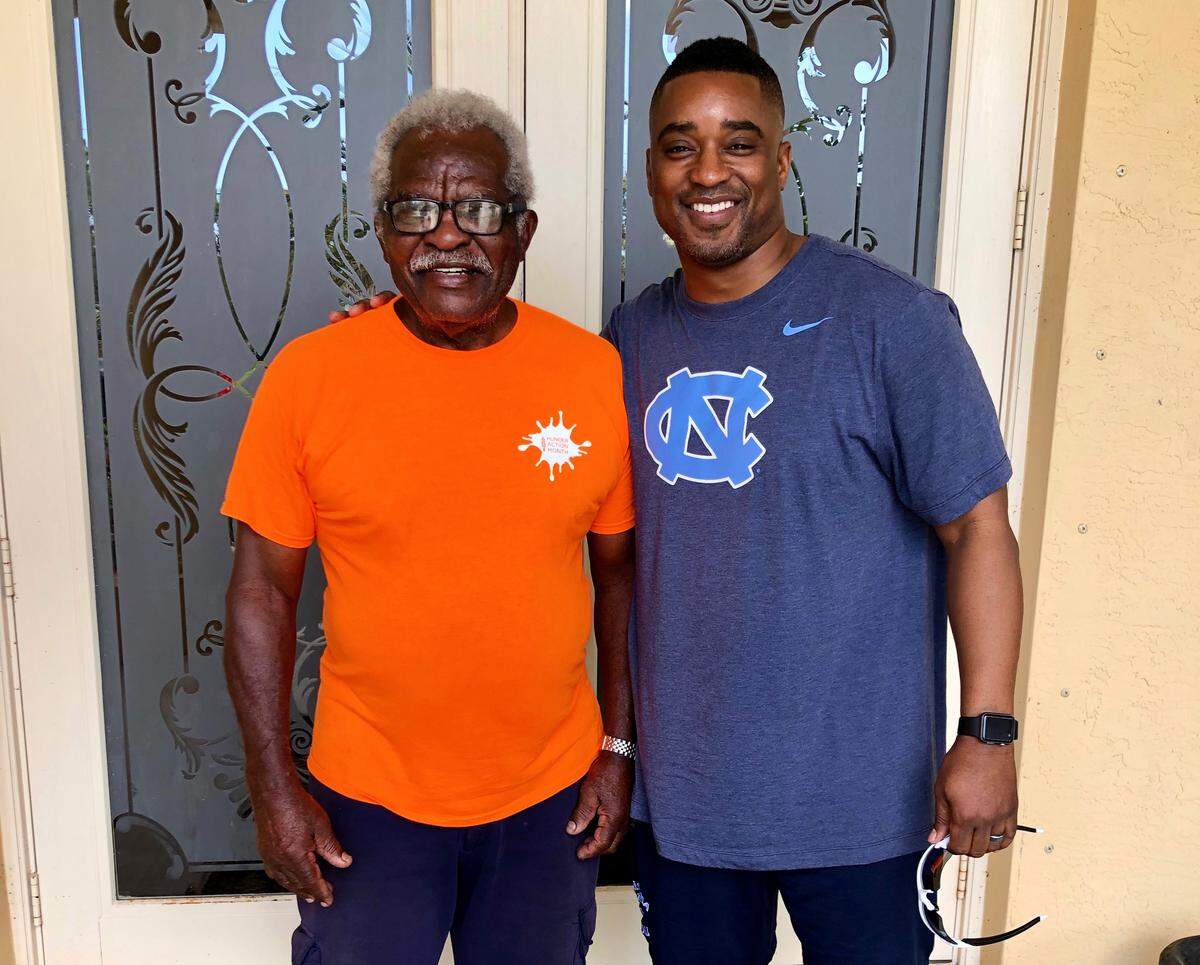
Mason is ‘everything’ for UNC football
It’s hard to pin down exactly what Mason does for North Carolina football. Not because his role is unclear, but because he seems to touch every corner of the program.
He prays with players before games. He leads Bible studies each Friday. He’s baptized players, officiated weddings and sat with families in their hardest moments. When former wideout Tylee Craft died last October after a two-and-a-half year battle with cancer, Mason delivered a powerful sermon at Craft’s celebration of life that “brought the house down,” said former linebacker Kaimon Rucker.
But Mason was there during Craft’s fight, too. They exchanged calls and texts about hospitals, treatments, their pain and scripture. They reminded each other to “keep swinging.”
“I think about him every day because more of my days are harder than good days,” Mason said recently of Craft. “And so I have to remind myself. And of course I think of him.”
Mason has promised numerous mothers and fathers that, when they dropped their sons at college, he’d look after them. He paced the sideline on Saturdays to calm those same young men down. At times, he’s more therapist than chaplain — the first stop when frustration or fear bubbles over.
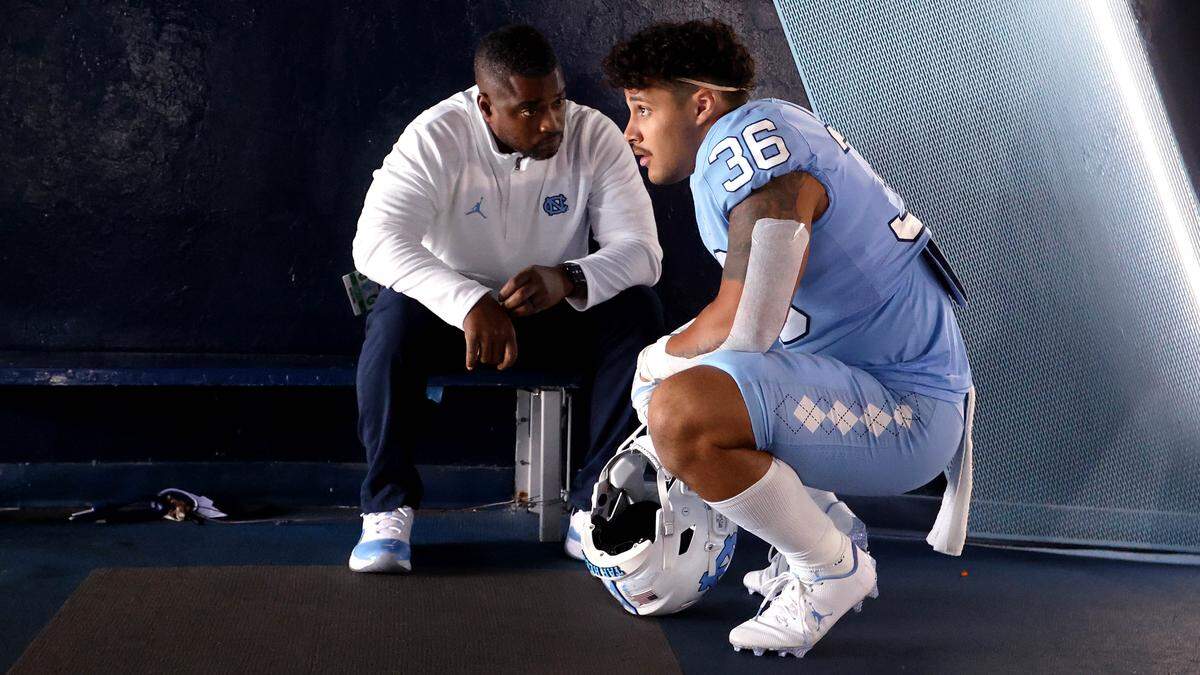
Former UNC tight end John Copenhaver said Mason has talked suicidal players “off the edge.” Christopher Holliday, a former defensive back, said Mason “stopped numerous players from transferring.”
“He’s not just a chaplain,” Copenhaver said. “He’s everything.”
Holliday added: “Especially if things are getting out of control, I think that consistency and that kind of levelheadedness is a very big piece of the heartbeat — even as things are always changing.”
In recent years, as Mason’s struggle with his health became more visible, his hands, which he uses with great excess when he preaches, shook. But the most obvious sign of struggle, said Rucker, was Mason’s gait.
Mason loved to walk around the UNC practice field, getting his steps in while watching the players work out. He’d point, offer a fist-bump or simply nod in support. Over time, his stride grew stiffer. A slight limp crept in. But Mason owned it. The players called it his “pimp walk.”
“We made fun of him, because what’s crazy is this disease — the worst thing that’s ever happened to him — gave him one of the best walks that ever was,” Rucker said.
Copenhaver said Mason added his own twist and flavor to it. He thinks Mason did it to get a laugh out of the players. Walk a little slower, add more of a sway. Lean down. Swing the arms. Like he owns the place.
“You would have never known, and you would have just thought bro had the meanest walk ... but that just shows how he made a negative and turned it into a positive,” Rucker said.
A rare disease hits. But Disney can’t wait
The first signs came before the diagnosis.
In the fall of 2019, Mason was taking a walk after practice when his legs gave out. He couldn’t take another step. He stopped, then vomited. He knew something was wrong.
By early 2020, neurologist Dr. Jodi Hawes had a name for it: idiopathic small fiber neuropathy, a rare nerve disorder with no cure. The disease itself wouldn’t kill him, Hawes said, but the side effects would slowly strip away life piece by piece.
“What do you love to do as a family?” Hawes asked that day.
Disney World, Mason and Chondra answered.
“Then I’d suggest going,” Hawes replied. “And really enjoy it.”
So they did. A week before the Covid-19 pandemic shut everything down, the family went to Disney World. Mason laughed. He walked the parks. He pushed through.
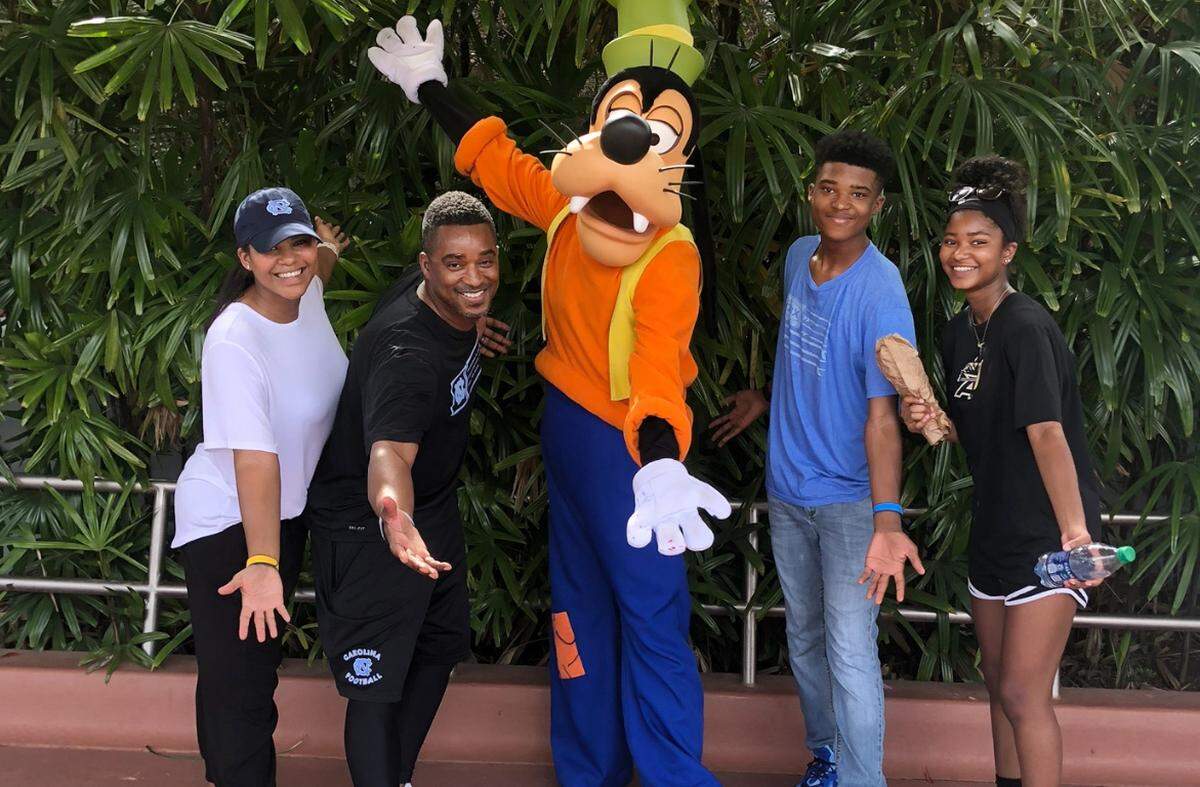
He kept pushing for years in his role as UNC football’s chaplain. But, eventually, his flare-ups became too frequent, too unpredictable. His body could be fine one minute and useless the next. Mason had to step away from work in April and has been at home ever since.
This summer, genetic testing offered another answer, and it was worse: The doctors were pretty sure he had multiple acyl-CoA dehydrogenase deficiency, also known as MADD. His body can no longer process protein, fats, carbohydrates. The very fuel that powers other people’s bodies turns into poison in his.
Now, when Mason admits he’s having a “bad day,” it doesn’t mean he’s tired. It means his body is seizing, shutting down, collapsing. His stomach, colon, pelvic floor — they’re all gone. His small intestine carries the load through his feeding tube. His memory flickers. His pain is constant, a 100 on a scale of 1 to 10.
He describes his condition the only way he knows how. The preacher tries to find metaphors for the unspeakable.
“If my body was a city,” Mason said, “I’m having a city-wide power outage. And we can’t get the power back on.”
A calming influence for the Tar Heels
Ryan Switzer stormed into the chaplain’s office. The freshman wideout was furious — convinced he wasn’t getting the ball enough, convinced the coaching staff was overlooking him. Nevermind that the Tar Heels already had NFL-caliber talent like Eric Ebron in front of him. Switzer was sure he was being held back.
“He was so hot,” Mason recalled with a laugh. When the outburst subsided, he asked “Are you done?” — then turned the conversation.
“Right now, Switz, you’re in the wilderness,” he told him. “Your faith is being tested, dog. Because faith that hasn’t been tested is a faith that cannot be trusted. Right now, your faith is being tested. Will you be faithful, even though things ain’t happening for you?”
Mason told the freshman to stop acting like the world owed him something. “So just shut up with the complaining and get out of my office!” Mason yelled at him, spraying Lysol in the room to emphasize his next point. “Because your attitude stinks.”
Soon enough, of course, the message began to sink in. The two continued to talk every week, multiple times a week. Mason was the freshman wideout’s “absolute rock.”
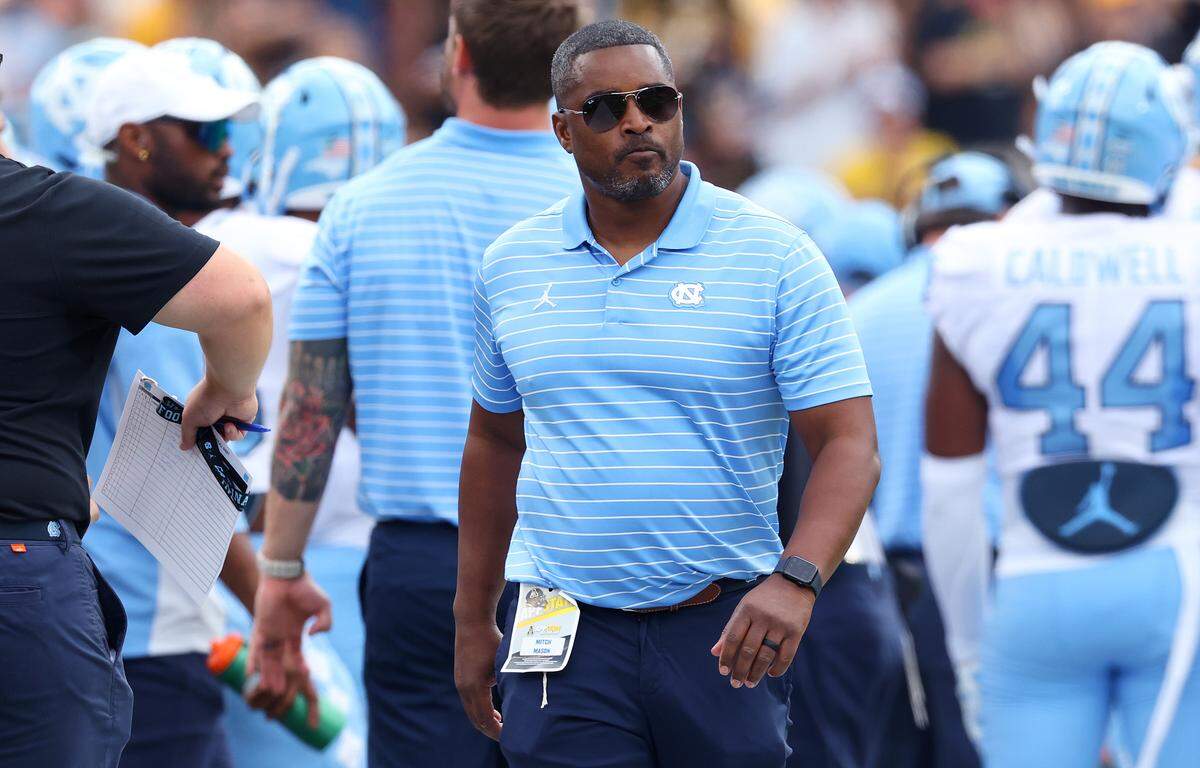
Switzer didn’t record his first punt return for a touchdown until the ninth game of the 2013 season against Virginia. Then, when North Carolina traveled to Pittsburgh to face a defense led by future pro tackle Aaron Donald, Switzer fielded two late punts and returned both for touchdowns to seal the overtime win.
“He took off when he realized life wasn’t about him,” Mason said. “Man, he came alive. The rest is history. I was just there to remind him of his purpose.”
As the Tar Heels celebrated after the game, Switzer sprinted to Mason on the sideline. Tears streamed down his face as he shouted the words Mason had drilled into him week after week.
“Your attitude!” was all he could muster before he collapsed into the chaplain’s arms.
Even though Switzer’s 30 now, coaching wideouts at the University of Tulsa, he can’t tell the story without breaking down.
“Listen, the only thing you need to know is that Mitch Mason changed my life,” he said, his voice breaking into a whisper, “and he’s still changing my life.”
“I hate what he’s going through,” Switzer continued, fully crying at this point. “But to see how strong and how steadfast he’s been ... I love him. I am who I am in large part because of his presence in my young adult years.
“He saved my life in more ways than one.”
Mason’s life story has impact
Copenhaver, just like Switzer years before, had many conversations with Mason about football frustrations: lack of reps, limited playing time. Each time, Copenhaver reminded himself: Mason was enduring far worse with his health.
“It really made you look at yourself in the mirror and be like, man, what am I doing?” Copenhaver recalled.
But Mason always heard the players out, never belittling their issues.
Once, Copenhaver approached Mason outside the Kenan Football Facility lunchroom with a personal problem. The player’s sister wasn’t dating the best guy. He didn’t know how to talk to her about it.
Mason invited Copenhaver to his office. They sat for nearly an hour as Mason unspooled his life story: the pain of his upbringing, how he met his wife, all of it.
Mason didn’t come from much in South Florida. His father, “God bless him,” Mason says, was an alcoholic with a short fuse. Mason — the youngest of three and the only boy — took plenty of blows, as did his mother. Eviction notices came often; at times, the family lived in hotels or out of their car. Mason estimates he moved at least 10 times before graduating high school. It was rough trying to hide that from his classmates, teammates and Sutton.
But there’s some things you can’t conceal.
“Coach takes you home after practice [and] you say, ‘Hey coach, I don’t live there anymore. I live over here,’” Mason said. “It was like that all the time.”
By opening up to Copenhaver years later, Mason gave him permission to do the same.
“I know people have gone through it mentally, and he’s been there, waiting for guys,” Copenhaver said. “I mean, he’s a big reason why a lot of the young men are thriving. … It’s because of him.”
‘It’ll never touch my spirit’
On Sept. 18, Shipp, Alexander, Hardy and Paysour slipped into Mason’s living room to deliver him the Richmond game ball. Even those few seconds, and the hugs, made a difference. Mason said the players were “ecstatic” to see him, even if he couldn’t see them clearly through his intense migraine.
“They were so cordial, they were so kind,” he said with a laugh, “And just saying that, ‘We dedicated this game to you. All of football, Coach Belichick, all of us — you know how much we love you. ... we just want you to know we have not forgotten you.’”
When asked if he feels forgotten, Mason answers carefully: “No. I’ll say it like this …”
He understands his condition is rare. It has no clear roadmap. With cancer, doctors can chart a course through chemotherapy. With infection, they prescribe antibiotics. But with Mason’s tangle of small fiber neuropathy, dysautonomia, and now the mitochondrial disorder, there is no playbook. Only experiments, trial and error.
He doesn’t know how much time he has left, only that it’s dwindling by the day.
The chaplain is under no illusions about what his body is losing. But, as unsure as this journey has been, he is just as certain about what it can’t take from him.
“This thing could touch my body,” he said. “But it’ll never touch my spirit. It’ll never touch it. You see, toughness is not in your muscles, kid. It’s in your soul and spirit. You either have it or you don’t. I could have 1,000 of these, or whatever. Bring it on.
“It’ll never touch my spirit.”
This story was originally published September 26, 2025 at 6:00 AM.