
East Coast powers head West: Duke, UNC face time-zone test against Stanford, Cal

AI-generated summary reviewed by our newsroom.
- East Coast powers Duke and UNC travel west; teams adjust schedules and routines
- Cal leverages time-zone edge; trainers enforce hydration and sleep routines
- Conference records show ACC teams struggle cross-coast; coaches tweak travel plans
As the unranked Stanford and Cal men’s basketball programs prepare to host No. 6 Duke and No. 14 North Carolina on the West Coast this week, the California teams know they have a slight advantage.
The Blue Devils and Tar Heels are probably tired.
“It’s hard to travel,” Cal coach Mark Madsen said on a recent ACC coaches Zoom. “And so how we try to maximize it is to come out with great energy at the start of games… coming out of the gates with tremendous energy. Playing fast, deflections, all those things.”
Madsen and his Golden Bears will face the Blue Devils for an 11 p.m. EST tipoff at Haas Pavilion on Wednesday, just after the Tar Heels’ 9 p.m. clash with Stanford that same evening. The two teams will flip opponents on Saturday, with Duke heading to Stanford’s Maples Pavilion for a 6 p.m. tipoff and North Carolina heading to Berkeley for a 4 p.m. tipoff.
Both UNC coach Hubert Davis and Duke coach Jon Scheyer are well-versed in this sort of travel. Davis said Monday the time zone adjustment for 18- and 19-year-olds is “overrated.” Scheyer said he doesn’t want to make the time change “bigger than what it is” in conversations with his players.
But that doesn’t mean staffs aren’t taking steps to prepare.
“There are ways to start to kind of shift your schedule — delay going to bed a little later, waking up a little bit later, trying to slowly progress into more of a Pacific Coast time zone,” UNC men’s basketball trainer Doug Halverson said. “But the hard part is, we’re always coming off of games that were the primary focus until they weren’t. We’d love to sit there and think, all right, three four days out... you don’t always have this perfect window beforehand to sketch out an ideal scenario.”
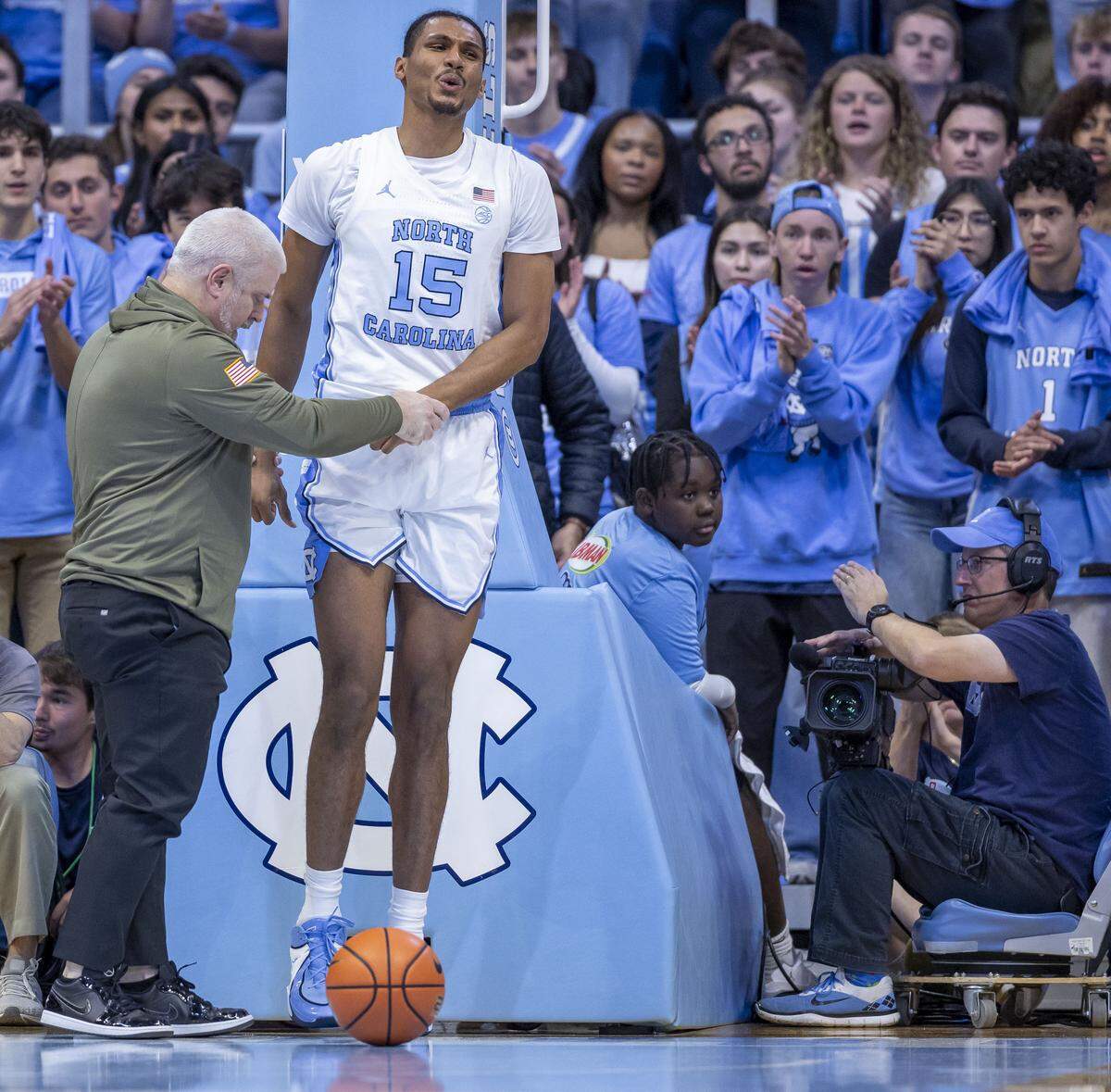
Barefoot in the sand
While this is UNC’s first trip west for ACC play, Halverson and his staff have managed far more extreme travel for past Tar Heel teams.
When North Carolina flew to Hawaii for the Maui Invitational, players were asked to wake up early the next morning and walk outside — shoes off, à la Mack Hollins.
The goal, Halverson said, was simple: use light to tell the body it’s morning.
“Your body thinks you’re still on East Coast time,” he said. “So how do you convince it that you’re not?”
While it’s unlikely the Tar Heels were roaming barefoot around Palo Alto for a three-hour time change, Halverson said the staff always focuses on the same travel fundamentals — nutrition, hydration and sleep — rather than rigid rules. Airplane cabin air is dehydrating, so players are given hydration targets for flights and plenty of drinks to choose from on the plane.
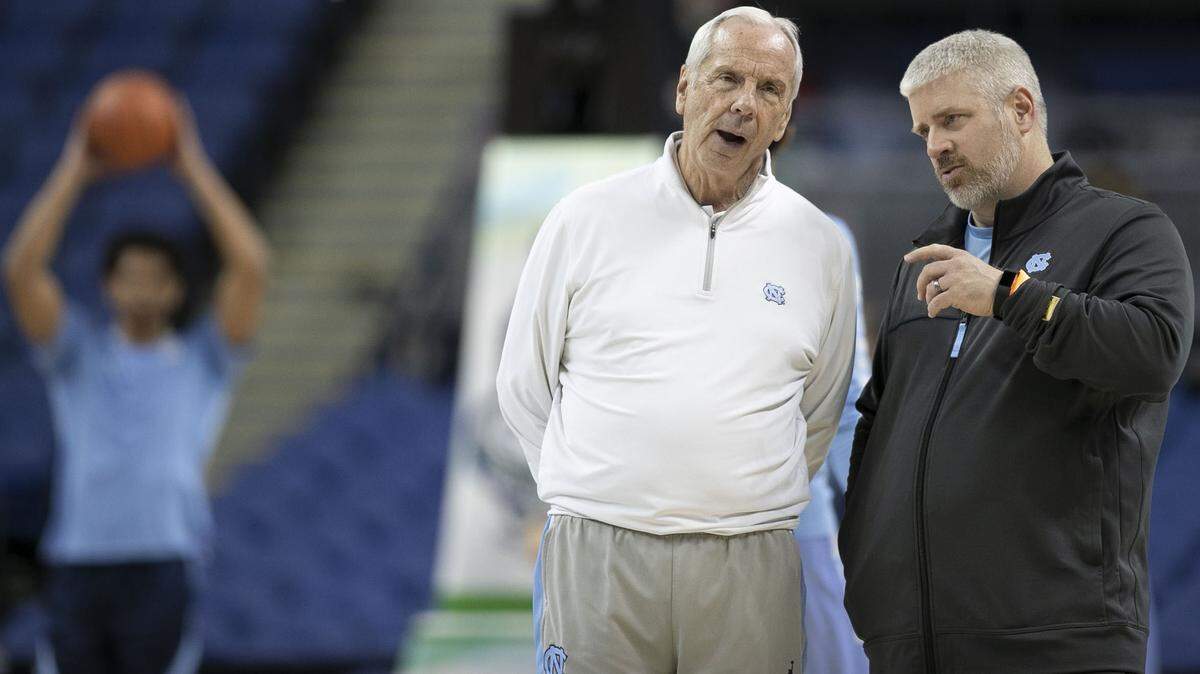
Rather than micromanage, Halverson said his approach is educational.
“This is a teaching institution, just like anything else... we’re not going to sit there and stick them with IVs and force feed them,” Halverson said. “You really do depend on them to understand the information and put it into action.”
Sleep is treated the same way. The travel alone is tiring — long flights, unfamiliar beds and disrupted routines — so players are encouraged to rest as much as possible and “bank” sleep when they can. Halverson said he avoids being overly prescriptive, like with specific nap windows, because strict schedules can backfire and negatively affect rest.
Playing ‘bad cop’
Cal takes a more precise approach. For many of Cal’s cross-country trips, the Golden Bears’ athletic performance coach Sebastian Hernandez has to play “bad cop” — doling out hydration tests pre-flight, waking players mid-flight, reminding them to drink 16 to 24 ounces of water per hour in the air and explaining why every detail matters.
“Almost everything has to go perfect to really optimize everything,” Hernandez, who started his training career in Fayetteville, told The News & Observer.
The margin for error has shown up in the results.
Since the ACC expanded in 2024 to add Cal, Stanford and SMU, basketball teams have struggled when crossing between Pacific and Eastern time zones.
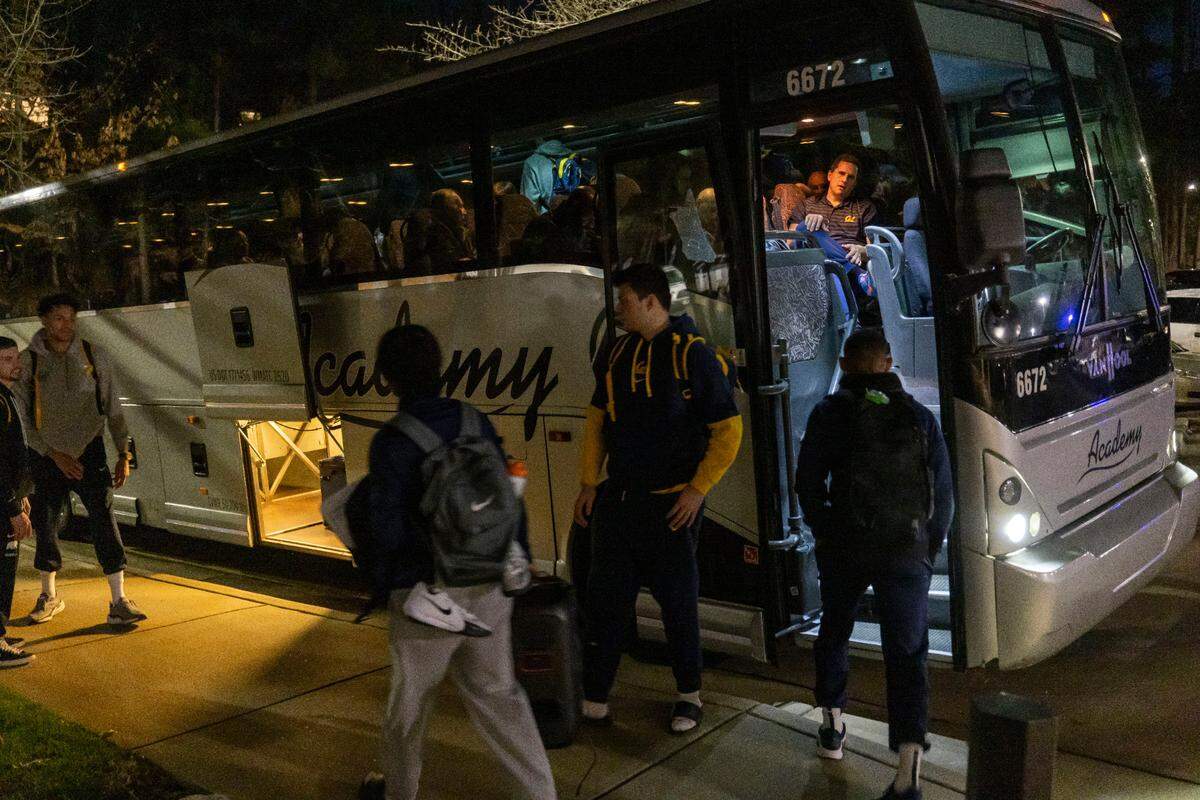
Conference women’s teams are 10–28 (26.3%) in ACC road games played on the opposite coast since last season. ACC men’s teams are 9–31 (22.5%).
In that time frame, only one men’s program — Wake Forest — has escaped California with a 2–0 record against Stanford and Cal. Duke became just the second women’s program to do so over the weekend, joining the then–No. 14 Tar Heels from last season.
“It’s a small data set,” Hernandez said, “so we’ll see how it goes this year. We’re still learning.”
Cal has even analyzed how often it has covered betting spreads — which can offer a clearer picture of how an unranked team performs against a powerhouse like Duke or UNC rather than simple win-loss.
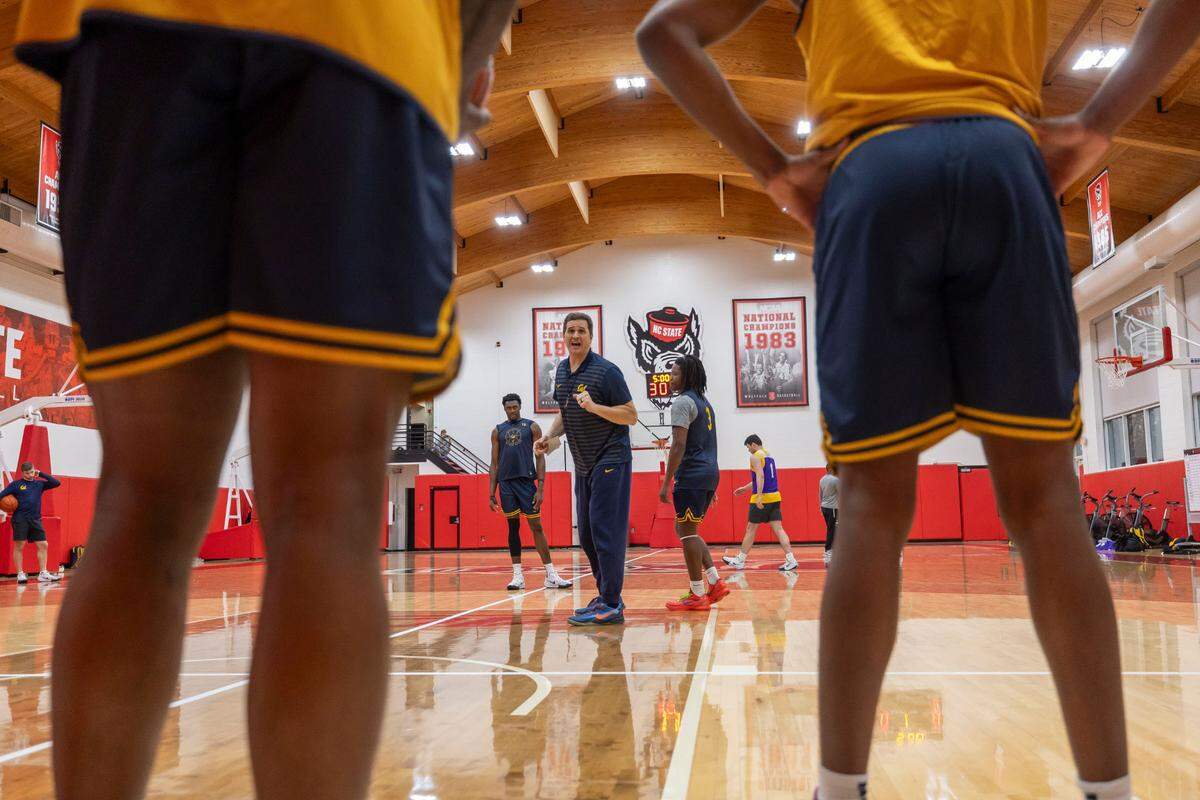
“Can we at least cover the spread?” Hernandez said. “Which shows, performance-wise, we at least performed as we should have… the spread numbers were a little better, but still a very low percentage in terms of covering the spread with all those road games.”
Based in part on that evidence, Cal adjusted its approach this season, tinkering with traveling one day before East Coast games instead of two.
“I don’t think anything is a secret,” Hernandez said. “I think at the end of the day, we’re testing everything just like they are.”
Halverson said the trial-and-error mindset has become even more necessary as rosters turn over faster than ever.
“The more times you do it, the more chances you have to tweak the process,” Halverson said. “And each group is different... with the transfer portal, we may have a completely new group of players to discuss this with the next time. It’s not like we can look back at, ‘Well, this is how the team reacted last time.’”
Which way is worse?
The Blue Devils and Tar Heels left Raleigh-Durham on Monday evening for their West Coast trips, with Duke departing at 5:16 p.m. and UNC at 8:12 p.m. Both took nonstop, five-hour flights, with Duke landing in Oakland at 7:18 p.m. PST and UNC in San Jose at 10:21 p.m. PST.
“The later those games are on the West Coast, it can be a little more challenging for our players to adjust,” Halverson said. “So our games are actually not bad this trip, because we’re at 6 p.m. Pacific Standard Time and 1 p.m. Pacific Standard Time. So we’re actually nicely kind of in our windows of what we would normally be playing games.”
“Duke’s playing later games this week... and that can be more challenging,” Halverson added. “So adjusting and prepping for those games may sometimes be a little bit more aggressive.”
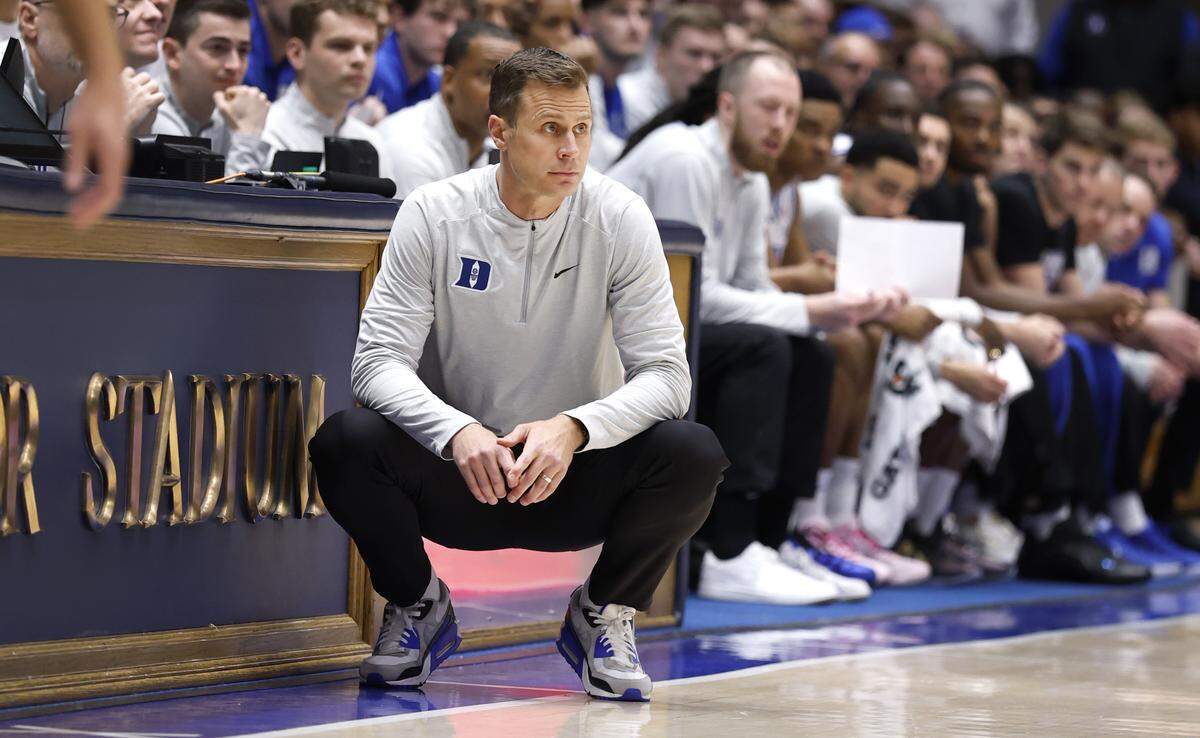
Scheyer said his staff Duke will be “a little bit more proactive” to prepare for Wednesday’s 11 p.m. EST tipoff.
“With our sleep, our medical team, training teams are all over that,” Scheyer said Monday morning. “Making sure you don’t sleep on the way out there or you can’t sleep at night. I think that’s the biggest thing.”
Scheyer said he won’t talk about the adjustment “a whole lot,” instead emphasizing how often Stanford and Cal make similar trips. Halverson also highlighted that UNC’s “California partners are certainly more challenged when they have to come.”
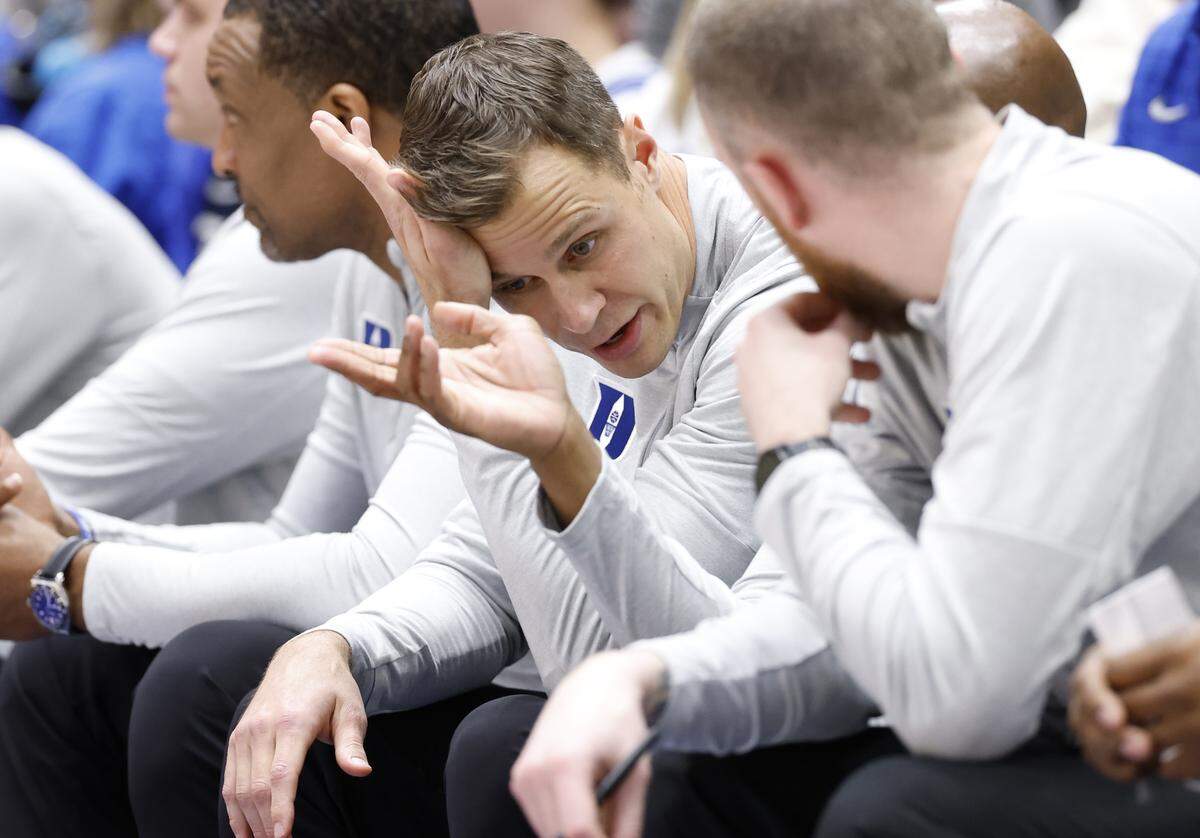
Still, Hernandez said east-to-west travel poses a unique challenge because of internal clocks.
When teams travel west to east, they “gain” time — meaning early East Coast games can feel like morning workouts.
The opposite problem emerges going east to west, when late-night tipoffs push players into what is normally a recovery window.
“Let’s not be naive and think these kids are going to bed at 9 p.m.,” Hernandez said, “but I don’t know if they’re in the gym playing that late. But again, I’m sure Duke has taken all that into consideration.”
Ebuka Okorie awaits
Davis has maintained that, despite the roughly 2,788 miles from Chapel Hill to Palo Alto, the challenge “is playing against a good Stanford team.”
At the top of the scouting report is Ebuka Okorie, a freshman phenom who ranks second in the ACC at 22.1 points per game and has scored 25 or more eight times.
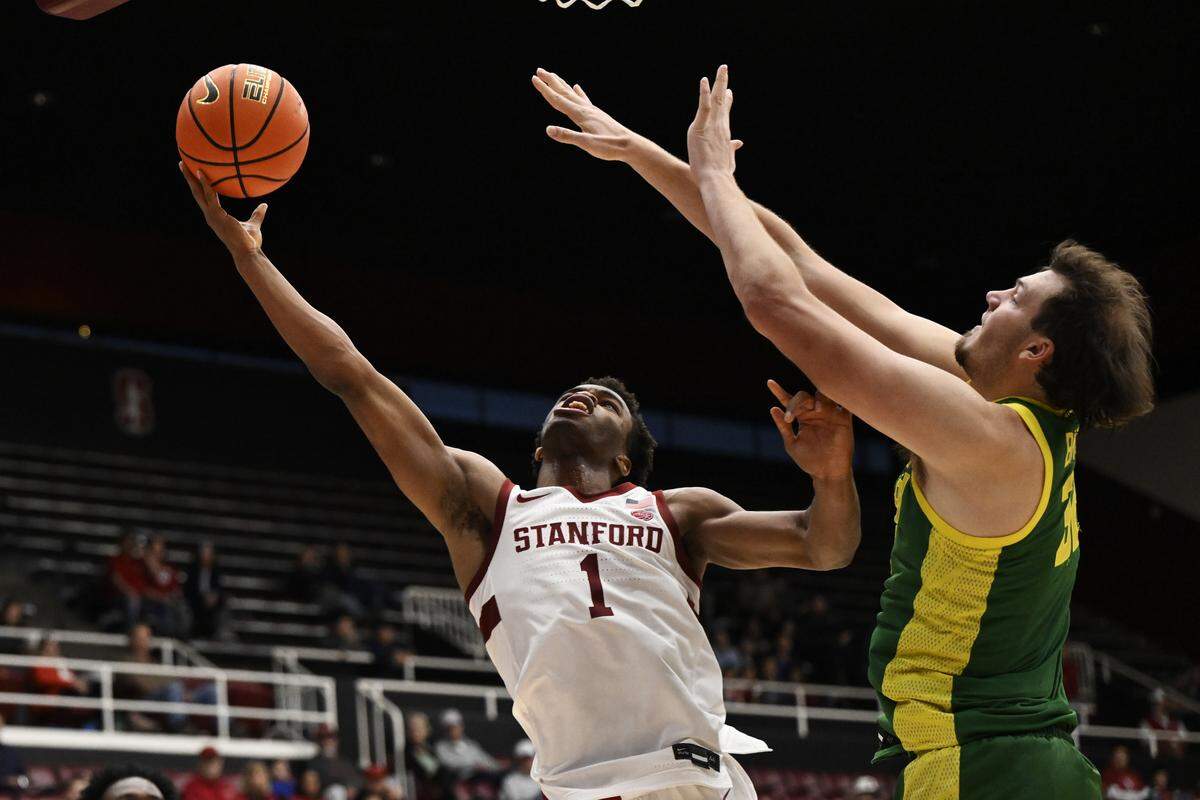
“I’ve been blown away by his impactfulness on both ends of the floor,” Davis said. “Defensively, he does a really good job of guarding the ball, competing, getting steals, deflections… offensively, he can shoot from three. He can shoot from three off the catch or the dribble.”
“They give him the ball a lot,” Davis said. “All their actions for the most part run through him. He’s stepped up and delivered, and been fun to watch. Hopefully, he’s not fun to watch on Wednesday.”
UNC’s 72–71 loss to Stanford last season on Jaylen Blakes’ buzzer-beater lingers as a reminder this may be tighter than history suggests.
Cal thrives on control
Duke arrives with a No. 4 NET ranking and six Quad 1 wins — most in the country — while Cal is trying to rebound from dropping three of its past four.
“The theme for me is taking the next step and maxing out who we can be,” Scheyer said Monday. “You don’t take winning for granted… I want us to really grow together this week.”
Cal’s strength is control: second-fewest turnovers in the ACC and third nationally in free-throw shooting at 79.4 percent. Dai Dai Ames leads Cal at 17.8 points per game, while John Camden ranks among the ACC leaders in made threes.
The matchup pits Duke’s pace against Cal’s discipline — and Duke against the challenge of sustaining that edge late.
“On the road together for a week? I think it’s an amazing opportunity for us to grow, learn something new,” Scheyer said. “And we plan on doing that.”
This story was originally published January 14, 2026 at 6:00 AM.