
Inside UNC athletics’ Smith Center location debate: ‘We’ve got to get it right’
AI-generated summary reviewed by our newsroom.
- UNC weighed renovating Smith Center vs a new on-campus arena and Carolina North site.
- Donor backlash and petition led UNC to pause plans and form advisory groups.
- Administration stresses revenue needs and is forming stakeholder advisory groups.
If there’s a through line to the past 15 years of North Carolina athletics facility planning, it runs through a premium seating section in Kenan Stadium.
When UNC athletic director Bubba Cunningham arrived in Chapel Hill in 2011, the Blue Zone had just been built. By the end of that football season, he said, the numbers jumped off the page. The revenue being generated “far exceeded” the debt retirement tied to it.
To Cunningham, this was a proof of concept: If that model worked in football, imagine what it could do in basketball.
That question — how to maximize revenue at an aging Dean E. Smith Center without sacrificing tradition — has been simmering in various forms ever since, and has now bubbled to the surface publicly.
This past December, many donors and former players say they first learned the administration was seriously considering moving the arena off campus. Some, like former Board of Trustees chair Rusty Carter, said they were told an off-campus move was a done deal.
“They sort of, at the last minute, reached out to deliver that message,” Carter told the N&O on Wednesday. “And we had lots of questions, and we still have lots of questions.”
This sparked almost immediate pushback. Carter helped launch the Committee for a South Campus Arena and its “Renovate, Don’t Relocate” campaign — a full-court press approach pushing for renovation of the Smith Center at its current location.
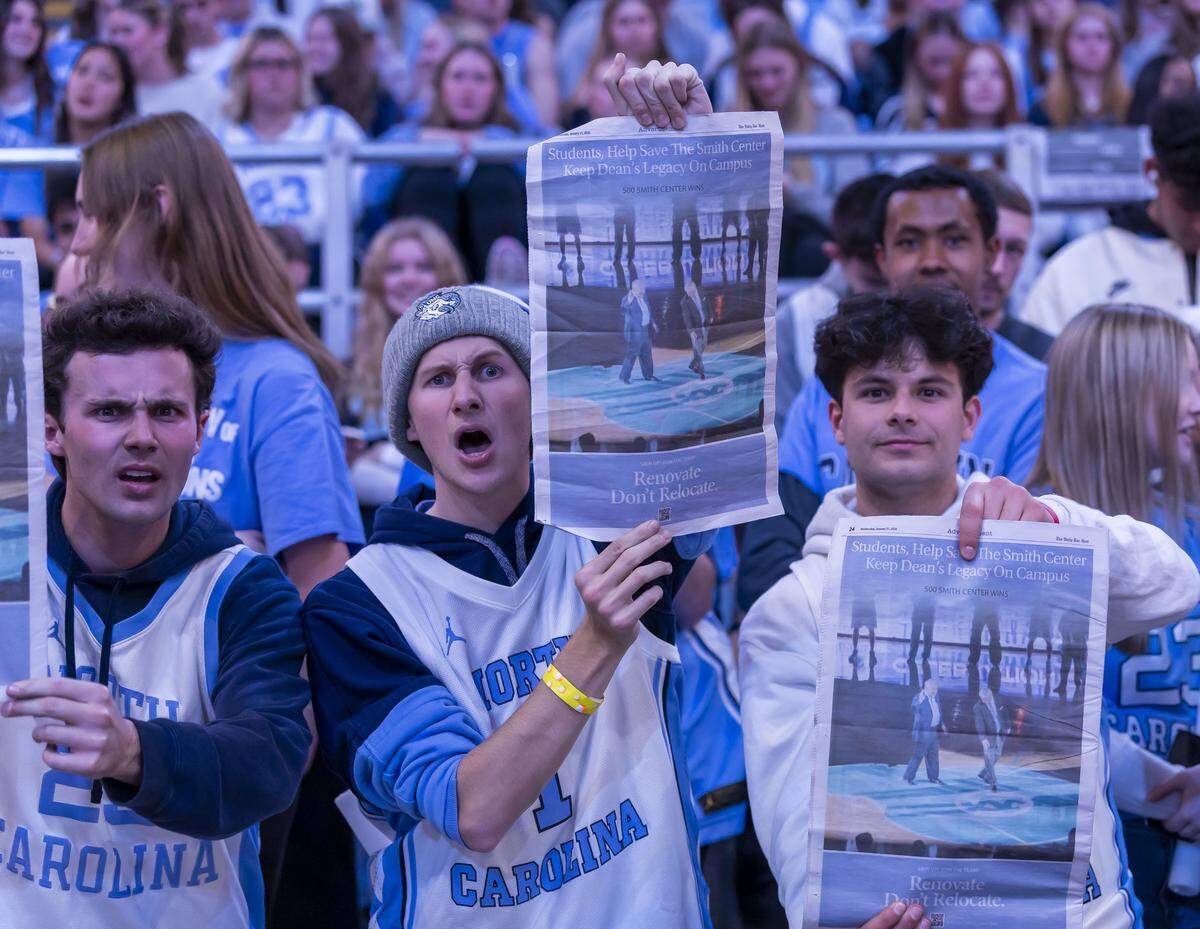
Carter said he felt the movement has been “effective in slowing down the train that had left the station.” Monday, Cunningham acknowledged that the department “dropped the ball” in communicating its plans and engaging key stakeholders during a crucial stretch of the process.
So how did we get here?
The timeline, as Cunningham and soon-to-be AD Steve Newmark see it, stretches back much further than the recent Carolina North headlines.
The first master plan
By 2013, Cunningham had engaged an outside architecture firm, Kansas-City based 360 Architecture, in early stage talks about the arena. The two concepts produced, as reported in 2015 by the N&O, included:
- A renovated Smith Center with three levels of premium club seating and an overall capacity of 17,612 (reduced from the current capacity of 21,568).
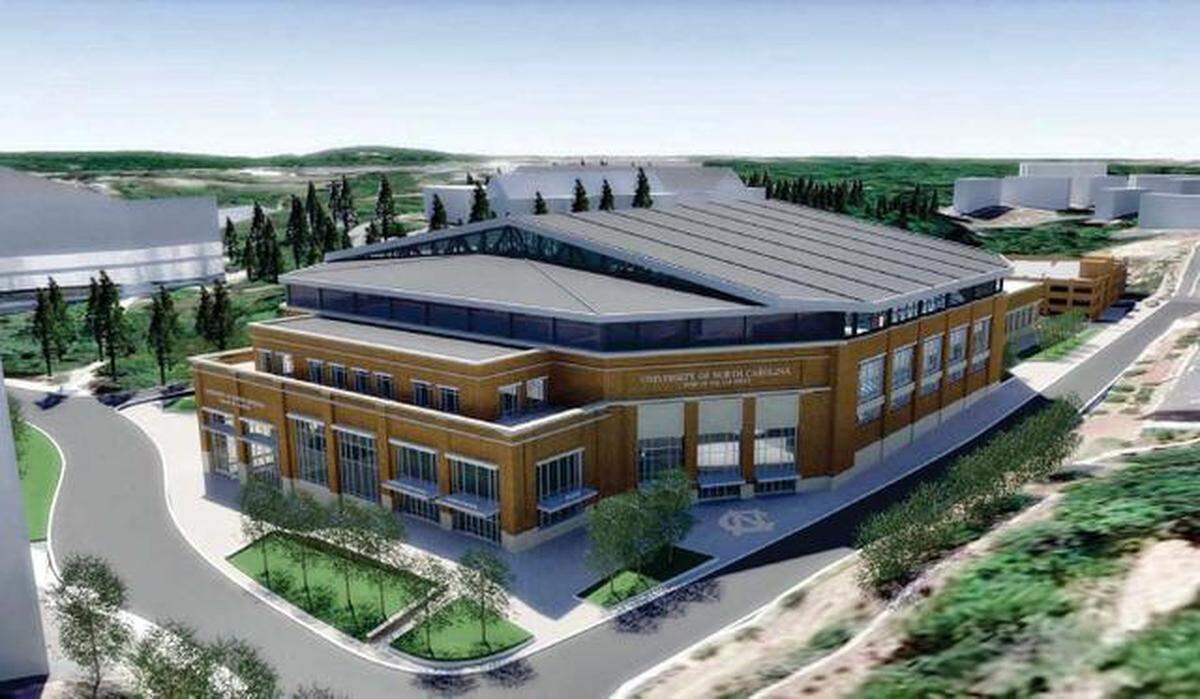
- A new on-campus arena with 600 premium seats and an overall capacity of 16,050.
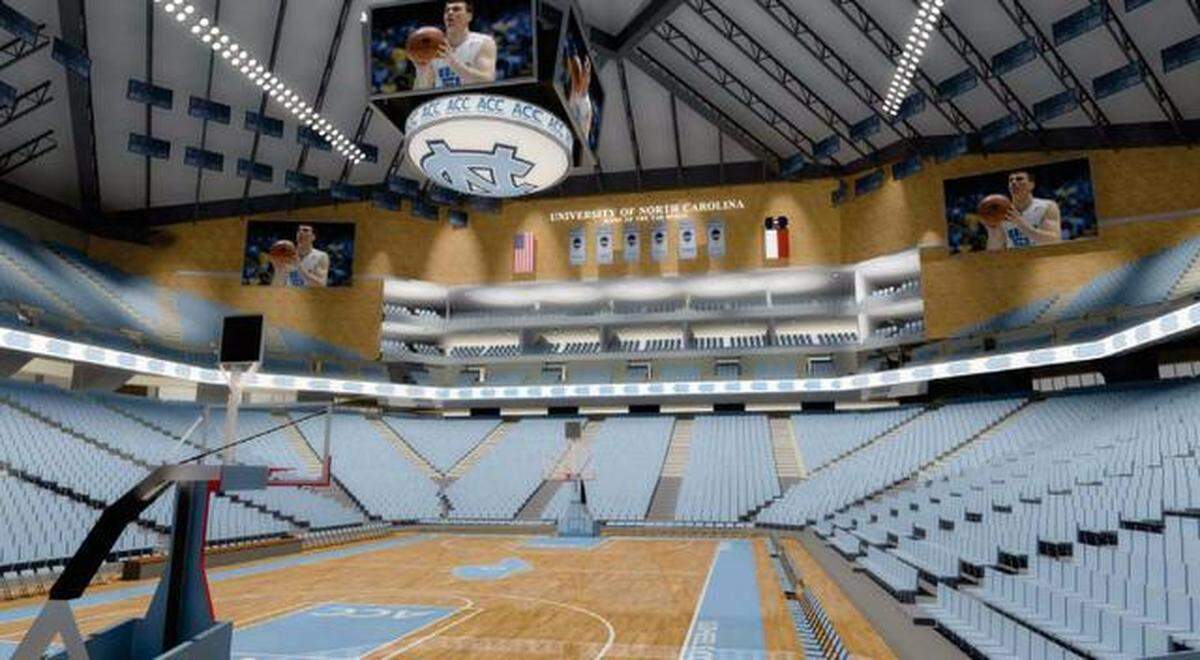
The new on-campus arena 360 Architecture proposed was to be built next to the Smith Center, at the corner of Skipper Bowles Drive and William Blythe Drive — a location known as the Bowles Lot.
“So I started shopping that (around) with some of the donors and things,” Cunningham said Monday. “But they said, ‘All right, now the NCAA case shut that down. We can’t do that now.’ So we did.”
Translation: The NCAA investigation into UNC’s academic scandal intensified, and the idea stalled.
A couple of years passed and, by then, the athletic department’s focus shifted. UNC athletics prioritized the “central campus project,” prioritizing investments in infrastructure across a range of Olympic sports. The strategy was sequential, according to Cunningham: Handle those projects first, then return to basketball.
About three years ago, Cunningham said, UNC began to reevaluate the Smith Center. The athletic department engaged consultants to assess the building’s mechanical systems, electrical infrastructure, roof and other structural realities that come with a facility that opened in 1986. They sought to answer the following questions:
- How much would it cost to simply maintain and update the building’s core systems?
- How much would a significant renovation cost?
- How much would it cost to build something new?
For roughly two-and-a-half to three years, Cunningham said, the department gathered expert opinions and analyses. The internal work, he believes, was thorough.
The next step — the communication — is where Cunningham and other administrators feel they dropped the ball.
.JPG "RAL_SMITHCENTER-SP-122225-RTW_1 (1).JPG")
According to Cunningham, the plan was to take what UNC had learned through its exploration process and begin a robust engagement process with the basketball community — former players, donors, season-ticket holders, students and other stakeholders.
“Quite frankly, I think that we dropped the ball,” Cunningham said Monday. “So from October of 2024 until just prior to Christmas of 2025, we didn’t do that.”
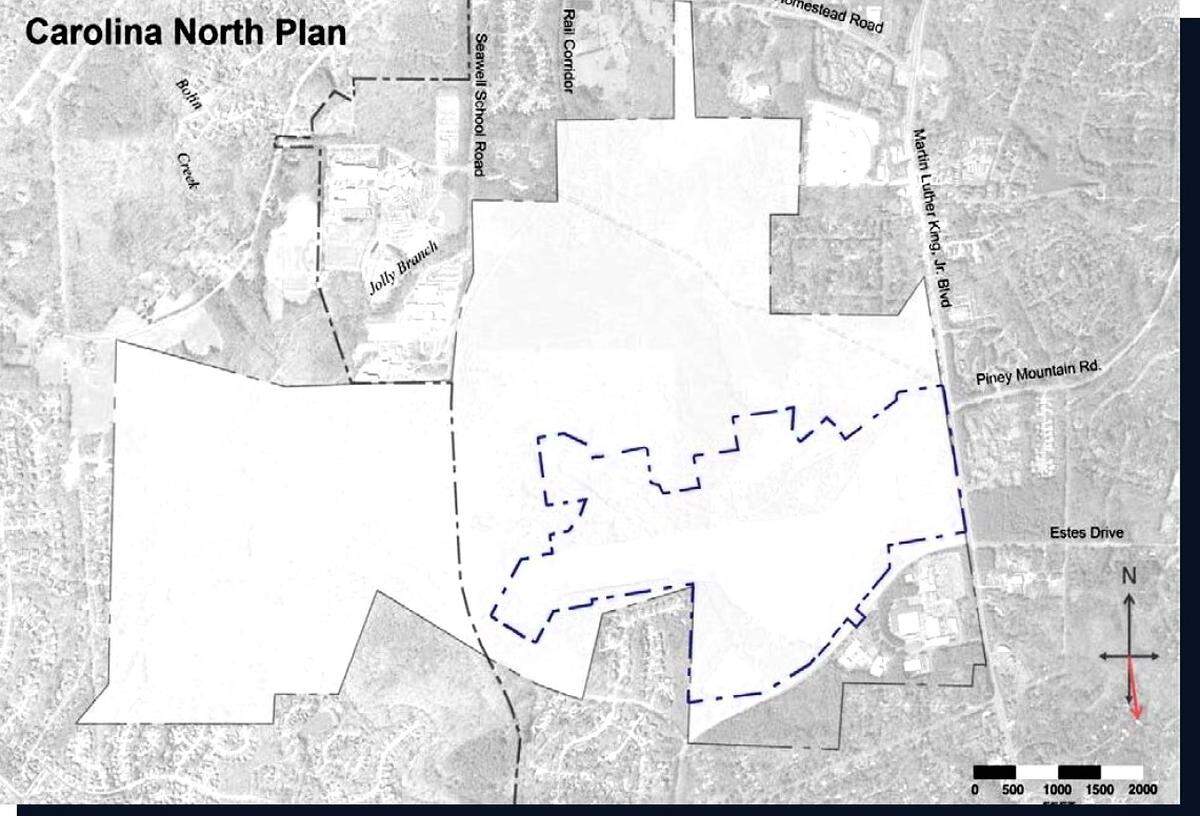
During that same period, another major piece of the university’s future came into sharper focus: Carolina North.
The long-planned development site north of campus — on and around the former site of the Horace Williams Airport — began moving toward a more concrete phase, with the university preparing to seek a developer through a request for proposal (RFP) process. But there was a catch.
“They said, ‘You have to make a decision on the basketball arena before you can tell people to bid on the development of Carolina North,’” Cunningham said. “So, at that point, we said, ‘Well, it’s probably going to be a basketball arena going to Carolina North. So why don’t we go ahead and do that? And then we started talking to more stakeholders and realized that’s not a good idea.’”
‘That did not go well’
It was a snowy day in Lexington, Kentucky, this past Dec. 2 when Newmark met with Carter and fellow basketball supporter Hunter Morin. The Tar Heels were set to tip off that night against Kentucky at Rupp Arena. Newmark had reserved a small meeting room at the adjacent Hyatt Regency. It was there, over a Diet Coke, that Carter learned an announcement was imminent: UNC planned to relocate its basketball arena.
The news was not entirely unexpected to Carter. He and Williams are good friends and, according to Carter, Newmark had visited Williams days earlier to relay the same message.
“That did not go well,” Carter said.
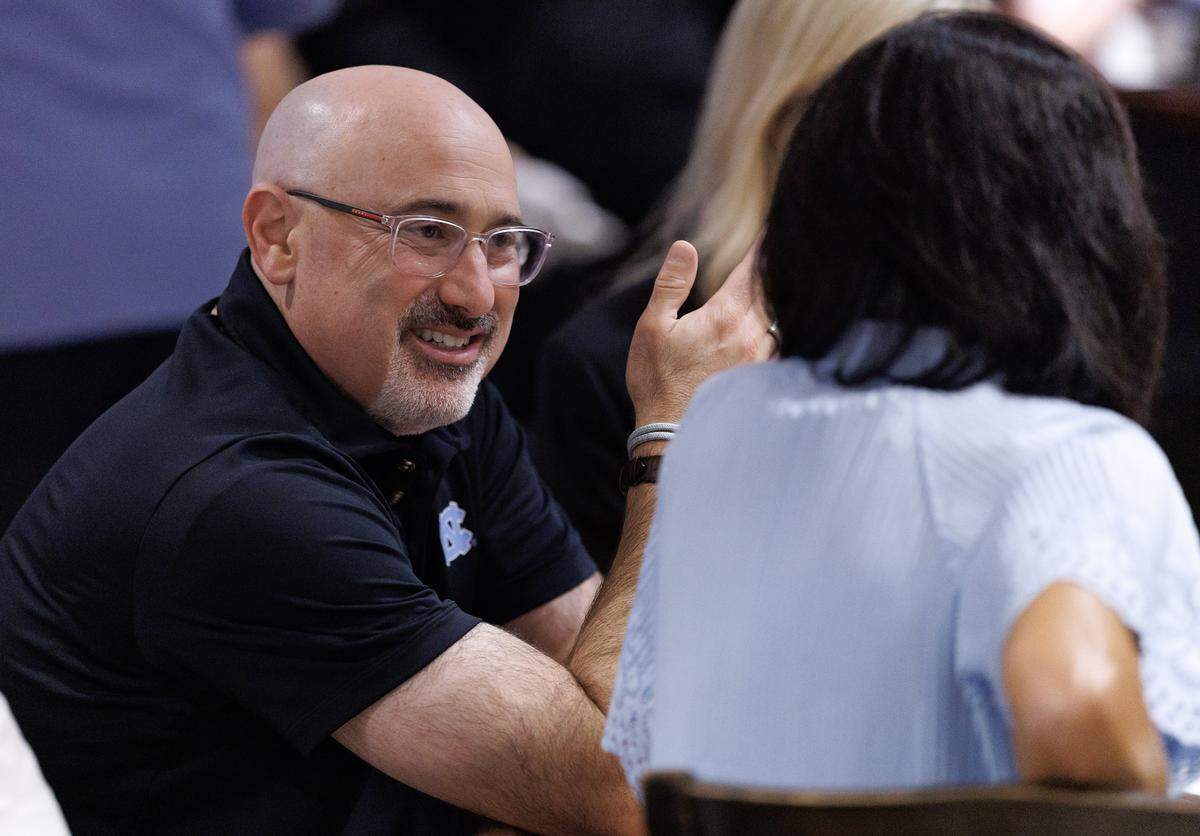
The message — and the manner in which it was delivered — did not sit well with Carter either. He said the implication was clear: The decision had been made, the process was over and there was little to no avenue to challenge the outcome.
“I think Steve (Newmark) was largely the messenger sent by Lee (Roberts),” Carter said. “It’s like, telephone, telegraph, tell a Tar Heel. It spread pretty rapidly. And so people are on the phone, emailing, talking, (about), ‘What are we going to do here?’”
The meeting became the catalyst for a movement, largely led by Carter, to save the Smith Center. It also exposed a growing divide between UNC’s traditional power base and a new administration pursuing a more centralized and revenue-focused approach.
In the weeks that followed, Carter and his colleagues mobilized aggressively. The Committee for a South Campus Arena launched coordinated social media outreach across multiple platforms, amplifying its “Renovate, Don’t Relocate” motto. An associated petition has gathered more than 34,000 signatures thanks to online mobilization and more analog tactics, including students led by UNC junior John Harrison Kiger who handed out QR codes to the petition outside the Smith Center.
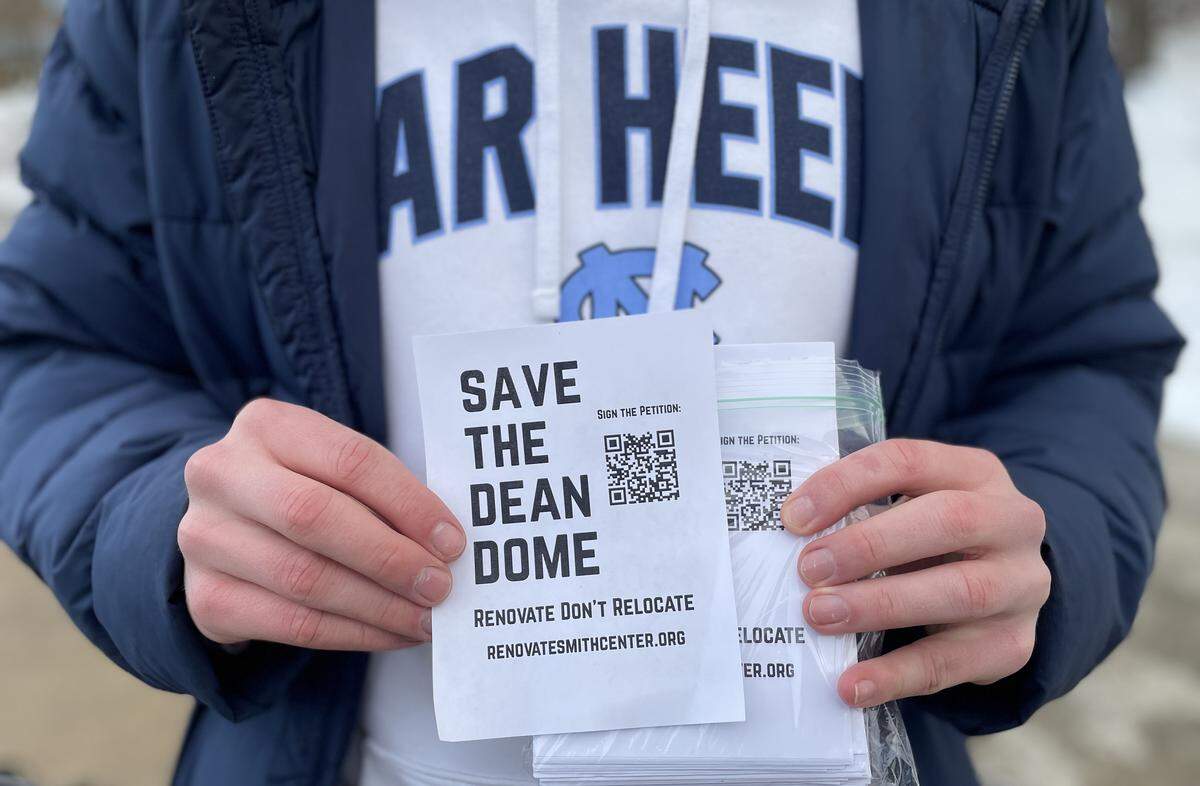
Rusty’s group also purchased full-page advertisements in The Daily Tar Heel — which students later held up in the rafters at games — and sent multiple open letters to Chancellor Lee Roberts urging a pause and greater transparency. High-profile videos featuring Roy Williams and Tyler Hansbrough on the group’s social media accounts gave the movement credibility, transforming the debate into a highly visible public fight over the future of Carolina basketball.
Carter said his group has appreciated Roberts “taking his foot off the pedal” in recent weeks.
“We’ve been highly effective in sending a message that 1,000s of people do not want to see this, this move, and that the process has been poor,” Carter said. “This pause was needed, but there’s a lot more work to do before you just keep charging forward, and they’re doing some of that work.”
Last month, as previously reported by the N&O, UNC’s Board of Trustees approved $8 million for preliminary site work and design at Carolina North. The plan does not currently include a basketball arena.
At the same time, the university announced it was forming two advisory groups — one made up of former players and another of students — to seek input.
“Let’s figure out what is important to these very important constituent groups and decide what we want to do,” Cunningham said. “That’s the process that we’re in right now. We’ve engaged very specifically with former basketball players. We’ve got a basketball council that’s advising us on the history and tradition of this building”
“And then what are we going to do with our students? We have to make sure that it’s student-driven,” Cunningham added. “The experiences of college kids are tied to these athletic events…particularly basketball. And so we’ve got a student group that’s also going to advise us on what we’re doing.”
‘I hope there’s some objectivity’
Carter said the formation of advisory groups and the decision to move forward with Carolina North without locking in an arena are signs the administration heard the backlash — but he remains cautious.
“I hope there’s some objectivity in these meetings, as opposed to the administration trying to sell the Carolina North agenda,” Carter said, later adding, “none of our committee having been invited to serve on these [UNC] committees is a little strange.”
Carter said the group hasn’t received a response to requests for a meeting with Roberts. They have also asked to see the same arena presentations being shown to internal committees, arguing that transparency should extend to major donors and alumni stakeholders.
At its core, the debate is about money.
Cunningham’s early takeaway from football’s Blue Zone still applies: facilities must do more than cover costs. They must fund the broader enterprise — especially today when revenue generation is king. With 28 varsity teams and rising expenses tied to salaries, scholarships, NIL and revenue sharing, football and men’s basketball remain the financial engines.
Any solution — renovation or replacement — must strengthen that model, Cunningham and Newmark argue.
“How are we going to generate money to pay for what we’re trying to do?” Cunningham said. “That’s all got to be successful.”
That reality may complicate nostalgia, yes, but Cunningham insists there is no rush.
“Maybe we get done by this summer,” he said. “Maybe we don’t. But we’ve got to get it right.”
This story was originally published February 20, 2026 at 9:00 AM.