
UNC’s Henri Veesaar has been adaptable his whole career. His biggest test awaits
AI-generated summary reviewed by our newsroom.
- Veesaar went from limited Arizona role to All‑ACC Second Team impact.
- Wilson’s absence forces Veesaar to boost rebounding and ball movement.
- UNC used analytics, fit and film to project Veesaar for a larger role.
The lobby at Claremont Resort & Club in Berkeley, California, is built to impress. A rug that looks straight out of a Georgia O’Keeffe painting sprawls across the floor. An ornate chandelier hangs above. The spectacular view spills out over San Francisco Bay. It’s the sort of place that would make most people feel small.
And yet, when Henri Veesaar walks in, the proportions shift.
He lumbers through the lobby doors with teammates after a Friday morning practice on Jan. 16, two days removed from a loss to Stanford and the night before another one, though no one knows it yet, against California. At 7 feet, Veesaar moves through the rococo space like a piece of furniture that has come to life before folding himself into a chair that, as soon as he sits in it, looks designed for someone half his size.
Just around the corner, in a nook beside the hotel’s wine cellar, projected lottery pick Caleb Wilson is chatting with Hall of Fame NBA writer Marc J. Spears. Their voices drift through the hallway. They spoke about the motivations fueling his freshman season — being cut from USA Basketball, the competitive edge he draws from matchups with fellow top prospects and the desire, above all else, to win.
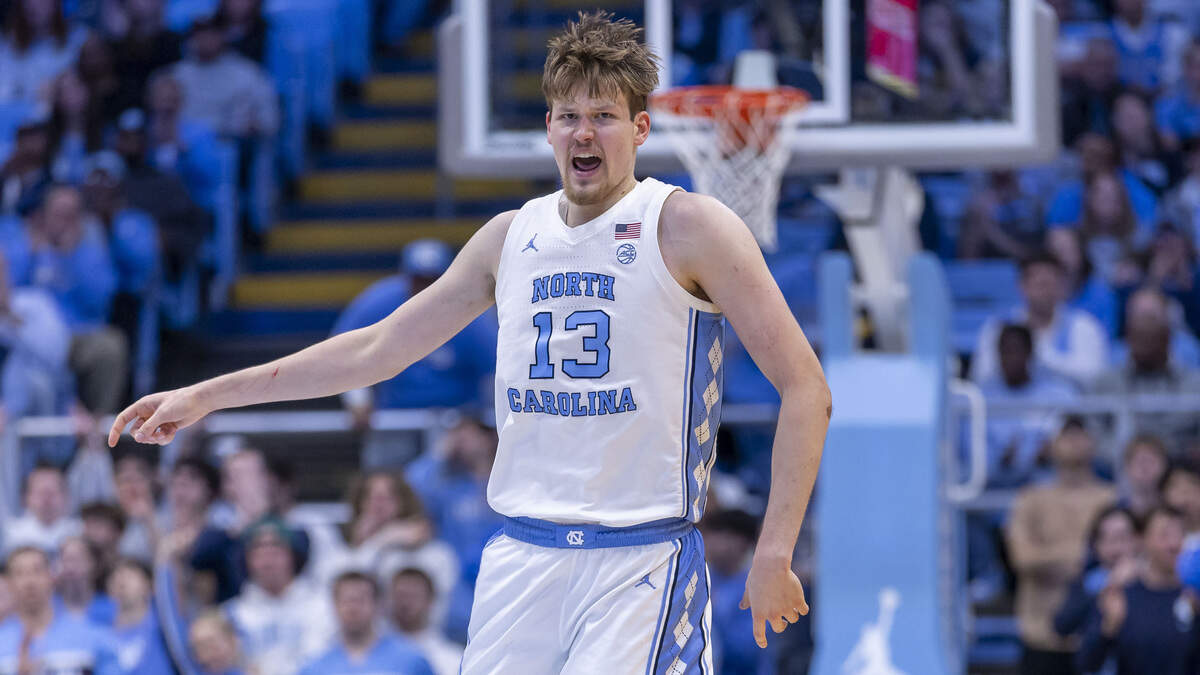
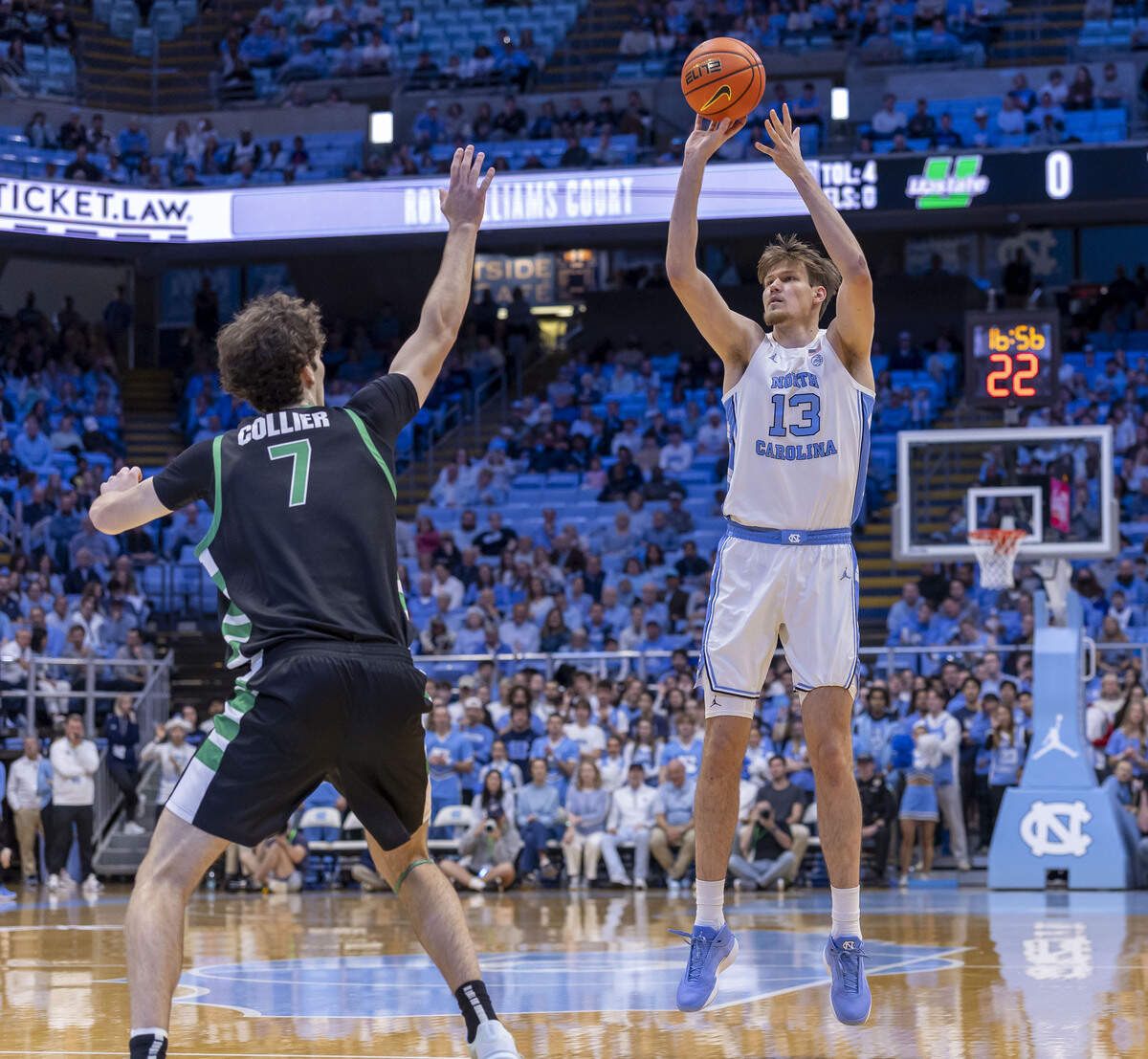
If Wilson is defined by his competitive edge, Veesaar operates on something more understated: adaptability. His ability to continually mold himself and, in doing so, raise the ceiling of whatever program he steps into. After recording zero double-doubles in three years at Arizona, Veesaar now has the second-most in the ACC this season. He also owns the conference’s second-highest field goal percentage, ranks fifth in rebounds and 10th in scoring. The All-ACC second-team pick is the only player in the country with 50 dunks and 30 made 3-pointers and, per CBB Analytics, carries the ACC’s highest individual defensive impact.
“He’s adapted,” Hubert Davis said of Veesaar on his Monday radio show. “Obviously, he’s a fantastic player, but what a great teammate and person he is to be around. We knew we needed more size coming into the season. Henri’s been that, and even more on both ends of the floor.
And now, with Wilson — UNC’s leading scorer and rebounder — out for the season, Veesaar will be asked to adapt once more as the No. 19 Tar Heels open postseason play with their ACC Tournament quarterfinal game on Thursday night at 9:30 p.m.
In many ways, though, he’s uniquely equipped for the challenge.
‘You got to finish it’
As Wilson and Spears carried on their conversation down the hall, the tone in the adjacent room with Veesaar was entirely different. He spoke about his native Estonia — specifically the capital, Tallinn, where he lived until age 15. When Veesaar speaks about his hometown, he describes it fondly — beautiful, full of rich sights and food worth savoring. He’s practically a Rick Steves brochure come to life.
Then the conversation pivots to a childhood vacation in Turkey. Just as Veesaar can anticipate an opposing guard driving straight down the lane, he knows where this story is headed. On that trip, a single run down a waterslide left him underwater far longer than expected. After that, he refused to dunk his head in the pool for the remainder of the vacation.
“Afterwards, my parents were like, ‘You’re going to swimming lessons. You can’t be scared of the water,’” Veesaar told the N&O. “So, yeah, my parents have very radical measures.”
Reflecting now, though, Veesaar understands the message his parents were trying to send.
“I think my parents have always been the ones where they’re like, ‘You have to try everything,’” Veesaar said. “You can’t say no before. So it’s like that with any type of food, they’ll make you try whatever food, or just be able to experience things in life and, overall, just be able to learn… it helps you on the court.”
That philosophy is how he wound up in the school choir in grade school — first jumping at the chance to join a few friends, then eventually standing among thousands of singers at a massive festival in Tartu, Estonia.
At the start, though, Veesaar’s enthusiasm didn’t last long — only two months, in fact.
“I asked my mom, ‘Please, I want to quit it,’” Veesaar recalled.
Her answer was simple.
“If you start it,” she told him, “you got to finish it.”
‘It’s hard to find’
Veesaar’s commitment to UNC may have been sealed with a slideshow.
When the Arizona transfer visited Chapel Hill in April and stepped into Davis’ office, a slideshow awaited him. It offered a meticulous breakdown of his Arizona season — shot charts, film showing what the staff liked and areas for improvement and “all these statistics that I had never seen before,” Veesaar recalled.
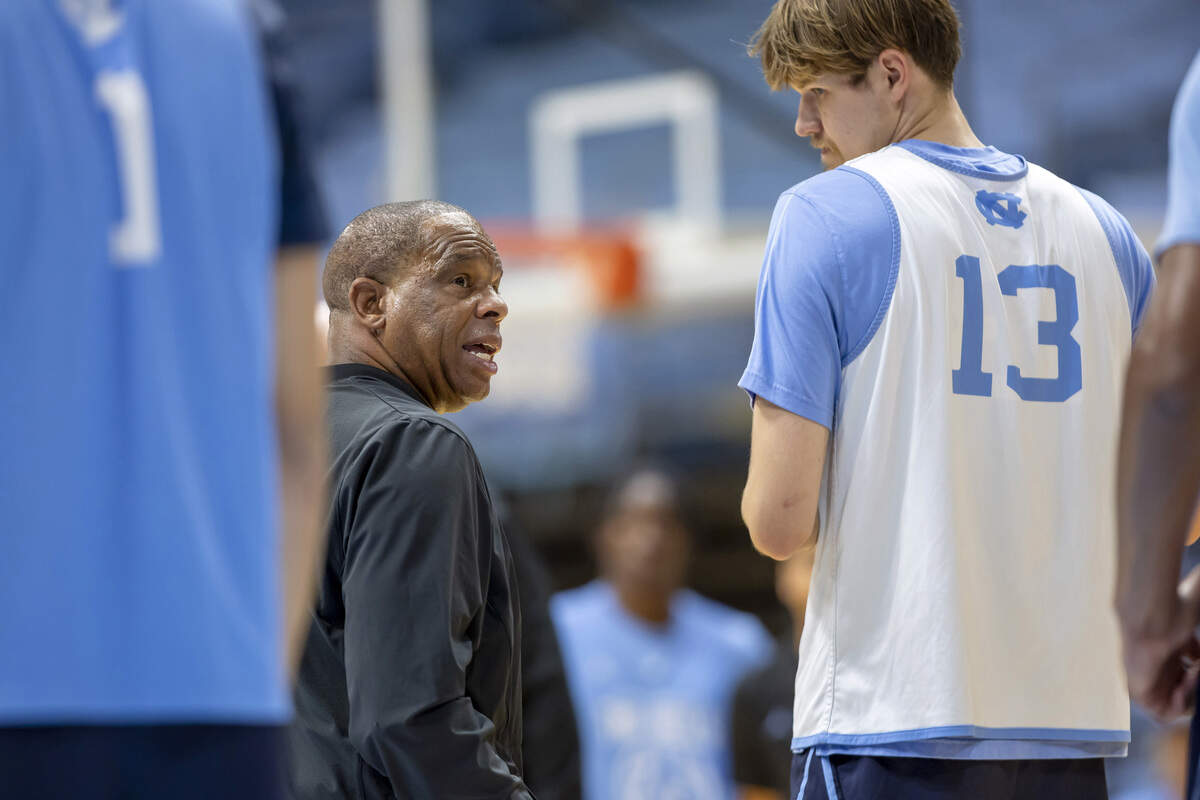
For the UNC coaching staff, Veesaar’s appeal was obvious. They were looking for size, length, and IQ — the kind of gifts Veesaar brought in spades — and figured his production in limited time at Arizona would hold up to a greater role in Chapel Hill.
“His analytics kind of spoke to us… his length, his ability to shoot the ball, we were really intrigued by his IQ, the way he plays,” UNC assistant coach Sean May told the N&O in January. “We studied him on film and you see how he moves out of pick and rolls, the fluidity that he moves with. It’s hard to find at that size.”
After only making five starts the previous season at Arizona, Veesaar believed he could have a bigger role at a Power Four program. UNC’s presentation showed Veesaar he could have that experience in Chapel Hill.
But, what sold Veesaar, beyond the numbers, was the conversation itself. Unlike the rote recruiting pitches he had experienced before, this was collaborative.
“One thing he talked about with us is, at Arizona, they used them a lot in the short roll,” May said. “And he was like, ‘Listen, I don’t want to just roll to the basket. I’ll be able to play out of the short roll and make plays.’”
Over the 2024–25 season at Arizona, Veesaar began getting more opportunities to make decisions on the court. The Wildcats’ system is effective — it has Arizona ranked No. 2 in the nation — but heavily guard-oriented as Veesaar describes it: bigs mostly rolled or took set shots with little room for improvisation.
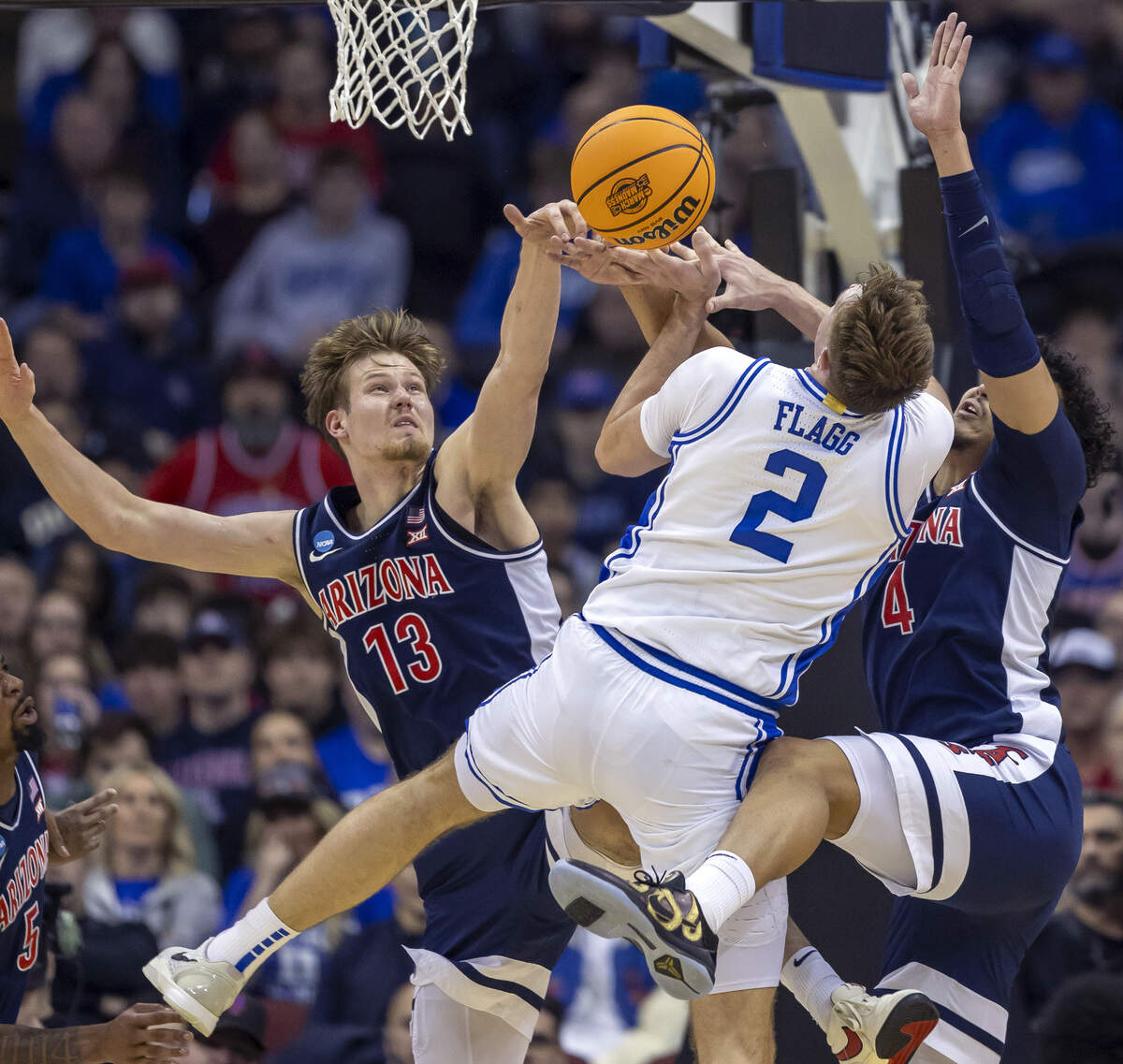
“I wanted just to be able to make some more decisions and be more impactful,” Veesaar said. “Be able to play more free rather than stuck in a system.”
And so, when Veesaar watched the slideshow in Davis’ office in April, his curiosity kicked in.
“So just seeing all of those things and then showing me these numbers where they want this, this and this to improve — I feel like that’s what we worked with, that’s kind of how we created the plan,” Veesaar said. “I jumped two feet in right away, committed. Like, I want to see how this is gonna go… it’s been a dream fit for me. I’ve been loving my time here.”
‘It’s a marriage’
From the start, the chemistry between Veesaar and Wilson was apparent.
May points to summer workouts before the season, unstructured sessions where that spark first emerged.
“You would see they just have an ability to find each other... Henri would be in a move and then drop it to Caleb,” May said. “(We said), ‘OK, like, we haven’t really talked about it.’”
In the second or third practice, Veesaar remembers watching from the sideline when Wilson pulled down a rebound, took two dribbles and threw a bounce pass to another forward running the floor.
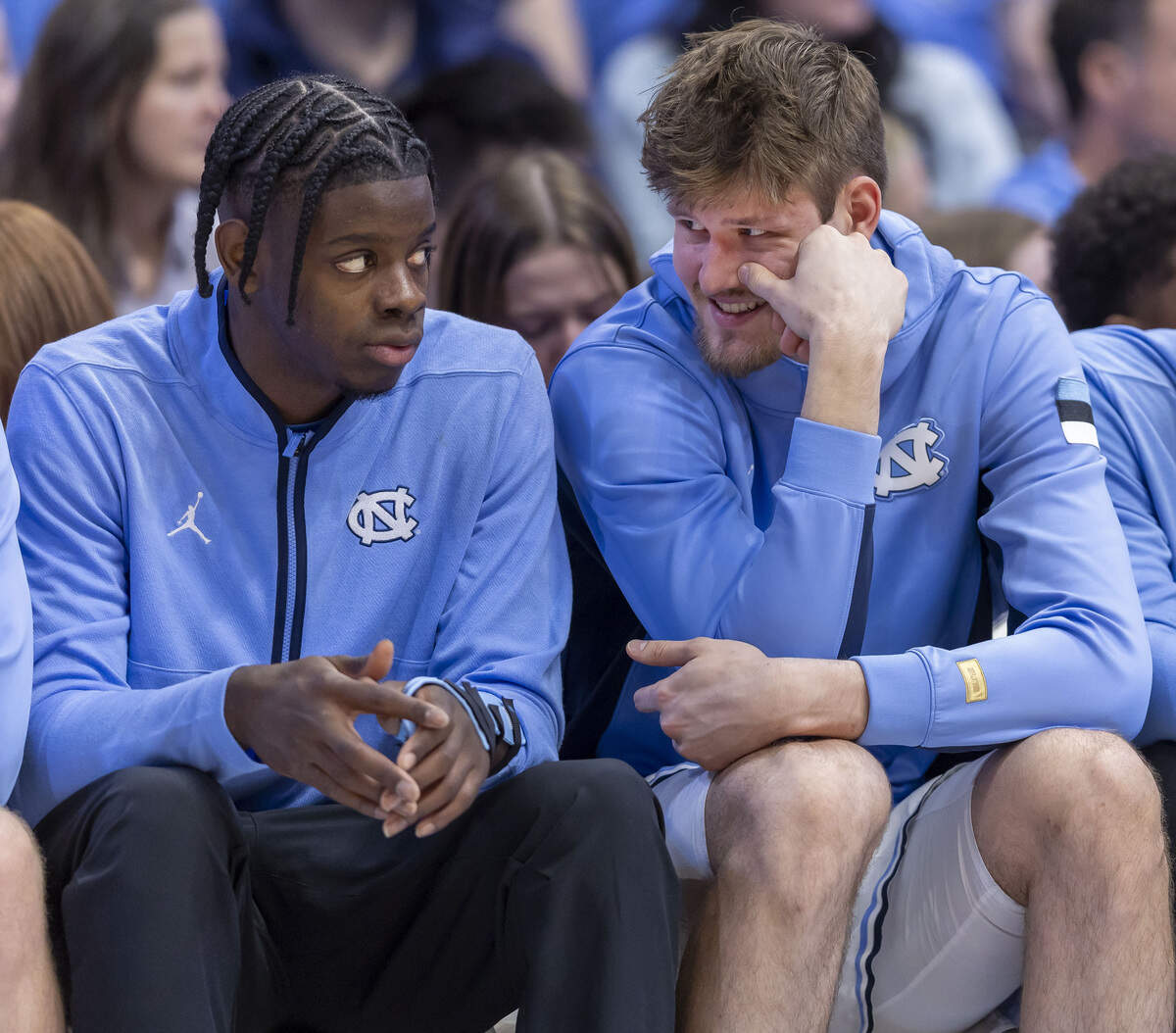
“I was like, ‘Oh, he can pass!’” Veesaar said with a laugh on a UNC radio show appearance in December. “I remember since that ‘Ooo moment,’ we just built the connection. We both have a similar understanding of the game, how it’s supposed to be played. He’s very good at finding high-low passes. I’m very good at finding high-low passes and just being able to set off each other.”
That intuitive connection became the foundation for a partnership that would define North Carolina’s frontcourt for much of the season.
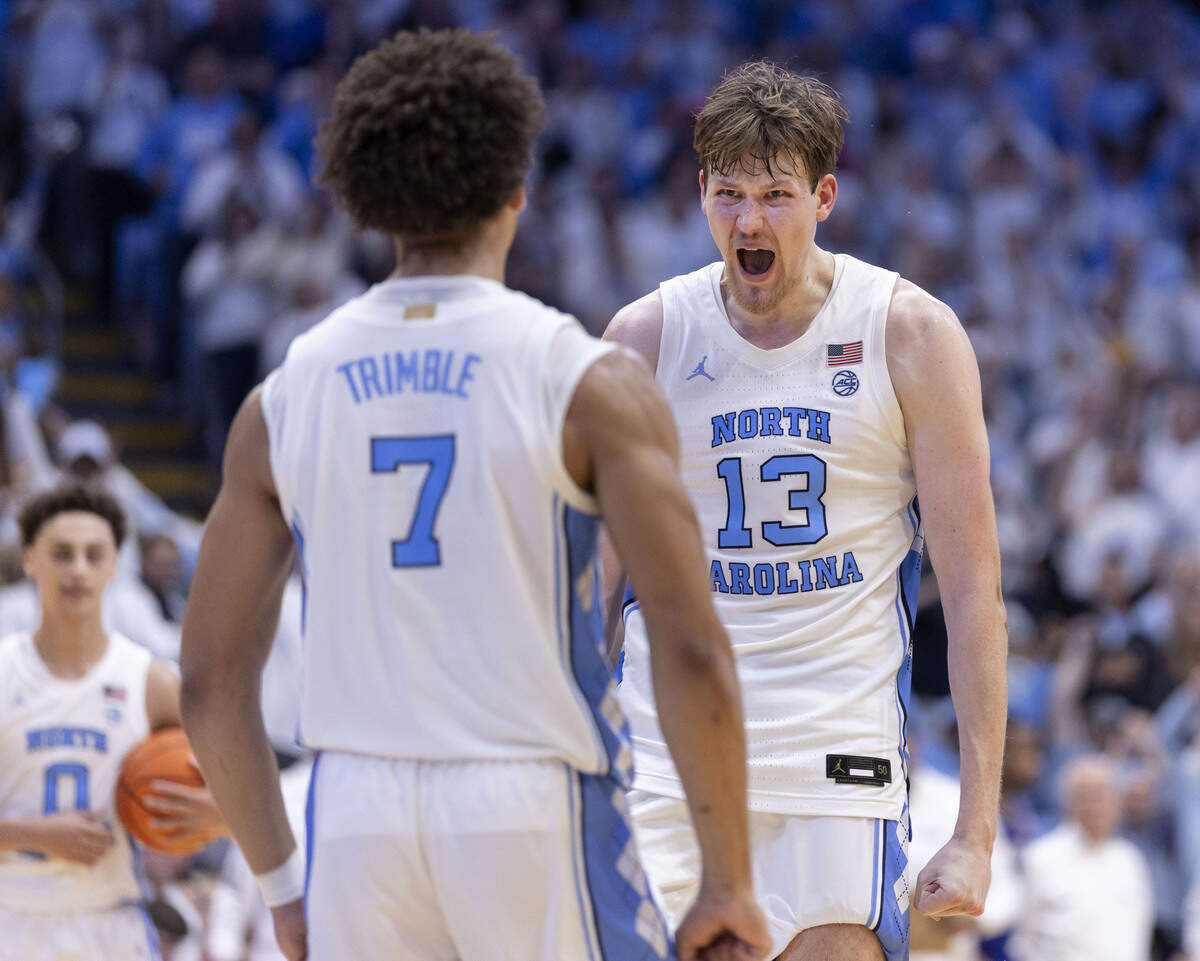
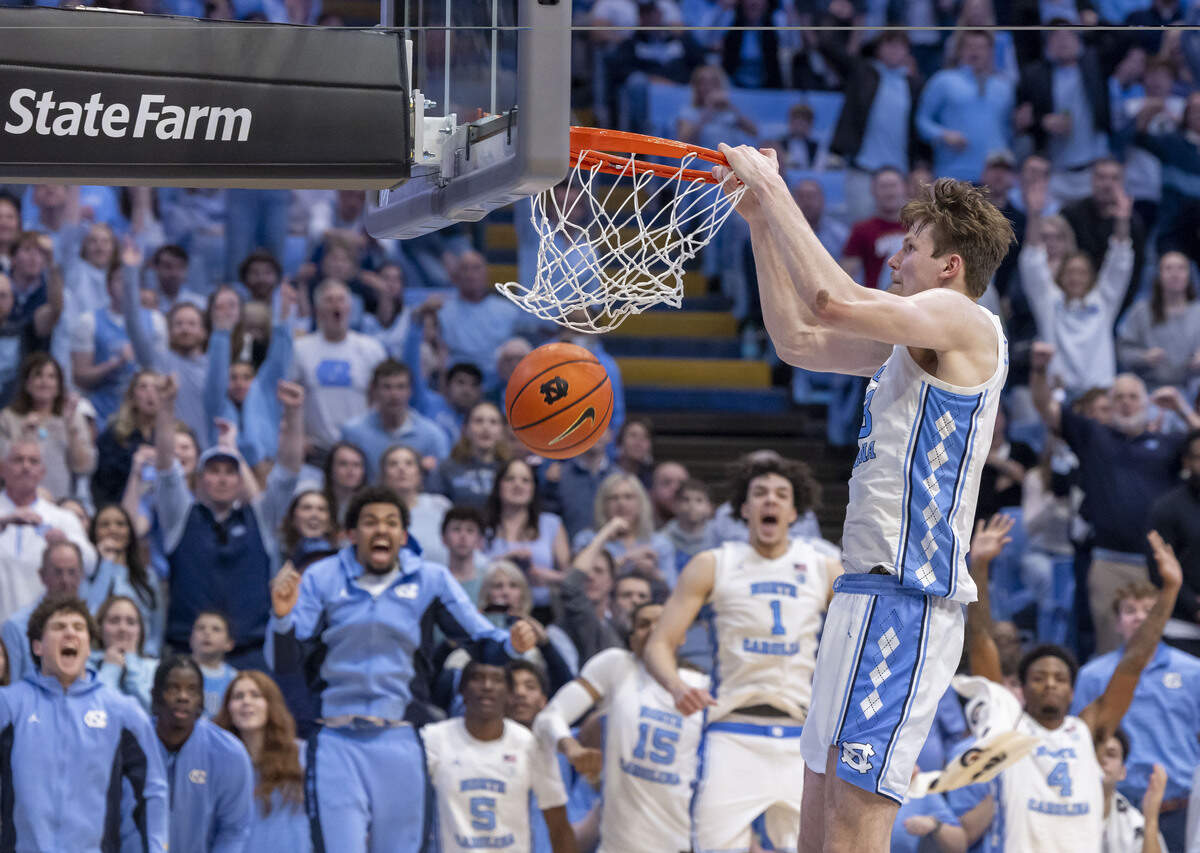
After the Miami game on Feb. 10 — the last game the two played together at UNC — Wilson was averaging 19.8 points and 9.4 rebounds per game, while Veesaar averaged 16.4 points and 9.0 rebounds. Their combined production — 24 double-doubles and 23 games scoring 20 or more points — put them in rare historical company: the last Tar Heel pair to average 16 points and nine rebounds in a season was Doug Moe and Lee Shaffer in 1959-60.
May credits a combination of factors for Veesaar’s rapid production: his natural ability, the minutes he’s earned at UNC and a few tweaks in UNC’s system. The Tar Heels played more of a high-low system with its bigs this season as opposed to the spread pick-and-roll of the last few years, May said.
“It’s like a marriage... a lot of it is our system, a lot of it is the relationship of him and Caleb,” May said. “That’s one thing that I don’t think we anticipated would work as well. Right off the bat, they had a kind of inner synergy about them, so I think that has benefited both of them greatly.”
‘I need to set a good example’
When asked in January how he approached scouting Wilson and Veesaar, Stanford coach Kyle Smith offered a sarcastic scoff.
“They really work the high-low together and they’re really organized offensively and how they attack it... those two are just relentless,” Smith said.
Smith likened Veesaar to Maxime Raynaud, the former Cardinal standout and current Sacramento Kings center, due to his size and outside shooting ability.
“If they didn’t have Wilson with him (Veesaar),” Smith said. “He’d probably be scoring more.”
Now’s the time to find out.
With Wilson sidelined for the season, the Tar Heel tandem that terrorized opponents all season has ended in an untimely separation. For Veesaar, though, it’s sort of a familiar predicament. He’s used to being dropped in the deep end, after all. But now, the stakes are higher — it’s not just a pool, it’s March basketball, and the Tar Heels need a new anchor.
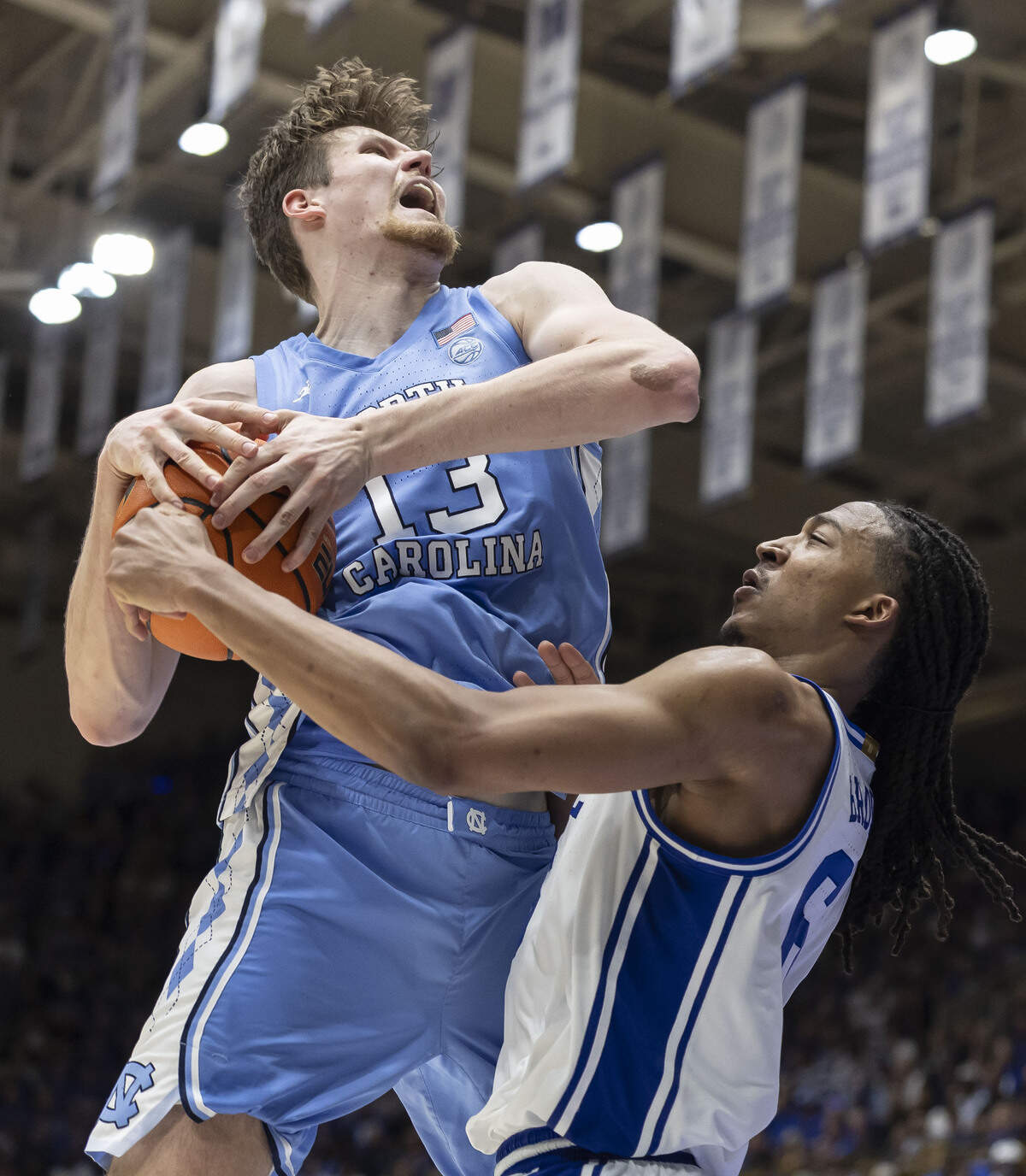
“I feel like the big part (with Wilson out) is going to be moving the ball and rebounding,” Veesaar said after North Carolina’s loss at No. 1 Duke on Saturday. “Because obviously he’s a freak athlete, he’s good at rebounding the basketball. And the other part is without him, we can’t really play (isolation) ball as much as we did with him because you kind of give him the ball, he went to work and it was very effective.
“Now we have to get the ball moving, people can’t be sticky with it.”
Veesaar understands his role has now shifted. He’ll need to be more aggressive at the start of games, which hasn’t always been the case this season.
At times, Veesaar’s tactical approach has made for tentative first halves. Against St. Bonaventure, Duke, Kentucky, Florida State, Notre Dame and Virginia Tech, he scored a combined 23 points before halftime. And after the break? A combined 84.
Without Wilson, though, “second-half Henri” isn’t a sustainable act.
“I need to do a better job rebounding to help the team out, just setting the tone for games when things get difficult…. for me personally, I need to set a good example,” he said Saturday.
Wilson’s absence is felt everywhere — on the glass, in pick-and-roll spacing and in the open-court opportunities that his athleticism once created. Veesaar, a polished big man with size, IQ and shooting touch, must now compensate for that loss.
It’s another test of adaptability for Veesaar. How he rises to that challenge could define not only the remainder of the season but also the legacy he leaves in Chapel Hill.
“It’s UNC basketball... it doesn’t matter who you are. Everybody gotta step up,” Veesaar told reporters Saturday. “Everybody is here for a reason. They’re on scholarship and they were brought in to play for UNC. So it’s the next person’s moment.”
This story was originally published March 11, 2026 at 5:30 AM.